Prevalence of Obstructive Sleep Apnea in Joint Hypermobility Syndrome: A Systematic Review and Meta-Analysis, 2019, Sedky et al.

nataliezzz

Senior Member (Voting Rights)
Prevalence of Obstructive Sleep Apnea in Joint Hypermobility Syndrome: A Systematic Review and Meta-Analysis
Karim Sedky, Thomas Gaisl, David S. Bennett
https://jcsm.aasm.org/doi/10.5664/jcsm.7636 (PDF available)

ABSTRACT

Study Objectives:
Because of associated abnormalities affecting connective tissue in various organs including airways, hypermobility syndrome has been associated with high risk for the development sleep apnea. Ehlers-Danlos syndrome (EDS) and Marfan syndrome (MFS) represent the most common hypermobility syndromes; therefore, the purpose of this review was to examine the prevalence of obstructive sleep apnea (OSA) in these populations.

Methods: All publications and poster presentations written in English found through August 2018 that describe the prevalence of sleep apnea among people with EDS or MFS were included.

Results: A total of 13 studies were identified, 7 for EDS and 6 for MFS. A combined random prevalence rate of OSA across both populations was 48.9% (95% confidence interval 38.3–59.6), with a slightly higher rate of 59.7% (39.7–77.0) for MFS versus 39.4% (28.8–51.1) for EDS. However, a high degree of heterogeneity across studies was found in both groups (EDS group: Q = 28.6 and I2 = 79.0; MFS group: Q = 37.1 and I2 = 86.5). When directly compared to the general population, patients with EDS/MFS were on average six times more likely (odds ratio 6.28 [95% confidence interval 3.31–11.93], P < 0.001, Z = 5.61) to have a diagnosis of OSA.

Conclusions: OSA is a previously underestimated EDS/MFS-related complication. The high prevalence of OSA might be the result of bony and soft-tissue abnormalities associated with these hypermobility syndromes. Untreated OSA is thought to worsen cardiovascular complications especially among those with MFS. Further research is needed to better delineate whether the prevalence of OSA is moderated by factors such as sex, body mass index, bony structure, and disorder subtype.
 
I have seen it claimed on this forum that there is no plausible link between hypermobility and chronic fatigue/chronic widespread pain - I disagree. People with more lax connective tissue have more collapsible upper airways and are more likely to have obstructive sleep-disordered breathing.

Leaving aside the question of the connection between obstructive sleep-disordered breathing and ME/CFS specifically, chronic fatigue is a well recognized symptom of obstructive sleep apnea syndrome (OSAS). I think there is also good evidence for a connection between OSA/S and chronic widespread pain (specifically, fibromyalgia): a meta-analysis found a 21% prevalence of fibromyalgia in OSA patients vs. ~2% in the general population (as discussed in the thread, this is probably skewed towards OSAS patients as they are much more likely to be referred for sleep studies than asymptomatic OSA patients)

S4ME link: Fibromyalgia in obstructive sleep apnea-hypopnea syndrome: a systematic review and meta-analysis, 2024, He et al.

I've also made a thread for the study referenced in this meta-analysis that "suggested that the effect of the hypermobility syndrome is comparable to a +11 kg/m2 BMI gain in the normal population"

S4ME link: Obstructive sleep apnoea and quality of life in Ehlers-Danlos syndrome: A parallel cohort study, 2017, Gaisl et al.

And for an explanation of how obstructive sleep-disordered breathing could be causing symptoms like chronic fatigue and chronic widespread pain, here are links to the UARS thread and the AI summary of the UARS theory.
 
Last edited:
The paper seems to be based entirely on data from the rare monogenic EDS type (1 in 5000 people) and the equally rare Marfans syndrome. Both of these are known to include structural and connective tissue differences from normal. I can understand that these lead to OSA among many other problems.

What is not clear from the study is whether this has any relevance to the much more common generalised joint hypermobility which seems to have a prevalance anywhere between 2% and over 50% depending which version of the Beignton or other scales is used and which age group and ethnic group is studied.

We need to be careful about suggesting this particular research article has any relevance to generalised joint hypermobility or to ME/CFS.
 
I have seen it claimed on this forum that there is no plausible link between hypermobility and chronic fatigue/chronic widespread pain

I don't think anyone has said that here. A link with widespread pain would be plausible. It is just that the population studies that have been done tend to indicate that it is not the case. Medicine has to be based on data, not what might be plausible.

Most studies of associations of this sort are done on clinic populations where all sorts of bias creep in from referral patterns. It is perfectly plausible that people with certain types of lax connective tissue get sleep apnoea and daytime sleepiness but, as Trish says, it is hard to see how that is relevant to ME/CFS, which is not an issue of sleepiness type fatigue.
 
It is perfectly plausible that people with certain types of lax connective tissue get sleep apnoea and daytime sleepiness but, as Trish says, it is hard to see how that is relevant to ME/CFS, which is not an issue of sleepiness type fatigue.
I did say "Leaving aside the question of the connection between obstructive sleep-disordered breathing and ME/CFS specifically, chronic fatigue is a well recognized symptom of obstructive sleep apnea syndrome (OSAS)." That said, are you suggesting that OSAS can't present as chronic fatigue without sleepiness? Many sleep doctors would beg to differ.

ETA: OSAS can present as the literal opposite of (objective) sleepiness: insomnia (S4ME link): Prospective RCT on the Efficacy of CPAP and Adaptive Servo-Ventilation in the Treatment of Chronic Complex Insomnia, 2019, Krakow et al.

I do have a lot more to say on this topic (especially on objective sleepiness [as measured by multiple sleep latency testing - MSLT] vs. subjective sleepiness [as measured by the Epworth Sleepiness Scale - ESS], and how the ESS likely isn't a good proxy for objective sleepiness and doesn't necessarily correlate with MSLT), so I will come back with a longer response later, but for now I will link to this study that found that CPAP treatment decreased both ESS and Fatigue Severity Scale (FSS) scores. Also note that there is no significant correlation between apnea-hypopnea index (AHI) or % sleep time below 90% oxygen saturation and ESS/FSS scores, so if you are thinking sleep fragmentation by apnea/hypopnea-related arousals or hypoxemia is the major driver of (self-rated) sleepiness/fatigue in OSA/S patients, think again.*

S4ME Link: Somatic arousal and sleepiness/fatigue among patients with sleep-disordered breathing, 2016, Gold et al.

Nasal CPAP treatment results:
45 UARS patients: BSQ score decreased by 43 % (p < 0.0001), ESS score decreased by 18 %, (< 0.0001), and FSS score decreased by 29 % (p < 0.0001)
49 OSA patients: BSQ score decreased by 42 % (p < 0.0001), ESS score decreased by 36 % (p < 0.0001), and FSS score decreased by 29 % (p = 0.0002)
Pooled analysis of the UARS and OSA populations: Change in FSS was positively correlated with change in BSQ (R = 0.32; p = 0.002). There was a non-significant trend toward a positive correlation between the changes in BSQ and ESS (R = 0.17; p = 0.10)

Also, a quick search for studies finding improvement in self-rated fatigue with CPAP for OSA/S yielded this:

Effects of Continuous Positive Airway Pressure on Fatigue and Sleepiness in Patients with Obstructive Sleep Apnea: Data from a Randomized Controlled Trial
Methods:
Fifty-nine men and women with OSA were randomly assigned to therapeutic or placebo CPAP in a double-blind fashion for a 3-week intervention period. Four outcome measures were assessed: (1) fatigue/vigor measured with the Multidimensional Fatigue Symptom Inventory—Short Form (MFSI-sf), the (2) fatigue and (3) vigor subscales of the Profile of Mood States—Short Form (POMS), and (4) the Epworth Sleepiness Scale (ESS). Data were analyzed using repeated-measures analysis of variance.

Results:
Compared with patients receiving placebo CPAP, those patients treated with therapeutic CPAP showed significant reductions in the apnea-hypopnea index, as well as decreases in both measures of fatigue and increases in vigor (P values < 0.05). The beneficial effect of therapeutic treatment was most pronounced in patients with high levels of fatigue at study onset. Significant treatment effects in sleepiness scores were not observed in the entire sample (P > 0.05); however, in a subset of patients with excessive sleepiness at the onset of treatment, ESS scores were significantly reduced with use of therapeutic CPAP (P < 0.05).

Conclusions:

Results suggest that 3 weeks of therapeutic CPAP significantly reduced fatigue and increased energy in patients with OSA. Therapeutic CPAP significantly reduced daytime sleepiness in patients who reported excessive sleepiness at the onset of treatment.

And they state in the paper:

In patients with OSA, complaints of fatigue, tiredness, and lack of energy are equally if not more common than those of sleepiness. 4 5

Yes, the above studies are just relying on subjective/self-report measures of fatigue, but ultimately fatigue is a subjective symptom, right? You can try to capture improvement in fatigue with objective data like step counts, etc., but then you're really measuring something different, right? (how tightly does step count correlate with self-rated fatigue e.g.?)

*AHI does seem to contribute to objective sleepiness when you get to an AHI ≥ 45 (link to the talk where this is discussed). This was an analysis done on data from this study: Hypersomnolence, Insomnia, and the pathophysiology of UARS, Gold et al. 2008.
1768887200575.png

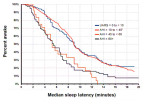
To get you thinking about what might actually be the primary driver of (self-rated) sleepiness (and likely fatigue) in obstructive sleep-disordered breathing patients, see here (snoring is a pretty good proxy for inspiratory flow limitation - the proposed stressor in Dr. Gold's theory - although many people have inspiratory flow limitation without audible snoring). Note that there is no difference in ESS scores in people with mild OSA and snorers with an AHI <5 (also of note, the vast majority of people with OSA snore):

 
Last edited:
Chronic fatigue is a symptom in literally hundreds of unrelated conditions, from minor and either self-resolving or easily treated/managed, through to major and life threatening.

On its own the symptom tells us very little. It needs substantial context and history to make meaningful clinical sense and determine how to deal with it.
 
That doesn't surprise me. But what relevance does this have to ME/CFS?
That's why I started the thread with this (specifically noting that I was leaving aside the possible connection to ME/CFS):
I have seen it claimed on this forum that there is no plausible link between hypermobility and chronic fatigue/chronic widespread pain - I disagree. People with more lax connective tissue have more collapsible upper airways and are more likely to have obstructive sleep-disordered breathing.

Leaving aside the question of the connection between obstructive sleep-disordered breathing and ME/CFS specifically, chronic fatigue is a well recognized symptom of obstructive sleep apnea syndrome (OSAS).
For example:
I refused because I did not consider hypermobility needed a special clinic. The claimed link with widespread pain and fatigue is pretty baseless.
If there is a link between lax connective tissue (causing obstructive sleep-disordered breathing) and chronic fatigue/widespread pain, which I think I have provided good evidence for, it probably doesn't matter what disorder is causing the lax connective tissue - EDS, Marfan, hEDS, hypermobility spectrum disorder, etc. (of course maybe people with classical EDS/Marfan/etc. have more lax connective tissue than people with "hEDS" etc., but the people with "hEDS" who can stretch their skin way out and whatnot clearly have something, whether or not it has a specific genetic inheritance pattern. If the skin around their body is that stretchy, the tissue inside their throat is probably "stretchy" too and more likely to cause their airway to collapse during sleep)
 
Back
Top Bottom