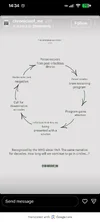
'Recovery Is Possible: Lessons in ‘ME/CFS’ Recovery from YouTube [Goldsmiths]

Why do I feel like I'm being patronised?

We have heard all these arguments before from brain retraining supporters. Why can't they accept that it is not the answer for a lot of very sick people?

It's always the same - 'you just haven't tried the right training for you.' Just like the CBT/GET clinicians who keep setting up yet another trial for another variation of the same thing, and when none of us get better, tell us we havent tried hard enough, or don't want to get better.
Dear Trish, it's not about you, just another one who "knows". :hug: :hug: :hug: :hug: :hug: :hug: :hug:
 
Member of the brain retraining cabal, here (I guess!)! I don't really know what I'm allowed to post but can answer a few questions if that helps. I don't have lots of time over the next month to come back and answer much in the way of follow up, sorry. I don't know if this is helpful.

I see a lot of misunderstanding about BT here. There is a good book called 'The Inflamed Feeling' which isn't specifically about M.E but does cover lots on the nervous system and why people might develop chronic fatigue, which would help you understand better if you are interested.

*So basically this isn't a study of 'patients' or 'recovered' but of people who are now making money/working in said industry?*

You need to understand this is because a) people get passionate about the thing that helped them and want to help reach others and the best way of doing that is making it your main job b) if you recover after being chronically ill, it can be hard to get back to a paid job, either because people are scared to hire you, confidence or knowledge gaps, or because you need to look after yourself while you're still in the early stages of recovery or c) your priorities have changed and you want to build a career on your terms. It's rarely more sinister than that.

*I tried variations on brain training twice, as well as all sorts of other alt med treatments. I was never afraid to be active, worked for many years with mild ME/CFS before I eventually became too sick to work. In fact I fit none of the stereotypes you and your ilk try to accuse us of.*

I'm sorry you've had such a long history of being ill. Some of the BT programmes are not as good as others. Which is why you hear people say they've tried a few before finding one that helped them. I don't think it should be that way.

No one is actually claiming you are afraid to be active in those kinds of simple terms. The argument is the brain creates symptoms in response to some form of threat. The brain takes in all sorts of information you aren't aware of to assess threat (for everyone) and with some gets over-sensitized to creating symptoms to stop you doing things (see Lekander's book which breaks this down). So the fear is not necessarily known to you, although if you do things and crash, it's also to be expected moving would create fear. There'd be something wrong if it didn't - in this case it's understandable fear of symptoms that come FROM moving. And its something we target to teach the brain to stop creating the symptoms.

No one is 'accusing' you of anything. The fact that you think that is a sign BT needs to be better explained. BT isn't about 'thinking positively,' handing out money to any programme, or anything else like that. This research does touch on a particular mindset that most recovered people had to enter to get better, however. But there will be barriers to people getting there such as very justified mistrust.

*what exactly does she think the NHS treatment pathway is? It's pretty much the same approach she is claiming isn't being talked about.*
No, the NHS does not understand or teach BT. CBT is similar and can help some but it doesn't explain things in the way BT does. And this is why some meditate for years and still don't get better, because it misses out someone understanding WHY their symptoms are being generated, how to respond to them (see somatic tracking resources which are explained for free online) and how to use certain techniques repeatedly to calm symptoms down. Just relaxing is not BT. For one, BT is taking the approach that neurodiversity is a factor for many people with chronic symptoms, even if it can be hard to spot in yourself sometimes, and more work is on the horizon to explore this link more fully. Many people who recover realise afterwards that they are neurodivergent, in fact, having never known that might be relevant to them.

Schubiner's Unlearn Your Pain goes into detail as another book recommendation. It has 800 references and 750 names of recovered people in the back.
Why posting now?
Taking a month off before you can answer feels very rude to me!
 
You need to understand this is because a) people get passionate about the thing that helped them and want to help reach others and the best way of doing that is making it your main job b) if you recover after being chronically ill, it can be hard to get back to a paid job, either because people are scared to hire you, confidence or knowledge gaps, or because you need to look after yourself while you're still in the early stages of recovery or c) your priorities have changed and you want to build a career on your terms. It's rarely more sinister than that.

All the members here understand all of that. They aren't idiots.
To me as a professor of medicine who has spent the last twenty years studying brain science your posts come across as astonishingly naive and patronising. We know all about this stuff. There is no relevant 'brain science' to draw on. OK you may believe there is and go on believing but please consider the possibility that some other people actually have a more balanced perspective on the matter.

You come across as someone saying "Yes, but you see, the earth IS flat".
 
Member of the brain retraining cabal, here (I guess!)! I don't really know what I'm allowed to post but can answer a few questions if that helps. I don't have lots of time over the next month to come back and answer much in the way of follow up, sorry. I don't know if this is helpful.

I see a lot of misunderstanding about BT here. There is a good book called 'The Inflamed Feeling' which isn't specifically about M.E but does cover lots on the nervous system and why people might develop chronic fatigue, which would help you understand better if you are interested.

*So basically this isn't a study of 'patients' or 'recovered' but of people who are now making money/working in said industry?*

You need to understand this is because a) people get passionate about the thing that helped them and want to help reach others and the best way of doing that is making it your main job b) if you recover after being chronically ill, it can be hard to get back to a paid job, either because people are scared to hire you, confidence or knowledge gaps, or because you need to look after yourself while you're still in the early stages of recovery or c) your priorities have changed and you want to build a career on your terms. It's rarely more sinister than that.

*I tried variations on brain training twice, as well as all sorts of other alt med treatments. I was never afraid to be active, worked for many years with mild ME/CFS before I eventually became too sick to work. In fact I fit none of the stereotypes you and your ilk try to accuse us of.*

I'm sorry you've had such a long history of being ill. Some of the BT programmes are not as good as others. Which is why you hear people say they've tried a few before finding one that helped them. I don't think it should be that way.

No one is actually claiming you are afraid to be active in those kinds of simple terms. The argument is the brain creates symptoms in response to some form of threat. The brain takes in all sorts of information you aren't aware of to assess threat (for everyone) and with some gets over-sensitized to creating symptoms to stop you doing things (see Lekander's book which breaks this down). So the fear is not necessarily known to you, although if you do things and crash, it's also to be expected moving would create fear. There'd be something wrong if it didn't - in this case it's understandable fear of symptoms that come FROM moving. And its something we target to teach the brain to stop creating the symptoms.

No one is 'accusing' you of anything. The fact that you think that is a sign BT needs to be better explained. BT isn't about 'thinking positively,' handing out money to any programme, or anything else like that. This research does touch on a particular mindset that most recovered people had to enter to get better, however. But there will be barriers to people getting there such as very justified mistrust.

*what exactly does she think the NHS treatment pathway is? It's pretty much the same approach she is claiming isn't being talked about.*
No, the NHS does not understand or teach BT. CBT is similar and can help some but it doesn't explain things in the way BT does. And this is why some meditate for years and still don't get better, because it misses out someone understanding WHY their symptoms are being generated, how to respond to them (see somatic tracking resources which are explained for free online) and how to use certain techniques repeatedly to calm symptoms down. Just relaxing is not BT. For one, BT is taking the approach that neurodiversity is a factor for many people with chronic symptoms, even if it can be hard to spot in yourself sometimes, and more work is on the horizon to explore this link more fully. Many people who recover realise afterwards that they are neurodivergent, in fact, having never known that might be relevant to them.

Schubiner's Unlearn Your Pain goes into detail as another book recommendation. It has 800 references and 750 names of recovered people in the back.
I do not think you understand that this concept remains a theory. Some people believe their ME/CFS is caused by microclots. Some believe they have structural issues in their spine. Some believe their chronic illness is caused by viral or bacterial persistence. There are scraps of evidence for each, but nothing to justify the dogmatic approach that proponents of each often take when presenting their ideas to other patients.

I am very much in the 'this could all be in the brain' camp, by the way. I would welcome more research into (psyco)neuroimmunology, for example. But clear scientific evidence that fear, threat perception, and nervous system dysregulation is the root cause of and perpetuating factor in all these different chronic illnesses — and that patients can routinely 'learn' their way out of them — does not exist. If it did, it would be a groundbreaking achievement — probably Nobel Prize worthy, IMO.
 
Last edited:
You need to understand this is because a) people get passionate about the thing that helped them and want to help reach others and the best way of doing that is making it your main job b) if you recover after being chronically ill, it can be hard to get back to a paid job, either because people are scared to hire you, confidence or knowledge gaps, or because you need to look after yourself while you're still in the early stages of recovery or c) your priorities have changed and you want to build a career on your terms. It's rarely more sinister than that.

None of these are good reasons from a patient's point of view, they are just things that make the coaches more likely to be exploitative and oversell their programmes or claim they are recovered when they aren't or incapable of dealing with people who can't recover in the same way
 
You need to understand this is because a) people get passionate about the thing that helped them and want to help reach others and the best way of doing that is making it your main job b) if you recover after being chronically ill, it can be hard to get back to a paid job, either because people are scared to hire you, confidence or knowledge gaps, or because you need to look after yourself while you're still in the early stages of recovery or c) your priorities have changed and you want to build a career on your terms. It's rarely more sinister than that.
Needing a job or money or confidence or flexibility is never a reason to exploit vulnerable people.

This comment is like trying to defend pyramid schemes with feminism, girl power, individual freedom, and so on.
 
The importance of the conflicts of interest, that 2/3 of study participants are themselves now commercial braintrainers,
Conflict of interest much?

------------

important turning points in narratives of recovery from CFS and related illnesses.'​

Do they think that constructing a narrative is the recovery process and goal? That we have just 'lost our narrative'?
 
Last edited:
Brain training folks need to brain train themselves into getting proper jobs.

Can overcome a extremely complex illness with the power of the mind like a Dune character. But the ability to get a job is beyond them.

Maybe you just need to try harder and stop telling each other that getting a job is impossible?
 
Last edited:
I see this a lot and I want to say the following. Brain retraining is gaining insight into how the brain can generate symptoms when it feels you are under threat. Everything about brain retraining is about getting to know yourself better so you understand why your brain might be wanting to do that. For some, its because of trauma, for some its because low level, ongoing stress plus neurodiversity tips the balance in the wrong direction. In BT we explore our feelings, we learn to look inwards and see what might be maintaining a sense of threat. Are there conversations that you've been putting off, fears that haven't been voiced, needs that weren't met when you were a child that you need to pay some attention to? We add in some meditation and sometimes journalling to help with things. Nothing is 100% safe, but BT is about as safe as anything can be, in reality. It should be led by the patient and should help them understand how they could feel better supported.

Getting to know yourself and prioritise your feelings, learning a reliable sense of safety in your body, understanding the science of the sick role (on a brain level), understand any potential neurodivergence in yourself is really all the work focuses on. It goes at the person's pace and you can stop at any time. It's why people get so passionate about it, because sometimes for the first time people learn how to feel their feelings, work themselves out and meet their own needs. That's very empowering and gentle work at the same time. And understandably this all looks like woo if you don't accept emotions affect our bodies and brains and making that leap can be the hardest part of things.
That’s I’m afraid nothing to do with the question / what you’ve cited (don’t worry we all get sidetracked or pick the wrong bit) - which is pretty important about whether responses were cherry-picked to give the desired answer

So I’ll respond the the bit you’ve quoted rather than the unrelated answer:

Could you confirm if you are someone involved in this ‘set of interviews/report’ who can provide that detail?


To avoid you needing to scroll back/be helpful, Here is what you did quote of my post at the start of your comment as if you were trying to reply to it:

bobbler said:
Do we even know details such as whether more people theoretically could have volunteered because they didn't have a great time, but were 'excluded' because they didn't say the right narrative to be included in this so-called research?
 
Last edited:
It is asserted that people are frequently, if not invariably, told recovery is not possible. Has this ever been evaluated? My experience is that UK medics are highly resistant to saying this.
I’ve never heard this said by a medic
and I’m the most severe case I know in my entire country.

Why are we seeing such an evangelical push for brain retraining at present, at least here in the UK and in Scandinavia? Is something happening that we are not aware of?
A lot of people are making a lot of money from this. And it’s a self-replicating culture.
 
I’ve never heard this said by a medic
and I’m the most severe case I know in my entire country.


A lot of people are making a lot of money from this. And it’s a self-replicating culture.
Indeed - it’s just a manipulation trick to their desired audience if said GPs who might refer and also sit in the CCG/ICB funding boards that they are wanting to sell at.

Basically a “don’t be like Dave/all those other bad GPs” bs to try and give them a pat on the back to carry on doing the wrong thing whilst being lied to that that’s new as if they’ve always been the few who ‘saw the future’ instead of being old wine in new bottles.

That’s why I talk about these things coming from behaviorists but it also merely being communication techniques that are just asx much used in other sales businesses that are being taught rather than ‘therapy’. It’s just behavioural psychology manipulation techniques on the buyers themselves - just like telling someone how awfully clever/good their question was when you want to suck up to them and slide things past them etc.

And I’m now smelling the even dirtier classic but immoral thing - ‘marketing is providing the best solution to the problem’. They aren’t selling to those who know the illness but talking about the patient to those who are third parties with power over them to misrepresent and undermine their voice and pretend ‘the problem’ (in marketing context) is some made up nonsense in order to match how their supply-side offering has use instead of harm.

And of course at the same time are deliberately and directly trying to infer lies about patients whose voice should be being heard - according to their own documents - basically to suggest the real patients testimony shouldn’t be listened to (cos trauma, hysterical woman tropes - old wine new words to try and pretend it’s not the same misogyny)

The weirdest thing is it being called BT in some of these comments - that’s actually the abbreviation used for ‘behavioural therapy’. Which still exists and is used for certain conditions and was the fore-runner of all this stuff that behaviourists push and indeed their same tactics

(think of and watch the Netflix documentary ‘the Program’ which more entertainingly shows this morphing/development of the industry/ideology: https://s4me.info/threads/netflix-documentary-the-program-about-cbt.44965/ - it also does well in noting its close connection with cults under the guise of. ‘Building community’) and underlies some CBT where it’s a type that comes from the BT behavioural therapy origins (where other types originated from the Cognitive Therapy side)

That this lot have copied it and then full-cycled on even nicking its abbreviation after about a century of BT being used and should be known about by anyone with enough knowledge of psychology to stand a chance of caring or wanting to know what’s safe is more than irony.
 
Last edited:
the interviews are with people who are now part of the industry and are 'game turned poacher' or whatever the term is, but certainly these intro sections don't seem to be hammering the honesty that the people she interviewed were 2/3 already working in the industry
This ‘recovery community’ basically works like a MLM. I suspect this is where most of its mobilizing power is coming from
 
This ‘recovery community’ basically works like a MLM
From Wikipedia:
Multi-level marketing (MLM), also called network marketing or pyramid selling, is a controversial and sometimes illegal marketing strategy for the sale of products or services in which the revenue of the MLM company is derived from a non-salaried workforce selling the company's products or services, while the earnings of the participants are derived from a pyramid-shaped or binary compensation commission system.
 
Never in over 10 years since I got diagnosed had a conversation with anyone from NHS either “CFSClinic” physio/ot or any GP about prognosis, barely had any discussion at all just me relating current symptoms when I still needed to get sick notes before I packed in working. Only had ONE discussion with anyone with any concept of reality private specialist who said pushing myself to try to keep working was counterproductive to my long term health, especially since I had had it already for several years undiagnosed. I’ve said before that when I discovered that according to the information on NHS website my symptoms seemed like “CFS” and I asked the GP if I had it she said “we don’t like to give that diagnosis it’s better to treat the symptoms”, preferring to sweep it under the carpet.
 
Aw goodness,

on page 17 (my bolding):
How to read this report

This open access report is the first in a series of planned outputs.

Analysis of the thematic content of participants’ recovery narratives has been prioritised.

This idea this 188 page ‘report’ with the facts on who was actually interviewed and who selected which got included being misrepresented hidden many pages down might be merely the first report of many …

Reminds me of when one watches a tv programme on a law firm and they get is the term depo-dumped or document-dumped for when discovery hides relevant documents by providing huge numbers of irrelevant other documents to the opposing side (making it a needle in the haystack for them to spot that key piece of evidence for their defence in the lorry-load of other documents to read through)

How are those who are being heavily sold at eg GP and policymakers supposedly to trawl thru 188 pages to the hidden lines in a para on page 30 to realise the inferences throughout from the foreward and background sections onward of things like it being real patients rather than a bunch of industry workers isn’t the truth of fact?

At what point does it become plain deception , or worse?

Nevermind the advertorial gone out as a press article their uni pr dept got potentially similarly misled into writing by the same material - were they aware of it all being interviews (that might have been already done for said website?) of those working in the industry that had been carefully selected by raelen ?
 
Last edited:
Member of the brain retraining cabal, here (I guess!)! I don't really know what I'm allowed to post but can answer a few questions if that helps. I don't have lots of time over the next month to come back and answer much in the way of follow up, sorry. I don't know if this is helpful.

I see a lot of misunderstanding about BT here. There is a good book called 'The Inflamed Feeling' which isn't specifically about M.E but does cover lots on the nervous system and why people might develop chronic fatigue, which would help you understand better if you are interested.

*So basically this isn't a study of 'patients' or 'recovered' but of people who are now making money/working in said industry?*

You need to understand this is because a) people get passionate about the thing that helped them and want to help reach others and the best way of doing that is making it your main job b) if you recover after being chronically ill, it can be hard to get back to a paid job, either because people are scared to hire you, confidence or knowledge gaps, or because you need to look after yourself while you're still in the early stages of recovery or c) your priorities have changed and you want to build a career on your terms. It's rarely more sinister than that.

*I tried variations on brain training twice, as well as all sorts of other alt med treatments. I was never afraid to be active, worked for many years with mild ME/CFS before I eventually became too sick to work. In fact I fit none of the stereotypes you and your ilk try to accuse us of.*

I'm sorry you've had such a long history of being ill. Some of the BT programmes are not as good as others. Which is why you hear people say they've tried a few before finding one that helped them. I don't think it should be that way.

No one is actually claiming you are afraid to be active in those kinds of simple terms. The argument is the brain creates symptoms in response to some form of threat. The brain takes in all sorts of information you aren't aware of to assess threat (for everyone) and with some gets over-sensitized to creating symptoms to stop you doing things (see Lekander's book which breaks this down). So the fear is not necessarily known to you, although if you do things and crash, it's also to be expected moving would create fear. There'd be something wrong if it didn't - in this case it's understandable fear of symptoms that come FROM moving. And its something we target to teach the brain to stop creating the symptoms.

No one is 'accusing' you of anything. The fact that you think that is a sign BT needs to be better explained. BT isn't about 'thinking positively,' handing out money to any programme, or anything else like that. This research does touch on a particular mindset that most recovered people had to enter to get better, however. But there will be barriers to people getting there such as very justified mistrust.

*what exactly does she think the NHS treatment pathway is? It's pretty much the same approach she is claiming isn't being talked about.*
No, the NHS does not understand or teach BT. CBT is similar and can help some but it doesn't explain things in the way BT does. And this is why some meditate for years and still don't get better, because it misses out someone understanding WHY their symptoms are being generated, how to respond to them (see somatic tracking resources which are explained for free online) and how to use certain techniques repeatedly to calm symptoms down. Just relaxing is not BT. For one, BT is taking the approach that neurodiversity is a factor for many people with chronic symptoms, even if it can be hard to spot in yourself sometimes, and more work is on the horizon to explore this link more fully. Many people who recover realise afterwards that they are neurodivergent, in fact, having never known that might be relevant to them.

Schubiner's Unlearn Your Pain goes into detail as another book recommendation. It has 800 references and 750 names of recovered people in the back.

Hope this is helpful - You seem to have found it now as I think you did it fine in one post somewhere - but when you put something as if it were a quote from someone on here then it is best to using the quoting form normally used and I know it can take a mo to work out options to do this :)

If you want to do it manually then you can go back and add the @insertname of the person whose comment it was from (and they’ll be notified of your reply too )

But the feature of just highlighting it in that person post and selecting the button at the bottom ‘quote’ or ‘add to quotes’ allows you to collect there as you read then insert them into your post with all this formatting done.

It allows readers then to identify which things are ones someone else rather than just you actually said - and who it was -

and in the inbuilt quote function to then click on the arrow in said quote to take them to that post , which saves scrolling when we need to see more of the context around it if it is a line from a longer comment

or if is a back-and-forth discussion between people it allows people to follow that trail of replies.
 
Last edited:
As another point to Goldsmiths university and other institutions this author is employed by (I’ve seen LSE too)

They will legally be requiring all of their staff to annually complete and update in good time throughout the year should anything change

- financial interest forms (for anything themselves or indeed close relatives, partners, close friends are involved in, run, have shares for etc - the obvious reason being eg for choosing between companies for bids type thing , so the uni is ‘above board’ on using the right processes )

- conflict of interest forms

- they also normally have to declare, potentially ask permission regarding ‘other employment’ (even if not paid) depending on their exact contract. With the reasons behind this including the above problems etc

There may well be others regulation / compliance wise

It seems obvious that whether paid or not , membership of any of these types of organisations like raelan eagle or other brain retraining or lightening process needs to become university policy to be required to be declared - and is recommend they might need to spell it out explicitly (note these that I’d think it should already implicitly probably anyway have to be to be covered, I only say be explicit just because it’s clearly becoming such a growing issue)
 
Last edited:
No one is actually claiming you are afraid to be active in those kinds of simple terms. The argument is the brain creates symptoms in response to some form of threat. The brain takes in all sorts of information you aren't aware of to assess threat (for everyone) and with some gets over-sensitized to creating symptoms to stop you doing things (see Lekander's book which breaks this down). So the fear is not necessarily known to you, although if you do things and crash, it's also to be expected moving would create fear. There'd be something wrong if it didn't - in this case it's understandable fear of symptoms that come FROM moving. And its something we target to teach the brain to stop creating the symptoms.
@UkPoster see my comment below to another "member of the brain retraining cabal" (lol).
@Friendswithme The traditional brain retraining paradigm cannot explain orthostatic intolerance being a core feature of (even mild cases of) ME/CFS. If it could, we would see more orthostatic intolerance in PTSD over ME/CFS, for example (PTSD being the worst stress/threat-related disorder of the nervous system with heavy ANS involvement). It also cannot explain why so many of us wake up feeling much worse than when we went to sleep. The traditional brain retraining paradigms like what Ashok Gupta came up with was a decent attempt to make sense of some aspects of ME/CFS (symptoms fluctuating by the day/hour & worsening with stress, mind-body recoveries, etc.) but it still doesn't hold up to scrutiny. The predictive coding stuff is just nonsense though and cannot explain the clinical presentation of ME/CFS at all (for ex, just take that many ME/CFS patients report the experience of going to sleep at baseline and waking up in PEM; if predictive coding were causing PEM, how can one decline into PEM while one is unconscious?)
The traditional brain retraining paradigm simply cannot explain orthostatic intolerance, degenerative sleep as a general and common symptom of ME/CFS, and going to sleep at baseline and waking up in PEM (nor can it explain the hypermobility connection [why would people with lax connective tissue--many of whom had no issues besides occasional dislocating joints prior to an infection/other stressor--be more likely to develop the type of problem you are proposing?], although people here are skeptical that the hypermobility connection actually exists for ME/CFS). Anyways, here's a theory that can account for all of those things, plus "mind-body"/"brain retraining" recoveries:

 
Back
Top Bottom