Member of the brain retraining cabal, here (I guess!)! I don't really know what I'm allowed to post but can answer a few questions if that helps. I don't have lots of time over the next month to come back and answer much in the way of follow up, sorry. I don't know if this is helpful.
I see a lot of misunderstanding about BT here. There is a good book called 'The Inflamed Feeling' which isn't specifically about M.E but does cover lots on the nervous system and why people might develop chronic fatigue, which would help you understand better if you are interested.
*So basically this isn't a study of 'patients' or 'recovered' but of people who are now making money/working in said industry?*
You need to understand this is because a) people get passionate about the thing that helped them and want to help reach others and the best way of doing that is making it your main job b) if you recover after being chronically ill, it can be hard to get back to a paid job, either because people are scared to hire you, confidence or knowledge gaps, or because you need to look after yourself while you're still in the early stages of recovery or c) your priorities have changed and you want to build a career on your terms. It's rarely more sinister than that.
*I tried variations on brain training twice, as well as all sorts of other alt med treatments. I was never afraid to be active, worked for many years with mild ME/CFS before I eventually became too sick to work. In fact I fit none of the stereotypes you and your ilk try to accuse us of.*
I'm sorry you've had such a long history of being ill. Some of the BT programmes are not as good as others. Which is why you hear people say they've tried a few before finding one that helped them. I don't think it should be that way.
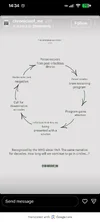
No one is actually claiming you are afraid to be active in those kinds of simple terms. The argument is the brain creates symptoms in response to some form of threat. The brain takes in all sorts of information you aren't aware of to assess threat (for everyone) and with some gets over-sensitized to creating symptoms to stop you doing things (see Lekander's book which breaks this down). So the fear is not necessarily known to you, although if you do things and crash, it's also to be expected moving would create fear. There'd be something wrong if it didn't - in this case it's understandable fear of symptoms that come FROM moving. And its something we target to teach the brain to stop creating the symptoms.
No one is 'accusing' you of anything. The fact that you think that is a sign BT needs to be better explained. BT isn't about 'thinking positively,' handing out money to any programme, or anything else like that. This research does touch on a particular mindset that most recovered people had to enter to get better, however. But there will be barriers to people getting there such as very justified mistrust.
*what exactly does she think the NHS treatment pathway is? It's pretty much the same approach she is claiming isn't being talked about.*
No, the NHS does not understand or teach BT. CBT is similar and can help some but it doesn't explain things in the way BT does. And this is why some meditate for years and still don't get better, because it misses out someone understanding WHY their symptoms are being generated, how to respond to them (see somatic tracking resources which are explained for free online) and how to use certain techniques repeatedly to calm symptoms down. Just relaxing is not BT. For one, BT is taking the approach that neurodiversity is a factor for many people with chronic symptoms, even if it can be hard to spot in yourself sometimes, and more work is on the horizon to explore this link more fully. Many people who recover realise afterwards that they are neurodivergent, in fact, having never known that might be relevant to them.
Schubiner's Unlearn Your Pain goes into detail as another book recommendation. It has 800 references and 750 names of recovered people in the back.