Save Caroline Roberts’ Life now: A very severe ME/CFS patient with high mortality risk

Chandelier

Senior Member (Voting Rights)
NHS Leicester.

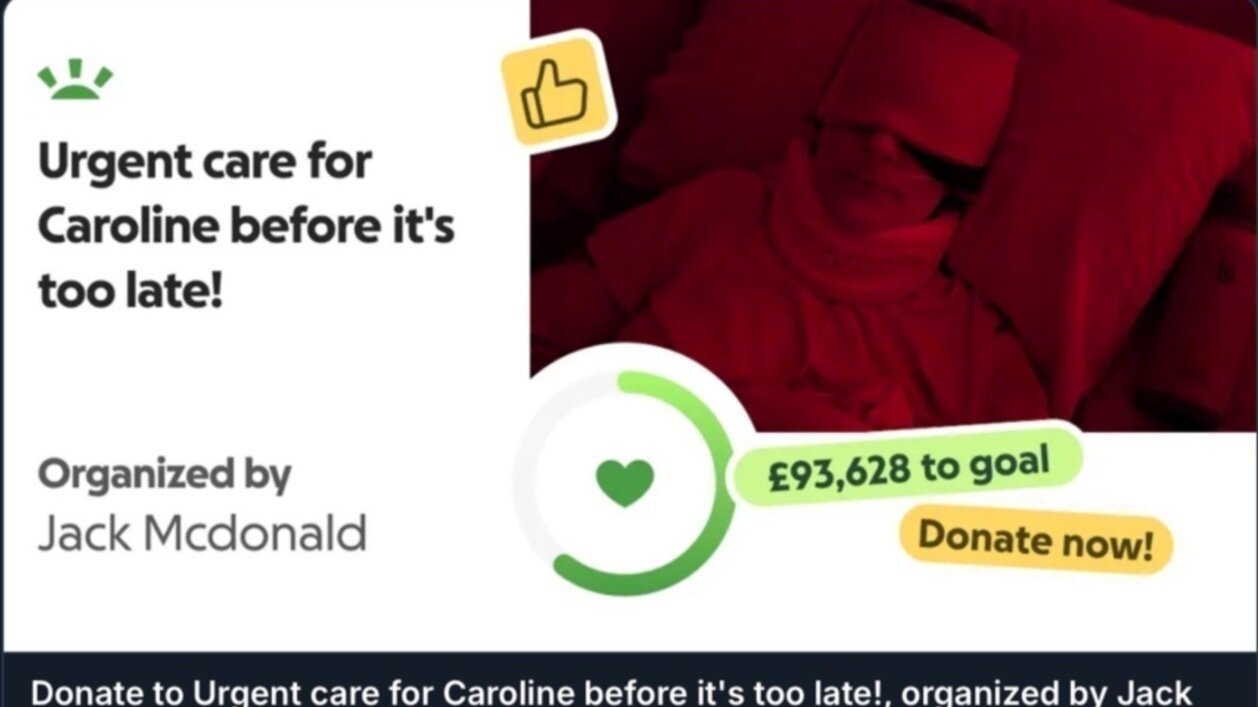
Caroline Roberts, once an active and loving mum to three, is suffering from very severe Myalgic Encephalomyelitis (ME/CFS).
This debilitating condition has left her entirely bed-bound, living in darkness, and in need of urgent medical care.
Just a week ago, Caroline was admitted to NHS Leicester Royal Infirmary Hospital in a worryingly deteriorated state due to inability to receive nutrition and hydration.
Unfortunately, instead of receiving the care she desperately needs, Caroline's condition has worsened due to inadequate care, and there is now a push from the hospital to discharge her prematurely while in a life threatening PENE/PEM crash.
This decision poses a significant threat to her life.

Myalgic Encephalomyelitis is a serious and chronic condition that demands comprehensive and compassionate care.
Patients like Caroline, who are severely ill, are at a high risk of complications and increased mortality without proper treatment.
It is alarming that Caroline is facing potential discharge without assessing the acute escalation in her symptoms properly.
The neglect in her medical care exemplifies a dire gap in understanding and treating ME/CFS by healthcare professionals, which cannot be overlooked.

Given this precarious situation, we call on the authorities at Leicester Royal Infirmary Hospital and relevant healthcare bodies to take immediate action.
Caroline needs a full review of her medical condition by a specialized ME/CFS team, appropriate and empathetic treatment, and assurance that she will not be discharged until it is medically safe to do so.
Comprehensive education for healthcare providers on ME/CFS is also crucial to prevent future cases of neglect.

Below is a template for emails to be sent directly to the hospital regarding Caroline’s care.
 
Her husband is posting on Instagram.

2 days ago:
Our only locally advocacy group has been unreachable for a week and the phone rings until you are disconnected!
Does anyone know of any other advocate group we can get in touch with ASAP!

2 days ago:
Verbally abused by The doctor the second I left to get a suitable breakfast as she's not being fed.
He would not leave her despite her saying She could not cope, she asked him to wait for me (her registered carer) to return, he refused, then proceeded to try and administer another neurological exam after being told it was well past her capacity.
Huge adrenaline dumping has left her in shock and immense pain. they want to discharge despite being worse than when she arrived.
We have no idea what we are meant to do.
 
Last edited:
Seems to me that in the case of a severe ME pt needing hydration and nutrition there needs to be a specialized professional team that administers advanced therapies (enteral and parenteral feeding, IV hydration) at the patient's home.

Otherwise, you run into the scenario above.

Of course, training and subsidizing this type of in-home service is another matter. Does something close to this exist in the UK or could parts of it be done at home vs in-hospital (do the radiology bits in hospital, brief episodes)?
 
Last edited:
Without wishing to comment overmuch on individual cases this situation appears to share many of the same features that we have seen in other cases - the all too common disbelief and/or hostility towards a patient with ME/CFS from those in the NHS; the involvement of private practitioners brought in to 'defend' the patient and their diagnosis but perhaps contributing to a breakdown in trust due to their own spurious mechanistic ideas involving hEDS, MCAS etc - all in the context of ongoing feeding difficulties.

Amongst other things the reference to fluoroquinolones seems confused. Oxycodone, pregabalin and duloxetine are not quinolones & as far as I'm aware the only quinolone medications in modern use are antibiotics.

There is now a real need for some form of guidance on the management of severe ME/CFS and associated feeding issues - a solution that is mutually acceptable to patients with severe ME/CFS and the NHS - ideally involving at-home supportive medical care run out of a hospital trust, rather than at GP/PCN level, with the avoidance of unnecessary admissions. There is the e-learning module but it doesn't constitute the kind of formal guidance that a trust would be expected to take into account. Every month or two we see more petitions along very similar lines; something very fundamental needs to change.
 
Devon & Exeter seemingly devised protocols after Maeve Boothby O'Neill's death- why are these not being adopted elsewhere?
I suspect in part because they were not particularly good but chiefly because they would go against the policy dictated by British Society for Gastroenterology - discouraging support for 'functional' cases.
 
I have raised the issues raised here with Shepherd, Chowdhury, and ForwardME members including Karen Hargreaves and representatives of other advocacy groups. So far I have not had an acknowledgement of the conflict generated by the sort of disinformation Nightsong mentions.

I don't see any progress being made until advocacy groups see both sides of the problem.
 
Back
Top Bottom