Sleep-Disordered Breathing Among Women With Fibromyalgia Syndrome, 2006, Shah et al

forestglip

Moderator
Staff member
Sleep-Disordered Breathing Among Women With Fibromyalgia Syndrome

Shah, Mansi A.; Feinberg, Stanford; Krishnan, Eswar

Background
In clinical practice, polysomnograms (“sleep studies”) are seldom ordered for patients with fibromyalgia, although sleep issues dominate the symptom complex. One reason for this is the lack of understanding how information from these studies could aid clinical decisions.

Methods
The authors conducted a chart review of one rheumatologist’s community-based practice where polysomnograms were offered routinely to all women who met the American College of Rheumatology criteria for fibromyalgia. Interpretation of these standardized protocol-based polysomnograms was performed by a board-certified neurologist using standard criteria.

Results
Mean age of the study subjects (n = 23) was 45 (standard deviation, 7.8) years. Median body mass index was 27 kg/m2 (interquartile range 20–48). These women had poor sleep with many arousals (median arousal index 23), apnea–hypopneas (median apnea–hypopnea index 22, interquartile range 17–30). Desaturation was common with half the patients having nadir oxygen saturation less than 87%. Restless legs were detected in polysomnograms among many women who clinically denied it (mean leg movement index 5.8).

Conclusions
A large proportion of women with fibromyalgia in a general rheumatology practice had sleep-disordered breathing, which can be detected using sleep polysomnograms. Studies are needed to examine if treatment of the commonly detected sleep apnea will have a beneficial effect on symptoms of fibromyalgia.

Web | DOI | JCR: Journal of Clinical Rheumatology | Paywall
 
I thought it'd be worth looking at this study, noted by @nataliezzz in another thread as showing a very high prevalence of sleep disorders in fibromyalgia:
e.g. in the below study - arguably a pretty representative sample - consecutive female fibromyalgia patients in a rheumatology clinic (all meeting ACR fibro criteria) were offered PSG; 40% (23) underwent PSG. 19/23 (83%) had an AHI >15; unspecified how many had milder OSA but it looks like 100% had OSA based on the graph), mean apnea index was 0.83 and mean hypopnea index was 30.6.
 
nataliezzz said:
arguably a pretty representative sample - consecutive female fibromyalgia patients
"Consecutive" is useful when all of the consecutive patients participate. If less than half of the patients participate based on voluntarily choosing to do a sleep study, then it's not representative, and is probably skewed to people with sleep issues.
Paper said:
All cases of FMS identified in a community-based single-specialty rheumatology office during the period 2003 through 2004 were eligible to be included in this study. These patients fulfilled the criteria for FMS proposed by the ACR.2 Formal polysomnography was offered to all patients with FMS and 40% (n 24) of those patients agreed to undergo polysomnography.
 
Though even if the study is not representative, it does seem to show that at least around 40% of fibromyalgia patients at a rheumatology clinic have sleep apnea. And since at least some of the 60% who didn't participate likely also have sleep apnea, the prevalence is probably higher than that.

So it does seem like a high prevalence of sleep apnea in fibromyalgia.
 
The full article is paywalled so I am not sure whether the results in Fibromyalgia were contrasted with a control sample or population norms. It would be interesting to know what levels to expect in different populations with other long term disabilities.
 
The full article is paywalled so I am not sure whether the results in Fibromyalgia were contrasted with a control sample or population norms. It would be interesting to know what levels to expect in different populations with other long term disabilities.
There's no control group, but they say other studies have shown a prevalence of 4%.
Our study did not have a control group (patients without FMS). However, previous studies have shown nearly 4% prevalence of sleep-disordered breathing in randomly selected females. 22,23 Much higher prevalence of SA (83%) in our population of females with FMS indicates a likely association between these 2 conditions.
22. Young T, Palta M, Dempsey J, et al. The occurrence of sleep-disordered breathing among middle-aged adults. N Engl J Med. 1993;328:1230–1235. https://doi.org/10.1056/nejm199304293281704
23. Boissevain MD, McCain GA. Toward an integrated understanding of fibromyalgia syndrome. I. Medical and pathophysiological aspects. Pain. 1991;45:227–238. https://doi.org/10.1016/0304-3959(91)90047-2

I'm not sure why the second paper is cited, from the abstract, but the first one seems to be be studying a sample intentionally chosen to have higher than average rates of sleep disorders, which I think means the 4% might be an over-estimate.
This investigation was based on a random sample of state employees in Wisconsin. A two-stage sampling scheme, designed to optimize the study's precision by oversampling subjects more likely to have sleep-disordered breathing, was used to construct a cohort representing a wide range of sleep-disordered breathing.

Note: l'm not sure from a quick skim what the 4% is based on. It seems that the prevalence in women was either 2% or 9%, depending on definition:
The estimated prevalence of sleep-disordered breathing, defined as an apnea-hypopnea score of 5 or higher, was 9 percent for women and 24 percent for men. We estimated that 2 percent of women and 4 percent of men in the middle-aged work force meet the minimal diagnostic criteria for the sleep apnea syndrome (an apnea-hypopnea score of 5 or higher and daytime hypersomnolence).
 
There's no control group, but they say other studies have shown a prevalence of 4%.

I'm not sure why the second paper is cited, from the abstract, but the first one seems to be be studying a sample intentionally chosen to have higher than average rates of sleep disorders, which I think means the 4% might be an over-estimate.

Note: l'm not sure from a quick skim what the 4% is based on. It seems that the prevalence in women was either 2% or 9%, depending on definition:
The full article is paywalled so I am not sure whether the results in Fibromyalgia were contrasted with a control sample or population norms. It would be interesting to know what levels to expect in different populations with other long term disabilities.

@forestglip @Peter T I think it's pretty difficult to definitively state what the approximate prevalence of OSA in the general population is, but I definitely think it's higher than 4% (of course even with a uniform definition of OSA, it is likely to be different in different countries/over time with varying rates of obesity/other risk factors).

I just made a thread on this paper: Obstructive sleep apnea is a common disorder in the population—a review on the epidemiology of sleep apnea that found "the prevalence of obstructive sleep apnea (OSA) defined at an apnea-hypopnea index (AHI) ≥5 was a mean of 22% (range, 9-37%) in men and 17% (range, 4-50%) in women in eleven published epidemiological studies published between 1993 and 2013." Some of these studies oversampled suspected OSA patients or habitual snorers, so this will obviously impact the results.

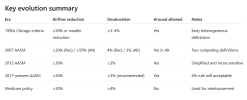
One thing that makes this whole thing difficult is that hypopnea criteria have changed over time, and different sleep centers/research groups may still use different criteria for hypopnea. Also, most sleep studies are still visually scored (it's pretty easy to clearly identify an apnea, since that's a complete/near complete cessation of airflow, but I'm not sure how reliable scoring of hypopneas is when you're looking at reductions in airflow that are close to whatever cutoff is used - 30% now, 50% in the past): The below is from ChatGPT about how hypopnea criteria have changed over time (I have not verified all of it, I will come back and verify it's all accurate later when I have time) - "arousal allowed" refers to whether the airflow reduction terminating in an arousal is sufficient to score it a hypopnea, or whether it must include an oxygen desaturation (of ≥3% or 4% depending on criteria):
1772920555786.png
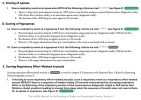
Here are the current American Academy of Sleep Medicine scoring guidelines for apneas, hypopneas, and respiratory effort-related arousals (RERAs) - UARS is often diagnosed as AHI <5, RDI (respiratory disturbance index - AHI + RERA index) ≥ 10, but it varies between sleep clinics and many do not score RERAs or diagnose UARS at all:

1772920306585.png
 
Last edited:
"Consecutive" is useful when all of the consecutive patients participate. If less than half of the patients participate based on voluntarily choosing to do a sleep study, then it's not representative, and is probably skewed to people with sleep issues.
True. However, if you were going to a study like this of ME/CFS patients using IOM criteria, it would be impossible for them not to have sleep complaints since unrefreshing sleep is a required criteria for ME/CFS in IOM criteria (and "sleep dysfunction* – unrefreshing sleep or disturbances in sleep quantity or rhythm" is required in CCC criteria, unless the illness began with an infection: "*There is a small number of patients without pain or sleep dysfunction, but no other diagnosis fits except ME/CFS. A diagnosis of ME/CFS can be considered in these cases if the illness has an infectious onset."). Still, as long as there is a self-volunteering process, you could still be biased towards those with more severe sleep complaints.

From this paper: 14 [out of 23] patients had complaints related to sleep. The most common complaints were insomnia, excessive daytime somnolence, and nonrestorative sleep. Nine patients reported restless legs.
 
Last edited:
Back
Top Bottom