Only one month so far:
Only one month at 100mg. It seems like she had no response during titration—probably 25, 50, 75 and then 100mg. It seems a little strange that she had no response until she hit exactly 100mg—but life is strange.

Only one month so far:

Preferential capture is a biochemical principle that has to do with receptor binding affinity to a ligand. It is a real phenomenon but the basis for invoking it here with such confidence and claiming that it causes cells to be functionally "starved" of GR activity is...entirely unsubstantiated.Can someone explain the bolded part? It seems to be a key part of the reasoning. What does «preferentially captured» mean, and is that something that actually happens?

Thank you!Long story short: as far as anecdotal evidence goes it's theoretically plausible that this person's health is affected by this mutation and that the drug did something to counteract it, I just don't think the biological explanation for why can be trusted

11 or 12% is the frequency of the allele. Everyone has two alleles. So out of all the alleles in a population (twice the population), how many are C? That's the allele frequency.It also seems a bit weird to me to place the entire illness on one fairly common mutation. Wasn’t it 11 % or something?
Even a common mutation could be relevant if the mutation worsens a problem that is already under strain from the disease state. That might explain things like how two people end up with very similar disease presentation, except one has debilitating OI as a primary symptom and the other doesn't. But yeah, I don't have faith it would explain the entirety of the illnessIt also seems a bit weird to me to place the entire illness on one fairly common mutation. Wasn’t it 11 % or something?

Yeah I am confused by this -- I often see genetics papers mention the location and gloss over which allele was the 'bad' one. Maybe it's obvious to experts for reasons like forestgliph said.How is this paper even ofninterest id the don’t say which alleles the patient had
Not advocating for it, but you could get your whole genome sequenced. My sense is, unless the gene is a well established risk factor for some disease, there often isn't a specific test just for it.What is the best commercial kit to test for this gene? Thanks.
I think that reference genomes are assembled from bits and pieces of genetic code of different people. So if those people have the minor allele, that's what gets included in the reference. Looking at DecodeME's Table 3, two of the eight lead SNPs are like this, where the reference allele is the minor allele.I guess C is the 'reference' allele even though it is more rare than the alt allele T. Is that unusual? I guess sometimes your reference genome just happens to contain the more rare variant?
Hopefully if and when it gets peer-reviewed, someone will ask that it be explicitly specified. But it seems to me the paper is saying the variant she has causes valine to be substituted into the gene.I contacted the author and asked which alleles the patient had, ahe said she think it was TT. That’s confusing, so she probably remembers it wrong? Because TT is the common type
The rs5522 variant results in a valine substitution at codon 180 in the MR N-terminal domain.
The minor allele frequency is approximately 12% in European populations, meaning approximately 20-25% carry at least one copy of the variant (2).
She probably forgot and mixed it up?!Hopefully if and when it gets peer-reviewed, someone will ask that it be explicitly specified. But it seems to me the paper is saying the variant she has causes valine to be substituted into the gene.
The C allele causes a valine substitution. T leads to the gene having isoleucine instead.
Also, the paper says:
If by "the variant", the paper means the same variant the patient has, then that frequency of 20-25% would match with having at least one copy of C, not T. Closer to 99% of Europeans have at least one T.
Yes. The Katsu paper outlines this substitution. I180vShe probably forgot and mixed it up?!
She said it gets peer reviewed ib 2 weeks!

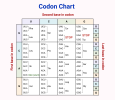
As far as I can tell, 23andMe reports based on the positive strand, and on the positive strand at this location, T is the common allele and C is the minor allele.With respect. You are not understanding how 23 and me reports the raw data.
rs5522 SNPAs far as I can tell, 23andMe reports based on the positive strand, and on the positive strand at this location, T is the common allele and C is the minor allele.
Can you please explain how you determined that T is the minor allele or codes for valine?
Thanks for the reply, @DonnellanP. I work with sequencing data regularly.With respect. You are not understanding how 23 and me reports the raw data.
The complementarity of nucleotides is C=G and T=A, and NR3C2 is a negative strand gene. So A/A reported on the positive strand means T/T in the negative (protein coding) strand. Would you mind sharing what the raw 23 and ME data said? Was it A/A or G/G?They report opposite strand
A/G (forward strand) = T/C (reverse strand)
TT = GG on forward strand