Stress-inducible WASF3 regulates brain metabolism and cognitive function 2026 Syed, Hwang et al

I don't think it did, but maybe the association is between a regulatory sequence to WASF3 and ME/CFS, rather than WASF3 itself and ME/CFS.

A regulatory sequence affects how much of the gene product is made. That could lead to a tendency to overexpress WASF3 and be more likely to suffer the disruption of energy metabolism.

WASF3 could also be dysregulated because the proteins that regulate it are dysregulated.
I don't quite follow - almost all GWAS hits are to regulatory sequences, often some way from the gene (though on the same stretch of chromosome) not the protein coding part of the gene. Or do you mean a hit on a gene or its product that indirectly regulates the WASF3 gene? GWAS rarely identify a gene directly, but point to the key DNA sequences on a chromosome. It would presumably be possible to see if the DecodeME ones are anywhere near WASF3, or its regulators if known.

None of the genes that DecodeME suggested are possibilities were hits to the protein coding regions.The idea is that researchers can look at DecodeME results to see if there is a link to genes of interest. Apologies if I have misunderstood.
 
I don't quite follow - almost all GWAS hits are to regulatory sequences
I wasn't aware that most GWAs hits are on regulatory sequences. That's disappointing.

Maybe there is an more indirect association. WASF3 expression is also regulated by cellular processes and the genetic association might be with these processes. Is there a way to check for these more indirect genetic associations? By more indirect association I mean something like this?

GWAS hit on regulatory sequence that influences a protein or some process which in turn influences WASF3 expression.
 
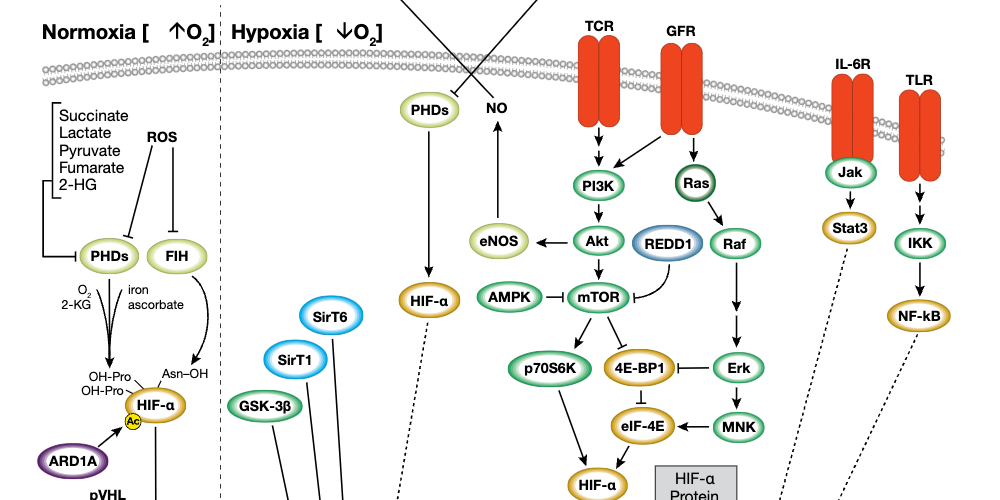
Hypoxia.


PKM2 has it's place, it's true, but the dimer form can cause excessive upstream glycolysis intermediates. One intermediate that refers to is lactate.


"On the other hand, the PKM2 dimer has a lower catalytic activity and cannot produce pyruvate at a normal rate, resulting in accumulation of upstream glycolysis intermediates."

Hypoxia where though? In the whole body? I don’t see a way that it would fit a systemic thing as I was discussing
 
Hypoxia where though? In the whole body? I don’t see a way that it would fit a systemic thing as I was discussing
I don't know how to answer that question.

Below are two points I will expand on later, It's 7:55 here and it's been a busy day. Also, my dog is whining. I will try to fill in later.

Lactate Administration Reproduces Specific Brain and Liver Exercise-Related Changes​


Role of PKM2-Mediated Immunometabolic Reprogramming on Development of Cytokine Storm​


PKM2, glycolysis, due to hypoxia
Excess lactate production
Lactate buildup in brain and liver
I guess what I am getting at is that these things that you have linked are tissue specific events. The crux of what I was saying is that I am not sure of the relevance of studies of peripheral tissue to a proposed mechanism in brain in the absence of a systemic driver and I am not sure that hypoxia is a good candidate for a systemic driver.

More importantly this is all not so relevant for the current study I think. Thinking about what the specific results in this study mean in context of brain is specifically what is important
 
Okay. I have skimmed the paper. The take home message is that WASF3 levels in the brain are associated with cognitive performance. I am not sure what the relationship may be with other features of ME/CFS. How would this tie into PEM? I would suspect that manipulating any of thousands of different proteins in the brain could affect cognitive performance. The looming question is the relevance to ME/CFS. The first paper is interesting but needs to be replicated. There are things in this second paper framed as definite statements which I would argue are too confidently stated relative to evidence (eg: "the mitochondrial dysfunction in patients with ME/CFS").

tldr WASF3 relevant to cognitive performance. Whether its overexpression in brain in pwME is a feature of the illness remains to be seen
 
From the study:
"These findings identify WASF3 as a mediator linking endoplasmic reticulum (ER) stress to brain bioenergetic dysfunction and suggest that targeting ER stress-WASF3 signaling may alleviate cognitive symptoms in ME/CFS and related postviral fatigue disorders more broadly."

Endoplasmic reticulum (ER) stress is caused by conditions that disrupt normal ER function and lead to the accumulation of unfolded or misfolded proteins in the ER lumen.

Some possible areas to work on:

Primary Triggers of ER Stress
  • Hypoxia: Low oxygen levels impair cellular energy and protein-folding capacity.
  • Nutrient Deprivation: A lack of glucose or essential nutrients starves the cell of resources needed for proper protein processing.
  • Oxidative Stress: Perturbations in the cell's redox status damage molecular machinery and interfere with disulfide bond formation in proteins.
  • Calcium Imbalances: Disturbances in intracellular calcium storage and regulation disrupt the function of calcium-dependent ER chaperones.
  • Increased Secretory Load: Overexpression of proteins or high demand for protein synthesis (such as in insulin-producing pancreatic beta cells) can overwhelm the ER's folding capacity.
  • Genetic Mutations: Inherited or acquired mutations can produce abnormal proteins that fail to fold correctly.
  • Viral Infections: Viruses hijack host cell machinery to synthesize large amounts of viral proteins, exceeding the ER's capacity.
  • Ischemia and Reperfusion: Restricted blood flow and the subsequent return of oxygen can cause severe cellular and metabolic insult to the ER
 
Back
Top Bottom