Uncovering the genetic architecture of ME/CFS: a precision approach reveals impact of rare monogenic variation, 2025, Birch, Younger et al

Wyva

Senior Member (Voting Rights)
Camille L. Birch, Brandon M. Wilk, Manavalan Gajapathy, Shaurita D. Hutchins, Gurpreet Kaur, Donna M. Brown, Tarun K. K. Mamidi, Kathleen S. Hodgin, Alp Turgut, Jarred W. Younger & Elizabeth A. Worthey

Abstract​

Background​

Myalgic encephalomyelitis/chronic fatigue syndrome (ME/CFS) is a disabling and heterogeneous disorder lacking validated biomarkers or targeted therapies. Clinical variability and elusive pathophysiology hinder progress toward effective diagnostics and treatment. Core symptoms include persistent fatigue, post-exertional malaise, unrefreshing sleep, cognitive dysfunction, and pain. We tested whether an individualized, “n-of-1” genomic and transcriptomic framework combined with comprehensive, participant-informed phenotyping could reveal molecular signatures unique to each patient.

Methods​

Clinical-grade whole-genome sequencing was conducted in 31 affected individuals from 25 families, with RNA-seq performed on a subset (16 affected, 7 unaffected) using blood samples. Machine-learning assisted variant triage, transcript-aware damage prediction, and expert review identified pathogenic or likely pathogenic variants in 8 of 25 probands (32%) and 12 of 31 affected individuals (39%).

Results​

Findings revealed marked genetic heterogeneity, including large-effect rare and more common variants. Implicated pathways included ATP generation, oxidative phosphorylation, fatty acid oxidation; regulation of glycolysis, amino acid and lipid turnover; ion and solute homeostasis; synaptic signaling, excitability, oxygen transport, and muscle integrity, resilience, and post-exertional recovery; previously implicated processes. Plausible modifiers influencing disease onset, severity, and relapsing–remitting patterns and possibly explaining intrafamilial variability and inconsistent findings across studies, were also identified. Despite gene-level diversity, downstream effects converged on impaired energy production, reduced stress resilience, and vulnerability to post-exertional metabolic failure; disruptions consistent with core ME/CFS symptoms of exertional intolerance, cognitive fog, and fatigue.

Conclusions​

Our findings support the hypothesis that at least a subset of ME/CFS cases represent distinct molecular disorders that converge on shared physiological pathways. Validation in larger, more diverse cohorts will be essential to test this hypothesis and establish generalizability, but increase size alone is unlikely to resolve causation in a disorder defined by rarity, heterogeneity, and molecular complexity. We suggest that progress will require experimental designs that integrate individual-level genomic data with deep, participant-informed deep phenotyping, capturing the combined effects of rare and common variants and environmental modifiers on disease expression and progression. We believe that an individualized precision medicine framework will uncover molecular drivers and modifiers of ME/CFS previously obscured by heterogeneity, enabling biologically informed stratification, improved trial design, biomarker discovery, and targeted interventions in this historically neglected condition.

Open access (full text downloadable in PDF): https://link.springer.com/article/10.1186/s12967-025-07586-w
 
Inclusion criteria required a confirmed diagnosis of ME/CFS meeting the Fukuda 1994 definition[2], with additional cutoffs for moderate fatigue severity and frequency proposed by Jason and colleagues (2014) to reduce misclassification[15]. Primary symptoms must have been present for at least 6 months.
Fatigue severity and frequency were assessed using the DePaul Symptom Questionnaire, a standardized and widely used self-report instrument specifically developed for ME/CFS characterization[16]. While it enables structured evaluation of symptom presence, frequency, and severity, its reliance on retrospective recall may introduce variability or recall bias.
Disease severity was further quantified using a single self-report item from the Brief Fatigue Inventory[18], which measures fatigue on a 0–10 scale (0 = no fatigue; 10 = fatigue as bad as imaginable); all participants reported at least moderate fatigue of severity ≥4.
I think there is a real possibility that they might have picked out some misdiagnosed patients.
All affected individuals met Carruthers and CDC diagnostic criteria for ME/CFS.
I’m not sure if Carruthers refers to CCC or ICC, but neither are the Fukuda criteria that they mentioned earlier. Edit: CDC = Fukuda
 
Last edited:
On Twitter, many of us have placed our trust in Amatica and its RNA sequencing. I know it's not popular here, but we have 120 patients with LC and MECFS and 60 controls. It's a start. In one month we will have the data.
In any case, the results of this study are frightening... this heterogeneity is truly problematic.
 
In any case, the results of this study are frightening... this heterogeneity is truly problematic.

I am not sure why 'genetic heterogeneity' is problematic. We assume that we are dealing with differences in genes and that these are likely to mostly have small contributions to disease causation.
I am unclear how you can draw any conclusions from rare gene variants in a small population. They may well be irrelevant.

I have not read the whole paper but the abstract tells us nothing useful and seems confused.
 
Yeah, it's confusing. In other places, they refer to Carruthers. One refers to CCC, one cites ICC:

Diagnostic criteria such as the Fukuda, Canadian Consensus (Carruthers), and International Consensus Criteria define the condition
based on hallmark features.
we converted the Carruthers et al. ME/CFS diagnostic criteria[2] into HPO terms
[2] is ICC.
 
I don't know the field well enough to give an informed opinion by my impression is that the study has picked up rare variant in genes associated with a random mix of genetically determined conditions, which you would expect in any cohort. The cohort seems to have been recruited online, which is problematic because such cases are likely to be atypical. The use of Fukuda seems unnecessarily imprecise.

It would be useful to have a view from Chris Ponting on this. But I think there are regular members here who may be able to shed light.

I may be wrong but I didn't see any control group?
 
may be wrong but I didn't see any control group?
No idea what this actually means, maybe the figure will tell us more when it’s published:

Participants
We enrolled 25 probands (38 individuals; spanning 31 affected participants and 7 healthy first-degree relatives). This included five affected-unaffected duos, three all-affected duos/trios, two trios with mixed unaffected/ affected individuals, and 15 singletons.

All affected individuals met Carruthers and CDC diagnostic criteria for ME/CFS.

All probands and all but one affected individual were female; this male participant was included as an affected son in a mother–son duo.

The mean age was 46.8 years (41.5 for affected participants, 71.7 for unaffected relatives).

Race and ethnicity self-reported at enrollment agreed with that estimated from WGS data, showing a predominantly European cohort, with six individuals of substantial African ancestry and three with significant American admixture (Supplemental Figure 2).

Disease onset ranged; eight in childhood, six in adolescence, nine in their twenties, and eight in their thirties. Sixteen reported gradual onset (four with identified exacerbating events), while 14 reported sudden onset: five with identified precipitating infections, six with non-infectious events, and three without any identified event.

One participant did not complete the questionnaire but provided information via phone and in-person screening.

All unaffected first-degree relatives were confirmed asymptomatic by interview and questionnaire.

DNA and RNA were extracted and sequenced for all; due to sample storage issues at HudsonAlpha, samples were lost and RNA-seq was completed for 16 affected and 7 unaffected participants.
 
The premise of the paper is basically asking: “Could a group of genetics researchers pull something out of the grab-bag of potentially pathogenic variants that every living human walks around with and come up with an educated guess for why participants X Y and Z might have [insert clinical symptom] and participants A B and C do not.”

Unsurprisingly, the answer is yes they can. Beyond this basic question, there are several parts of the analysis where I’m just not sure what the reasoning was.

If you wanted to do this systematically, you would likely need thousands of participants with extremely detailed symptom information. And it still wouldn’t give you much information about the etiology of ME/CFS at all—it might just enable us to predict something like “under the physiological strain of the ME/CFS disease state, what genetic factors make some pwME more likely to end up with OI or rapid muscle weakness as one of their primary symptoms?”
 
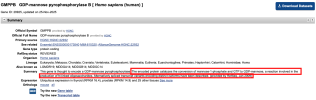
One more data point suggesting N-Linked glycosylation defects. From the study, we read noting GMPPB below :


These included thyrotoxic periodic paralysis (KCNJ18), fatty acid oxidation disorders (HADHA, ACADM), glycogen storage disease (ENO3), Gitelman syndrome (SLC12A3), cobalamin deficiency (MMACHC), erythrocyte and hemolytic disorders (SPTA1, SLC4A1, G6PD), and structural or metabolic myopathies (COL6A3, MYH7, GMPPB). This overlap reinforces the biological plausibility of the variants identified and their relevance to participant phenotypes

and

Participant 26, who noted greater pain and broader symptoms also had a pathogenic GMPPB variant affecting α-dystroglycan glycosylation[107,108]. Resulting dystroglycanopathies are typically early onset recessive, but can be later onset and milder with exercise intolerance, cramps, myalgia, fatigue, and progressive weakness, triggered by illness, pregnancy, or exertion[107–109]. This participant also had a pathogenic CFTR variant and VUSs in HAGHL and FCRL1[110–113].

And looking closer at GMPPB we see N-linked oligosaccharides :


GMPPB-N-linkedglyc.png


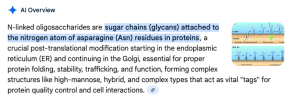
and asparagine + ER Stress, coming up . Again :


Screenshot 2025-12-25 at 09.44.15.png
 
Am confused because if these identified mutations are truly pathogenic, they would be a major finding and tell us something important about common misdiagnosis of ME/CFS pathology.

But looking up mutations for the first gene, KCNJ18, shows that are "seldom pathogenic" as this paper concludes.
Kuhn M, et al. J Neurol Neurosurg Psychiatry 2016;87:49-52.
https://www.uni-ulm.de/fileadmin/we...ublikationen/2016_HypoPP-KCNJ18_Kuhn-JNNP.pdf

For example, the first mutation, p.Gln407Ter (also known as Q407X) was first though to be pathogenic, but this 2016 paper showed it was likely not the case. The same is true for other KCNJ18 mutations mentioned. This ME/CFS paper by Birch et al., however, labels them as: "pathogenic: definitive", which seems quite misleading.
 
For the other mutations listed in the table, the patients were heterozygous so they had only this mutation only once. Suspect that most diseases that they associate with these mutations are recessive: they only manifest if people have two of these mutations without normal back up copy.

So not sure how relevant it is that patients had one mutation if it only causes the full disease if you have two.
 
For example, the first mutation, p.Gln407Ter (also known as Q407X) was first though to be pathogenic, but this 2016 paper showed it was likely not the case. The same is true for other KCNJ18 mutations mentioned. This ME/CFS paper by Birch et al., however, labels them as: "pathogenic: definitive", which seems quite misleading.
I am not sure if this is relevant, but I think KCNJ18 is a potassium ion gene, as is KCNJ2. They certainly sound similar. Mutations in KCNJ2 are massively pathogenic. We are talking about a major channelopathy when the KCNJ2 variation is at play.
 
Last edited:
Mutations in KCNJ2 are massively pathogenic.

The problem @ME/CFS Science Blog is highlighting is that if these gene variants are pathogenic then presumably the individuals concerned do not have ME/CFS but have some other disorder like a channelopathy that has been misdiagnosed. If they are not pathogenic they may mean nothing.

There is of course an in-between scenario where the gene variant predisposes to ME/CFS if other factors are in play. The problem with this is that we have no evidence for that unless these variants are turning up statistically significantly too often. But in this study there are no statistics because all we have are individual rare gene variants and everybody has a few of those (I think I read that most of us have about 100 in fact).
 
For example, the first mutation, p.Gln407Ter (also known as Q407X) was first thought to be pathogenic, but this 2016 paper showed it was likely not the case. The same is true for other KCNJ18 mutations mentioned. This ME/CFS paper by Birch et al., however, labels them as: "pathogenic: definitive", which seems quite misleading.
Apparently the labeling of pathogenic variants is known to be pretty fraught—even the ones pretty well-established to cause a hereditary disease can be called into question when someone is found with a homozygous mutation and is not sick. Outside of a few projects like Biobank and All of Us, people really only get screened when they are presenting with unexplained symptoms [edit: or have multiple sick family members and a reason to be worried], so that obviously introduces a lot of bias.

For the other mutations listed in the table, the patients were heterozygous so they had only this mutation only once. Suspect that most diseases that they associate with these mutations are recessive: they only manifest if people have two of these mutations without normal back up copy.
Like the paper mentions there is some evidence of heterozygous mutations becoming deleterious under conditions of stress—not causing the disease from the homozygous mutation, but being associated with things like worse outcome during stroke, increased likelihood of dementia, etc.

It’s theoretically possible that a heterozygous mutation might make someone more likely to present with a specific constellation of symptoms when they already have ME/CFS—but what’s presented in this paper is solely a bunch of guesses at causal links (largely based on unsubstantiated a priori assumptions on what pathways are likely to be involved in ME/CFS symptoms)
 
Last edited:
The problem @ME/CFS Science Blog is highlighting is that if these gene variants are pathogenic then presumably the individuals concerned do not have ME/CFS but have some other disorder like a channelopathy that has been misdiagnosed. If they are not pathogenic they may mean nothing.

There is of course an in-between scenario where the gene variant predisposes to ME/CFS if other factors are in play. The problem with this is that we have no evidence for that unless these variants are turning up statistically significantly too often. But in this study there are no statistics because all we have are individual rare gene variants and everybody has a few of those (I think I read that most of us have about 100 in fact).
Thank you.

But if these numbers are representative, then - assuming my math is correct - one out of eight ME/CFS cases alone can be attributed to a single variation of channelopathy. One out of 8. And how many variations of channelopathies are there? I have a daughter who taught graduate stats at Duke, which is a pretty good school. I know she doesn't know because nobody knows; we have sunk no meaningful monies into research. But I suspect the numbers could be significant.

Do these findings at least hint that the Australian school might have some merit?

One out of eight. Are these not-ME/CFS? Are there more of what we call ME/CFS that are not ME/CFS? Is that just the ratio for a single brand of ME/CFS? Or an indicator that true ME/CFS is rarer still? Or is it not even a thing??
 
Last edited:
Back
Top Bottom