United Kingdom: ME Association governance issues

It says that he is a GP in Essex.

aha:


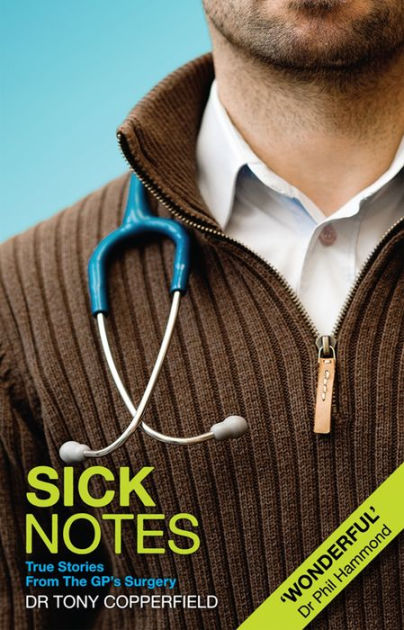
Dr Tony Copperfield is pen-name of two British doctors - Dr Keith Hopcroft and Dr Martyn Hobley - who are GPs.
 
This is very confusing. Are we pond life, or are we victims of gaslighting? I was so pleased to read the article in Pulse that at last tells the truth about the whole psychobehavioural nonsense pushed in ME/CFS, Long Covid, FM and pain clinics in the UK. The emperor has no clothes and Copperfield is prepared to say so.
Isn't that a wholly good thing?
 
Interesting and refreshingly self-aware.


Some patients. But other forums are filled with people who think the treatment is in the next supplement. Or people who don't read about ME/CFS every day like us. They got sick, the doctor says there's a name for it, and they expect the doctor to do something to make them feel better.
They are looking for the cures because no doctor has told them that they aren’t any cures. You’ll always find some people that are unwilling or unable to accept their ill health with no treatments, but that number can be drastically lowered if the doctors did their job.

Edited for accuracy.
 
Last edited:
I think the Pulse article perfectly encapsulates the way that ME/CFS is perceived and framed by many doctors – that the primary problem is for the poor GPs who don’t know what to do with these inconvenient patients who block up their clinics, rather than the suffering of patients. That is why SW was embraced – he offered them a way to get rid of their patients.

From SW interview on The Life Scientific:
And as I got a bit older I had a stroke of luck that I went to Queens Square, The National Hospital for Neurology and that was in this fantastic hospital, surrounded by neurologists, so there were only three psychiatrists, and that’s when I really started to get interested in research, and that’s where I got interested in “chronic fatigue syndrome”.

And because these patients were being seen there. I have to be honest, and say nobody really liked them.
Fill transcript: https://meassociation.org.uk/2017/0...life-scientific-bbc-radio-4-13-february-2017/

Discussion of SW including that interview: https://www.s4me.info/threads/who-is-simon-wessely.9364/
 
There are a few doctors already taking a medical approach, like Binita Kane, but we need them to be responsible and pushing forward with proper studies.
As usual, I’m struggling to keep up. My unreliable memory tells me that you were critical of Binita when she appeared to be promoting micro-clot theories and experimental treatments. Do you feel she is pulling in the right direction these days?

And on the buildings side, we have the facilities. It is just that at present they are dedicated to treatment of leukaemia and the like. At UCLH there are single rooms that can be darkened and are sound proof. Nurses come in and out quietly and either alone or in pairs if the person needs lifting etc.. I have recent experience of this because poor Jo Cambridge spends a lot of time in just such a room.
Really sorry to hear that Jo is so poorly again.

There is a members thread about Jo here but the last post indicated that she was much better:
 
This is a strawman on patient expectations. The patients know there isn't a cure, they are seeking diagnosis and symptom relief. They want their condition accurately reflected in their medical records, having the guidance applied with good intent and for their doctors to represent properly how sick they are and apply their part in pressure to get real research done. Most importantly they want doctors to stop harming patients.

If the only reason they are denying diagnosis and symptom relief treatments and sending patients off to be harmed is because the conversation that it can't be cured is too hard than frankly the situation is not just that they are appalling, its worse much worse than that. Because telling people there isn't a cure is their job, the difficulty of that conversation in no way validates this behaviour at all.

Wow just wow.
It's also completely transparent bullshit. Physicians have to deal with this every day. Well, most of them anyway. People die of diseases medicine can't do anything about every single minute. And about the only way we happen to end up dying because of this illness is the negligence. So they are actually making this problem far worse than it is, all to provide relief to themselves. By which they admit that they find relief in abandoning people to lifelong misery and early death, which is extremely disturbing. Even more disturbing is they don't even see anything wrong with admitting it. Even far more disturbing is that it can be admitted and it still changes nothing.

So even when they admit they're not honest about why they do this, they're not honest about why. They bullshit about why they bullshit. Which is normal, psychosomatic ideology is a system built entirely on lies with an ends justify the means approach. An approach that only ever leads to the same outcome: the means become the ends. Lies, the means, have become the end, the goal, so all they have is lies, even lying about lying.

There is no system that can succeed with even a fraction of this dishonesty. Not even minor systems. Not even a small cafeteria can function with a fraction of such blatant lack of integrity.

The one root cause to fix everything wrong in medicine starts with this, it's what unlocks everything: the truth, the whole truth and nothing but the truth. It's what would set everything else right, because everything wrong so obviously fails it, and everyone knows it because it's intentional.

This is an entirely human problem with a human solution. It has no natural limitations, nothing we can't fix, it's a purely made-up problem.
 
Last edited:
They are looking for the cures because no doctor has told them that they are any. You’ll always find some people that are unwilling or unable to accept their ill health with no treatments, but that number can be drastically lowered if the doctors did their job.
Which is perfectly normal given that there is zero meaningful support, professional or otherwise. A cure is the only good way out. The idea that sick people will just give up is so absurd that it's literally the main message about the behavioral treatments: "well, then, just give up and spend the rest of your life in bed", they will see to people literally seeking a cure from it.

If support were offered, along with the truth that no treatment exists, people would not continue to seek a cure. Medicine is refusing to solve a problem and essentially creates multiple problems as a result, all while making the original problem worse. It even makes them feel worse about it, but they refuse to change even though it's not even that they have the key to the solution, they closed the lock themselves and refuse to even admit that!

It's all so damn absurd. Nothing about this makes sense but it's impossible to even convince people that it must be fixed, even people who can plainly see this is all completely broken.
 
Perhaps this comment should belong in a different thread under advocacy, but it was inspired by reading through this thread.

Regarding the earlier comments on 'specialist' services for ME/CFS and it being a poor excuse for the cheap psychobehavioural BACME NHS clinics:

I have never understood why we need a specific or 'special' service either (as in just for ME/CFS or PVFS or PASC).

There are existing services that already do everything we need. That do exactly the "help me, not treat me" thing as mentioned earlier. All that it would require would be some up-to-date training within the services on ME/CFS from a biomedical viewpoint, including PEM and the dangers thereof.
(I'm using the term biomedical loosely only for the lack of a better and non-misconstrued word. I'm not suggesting the complete biobabble stuff, and I am aware there is little known pathophysiology).

Why do we not fall under Palliative Care / Hospice-at-home services?
ESPECIALLY for those severe to very severe?

ME/CFS meets almost all the eligibility criteria for palliative care.
:emoji_spoon: life-limiting illness: yes
:emoji_spoon: complex symptom management: yes
:emoji_spoon: holistic needs beyond routine medical care: definitely. (I'm not using 'holistic' in the style the BPS crowd do)
The only catches would be on definitions of "irreversible" and "progressive", and admissions to inpatient services determined by 'end of life'/terminal diagnoses.

Though a hospice admission as respite would be a far better environment for those with very severe ME/CFS to go when needing hospital care especially for feeding.

My personal vote is to scrap ALL the ME/CFS 'specialist services' in their entirety and amend palliative care / hospice at home services to include ME/CFS.

It would be an immediate solution to the lack of services for severe and very severe ME/CFS that would require very little investment. It wouldn't need a silly 10 year delivery plan.
Redirect all the funding that's currently going into specialist ME/CFS NHS clinics into additional training for palliative clinicians and staff in ME/CFS and PEM. (Not delivered from anyone involved in BACME). And the government would probably have money left over to spare.

I don't see why it couldn't be done. (Apart from the resistance from those invested in ME/CFS being "dysregulation" / functional / deconditioning / psychosomatic.)

Far more logical and economical to me - what does everyone else think?

Personally I think this would be a better option to campaign for than trying to 'fix' existing organisations and 'services', whose help is all worse than no help at all.
 
A very interesting proposal, @Elara Grey. Albeit several decades ago now, I have worked a lot with people with neurodegenerative conditions, and this approach makes sense to me for ME/CFS too.

Would it be worth having a thread to specifically discuss this? We have previously discussed whether models of service provision for MS or MND (ALS) would transfer to ME/CFS.
 
Yes, I agree palliative medicine is the most appropriate medical specialism for people with very severe ME/CFS. I think the suggestion has come up before and is worth making again.

But, even for life threatening diseases such as terminal cancer and motor neuron disease, I think palliative medicine only takes over in the later stages of the disease. There are other specialisms, oncology and neurology for example, which do the diagnosis and ongoing care in the earlier and milder stages.

Palliative medicine wouldn't have the resources and would not be appropriate, I think, to diagnose and oversee the care of people with mild or moderate ME/CFS. We therefore still need a medical specialism that is not rehab. medicine or psychiatry to take responsiblity for ME/CFS. Many people with ME/CFS never reach the stage of needing palliative medicine for their ME/CFS.

 

I think you're on the right track, but much of what makes the difference in hospices is good nursing. Hospices tend to be places that enable good nursing to happen, too. There are good nurses in hospitals who can't do the job the way they'd choose because there's twice as much demand as there are resources.

But there's also good nursing in some community settings. A former colleague has severe MS and a mate has a sibling with it, and they both praise the care they get. One of the important roles for their nurses seems to be joining up their consultant-led treatment, social care, aids and adaptations, and routine care for non-MS things. My parents' generation also got good nursing care when they were in their final years, some of it was outstanding.

Good nursing care for ME/CFS is achievable and could make a great deal of difference. For very severely ill people hospice care is the obvious answer—and there are precedents for people receiving respite care or treatment in hospices and then going back home, it's not only the final stages of terminal illnesses.
 
Yes, I agree palliative medicine is the most appropriate medical specialism for people with very severe ME/CFS. I think the suggestion has come up before and is worth making again.

But, even for life threatening diseases such as terminal cancer and motor neuron disease, I think palliative medicine only takes over in the later stages of the disease. There are other specialisms, oncology and neurology for example, which do the diagnosis and ongoing care in the earlier and milder stages.

Palliative medicine wouldn't have the resources and would not be appropriate, I think, to diagnose and oversee the care of people with mild or moderate ME/CFS. We therefore still need a medical specialism that is not rehab. medicine or psychiatry to take responsiblity for ME/CFS. Many people with ME/CFS never reach the stage of needing palliative medicine for their ME/CFS.
I don't know how much palliative care is directly funded by NHS and how much is carried out by charities' funding .
This may be interesting as it could be a cohort where staff education could potentially push things forward .
 
NHS palliative care is only a small part. I think there is an initiative to build new hospices in the future (maybe in the 10 year plan) however in the meantime Marie Curie have been closing down hospices.
Many people reporting the “virtual hospice at home” being used and it’s not good. The hospice with the chef preparing tempting, healthy, easy to ingest soups and smoothies has been replaced by staff dropping you supermarket style sandwiches in a box at home.
And at the very end, people are handed back over to the district nurse. Palliative care right now in the UK has gone downhill very quickly.
 
Back
Top Bottom