InitialConditions
Senior Member (Voting Rights)
Voluntary attention regulates acute immune responses in humans
Mizrachi, Nofar; Rottem, Menachem; Rozenkrantz, Liron
Abstract
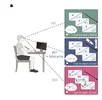
Abstract Attention is a central mechanism for prioritizing and shaping sensory information. For example, directing attention away from injury reduces perceived pain. Whether such cognitive modulation extends to downstream biological processes has remained unknown. Here, across three pre-registered within-subjects experiments using acute skin inflammation as a model system, we show that directing attention towards bodily sensations, compared to attentional distraction, produces markedly more regulated immune responses, with distinct temporal dynamics. This effect was highly consistent (~90% of participants across two independent cohorts) and substantial, with ~1.5-fold smaller responses under internal attention. Mechanistically, two complementary pathways emerged: a sensory-dependent route, in which attentional modulation of identical input scaled inflammatory magnitude, and a top-down route engaging parasympathetic vagal activity. These results establish attention as a cognitive mechanism capable of regulating immune function in vivo. Situated within predictive and allostatic models of brain–body control, our results reframe perception as biologically consequential rather than merely experiential.
Web | DOI | PDF | Nature Human Behaviour
Mizrachi, Nofar; Rottem, Menachem; Rozenkrantz, Liron
Abstract
Abstract Attention is a central mechanism for prioritizing and shaping sensory information. For example, directing attention away from injury reduces perceived pain. Whether such cognitive modulation extends to downstream biological processes has remained unknown. Here, across three pre-registered within-subjects experiments using acute skin inflammation as a model system, we show that directing attention towards bodily sensations, compared to attentional distraction, produces markedly more regulated immune responses, with distinct temporal dynamics. This effect was highly consistent (~90% of participants across two independent cohorts) and substantial, with ~1.5-fold smaller responses under internal attention. Mechanistically, two complementary pathways emerged: a sensory-dependent route, in which attentional modulation of identical input scaled inflammatory magnitude, and a top-down route engaging parasympathetic vagal activity. These results establish attention as a cognitive mechanism capable of regulating immune function in vivo. Situated within predictive and allostatic models of brain–body control, our results reframe perception as biologically consequential rather than merely experiential.
Web | DOI | PDF | Nature Human Behaviour