Voluntary attention regulates acute immune responses in humans, 2026, Mizrachi et al

InitialConditions

Senior Member (Voting Rights)
Voluntary attention regulates acute immune responses in humans

Mizrachi, Nofar; Rottem, Menachem; Rozenkrantz, Liron

Abstract
Abstract Attention is a central mechanism for prioritizing and shaping sensory information. For example, directing attention away from injury reduces perceived pain. Whether such cognitive modulation extends to downstream biological processes has remained unknown. Here, across three pre-registered within-subjects experiments using acute skin inflammation as a model system, we show that directing attention towards bodily sensations, compared to attentional distraction, produces markedly more regulated immune responses, with distinct temporal dynamics. This effect was highly consistent (~90% of participants across two independent cohorts) and substantial, with ~1.5-fold smaller responses under internal attention. Mechanistically, two complementary pathways emerged: a sensory-dependent route, in which attentional modulation of identical input scaled inflammatory magnitude, and a top-down route engaging parasympathetic vagal activity. These results establish attention as a cognitive mechanism capable of regulating immune function in vivo. Situated within predictive and allostatic models of brain–body control, our results reframe perception as biologically consequential rather than merely experiential.

Web | DOI | PDF | Nature Human Behaviour
 
In short:
Focusing on the internal sensation caused by the skin prick test was associated with weaker skin reaction and faster resolution of the skin reaction compared to distracting yourself from the sensations. They argue that the design allows them to prove causation.

This is the exact opposite of most BPS models, where sustained attention creates, sustains or worsens symptoms.
 
It is ironic that they are claiming *focusing* on the injury is good and makes it heal faster. That said...

I'm pretty skeptical of research of this form. There seems to be a whole subfield of psychology focused on this particular mind-body angle. Their experiments follow these steps: (1) induce very minor injury, (2) apply some mental task/manipulation to the participant, (3) report that the mental behaviour visibly influenced healing on the span of 20ish minutes. In this case the direction of effect was kind of funny for us (focus on pain = good), but they publish results in all directions. They tend to report strong effects at first glance, but on closer inspection things start looking a bit questionable.

For instance, in this study, I'm having a hard telling if (and how) the person measuring the wheal response was even blinded. They say:
A trained experimenter, blinded to experimental conditions, placed one drop of histamine (10 mg ml−1) and pricked the skin with a sterile allergy lancet [...]
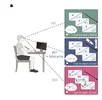
However this is the experimental set up (note the tiny ruler by the participant's arm, visually representing their measuring of the wheal with a ruler):
Screenshot 2026-08-17 at 9.19.38 AM.webp
Their trained experimenter measured the size of the wheal (raised bump) 5 times over 20 minutes as the participant was either watching distracting videos or 'focusing' on the itchiness of their new itchy spot. As far as I can see, they don't mention anything about preventing the wheal-measuring person from seeing the computer screen right next to them (or from seeing the participant's overall affect). Perhaps the measurer also found the video distracting? I don't understand how they would be blinded, short of some complicated set up involving curtains or horse blinkers which I guess they just forgot to mention in the paper.

From what I've been able to tell, the motivation for this line of research is that these folks think the placebo response is the mind literally causing a large healing effect, over a short time frame and in every context they look. They mention the placebo response motivation in their pre-registration and cite other papers like 'Pain reprocessing therapy vs placebo and usual care for patients with chronic back pain' as further evidence in their discussion.

I previously came across this field via a fight between some psychologists claiming that they could make bruises heal more quickly if they showed participants a clock that ran artificially fast, and some other researchers claiming this was bad science. They wrote a nice rebuttal here:
How Statistical Challenges and Misreadings of the Literature Combine to Produce Unreplicable Science: An Example From Psychology, 2024, Gelman
 
This is the exact opposite of most BPS models, where sustained attention creates, sustains or worsens symptoms.
I don't think results like this would upset many of the psychosomatic persuasion. I'd expect them to either selectively reference it as evidence for the power of the mind over the body, or find an angle to fit the observations within the infinitely flexibility of the larger BPS model.
 
Their trained experimenter measured the size of the wheal (raised bump) 5 times over 20 minutes as the participant was either watching distracting videos or 'focusing' on the itchiness of their new itchy spot. [...] I don't understand how they would be blinded, short of some complicated set up involving curtains or horse blinkers which I guess they just forgot to mention in the paper.
Would taking pictures be a viable option? Seems like that could eliminate some uncertainty, especially if made available with the data.
 
I don't think results like this would upset many of the psychosomatic persuasion. I'd expect them to either selectively reference it as evidence for the power of the mind over the body, or find an angle to fit the observations within the infinitely flexibility of the larger BPS model.
The paper even mentions PRT as an example of an intervention that according to them successfully utilises internal attention as one component of reducing pain.

Which completely ignores that PRT explicitly says that there is no peripheral issue, and there certainly isn’t any inflammation.
 
Was them scratching the bump controlled for? Could be that the ones focusing on the pain had no distraction and could focus on not scratching and making it worse, whilst the distracteds scratched without really thinking about it thus increasing inflammation.

Maybe that’s far fetched but I’m trying to think of reasons this result could be found.
Or as @ScoutB says given there’s papers going in both directions maybe its just noise/low quality study design.
 
Back
Top Bottom