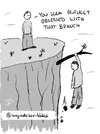
Wired Magazine: The Painful Truth About Long Covid

Oh the /r/covidlonghaulers sub-reddit has thousands of those. It would be far more interesting as a comprehensive analysis, because it makes all the specific attributions, especially the first 1-2 years where supplements were the big thing, all the more interesting, since no one pushing healing magic believes in those, and they effectively debunk their nonsense. Not that they'd care about it, but still.

We already know for a fact that a % recover after some time, then some % more after more time, and so on. All of which fully debunks the healing magic anecdotes, which somehow now matter, even though the people pushing them would be among the first to dismiss anecdotes that go against them as "just anecdotes". The data on this are more than good enough. Someone Levinovitz made the case in this thread that it's far more plausible to be some healing magic mechanism, rather than some chance process that occurs in most, with varying delays. Because humans are weird like that.

Even the /r/cfs sub-reddit has plenty of stories of remissions and some recoveries, though rarely full. It's plainly absurd how this is still somehow being discussed. We have been on the other side of the looking glass for a long time, and somehow the with queen still rules the land. Somehow.
I asked AI to scrape Reddit forums and estimate figures just from there. It’s totally unscientific but also interesting.
 
If you really knew the forum as well as you claim to then you would know we are equally critical of all studies. The standard here is that a study is relevant, robustly conducted, and honestly reported, not if it is a biological or psychological study. It is more than a little disturbing how many studies across medicine fail that basic standard. It is not our fault if psychological studies are the worst offenders, that is on the authors of those studies, not us for pointing it out.
On that topic, I often see people involved in academia, in completely unrelated discussions, mention how awful most medical research is. And that includes people in life sciences, like PhDs in biology. And they don't even mean topics where psychological standards are used, which are even far lower.

Of course that's mainly because medicine is uniquely difficult to study. Can't isolate much, can't stop and go time, can't pick apart the system being studied. All of which massively lowers its validity, but instead of acknowledging, and hedging the value of this limited research, it's being over-compensated by being confidently wrong, even more so when it comes to psychosomatic ideology. Which is comically the same thing LLMs do, and for which they get blamed for.

Medicine is by far the hardest discipline to research precisely because of the huge overlap between hard science, biology, and soft science, in the human experience, about which we understand almost nothing. But in the case of psychosomatic ideology, it is imposed, by force, coercively and assertively, precisely to overcompensate on how weak it all is.

This is how it does so much harm, because the causes might not be sociopolitical, but when there are no clinical solutions, all that remains are sociopolitical solutions: funding research and providing financial and social support, all of which overlaps with politics, with taxes, and is in direct conflict with the constant pressure the wealthy and powerful constantly exert, who would much rather this money go in their own pockets. And they almost always win. After all, they are perfectly civil, in their $5K suits and large limousines carrying them from their luxury office to their luxury apartment.
 
Last edited:
So it's not about some trial no one could know about being done on Pluto. It's about three trials--two into the Lightning Process, one into Gupta--into the very thing he says can't or isn't being studied.
I'm not sure it makes sense to separate out CBT as not being "mind-body", so we are talking about hundreds of trials, easily over 1K when casting a wide net, across several decades.

I personally can't really see any difference, but even the people peddling CBT all seem quite comfortable presenting their therapies as fitting the vague mind-body spectrum. It's not as if it has much else to go on, it's not even especially effective on the stuff it should be most effective at, such as phobias and addiction, so most of its application have been towards psychosomatic applications.

And while the GET-to-reverse deconditioning isn't strictly mind-body, most of its proponents can be made to agree, begrudgingly, that deconditioning isn't especially significant in most cases, they always heavily feature mind-body stuff, and are based on such models. GET is pretty always GET+CBT. And even the rehab without the mind-body stuff doesn't show much effectiveness anyway, but that's another issue.
 
Last edited:
I changed my mind after writing the VICE piece the same way you all do: I looked at lots of evidence.
I don't think the trials of the Lightning Process or Gupta prove much.
So when you say "lots of evidence", what do you mean? If not trials. Hundreds of which have already been done, and systematically showing less effect the more rigorous they are.
I also believe it won't matter if an excellent trial comes out. Let's say Donnino (who I talk about in the piece) runs his trial. It's rigorous, and we see a big effect size. Here's my prediction: This community will immediately tear it to shreds.
Well then you're in luck, there have been many such trials. None were excellent, in that they all start from the premise that it will work, too much bias, are not blinded, and in fact mainly consist of telling people to report themselves as better and then asking them whether they are better. Which is laughably bad, and the basis of this whole "tearing to shreds". PACE set their final recovery criteria below the entry criteria on one of their main assessments, which would lead to a failing grade in school. But none have produced a big effect size. You even said so right before, talking about how there might be a small subset. That's not a big effect. You're arguing something you know is false, contradicting yourself in consecutive sentences. It's stunning seeing cognitive dissonance work.

So, not very coherent as arguments go. Which is quite similar to the whole "GET for deconditioning but actually they're active enough not to be deconditioned" we are used to. We have seen all this crap before. It's just like the whole "the sun doesn't always shine" debate over renewable energy and climate change. It doesn't get any more true by being mindlessly repeated.
 
Last edited:
NICE agreed with the criticism of the PACE trial. NICE also stopped recomming CBT/GET. Was NICE bullied into submission by zealots or was the criticism justified?
The German equivalent, IQWIG, also did. They dismissed 97% of trials from analysis because they were of too low quality. They still recommended CBT and GET on the basis of a handful of trials, but when the near totality of an evidence base gets dismissed by authorities this way, you aren't dealing with a lunatic fringe who goes off on insisting that it's all crap because they're delusional.

The IOM/NAM 2015 report also agreed with this, saw no validity to the psychiatric framing. The NIH did study a few mind-body interventions as part of RECOVER. The trials failed. Every single trial has failed to show objective evidence of anything.

There is pretty much no topic taken seriously by experts that has ever been more thoroughly debunked by its own evidence. It's right there along with believing that renewable energy will never, ever work out. And somehow it just keeps on plowing ahead in a circle.
 
@Learningandlistening
Can I repeat some questions to you that you haven’t answered yet?

Do you believe in superstitions like black cats or broken mirrors meaning bad luck?

We’ve had thousands of years of superstitions, surely some of them would have to be right by now?

What about astrology? It can’t be all wrong - how unlikely would that be? Think of all those horoscopes.

If you don’t believe in any of those, can you explain how they are materially different from brain retraining and other kinds of anecdotes? Because I don’t see any differences myself.

——

And here is something I can tell you with unequivocal certainty, a foundational truth in my own area of expertise. Monomaniacal obsession with a topic, in a community of people who share the same obsession, when physical health and personal identity (yes! even if you don't see it!) are on the line — it is not conducive to finding the truth. There may be excellent expert discussions — the best 9/11 conspiracists knew more about concrete and steel beams than most engineers — but when it comes to truth-seeking, it is far from ideal.
Do you know me privately, Alan? Do you know what my interest are or what I spend my time doing? Do you see the books I read? The sports I follow? The people I talk to and the topics we discuss? Do you know what I think of when I rest?

Something that you might not have considered is that I just want to be healthy. I would do anything except cause harm to others in order to achieve that. I truly don’t care what ME/CFS is. I don’t care what the solution is either. I just want to find it so I can get my life back. So I might be able to have children. So I won’t miss the weddings of my siblings or the funerals of my family members that are slowly dying without me being able to be with them. So I don’t have to be the mill stone around the necks of my carers.

I don’t care what I am now. If I’m completely delusional I want to know it. If I’m psychotic I want to know it. Deconditioned. Stuck in brain loops. I don’t care. Because whatever it is, I don’t want to have it anymore.

So please help me understand what it is you’ve understood. Please show me the evidence you speak of. If it’s sound, I want to know.
 
The German equivalent, IQWIG, also did. They dismissed 97% of trials from analysis because they were of too low quality. They still recommended CBT and GET on the basis of a handful of trials,
IQWIG doesn't recommend GET.

Have to check but I think generally, they don't recommend any treatment I think, they just assess the evidence for a beneficial effect and gauge it with the evidence for negative effects. With GET, they concluded that the potential negative effects outweigh he potential beneficial effects for which, as you say, they found no robust evidence anyway -- [Edit: ] especially they doubt that the alleged statistical significance in a few studies correspond with a meaningful clinical signifcance.

Link to IQWiG press release on their ME/CFS report: https://www.iqwig.de/presse/pressemitteilungen/pressemitteilungen-detailseite_93184.html
 
Last edited:
I can't resist a little diversion into something unrelated that this article reminds me of. I'll put it in a spoiler so as not to distract from the thread topic, though I think it's relevant.

I have long observed that people who are academics in the arts and social sciences study and write about topics such as diseases and their treatment in a very different way than scientists do.

I got some feel for where this comes from when I did some undergrad study of Arts subjects, having only previously studied maths and sciences. At school I wasn't very good at English lit essays because I though I had to get a 'right answer'. I discovered on the undergrad course that there wasn't a right answer, the point was to make a structured argument of my choosing and to provide relevant quotes to support it.

I was shocked when I wrote an essay in which I argued that Friar Lawrence in Romeo and Juliet was an evil and foolish man, not a wise monk, and the lecturer gave me a very high mark. He said he disagreed profoundly with my argument but I had written it well and given appropriate quotes to support it. This was a revelation to me.

I would have done much better in an Eng Lit exam at school if I had realised that I could say what I liked about a poem so long as I wrote a structured essay in good English and with appropriate quotes. Instead I was afraid I had misunderstood the poem and crossed out my answer.

I have since been able to see that so many articles and research papers by social scientists and arts academics about ME/CFS follow the same pattern. Think up a theory, howevery preposterous, then find and quote 'evidence' to support it. Find ways to dismiss all evidence that contradicts it even if that means misrepresenting or exaggerating that evidence. Find some anecdotes to give 'colour' to the piece, and hey presto, you have a publishable article.

What you don't have is scientific accuracy.

As some decent science researchers have reminded us, if you want to show a scientific theory has validity, don't waste your time on supporting anecdotes. Dig deep in every direction you and your colleagues can think of to try to disprove your hypothesis. Only when you have run out of ideas of ways to disprove and none do so, you can start thinking there may be something in your hypothesis.

There is a gaping chasm between these two approaches.
Oh that's perfect. Who wrote this?
 
I'm not sure it makes sense to separate out CBT as not being "mind-body", so we are talking about hundreds of trials, easily over 1K when casting a wide net, across several decades.
true, but the article was about not being able to do studies of mind-body interventions. there's no argument, it seems about the ability to do CBT/GET studies. Given that so many of those are done, and those researchers also complain that they are harassed and abused by patients, it's hard to see how the same group of patients is responsible for or capable of shutting down mind-body research and not CBT/GET research. Maybe funders should get the blame, not patients.
 
true, but the article was about not being able to do studies of mind-body interventions. there's no argument, it seems about the ability to do CBT/GET studies. Given that so many of those are done, and those researchers also complain that they are harassed and abused by patients, it's hard to see how the same group of patients is responsible for or capable of shutting down mind-body research and not CBT/GET research. Maybe funders should get the blame, not patients.
Live Landmark is currently doing a large and publicly funded LP study in Norway. It was intended to be part of her PhD project, and the position was funded by a friend in power in municipality if I remember correctly.

When the study was evaluated by the national ethics committee, Signe Flottorp, the then head of research at the National Institute of Public Health in Norway, tried to privately lobby the new member of the committee, urging them to approve this very important research project. It was approved eventually, with both the first and second leader voting against it due to the massive conflicts of interest.

A few years earlier, Flottorp tried to pressure the National Research Centre for Complementary and Alternative Medicine (a national, government-funded research and information centre, assigned by the Norwegian health authorities), when they put out a warning against using LP based on reports of harm.


Wyller has already done two trials of MBRT, and have received millions to do even more.

Reme has been funded by the Norwegian Cancer Association.

Fink is being funded by the insurers.

But this goes way beyond the funders, as e.g. Hunt have documented.
 
The use of the term "BPS" is not intended as some kind of dismissal of the entirety of psychology or psychiatry or philosophy; it is usually used in ME/CFS spaces specifically to refer to psychobehavioural models of ME/CFS such as the cognitive-behavioural model in which the illness is claimed to be maintained by psychological factors and deconditioning.

It is the responsibility of those making claims of cures to justify their claims to an scientifically acceptable standard. The onus is on them. Asking members to address anecdotes from people claiming to feel better as a result of this or that programme is pointless; there is no actionable information, at least none that is not commercially gated. If there are trials that we're unaware of I'm sure there would be many members interested in looking at them.

Some patients may say on social media that they would prefer more or less of this or that type of research. We shouldn't forget, though, that they are not the ones making funding decisions. By contrast, I have heard of more than one attempt by psychobehaviourally-aligned clinicians to stymie biologically focussed research into ME/CFS, and more than one attempt to interfere with the academic career of a critic.

It is not as if it is difficult to obtain funding for psychobehavioural trials - we see several, usually of dreadfully poor quality, every year. Not just for CBT, either - we've seen trials for ACT and psychodynamic therapy and EMDR and other more obscure therapies being funded. Those that have been conducted to date haven't shown any robust evidence of efficacy. If "mind-body" ones are being rejected by funders the proposals must be utterly dire; standards are so very low already.

The "mind-body" practitioners seem to confine themselves to a commercial niche where the 'evidence' consists of unverifiable anecdotes and closed social-media groups from which critical voices are excluded. That is not how scientific progress is made.

Governments, funding bodies, medical societies & Royal Colleges have been very heavily influenced by psychosomatic ideas and that remains the case to this day. The institutional influence and power that critics & ME/CFS patients wield is entirely negligible by comparison.
 
If I cannot appeal to your head, Alan Levinovitz, perhaps I can appeal to your heart.

Imagine for a moment, if you will, someone about your age who had the misfortune through no fault of their own, to get struck down by ME/CFS at age 16. Imagine, instead of the university and working and family life you and I experienced, they are still stuck at home with an equally sick parent. Imagine them able today to sew a few embroidery stitches before heading defeated back to bed, imagine being reduced to tears by being too sick and exhausted to eat their dinner. As I scraped their dinner into the bin and took them a liquid meal replacement instead, I thought of you.

I wondered whether, like me at about your age, you might be struck down by ME/CFS or Long Covid and have your career and family life blighted by it. Imagine trying everything you can to get better, including CBT, exercise programs, brain training and some more esoteric alt med, and like me, ending up sicker than ever.

Now imagine reading your article. Imagine your family, carers, doctors reading it. Imagine them accusing you of not trying hard enough, imagine them turning away from you and leaving you unsupported because they believe you don't want to get better, or worse.

Think it possible you are wrong, Alan Levinovitz.

It's not too late to reverse course again. If you are really williing to listen and learn as your chosen forum handle implies, you may be surprised. You may even have a revelation. You may even do some good.
 
Last edited:
as do all of us, just trying to exist.
Sorry to say it but you and your theories are nothing new, nothing special. We have heard it all before and it's tiresome. Try going to 'search forum', tags and 'bps' (biopsychosocial).
'
A good point to start with is George Faulkner's analysis on how insurance companies made use of both investigators embracing the BPS model of ME/CFS (and other illnesses) and the distortion of evidence these investigators produced by applying questionable research practices. For the bigger picture see also the thread where it's posted:
Faulkner, George (2016), In the Expectation of Recovery, Centre for Welfare Reform, https://citizen-network.org/uploads/attachment/492/in-the-expectation-of-recovery.pdf

See also Hilda Bastian's first PLOS blog post on ME/CFS :


And there's a members-only thread I started a while ago which I just remembered and thought the introductory bits could explain why so many doctors like the BPS approach. So apologies for another self-quote:

This one-sided application of the BPS model seems to be a proliferation of the "mind over body" dogma and it appears to be very convenient for some actors in the health care system, especially insurers and state-funded public welfare and social security institutions.

But why is it also convenient for so many doctors? Potential reasons are being discussed on the forum most recently here:

https://www.s4me.info/threads/bps-attempts-at-psychologizing-longcovid.16013/page-3#post-276651

and here:

https://www.s4me.info/threads/making-and-managing-medical-anomalies-exploring-the-classification-of-‘medically-unexplained-symptoms’-2020-rasmussen.15941/#post-274400

I found the explanation given in the paper quoted in the latter thread most convincing:

"the biopsychosocial frame [...] manifested [general practitioners'] feelings of confidence and competence. This in turn made them [= general practitioners] feel empowered",

whereas

the "biomedical frame emphasised the lack of objective evidence, problematized subjective patient testimony, and manifested [general practitioners'] feelings of uncertainty, doubt and powerlessness. This in turn complicated [general practitioners'] patient handling".

If independent from the illness and the patient, a particular frame makes everything easier for the doctors and they feel more confident, competent and empowered than with another frame that only leaves everyone with uncertainty, then it might be understandable while more and more doctors opt for the former.

They could be interested in how the patients feel in this frame, but so many doctors think patients' reports aren't reliable anyway -- unless adequately "framed" by the doctor.
 
We use the term BPS because that is the term its proponents use ('biopsychosocial model'), and BPS is just convenient shorthand. We did not invent it. There is no hidden agenda over it from us. This is not complicated, nor of any significance.

The German equivalent, IQWIG, also did. They dismissed 97% of trials from analysis because they were of too low quality. They still recommended CBT and GET on the basis of a handful of trials, but when the near totality of an evidence base gets dismissed by authorities this way, you aren't dealing with a lunatic fringe who goes off on insisting that it's all crap because they're delusional.

The IOM/NAM 2015 report also agreed with this, saw no validity to the psychiatric framing. The NIH did study a few mind-body interventions as part of RECOVER.
The report from the Australian NHMRC* in 2019 also stated clearly that ME/CFS was not a psychological condition.

(*National Health and Medical Research Council)
 
S
If I cannot appeal to your head, Alan Levinovitz, perhaps I can appeal to your heart.

Imagine for a moment, if you will, someone about your age who had the misfortune through no fault of their own, to get struck down by ME/CFS at age 16. Imagine, instead of the university and working and family life you and I experienced, they are still stuck at home with an equally sick parent. Imagine them able today to sew a few embroidery stitches before heading defeated back to bed, imagine being reduced to tears by being too sick and exhausted to eat their dinner. As I scraped their dinner into the bin and took them a liquid meal replacement instead, I thought of you.

I wondered whether, like me at about your age, you might be struck down by ME/CFS or Long Covid and have your career and family life blighted by it. Imagine trying everything you can to get better, including CBT, exercise programs, brain training and some more esoteric alt med, and like me, ending up sicker than ever.

Now imagine reading your article. Imagine your family, carers, doctors reading it. Imagine them accusing you of not trying hard enough, imagine them turning away from you and leaving you unsupported because they believe you don't want to get better, or worse.

Think it possible you are wrong, Alan Levinovitz.

It's not too late to reverse course again. If you are really williing to listen and learn as your chosen forum handle implies, you may be surprised. You may even have a revelation. You may even do some good.
Trish,

thank you for that post, I hope Alan reads it.

I also imagine Alan Levinovitz may read your post and say to himself, "She doesn’t understand, I am not denying your sickness rather I am saying that for some people there are cures that involve mind training, etc.

If this is true, I say that Alan needs to recognize that he is participating here in a forum entitled, "Science4ME". We are trying to help advance the scientific understanding of ME/CFS. This involves evaluating published bio-medical papers that adhere to strict scientific and statistical guide rails. ANECDOTAL RECOVERY STORIES DO NOT QUALIFY AS SCIENCE. No matter how many you dig up and no matter how much you pontificate about them, they don’t qualify as science.

So Alan, just give us some actual vaild scientific detail and we can have a discussion. Perhaps it is best for you to start by understanding some definitions of the terms we use:

https://s4me.info/threads/science-for-me-fact-sheets.43310/
 
Back
Top Bottom