SugarSquared
Senior Member (Voting Rights)
A genome-wide association study identifies novel genetic variants associated with neck or shoulder pain in the UK biobank (N = 430,193)
Introduction:
Neck and shoulder pain are prevalent musculoskeletal disorders that significantly affect the quality of life for a substantial portion of the global population. Studies have shown that women are more susceptible than men.
Objective:
This study aims to discover genetic variants associated with neck or shoulder pain through a genome-wide association study (GWAS), using data from 430,193 participants in the UK Biobank.
Methods:
A genome-wide association study was performed adjusting for age, sex, BMI, and 8 population principal components. Significant and independent genetic variants were replicated by FinnGen.
Results:
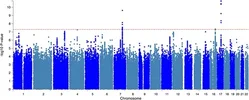
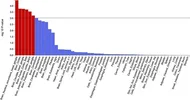
The primary GWAS revealed 5 significant genetic loci (including 2 novel) associated with neck or shoulder pain, with the most significant single nucleotide polymorphism (SNP) being rs9889282 (P = 2.63 × 10⁻¹²) near CA10 on chromosome 17. Two novel significant associations were detected on chromosomes 18 and 14, with the top SNPs being rs4608411 (P = 8.20 × 10⁻⁹) near TCF4 and rs370565192 (P = 3.80 × 10⁻⁸) in DCAF5, respectively. Our secondary GWAS identified a single novel genetic locus in SLC24A3 among males and 2 genetic loci (including one novel near LINC02770) among females. In the replication stage, the SLC39A8 locus was weakly supported by the FinnGen cohort. The tissue expression analysis revealed a significant association between brain tissues and neck or shoulder pain.
Conclusion:
In summary, this study has identified novel genetic variants for neck or shoulder pain. Sex-stratified GWAS also suggested that sex played a role in the occurrence of the phenotype.
Link | DOI | PDF | PAIN Reports | Open Access
Yiwen Taoa, Qi Pana, Tengda Caia, Zen Huat Lub, Mainul Haquec, Tania Dottorinid, Lesley A. Colvine, Blair H. Smithe, Weihua Meng
Introduction:
Neck and shoulder pain are prevalent musculoskeletal disorders that significantly affect the quality of life for a substantial portion of the global population. Studies have shown that women are more susceptible than men.
Objective:
This study aims to discover genetic variants associated with neck or shoulder pain through a genome-wide association study (GWAS), using data from 430,193 participants in the UK Biobank.
Methods:
A genome-wide association study was performed adjusting for age, sex, BMI, and 8 population principal components. Significant and independent genetic variants were replicated by FinnGen.
Results:
The primary GWAS revealed 5 significant genetic loci (including 2 novel) associated with neck or shoulder pain, with the most significant single nucleotide polymorphism (SNP) being rs9889282 (P = 2.63 × 10⁻¹²) near CA10 on chromosome 17. Two novel significant associations were detected on chromosomes 18 and 14, with the top SNPs being rs4608411 (P = 8.20 × 10⁻⁹) near TCF4 and rs370565192 (P = 3.80 × 10⁻⁸) in DCAF5, respectively. Our secondary GWAS identified a single novel genetic locus in SLC24A3 among males and 2 genetic loci (including one novel near LINC02770) among females. In the replication stage, the SLC39A8 locus was weakly supported by the FinnGen cohort. The tissue expression analysis revealed a significant association between brain tissues and neck or shoulder pain.
Conclusion:
In summary, this study has identified novel genetic variants for neck or shoulder pain. Sex-stratified GWAS also suggested that sex played a role in the occurrence of the phenotype.
Link | DOI | PDF | PAIN Reports | Open Access