Thanks, I'll have a look into it.This is data from a single clinic in Minnesota.
Here’s an example where herpes drugs and antivirals is the first example of drugs used for ME/CFS according to a «literature based commentary».

You are using an out of date browser. It may not display this or other websites correctly.
You should upgrade or use an alternative browser.
You should upgrade or use an alternative browser.
Antivirals as an ME/CFS treatment (e.g. valacyclovir, valgancyclovir, amantadine)
- Thread starter Lidia Thompson
- Start date

Jonathan Edwards
Senior Member (Voting Rights)
Give me their names, please, so that I can fact check your claim.
Why should I give colleagues' names in this situation?
You will find reference to their use of antivirals in the archives of S4ME. Do your own homework.

I know that paper. It doesn't say anything about how many patients have actually tried herpes drugs and whether they benefitted.This is data from a single clinic in Minnesota.
Here’s an example where herpes drugs and antivirals is the first example of drugs used for ME/CFS according to a «literature based commentary».
It's a review of the pharmacological evidence for the treatment of ME/CFS that I took with me to my last appointment with my specialist to support my request for a prescription for valaciclovir because it concludes that there should be more research into herpes drugs.

Let's have a civil discussion.Why should I give colleagues' names in this situation?
You will find reference to their use of antivirals in the archives of S4ME. Do your own homework.
I had a look at all the hits for aciclovir on s4me. There doesn't exist any such information.
It then seems that also in the UK it is rare that doctors prescribe val(aciclovir) for ME/CFS and few patients have self-medicated with it. Just as that study from the US suggests.
I will conclude for now that above comments that suggest that val(aciclovir) is widely prescribed by doctors and/or regularly tried out by patients on their own initiative are exaggerated and create a false narrative around the use of herpes drugs in ME/CFS.
Jonathan Edwards
Senior Member (Voting Rights)
I had a look at all the hits for aciclovir on s4me. There doesn't exist any such information.
It then seems that also in the UK it is rare that doctors prescribe val(aciclovir) for ME/CFS and few patients have self-medicated with it. Just as that study from the US suggests.
I was not specifically talking of aciclovir. You might not find anything on that. I was talking of physicians who developed a special practice in ME/CFS in the UK. They have been referred to here and at least one has a thread. There have always been rather few and there may be almost none now, since these have retired. The great majority of people with ME/CFS will not have seen such physicians, so on an epidemiological scale, yes antiviral prescribing has been rare. Patients will not have self-medicated probably. But within the private ME/CFS physician circuit antivirals have been used.
There is reference to at least two physicians prescribing antivirals regularly either on S4ME or conceivably on Phoenix Rising before we moved over. We discussed these things several years ago. One of our regular members improved significantly after being given an antiviral. I know these physicians particularly well and they have described to me their preference for using antivirals. We are not talking of thousands of patients but it must be scores. Of note, the physician with the greatest enthusiasm repeatedly related that he had one major success with antivirals.
But things have changed, probably since the debacle over XMRV and the failed blinded study of valganciclovir (or valaciclovir, I forget ). As I say, these physicians are no longer in regular practice.
I am not sure why it matters since there have been trials and as far as I know they were negative in the end. Anecdotal reports don't get us far. I have not seen any enthusiasm for further antiviral studies recently, even from those who used them and we had a government working party specifically on the look out for drug repurposing options, which I think this would have fallen under.

Mij
Senior Member (Voting Rights)
I was prescribed Valtrex by a virologist over 25 years ago who saw patients with ME/CFS but it didn't make any difference in my fatigue symptoms. Some of his patients felt improved from taking antivirals, so there are subgroups that benefit.
I had all the DNA/RNA PCR testing but nothing came up positive, my lymphocytes are well below normal range so this indicates that my immune system isn't keeping viruses in check. I'm in the subgroup that experiences reactivations of herpes viruses quite often, so taking antivirals will help symptoms when they reactivate, but won't rid my body of the viruses.
It's a temporary 'fix'.
I had all the DNA/RNA PCR testing but nothing came up positive, my lymphocytes are well below normal range so this indicates that my immune system isn't keeping viruses in check. I'm in the subgroup that experiences reactivations of herpes viruses quite often, so taking antivirals will help symptoms when they reactivate, but won't rid my body of the viruses.
It's a temporary 'fix'.
Mij
Senior Member (Voting Rights)
I should also mention that the virologist prescribed Imunovir that reactivated EBV and HHV6 in my case. He did a small ME/CFS study with Imunovir and the results showed patients felt less 'fatigue', but I'm of the subgroup who should never taken immunomodulators b/c it caused a terrible relapse.
I demanded the prescription because during that time period it was the 'flavour of month' for ME/CFS.
I demanded the prescription because during that time period it was the 'flavour of month' for ME/CFS.

Covidivici
Senior Member (Voting Rights)
I followed the Putrino/Pridgen protocol (Valacyclovir + Celecoxib for 120 days; Paxlovid for 15 days)
No benefit.
No benefit.

ukxmrv
Senior Member (Voting Rights)
I was first prescribed Amantadine by an ordinary UK GP(!) In the late 1980s.
Then Valtex by a private doctor about 15 years ago. It made a difference to the hot dry deep painful burning in my legs and spine at night. My episodes of sore throats and glands lessened. The bouts of shingles i had been getting stopped.
There were several private or NHS doctors prescribing it around 10 years ago. I don't know if any of them are still doing this. They may have all retired or given up.
My (very poor) memory was that anti viral drugs were discussed on the old MECFSExperimental Yahoo group. Patients in the group were having the drugs prescribed in the USA or the UK or buying them online.
This discussion continued on Pheonix Rising with patients swapping names of online pharmacies and discussing different antiviral drugs.
When I lived in Australia there were doctors prescribing the Valtrex/Celebrex combo which I found really helped me with pain.
It seems as if discussion on antiviral drugs went out of fashion.
It's been like this for decades. A potential treatment becomes popular, lots of people try it with varying degress of response, any papers are discussed, then discussion of it stops when only a few report any real success.
Then Valtex by a private doctor about 15 years ago. It made a difference to the hot dry deep painful burning in my legs and spine at night. My episodes of sore throats and glands lessened. The bouts of shingles i had been getting stopped.
There were several private or NHS doctors prescribing it around 10 years ago. I don't know if any of them are still doing this. They may have all retired or given up.
My (very poor) memory was that anti viral drugs were discussed on the old MECFSExperimental Yahoo group. Patients in the group were having the drugs prescribed in the USA or the UK or buying them online.
This discussion continued on Pheonix Rising with patients swapping names of online pharmacies and discussing different antiviral drugs.
When I lived in Australia there were doctors prescribing the Valtrex/Celebrex combo which I found really helped me with pain.
It seems as if discussion on antiviral drugs went out of fashion.
It's been like this for decades. A potential treatment becomes popular, lots of people try it with varying degress of response, any papers are discussed, then discussion of it stops when only a few report any real success.
Jonathan Edwards
Senior Member (Voting Rights)
It's been like this for decades. A potential treatment becomes popular, lots of people try it with varying degress of response, any papers are discussed, then discussion of it stops when only a few report any real success.
Your memory is better than mine but that is all much as I remember it.
Valtrex was on everyone's lips 10 years ago.

Ariel
Senior Member (Voting Rights)
I tried valacyclovir which is one of the few things that appeared to help me a lot particularly with physical PEM. Just chiming in as a lot of people reporting no effect. I am not claiming causation; it did appear to help a huge amount to the point I was able to go for walks again and do all kinds of things, but didn't help when I had a major relapse from covid. The drugs were very difficult to get, though; I know a lot of clinicians seem to use them but most refuse (rightly or wrongly). Just adding my experience. Could be coincidental obviously; really didn't feel like it at the time. One of the things that gives me hope is we may find something like this in the future to have this experience again.

Evergreen
Senior Member (Voting Rights)
I am working from memory here but my impression was that antivirals were being prescribed by many "ME/CFS specialists" particularly in US in 2010s. I remember Lucinda Bateman talking about them. If I recall correctly, Ron Davis warned against their use because they can damage mitochondria. I think that was during the Naviaux era. Edit: read more here.
This is from a 2014 primer by the "International Association for CFS/ME", authors below:
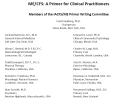
This is from a 2014 primer by the "International Association for CFS/ME", authors below:
Infections and immunological factors.
A number of viral, bacterial or parasitic infections have been found in some cases of ME/CFS (e.g., herpes viruses, enteroviruses, B. burgdorferi, mycoplasmas, G. lamblia).15 Based on clinical observation, the use of long-term antibiotics, anti-parasitics or antiviral therapy may be beneficial in patients where the presence of pathogens has been confirmed.
Although initial results of some new drug therapies for various viral infections in ME/CFS appear promising,85-89 treatment protocols are often complex and remain untested in controlled trials. In addition, adverse reactions, the development of drug resistance, and costs are significant concerns. Referral to a specialist who has experience in testing and therapeutic interventions for these subgroups of patients may be helpful. [my bolding]
Last edited:
Evergreen
Senior Member (Voting Rights)
Then in July 2020, the "U.S. ME/CFS Clinician Coalition" wrote:
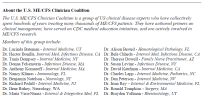
wrote this:
Note: In addition to these basic treatments, some disease experts are evaluating the selective use of antivirals and immune modulators in ME/CFS and have seen evidence of efficacy in some patients.
wrote this:

Evergreen
Senior Member (Voting Rights)
This is from the MEA's 2010 survey. The antivirals are the line "Inosine pranobex/Imunovir":Am I making this up, but did the UK MEA’s big purple book suggested that antivirals helped about 40% of people with ME. I can’t find my copy, but it must be getting on for twenty years ago that I read it. I have no idea what evidence this was based on.
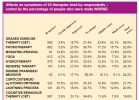
Excerpt only. Table continues in the survey doc.
Edit: Am adding the homeopathy line below for context:

So based on those figures, more report improvement with homeopathy than with antivirals, and more report deterioration with antivirals than with homeopathy.
Last edited:

Dr. Kaufman talks about prescribing antivirals to his patients in his podcast.
Earlier he talks about measuring antibody titers to viruses, so prescribing antivirals might be limited to those patients with high levels, though I haven't listened to the whole thing in detail.
Edit: I think his patient population is more broad than just ME/CFS, but they're included:
Edit: fixed spelling of name
There's four routinely used oral antivirals for these herpes family infections. Aciclovir, otherwise known Zovirax, famciclovir, otherwise known as Famvir, valaciclovir - Valtrex. [...] The fourth antiviral is valganciclovir or Valcyte. [...]
The first three, as I said, are unpredictably effective against EBV, but in general, I will routinely begin with one of those, because around half the time it seems to me it works even though it shouldn't be working. Meaning that the the EBV numbers start to come down and then maybe some perceived immediate benefit for the patient.
Earlier he talks about measuring antibody titers to viruses, so prescribing antivirals might be limited to those patients with high levels, though I haven't listened to the whole thing in detail.
Edit: I think his patient population is more broad than just ME/CFS, but they're included:
So it's pretty well-established that roughly two thirds of ME/CFS patients have an initiating event with a viral infection. [...] So the real question is how come I don't have ME/CFS, but my patients do, even though we both have EBV.
Edit: fixed spelling of name
Last edited:
Thank you all for all these interesting and useful comments.
I have finally found more ME/CFS patient knowledge around the long term use of (val)aciclovir responders over at Reddit.
There are about ten threads on questions around the drug in the past five years so I don't won't link them here. (Systematic research has always been a weak point of mine. So I am very happy that I have found out about this.)
For the moment I am just happy that there are more patients who experience the same as I. We all experience a full suppression of flares and a dissolution of exertion intolerance. Folks say things like, I am doing sports again, went back to work...
And there's no discussion of the drug losing its power after a while. That was particulary important for me to hear about more because I was warned by an infectologist that I'd risk the building of resistancies.
One patient claims that he/she's been on it in a very high dose (the shingles active flare dose of 3000mg a day) for seven years – and still alive
I have finally found more ME/CFS patient knowledge around the long term use of (val)aciclovir responders over at Reddit.
There are about ten threads on questions around the drug in the past five years so I don't won't link them here. (Systematic research has always been a weak point of mine. So I am very happy that I have found out about this.)
For the moment I am just happy that there are more patients who experience the same as I. We all experience a full suppression of flares and a dissolution of exertion intolerance. Folks say things like, I am doing sports again, went back to work...
And there's no discussion of the drug losing its power after a while. That was particulary important for me to hear about more because I was warned by an infectologist that I'd risk the building of resistancies.
One patient claims that he/she's been on it in a very high dose (the shingles active flare dose of 3000mg a day) for seven years – and still alive