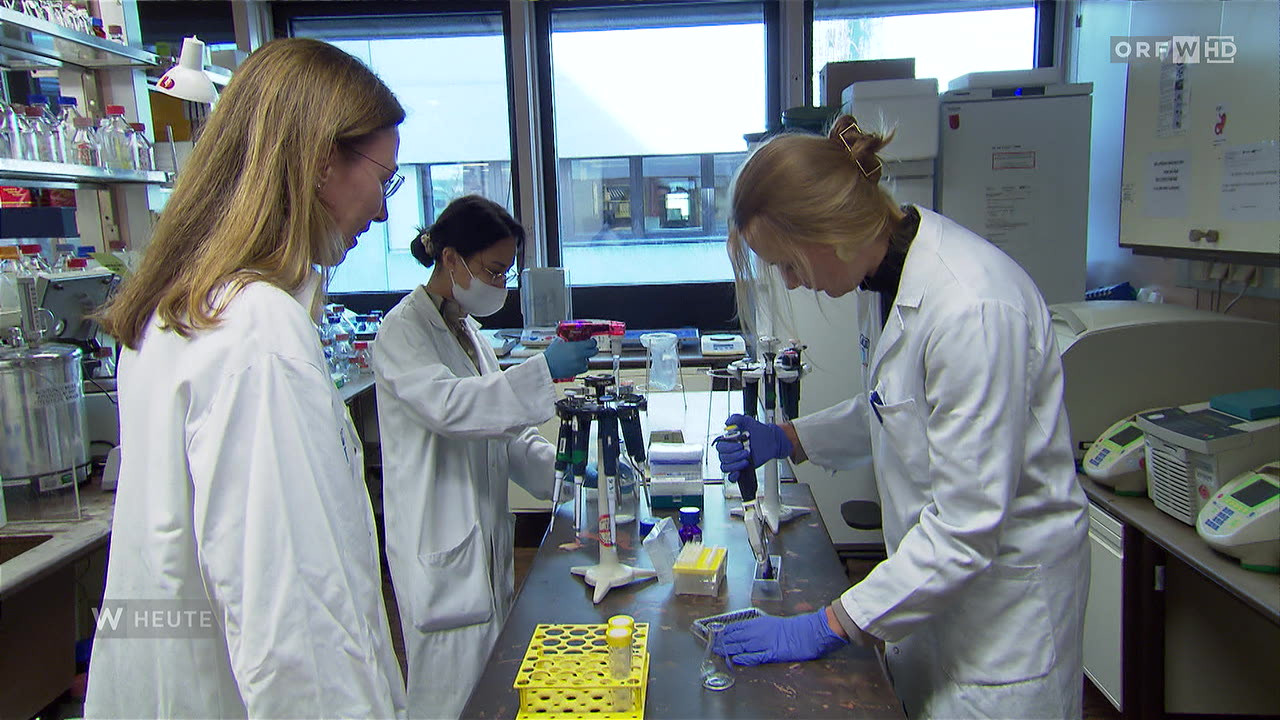
Austria: WE&ME Foundation

Hi all, thanks for sharing the overview of our activities in Austria. It has been a busy couple of years. I’d be curious to hear your view: how do we compare with other initiatives that are more locally embedded? Any thoughts on this?
There is the feeling of organization, continued effort, openness, and that authorities are more touch than they usually are (better informed?).

As an initiative it has its own unique character.
 
and I deeply appreciate what you and WeandMe are doing too!! It’s just that great.

Regarding the Decade, I personally have to feeling that BMFTR oftentimes does what the “German Community” and the patient organizations want.
In the beginning their focus was more on pathomechanisms and basic research but both the organizations and the community urged them to focus more on clinical trials so that’s what happened.

Patientorganizations are also part of the “Gutachterprozess” which is taking place right now.

Karl Lauterbach and Stephan Albani are shaping the Decade too a bit, from outside the Bundestag.

(I am from Germany)
 
Last edited:
@Silip - thanks a lot, highly appreciated. Speaking of the "Dekade": Any pointers on process, funding criteria, involved people, institutions?
As far as funding criteria are concerned, in my humble opinion they have set the bar too high. Up to now, as far as I know and the official criteria goes they have primarily sought to fund studies that are randomised, controlled and multicentre.

Of course, that is the scientific ‘gold standard’, but to me it makes no sense at this stage for a poorly understood condition such as ME, particularly the multicentre aspect. Often, we are still only at the stage of theoretical ideas and hypotheses, and these would first need to be tested in small-scale studies.

For me the same applies to any clinical drug trials, where it makes no sense to launch large multicentre trials straight away before there is any concrete evidence that a medicine might be effective.

Like @justlxsa said, certain German patient organisations have been pushing for more clinical trials, given that the Decade initially intended to focus particularly on basic research; although it is often unclear to me exactly what they had in mind in terms of which active substances should be tested.

I’m afraid there was a lot of wishful thinking involved, because regardless of what certain people claim, I can see very few active substances for which a large-scale trial into ME might currently be worthwhile (of course this could potentially change fast in 1-2 years) , and the small pilot studies aren’t funded, after all.

I believe this makes it all the more important that your initiative in Vienna, through its long-term funding of specific research institutions and projects, also enables small-scale studies to be carried out, in which new hypotheses and ideas can be tested.

 
I can see very few active substances for which a large-scale trial into ME might currently be worthwhile (of course this could potentially change fast in 1-2 years) , and the small pilot studies aren’t funded, after all.
Are they really not funding small scale clinical trials? That seems like madness. The only drug I can see that is crying out for a trial imo is Campath and giving a drug that serious to a large group straight off the bat would be unethical and potentially dangerous.

If researchers want to do a theraputic experiment that could possibly be used as a treatment (as opposed to e.g. buspirone where it just gives us clues) they will likely want to start small anyway. And with such government funding and interest you could likely move quite swiftly to a large trial. Which would be brilliant. But I don't understand why small experimental trials are not being prioritised in the clinical trial aspect of this stage of the national decade project.
 
Are they really not funding small scale clinical trials?
they will be. the next 2 funding guidelines will be on
- pathomechanisms
- clinical trials in earlier phases (the first funding guideline was phase 2b and 3 if I recall correctly)

that is where campath could be tested, at least if it will involve phase 2a- if we get a team that wants to trial it.
 
they will be. the next 2 funding guidelines will be on
- pathomechanisms
- clinical trials in earlier phases (the first funding guideline was phase 2b and 3 if I recall correctly)

that is where campath could be tested, at least if it will involve phase 2a- if we get a team that wants to trial it.
Ah right, I still don't understand why they started off with phase 2b and 3s - seems completely backwards!

I am not a scientist and base my desire to see a Campath trial purely on what others have said on here about it maybe being a good thing to use if T cells are involved in ME/CFS pathology. It's a serious drug and I'm not advocating for a trial of it lightly. It should be done properly by people who know what they are doing.

I think starting with a control group in a phase 2a would be really good for any repurposed drug we think has a good chance of working in order to give us more confidence and get it to people who need it quicker (wish Fluge and Mella had done this with daratumumab), but I don't know if it's feasible or practical to always do that.


A thread I started about the possibility of T cell targeting trials:
I asked this question in the BTN2A1/2 thread but don't want to keep clogging that thread up. So ill quote some of the things I said there here:


In a manner analogous to ritux/dara for a general and specific approach to B cells and then LLPCs, perhaps there could be a pilot looking at something like Campath that is more general and another looking at the monoclonal that specifically targets gamma delta T cells.

Would such a study struggle to get funded now? If so, what would convince funders? Would pharma companies be on board? etc

Perhaps it is still a little early for this, perhaps not, but I thought it might be good to discuss if it is time and what these trials might look like. Even if it isn't, if and when more evidence comes from the genetics or elsewhere, we can have an idea of what well designed T cell drug trials would look like, what the pitfalls and dangers might be, and who we would want running them.

General forum search on Campath:
 
From Twitter.
Machine translation:


Together with the WWTF and @Stadt_Wien, the WE&ME Foundation is supporting two research teams at the Medical University of Vienna, each with around one million euros.​
​
Lukas Haider and his team are investigating why, in people with ME/CFS, the energy supply to the brain and muscles fails when the body is deprived of oxygen. Matthias Wielscher and Kathryn Hoffmann are looking into whether some diagnoses may actually be caused by a rare genetic disease that has so far gone undetected.​
​
Two years ago, we launched our first small-scale projects with the WWTF. Both researchers now receiving funding had only just begun working on ME/CFS at the time. That was exactly our goal: to bring people into research who would stay.​
​
And there’s news for people affected: starting in 2027, Vienna’s first outpatient clinic for people with ME/CFS, Long Covid and similar conditions will open in Floridsdorf.​
​
Thank you to everyone supporting us on this journey.​
​
The ORF report is available on the ORF TVthek:​
​
#MECFS #WEandME #Forschung #Wien​


Machine translated title and text:

City of Vienna: "Vienna expands its pioneering role in ME/CFS research and care"

October 13, 2026


Two years ago, Vienna began specifically funding research into ME/CFS. Today, the results are evident: The Vienna Science, Research and Technology Fund (WWTF), together with the WE&ME Foundation, is awarding two Consolidation Grants of approximately one million euros each – the largest single grants for ME/CFS research in Austria to date. Mayor Michael Ludwig presented the projects today, Tuesday, in the Vienna City Hall's ceremonial hall, together with WWTF President Michael Häupl and Gerhard Ströck, Chairman of the WE&ME Foundation.​


Original article | Google Translate
 
I’d be curious to hear your view: how do we compare with other initiatives that are more locally embedded? Any thoughts on this?
Apologies, this is likely to be somewhat rambling. Your question was broad, so I've tried to take the highest level view I could on my opinions.

For me, WE&ME seem to have clear goals and clear ideas of how to achieve them. The perception that I have is that WE&ME have approached the situation with more of a business mindset and with the advantage of a certain level of secure financial backing, things the vast majority of organisations haven't had, and have therefore had to grow organically and with an almost inevitable lower level of focus.

Being relatively new means that you don't have a history with the patient community. This can be both a good and a bad thing; good as you might not have to live with poor decisions made by others many years ago, bad as you might not have built up such a good reputation.

I also don't get the impression that there are many initiatives like yours in Austria and neighbouring countries? In my opinion, in the UK we have too many organisations; I understand the historical reasons why but now there is just far too much duplication of effort, and currently you seem to avoid that situation.

I think it is inevitable that most forum members here will favour your science-led approach, and I think that as long as you retain a core focus on research, and of using science-led approach to anything else, then your activities will be viewed positively by the vast majority in the community.

Happy to be corrected if I have misunderstood anything.
 
Thanks for your feedback, Andy! I really appreciate the points you raise. Some thoughts on this
- fragmentation issue among organisations: this is an issue not solely within the ME/CFS space, we see this along many foundations across the world. high overheads, same small-scale activities, etc. Our approach at WE&ME will be to have the best and innovative funding process togeher with strong patient partners like s4me
-patient involvment: i have been active in this space for a couple of years in my previous work at the Ludwig Boltzmann Society and I'm aware of most of the issues around PPI and how to do this in a good way without being tokenistic. this needs to start with priority setting and decision-making processes BUT it also needs researchers on board that show permeability in their research. so the triangle patients, researchers and funders are necessary.
- science-led. no alternative from my perspective. the question for me is rather on how to achieve the best science for ME/CFS. there might be different views on this, but right now for me the only road to excellency is to co-develop the research with patients.
 
Thanks for the reply Benjamin.

In regards to what the best science might be for the ME/CFS field, I'm of the opinion that there is a lot of what I would term basic level research that needs doing, and therefore funders like yourself might encourage.

By basic level I mean research that would explore and seek to put on a firm footing what are meant to be the core facts about our condition, much of it longitudinal, such as accurate prevalence figures, what is the data on age of onset, does there seem to be a triggering event etc etc. I'm also much in favour of replication as there are so many hanging threads that need to be pulled to see if they unravel or not.

In short, so much research in the ME/CFS field seems to be built on shaky foundations, if any at all, and I believe we need to sort those foundations first in order to be able to make progress. I do understand though that this would seem like a slower route to the final goal of effective treatments or, ideally, cure and therefore less appealing to many in the patient community.
 
I'm of the opinion that there is a lot of what I would term basic level research that needs doing, and therefore funders like yourself might encourage.
Agee, one of the things I’ve liked is seeing a number of what I’d see as basic/foundational research proposals in this funding round. It’s a long way from the years of hand waiving and pet theories or trials built upon layers of assumptions. Not that we’re free of them yet.
 
Thanks for the reply Benjamin.

In regards to what the best science might be for the ME/CFS field, I'm of the opinion that there is a lot of what I would term basic level research that needs doing, and therefore funders like yourself might encourage.

By basic level I mean research that would explore and seek to put on a firm footing what are meant to be the core facts about our condition, much of it longitudinal, such as accurate prevalence figures, what is the data on age of onset, does there seem to be a triggering event etc etc. I'm also much in favour of replication as there are so many hanging threads that need to be pulled to see if they unravel or not.

In short, so much research in the ME/CFS field seems to be built on shaky foundations, if any at all, and I believe we need to sort those foundations first in order to be able to make progress. I do understand though that this would seem like a slower route to the final goal of effective treatments or, ideally, cure and therefore less appealing to many in the patient community.
Andy, besides longitudinal studies: what would be the top5 hanging threads that need replication in your view?
 
Agee, one of the things I’ve liked is seeing a number of what I’d see as basic/foundational research proposals in this funding round. It’s a long way from the years of hand waiving and pet theories or trials built upon layers of assumptions. Not that we’re free of them yet.
@hotblack: can you name three of the most assumptions/ theories still sticking around not grounded on robust science.
 
@hotblack: can you name three of the most assumptions/ theories still sticking around not grounded on robust science.
I think we could start a thread on that as there will be some disagreement! And maybe one best left until after this funding round unless you feel it would help inform decisions there?

Actually I think there are some threads already related to that question that maybe could need an update?

Just one fully public thread:


[Sorry I'm not able to engage currently, but seeing the cooperation between WE&ME and S4ME, seeing Benjamin Missbach and also more and more genuinely interested researchers joining the exchannge here on the forum is extremely encouraging and fulfills part of the suggestions/ hopes I think some S4ME people (including me) posted back then... So: Thank you @Benjamin Missbach and the WE&ME team, S4ME staff and members and everyone participating, keep up the good work, it's much appreciated.]
 
Andy, besides longitudinal studies: what would be the top5 hanging threads that need replication in your view?
Just off the top of my head, and not meant as an exhaustive list, the existence or not of;
Inflammation, particularly of the brain and spinal cord
Faulty mitochondria
Something in the blood (although arguably Audrey has already shown this to be un-replicatable).
Microclots

and the efficacy or otherwise of
Plasmapheris
LDN
Ablify
 
Back
Top Bottom