Contrasting neuroendocrine responses in depression and chronic fatigue syndrome
Abstract
Hypothalamic-pituitary-adrenal (HPA) axis and central 5-HT function were compared in chronic fatigue syndrome (CFS), depression and healthy states. 10 patients with CFS and 15 patients with major depression were matched for age, weight, sex and menstrual cycle with 25 healthy controls.
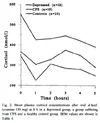
Baseline-circulating cortisol levels were highest in the depressed, lowest in the CFS and intermediate between the two in the control group (P = 0.01). Prolactin responses to the selective 5-HT-releasing agent d-fenfluramine were lowest in the depressed, highest in the CFS and intermediate between both in the healthy group (P = 0.01).
Matched pair analysis confirmed higher prolactin responses in CFS patients than controls (P = 0.05) and lower responses in depressed patients than controls (P = 0.003). There were strong inverse correlations between prolactin and cortisol responses and baseline cortisol values.
These data confirm that depression is associated with hypercotisolaemia and reduced central 5-HT neurotransmission and suggest that CFS may be associated with hypocortisolaemia and increased 5-HT function. The opposing responses in CFS and depression may be related to reversed patterns of behavioural dysfunction seen in these conditions. These findings attest to biological distinctions between these disorders.
Web | DOI | Journal of Affective Disorders | Paywall
Cleare, Anthony J.; Bearn, Jenny; Allain, Teresa; McGregor, Alan; Wessely, Simon; Murray, Robin M.; O'Keane, Veronica
Abstract
Hypothalamic-pituitary-adrenal (HPA) axis and central 5-HT function were compared in chronic fatigue syndrome (CFS), depression and healthy states. 10 patients with CFS and 15 patients with major depression were matched for age, weight, sex and menstrual cycle with 25 healthy controls.
Baseline-circulating cortisol levels were highest in the depressed, lowest in the CFS and intermediate between the two in the control group (P = 0.01). Prolactin responses to the selective 5-HT-releasing agent d-fenfluramine were lowest in the depressed, highest in the CFS and intermediate between both in the healthy group (P = 0.01).
Matched pair analysis confirmed higher prolactin responses in CFS patients than controls (P = 0.05) and lower responses in depressed patients than controls (P = 0.003). There were strong inverse correlations between prolactin and cortisol responses and baseline cortisol values.
These data confirm that depression is associated with hypercotisolaemia and reduced central 5-HT neurotransmission and suggest that CFS may be associated with hypocortisolaemia and increased 5-HT function. The opposing responses in CFS and depression may be related to reversed patterns of behavioural dysfunction seen in these conditions. These findings attest to biological distinctions between these disorders.
Web | DOI | Journal of Affective Disorders | Paywall