

chillier
Senior Member (Voting Rights)
It may be I've missed it but I haven't seen much discussion of stimulation and suppression studies of the HPA axis in this thread.
Suppression - where glucocorticoids (eg dexamethasone) are given to participants and cortisol levels are subsequently measured. These externally given glucocorticoids mimic cortisol and inhibit ACTH production in a negative feedback loop. In this 2008 suppression study by Papadopolous and Cleare they administered dexmethasone in the evening and the next morning measured cortisol. They saw no difference in suppression of cortisol levels between patients and controls.
Stimulation - where a CRH challenge is given to participants and ACTH/cortisol changes measured. CRH stimulates ACTH and then cortisol production. In this Scott et al 1998 crh stimulation study the authors reported a significant (p<0.005) blunted ACTH response in CFS patients compared to controls:
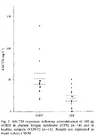
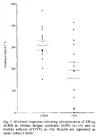
and a less blunted by still significantly blunted cortisol response (p<0.05):
Suppression - where glucocorticoids (eg dexamethasone) are given to participants and cortisol levels are subsequently measured. These externally given glucocorticoids mimic cortisol and inhibit ACTH production in a negative feedback loop. In this 2008 suppression study by Papadopolous and Cleare they administered dexmethasone in the evening and the next morning measured cortisol. They saw no difference in suppression of cortisol levels between patients and controls.
Stimulation - where a CRH challenge is given to participants and ACTH/cortisol changes measured. CRH stimulates ACTH and then cortisol production. In this Scott et al 1998 crh stimulation study the authors reported a significant (p<0.005) blunted ACTH response in CFS patients compared to controls:
and a less blunted by still significantly blunted cortisol response (p<0.05):


