Could Phospholipid Dysregulation Contribute to ME/CFS?

@TamaraRC may I ask how are you feeling now ? Do you experience PEM?

I don't experience PEM any more, I am mostly recovered now but I continue to take Bodybio PC, statins, Methylfolate, B12, Omega 3 and red ginseng. Also sometimes add creatine. I did have to take mast cell medications for a while but I stopped taking them over a year ago and mast cell issues haven't returned. A lingering symptom I have is that I sometimes get a mild hangover feeling in my head, but I noticed that taking the L. Reuteri yogurt (that Ron Davis has been researching for oxidative stress) quickly gets rid of the hangover feeling, so I think it's oxidative stress related. I think I have genes which predispose me to oxidative stress.
 
I don't experience PEM any more, I am mostly recovered now but I continue to take Bodybio PC, statins, Methylfolate, B12, Omega 3 and red ginseng. Also sometimes add creatine. I did have to take mast cell medications for a while but I stopped taking them over a year ago and mast cell issues haven't returned. A lingering symptom I have is that I sometimes get a mild hangover feeling in my head, but I noticed that taking the L. Reuteri yogurt (that Ron Davis has been researching for oxidative stress) quickly gets rid of the hangover feeling, so I think it's oxidative stress related. I think I have genes which predispose me to oxidative stress.

I am really happy to hear that. Currently looking at the mevalonate pathway and since you mentioned statins which are inhibiting HmG-CoA as a central mechanism, you may be affecting protein prenylation. I am not aware of any studies looking at isoprenoid intermediates.

The software I have been using has identified it as a potential metabolic bottleneck. Please investigate geranylgeraniol and see whether prenylation matches anything of interest to your research.

Again, very happy for you. Thank you for all of your work.
 
I don't experience PEM any more, I am mostly recovered now but I continue to take Bodybio PC, statins, Methylfolate, B12, Omega 3 and red ginseng.
If you don't mind my asking, why the proprietary "Phospholipid Complex" in place of, say, Phosphatidylcholine alone (or at least a supplement where you know how much of an individual ingredient is included)?
 
@Hutan, being the expert would it be possible to comment regarding the methodology/design of the listed studies? There are many more obviously , I selected these as the most promising given their design.


1. Che et al. / Lipkin & Fiehn (2022)
"Metabolomic Evidence for Peroxisomal Dysfunction in Myalgic Encephalomyelitis/Chronic Fatigue Syndrome"
International Journal of Molecular Sciences 23(7):3842
https://www.ncbi.nlm.nih.gov/pmc/articles/PMC9320121/

2. Hoel, Fluge, Mella, Tronstad et al. (2021)
"A map of metabolic phenotypes in patients with myalgic encephalomyelitis/chronic fatigue syndrome"
JCI Insight 6(18):e149217
https://pmc.ncbi.nlm.nih.gov/articles/PMC8409979/

3. Nkiliza, Klimas, Abdullah et al. (2021)
"Sex-specific plasma lipid profiles of ME/CFS patients and their association with pain, fatigue, and cognitive symptoms"
Journal of Translational Medicine 19:370
https://www.ncbi.nlm.nih.gov/pmc/articles/PMC8401202/
 
@Hutan, being the expert
No more than many here, and certainly less on all sorts of aspects.

Picking one to start with. Other members might like to tackle the other papers.
3. Nkiliza, Klimas, Abdullah et al. (2021)
"Sex-specific plasma lipid profiles of ME/CFS patients and their association with pain, fatigue, and cognitive symptoms"
Journal of Translational Medicine 19:370
https://www.ncbi.nlm.nih.gov/pmc/articles/PMC8401202/
Forum thread
I see that we didn't make any comments about the paper. It will be interesting to have a look at it. I'll post a comment on the paper's thread, but it might be tomorrow.
 
Not sure why though?
Alcohol intolerance is not particularly a feature of insulin resistance and shifts in liver function do not stop people finding alcohol pleasurable by and large.
What causes sudden alcohol intolerance like what happens to so many of us after ME is triggered, when the week before getting ME we could drink alcohol no problem? In my case the intolerance manifested itself as even just a couple sips of any alcoholic beverage immediately gave me powerful symptoms as if I drank a gallon, I was so nauseated and sick, sudden major hangover, and dizzy and really drunk from almost nothing
 
What causes sudden alcohol intolerance like what happens to so many of us after ME is triggered, when the week before getting ME we could drink alcohol no problem? In my case the intolerance manifested itself as even just a couple sips of any alcoholic beverage immediately gave me powerful symptoms as if I drank a gallon, I was so nauseated and sick, sudden major hangover, and dizzy and really drunk from almost nothing
Can you tell us what triggered your ME?
 
Can you tell us what triggered your ME?

What felt like a massive viral infection and two week long flu. But the only circumstantial proof I have of that is when I finally went to the doctor two months later I had extremely high IgG antibodies to EBV and CMV that's it. They didn't measure EBV EA-D IgG at that time only many months later after I was already diagnosed, and that has been high multiple times throughout the years like EBV is reactivating all the time. Antivirals didn't work for me even Valcyte + Famvir together
 
Last edited:
What felt like a massive viral infection and two week long flu. But the only circumstantial proof I have of that is when I finally went to the doctor two months later I had extremely high IgG antibodies to EBV and CMV that's it. They didn't measure EBV EA-D IgG at that time only many months later after I was already diagnosed, and that has been high multiple times throughout the years like EBV is reactivating all the time. Antivirals didn't work for me even Valcyte + Famvir together

80 to 90% percent of people who get EBV have raised liver enzymes. Do all of them get ME/CFS ? Certainly not, but if you have a combination of specific metabolic defects then such an event could break a delicate compensatory state which you could be in before EBV hit you :

Screenshot 2026-05-26 at 16.40.15.png


You also mentioned CMV :


Screenshot 2026-05-26 at 18.16.07.png


But as it seems, even given the above and despite a large study by @Chris Ponting identifying liver dysfunction to patients with ME/CFS , scientists prefer to look elsewhere for answers. By the way the liver is responsible for metabolizing all medications and of course, alcohol.
 
If you don't mind my asking, why the proprietary "Phospholipid Complex" in place of, say, Phosphatidylcholine alone (or at least a supplement where you know how much of an individual ingredient is included)?

I don't remember my thinking as I started taking it 18 months ago, I just noticed it helped a lot at the recommended dose so I kept taking it.
 
But as it seems, even given the above and despite a large study by @Chris Ponting identifying liver dysfunction to patients with ME/CFS , scientists prefer to look elsewhere for answers. By the way the liver is responsible for metabolizing all medications and of course, alcohol.
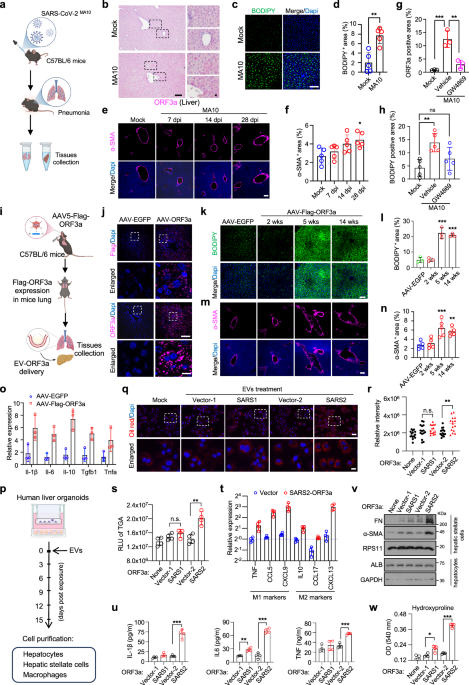
Here is a study about SaRS-CoV-2 affecting hepatic lipid metabolism related to ORF3.


Compared to the negative controls, the levels of ALT, AST, and GGT were significantly elevated in COVID-19-positive patients, whereas ALP and TBIL levels did not show significant changes, indicating that liver dysfunction is prevalent even in mild COVID-19 cases.

During infection, ORF3a can be efficiently secreted via exosomes by infected cells in vitro. Therefore, we hypothesized that ORF3a-enriched exosomes are captured by the liver, leading to the accumulation of LDs and subsequent hepatic inflammation during mild COVID-19.

Indeed, inhibiting exosome secretion by GW4869 reduced ORF3a levels in the liver of MA10-infected mice.

Hepatic LD accumulation and immune cell infiltration were subsequently reduced following GW4869 treatment in MA10-infected mice.

These findings indicate that ORF3a is transported to the liver via exosomes, where it disrupts liver lipid metabolism and triggers liver fibrosis in a mild COVID-19 model.
 
Last edited:
Regarding carb sensitivity and blood sugar, as discussed in some of the early comments, there have been some discussions about that on the forum.

I myself explored it with an endocrinologist and discussed the debated link to POTS with the ME clinic.

I can’t find and link the posts right now as I am on my phone.
 
Given the subject is phospholipid dysregulation. Is it common for MECFS patients to have been diagnosed, or to have been suspected of having antiphospholipid syndrome? As in more common than the average person?

I think there is a problem there in that antiphospholipid antibodies occur in association with a spectrum of antinuclear antibodies and fatigue is a common feature of the clinical presentation, as for Sjogren's.

Tagging also @Jonathan Edwards because the study discusses antibodies against neurons, glutamate etc

The data in that paper do not look very exciting - small numbers, unknown Russian antibody test, scatter of various antibody specificities... etc.
 
See the following : https://pmc.ncbi.nlm.nih.gov/articles/PMC9231045/

Tagging also @Jonathan Edwards because the study discusses antibodies against neurons, glutamate etc
"It is especially interesting that, in our study, the elevated levels of autoantibodies to β2-glycoprotein-I correlated most significantly with CFS/ME diagnosis. This particular autoantigen is also known as an antiphospholipid syndrome (APS) marker [37]. "

"There is also significant correlation of CFS/ME with AAb against some neural antigens, but in contrast, a significant negative correlation of this diagnosis with some other anti-neural antibodies (e.g., glutamate receptors and protein NF200). "

This is interesting:
"Many types of AAb to antigens expressed in the nervous tissue, but only anti-adrenal medullar AAb, among all checked types of anti-visceral organ-specific AAb, significantly correlated with chronic fatigue. This fact suggests that the numerous complaints of such patients related to visceral dysfunctions are associated not with a direct autoimmune lesion of the internal organs, but with their secondary involvement mediated through autoimmune neuroendocrine dysregulation and/or dysautonomia [39]."

And this paragraph probably explains why so many people with autoimmune diseases find pro resolving mediators helpful.
Pro resolving mediators is one of two things that I have started taking in the past 4-6 weeks that are turning my condition around.

"In post-viral and stress-associated forms of clinically significant chronic fatigue autoimmune reactions against non-organ-specific antigens associated with apoptotic processes and tissue debris were evaluated. It may indicate the role of impaired clearance of apoptotic material and tissue debris in the pathogenesis of symptoms associated with CFS/ME, similar to the occurrence of this phenomenon of apoptotic clearance deficiency in lupus and other rheumatological diseases [40,41,42,43]."
 
"It is especially interesting that, in our study, the elevated levels of autoantibodies to β2-glycoprotein-I correlated most significantly with CFS/ME diagnosis. This particular autoantigen is also known as an antiphospholipid syndrome (APS) marker [37]. "

"There is also significant correlation of CFS/ME with AAb against some neural antigens, but in contrast, a significant negative correlation of this diagnosis with some other anti-neural antibodies (e.g., glutamate receptors and protein NF200). "

This is interesting:
"Many types of AAb to antigens expressed in the nervous tissue, but only anti-adrenal medullar AAb, among all checked types of anti-visceral organ-specific AAb, significantly correlated with chronic fatigue. This fact suggests that the numerous complaints of such patients related to visceral dysfunctions are associated not with a direct autoimmune lesion of the internal organs, but with their secondary involvement mediated through autoimmune neuroendocrine dysregulation and/or dysautonomia [39]."

And this paragraph probably explains why so many people with autoimmune diseases find pro resolving mediators helpful.
Pro resolving mediators is one of two things that I have started taking in the past 4-6 weeks that are turning my condition around.

"In post-viral and stress-associated forms of clinically significant chronic fatigue autoimmune reactions against non-organ-specific antigens associated with apoptotic processes and tissue debris were evaluated. It may indicate the role of impaired clearance of apoptotic material and tissue debris in the pathogenesis of symptoms associated with CFS/ME, similar to the occurrence of this phenomenon of apoptotic clearance deficiency in lupus and other rheumatological diseases [40,41,42,43]."

Haven't seen it mentions apoptotic cell clearance. Thank you !
 
Back
Top Bottom