Landmark independent studies challenge longstanding dogma for brain aging
erictopol.substack.com
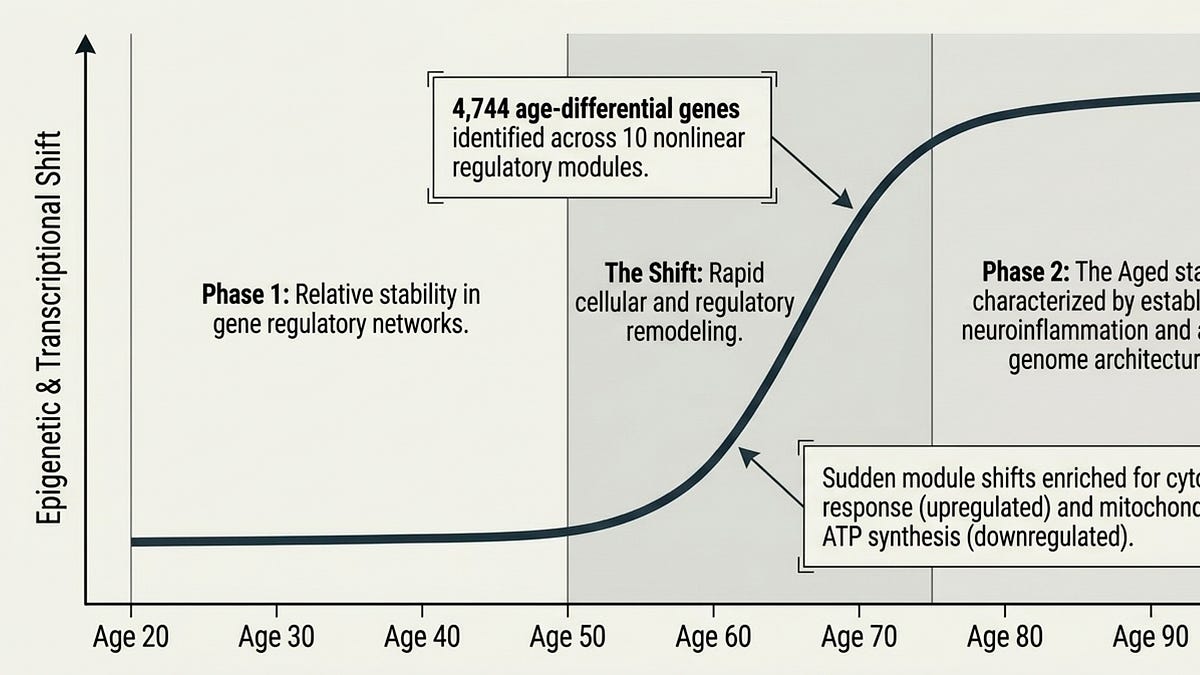
There has been a big shake-up in the understanding for how our brain ages. Until now, the prevailing belief was that our brain tissue shrinks with age, exemplified by the hippocampus, the region tied to memory and learning, as seen via MRI and other imaging modalities. That the microglia immune cells we were born with (embryonic) were the only types to be found in our brain. And the brain aging process was accepted to be a linear, steady deterioration. It turns out all of that was wrong!
I don't know what processes were going on, but the reason my memory deteriorated in my 50s was because I had to give up work.
I no longer needed to remember the production schedules of several projects, the dates of meetings and funding cycles, who was doing what in both our company and the wider industry, and the names, faces and job titles of hundreds of people—so I lost the skill.
It's quite common in people who step back from all work-related activities, and probably isn't much of a mystery.
I don't know where Topol has been but the 'new' findings are exactly what I would have expected since I studied macrophages in 1980. The hype seems completely brainless to me. As for neuroinflammation...
Scientists have uncovered sweeping changes in how the human brain controls and organizes its genome beginning in midlife, offering new clues to why aging sharply increases the risk of Alzheimer’s and other neurodegenerative diseases. One of the biggest shifts occurred between about ages 50 and 75, when many of the brain’s original immune cells declined and were replaced by cells with more inflammatory characteristics. Researchers also found weakening of cells that help maintain the blood-brain barrier, along with widespread deterioration in the genome’s three-dimensional organization.
Nathan R. Zemke, Seoyeon Lee, Sainath Mamde, Bing Yang, Nicole Berchtold, B. Maximiliano Garduño, Hannah S. Indralingam, Weronika M. Bartosik, Pik Ki Lau, Keyi Dong, Emily Hsu, Amanda Yang, Yasmine Tani, Chumo Chen, Qiurui Zeng, Varun Ajith, Liqi Tong, Chanrung Seng, Daofeng Li, Ting Wang, Jingtian Zhou, Joseph R. Ecker, Christopher K. Glass, Carl W. Cotman, Xiangmin Xu, Bing Ren. Epigenetic and 3D genome reprogramming during the aging of the human hippocampus. Science, 2026; 393 (6809) DOI: 10.1126/science.adt8307
Epigenetic and 3D genome reprogramming during the aging of the human hippocampus
Nathan R Zemke; Seoyeon Lee; Sainath Mamde; Bing Yang; Nicole Berchtold; B Maximiliano Garduño; Hannah S Indralingam; Weronika M Bartosik; Pik Ki Lau; Keyi Dong; Emily Hsu; Amanda Yang; Yasmine Tani; Chumo Chen; Qiurui Zeng; Varun Ajith; Liqi Tong; Chanrung Seng; Daofeng Li; Ting Wang; Jingtian Zhou; Joseph R Ecker; Christopher K Glass; Carl W Cotman; Xiangmin Xu; Bing Ren
INTRODUCTION
Aging is the strongest risk factor for neurodegenerative disease and is accompanied by memory decline and chronic inflammation in the brain. The hippocampus, a region essential for learning and memory, is particularly vulnerable to aging. Prior studies have identified age-related shifts in gene expression, including increased inflammatory signaling and reduced synaptic function, implicating transcriptional dysregulation in brain aging. However, gene expression alone provides an incomplete view. It remains unclear how epigenetic regulation and higher-order genome organization change across cell types and how these changes drive hippocampal dysfunction. Defining these molecular alterations is critical for understanding cognitive decline and disease susceptibility.
RATIONALE
To address this, we profiled gene expression and multiple layers of epigenetic regulation, including chromatin accessibility, DNA methylation, and three-dimensional (3D) genome organization at single-cell resolution across the adult lifespan. This integrated multiomic approach enables direct assessment of how epigenetic and structural genome changes shape transcriptional programs in aging brain cells, and reveals coordinated, cell type–specific mechanisms not captured by single-modality analyses.
RESULTS
Aging is associated with coordinated and often nonlinear changes in gene regulation across cell types, with a major transition occurring around midlife. A notable finding was a remodeling of the brain’s immune cell landscape. Microglia underwent a nonlinear transition in which embryonically derived, brain-resident microglial cells were progressively replaced by a population with epigenetic features resembling blood-circulating monocytes. This transition was not readily detectable using gene expression alone but was revealed by DNA methylation, which preserves cellular lineage. These monocyte-like microglia exhibited epigenetic, transcriptional, and 3D genome features associated with proinflammatory programs, suggesting a potential driver of age-related neuroinflammation.
In parallel, there was a marked decline in astrocytes, including those that support synaptic signaling and maintain the blood-brain barrier. This loss was accompanied by reduced expression of genes involved in mitochondrial energy production and increased cellular stress signatures, indicating metabolic dysfunction as a potential contributor to astrocyte attrition.
At the genome architecture level, aging was marked with a global weakening of 3D genome organization across cell types, including reduced integrity of topologically associating domains and increased trans chromosomal interactions. These structural changes coincided with epigenetic alterations and shifts in gene expression, reflecting widespread rewiring of regulatory programs.
CONCLUSION
Aging reprograms both the cellular composition and regulatory architecture of the human hippocampus. Replacement of embryonically derived microglia with a proinflammatory, monocyte-like population, together with astrocyte loss and global alterations of genome organization, defines key hallmarks of brain aging. These coordinated changes provide a mechanistic framework for age-related memory decline and increased vulnerability to neurodegenerative disease.
Did anything ever come of the concept of ‘terminal dip’ in memory (if I have remembered the term correctly, or was it ‘terminal drop’)? I am over forty years out of date on memory studies, but when I was an undergraduate one of my tutors, Prof Pat Rabbitt, was working on the idea that findings indicating memory gradually declined with age were an artefact of group studies using average scores. He argued that instead of measuring group effects on the basis of chronological age, you should look at individual changes over time measured backwards from death. When doing this the appearant steady decline was rather replaced with a rapid dip over the last six months of life, regardless of the cause of death.
This site uses cookies to help personalise content, tailor your experience and to keep you logged in if you register.
By continuing to use this site, you are consenting to our use of cookies.

 erictopol.substack.com


