MrMagoo
Senior Member (Voting Rights)
Just released
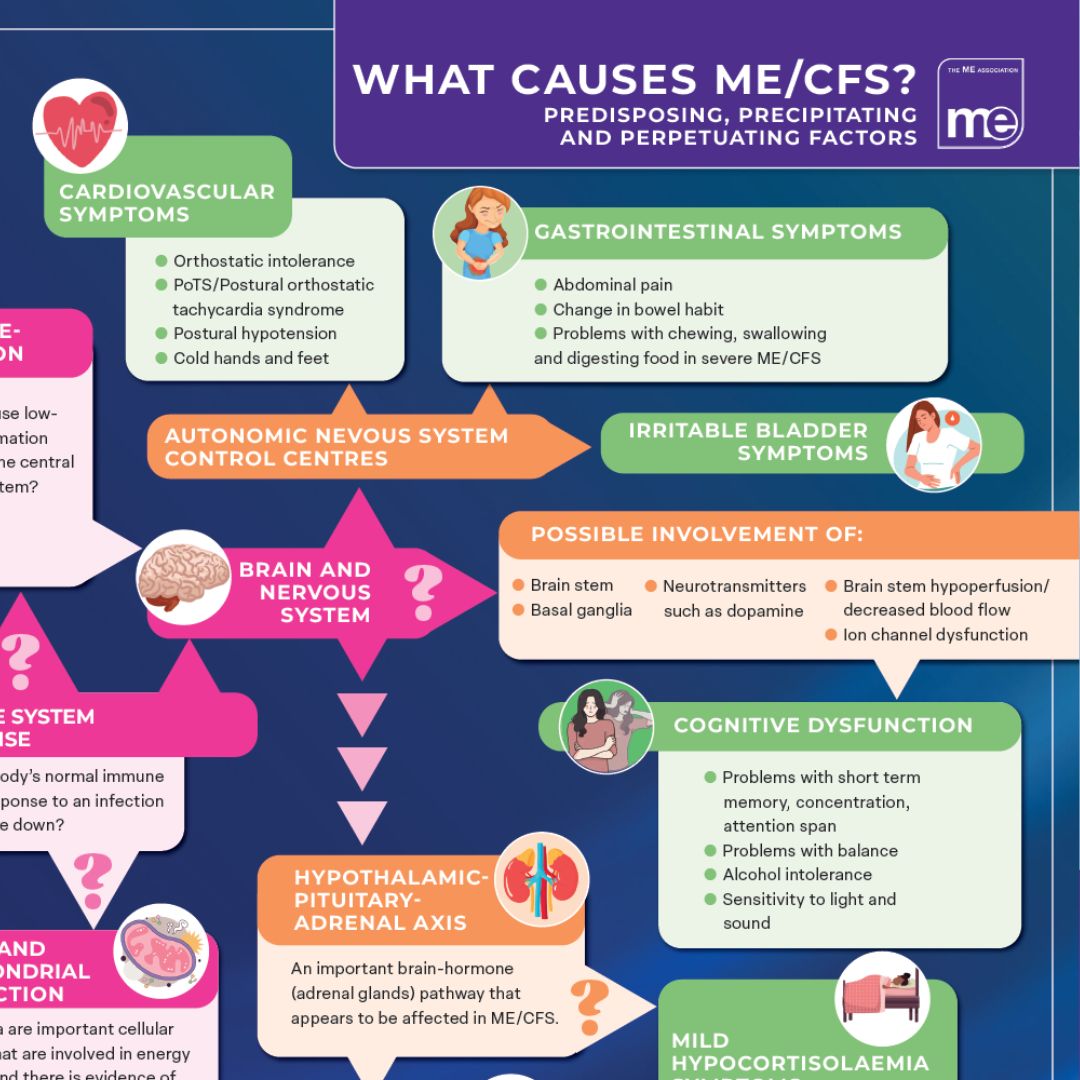
What causes ME/CFS?
Predisposing, precipitating and perpetuating factors
This is a three-stage disease-causing hypothesis that is based on predisposing, precipitating and perpetuating factors.
The explanation covers key facts on what we already know about these three aspects of causation and the many uncertainties that still exist.
1. Predisposing factors
There appears to be a genetic predisposition to developing ME/CFS – as occurs in some other serious medical conditions.
2. Precipitating factors
Viral infections
Other infections
Other immune-system stressors such as vaccinations
Sometimes no obvious trigger
Physical or mental stress at the time of a triggering event may act as a co-factor.
3. Perpetuating factors
Research evidence indicates that this could involve a complex interaction involving the nervous and immune-systems and the way in which the body creates energy.
Involvement of the microbiome is also possible.
On-going immune-system activation
Is there an on-going production of cytokines – immune-system chemicals that produce flu-like symptoms in response to an infection?
Can this cause low-level inflammation in parts of the central nervous system?
Symptoms
Sore throats
Enlarged glands
Flu-like feelings
Immune system response
Does the body’s normal immune system response to an infection fail to settle down?
Microbiome and the gut-brain axis
Disturbances to the composition of organisms that inhabit the gut and their effect on immune-system responses could also play a role.
Muscle and mitochondrial dysfunction
Mitochondria are important cellular structures that are involved in energy production and there is evidence of mitochondrial dysfunction
Symptoms
Activity induced fatigue
Pain
Post-exertional malaise
Brain and nervous system
Autonomic nervous system control centres
Possible involvement of:
Brain stem
Basal ganglia
Neurotransmitters such as dopamine
Brain stem hyperperfusion/decreased blood flow
Ion channel dysfunction
Cardiovascular symptoms
Orthostatic intolerance
PoTS (Postural Orthostatic Tachycardia Syndrome)
Postural hypotension
Cold hands and feet
Gastrointestinal symptoms
Abdominal pain
Change in bowel habit
Problems with chewing, swallowing and digesting food in severe ME/CFS
Irritable bladder symptoms
Cognitive dysfunction
Problems with short term memory, concentration, attention span
Problems with balance
Alcohol intolerance
Sensitivity to light and sound
Hypothalamic-pituitary-adrenal axis
An important brain-hormone (adrenal glands) pathway that appears to be affected in ME/CFS.
Symptoms
Problems with temperature control
Disturbed sleep
Appetite changes
Mild hypocortisolaemia symptoms
Fatigue
Muscle and joint pain
Bowel symptoms
Low blood pressure
Important to exclude Addison’s disease
Attachments

Last edited: