Netherlands: PAIS [Post-Acute Infection Syndromes] Conference, 26th to 29th August, 2026, Amsterdam

Maybe there is another thread for this discussion, but in general I don't think "PAIS" is a useful category and I have problems to understand why some researchers seem to think otherwise.

Pais is a politically convenient term at the present, on which millions of dollars of research funds will hinge. But I agree, it is not a good term. There are a. whole host of post-acute infective problems that we have known about for years that it would be ridiculous to treat as a single category. The biggest problem with most of this terminology is that current researchers simply do not have the historical background in pathology and clinical medicine. So they compete to invent lemons.
 
Maybe there is another thread for this discussion, but in general I don't think "PAIS" is a useful category and I have problems to understand why some researchers seem to think otherwise.
There is this thread where it was being discussed a while back:
 
PAIS...Long Covid...PAIS, they really seem completely determined to never mention ME.

Maybe there is another thread for this discussion, but in general I don't think "PAIS" is a useful category and I have problems to understand why some researchers seem to think otherwise.

Long Covid already often is used as a catch-all that's only defined by the trigger and can mean everything, lung damage, ME, sleep problems whatever. PAIS is even worse, it's neither defined by a specific trigger nor specific symtoms and it's also not mentioned in the ICD, so why are they insisting on using this term?
I completely get your frustration—I shared it for a long time. Especially when I felt like LC patients with ME/CFS were using those terms primarily to avoid stigma and distance themselves from the psychiatric perceptions of ME/CFS by highlighting their pre-illness functionality, heavy responsibilities, or the endless half-marathons they used to run.

But there’s another side to why these new concepts are being used. Take this article, for example:

https://www.science.org/content/article/covid-19-can-wake-dormant-viruses-body-large-study-confirms#

You can see how everyone who contributed to this piece is keenly aware of—and actively avoiding—the typical pushback from the traditional medical establishment against ME/CFS and herpes research, all the while keeping pre-pandemic ME/CFS patients right at the center of their attention. In fact, you’ll find the core takeaway—that leading ME/CFS researchers have already reoriented their work to focus on latent virus reactivation—buried in the very last paragraph.
 
Last edited:
But there’s another side to why these new concepts are being used. Take this article, for example:

That just looks like retweeting of the Twitterati both sides of the Atlantic. I don't see how its justifies PAIS, just the biobabblefashionwagon. Where does Reiter's syndrome come in? Or rheumatic fever, or Poncet's Disease? Viral reactivation in ill people is something we have known about since long before i was born.
 
That just looks like retweeting of the Twitterati both sides of the Atlantic. I don't see how its justifies PAIS, just the biobabblefashionwagon. Where does Reiter's syndrome come in? Or rheumatic fever, or Poncet's Disease? Viral reactivation in ill people is something we have known about since long before i was born.
Thank you for the quick reply. However, I think further discussion won't be productive as long as we're talking past the actual science being discussed.

The research in question isn't referring to standard, full-cycle viral reactivation as classic infectology has understood it for decades. It is specifically examining tissue-specific, abortive reactivations—phenomena that operate outside that traditional framework. Highly sophisticated projects currently led by researchers like Liisa Selin (UMass), Anayo Kohlgruber (Harvard's Children), Akiko Iwasaki (Yale), and Michela Locci (UPenn) are actively investigating these exact tissue-level mechanisms. We simply have to wait for their results to be published but their groundlaying work is already out there for anyone interested in looking it up.

Until we are engaging with the specific mechanisms at the center of this current work, I'd prefer to leave the conversation here.
 
Last edited:
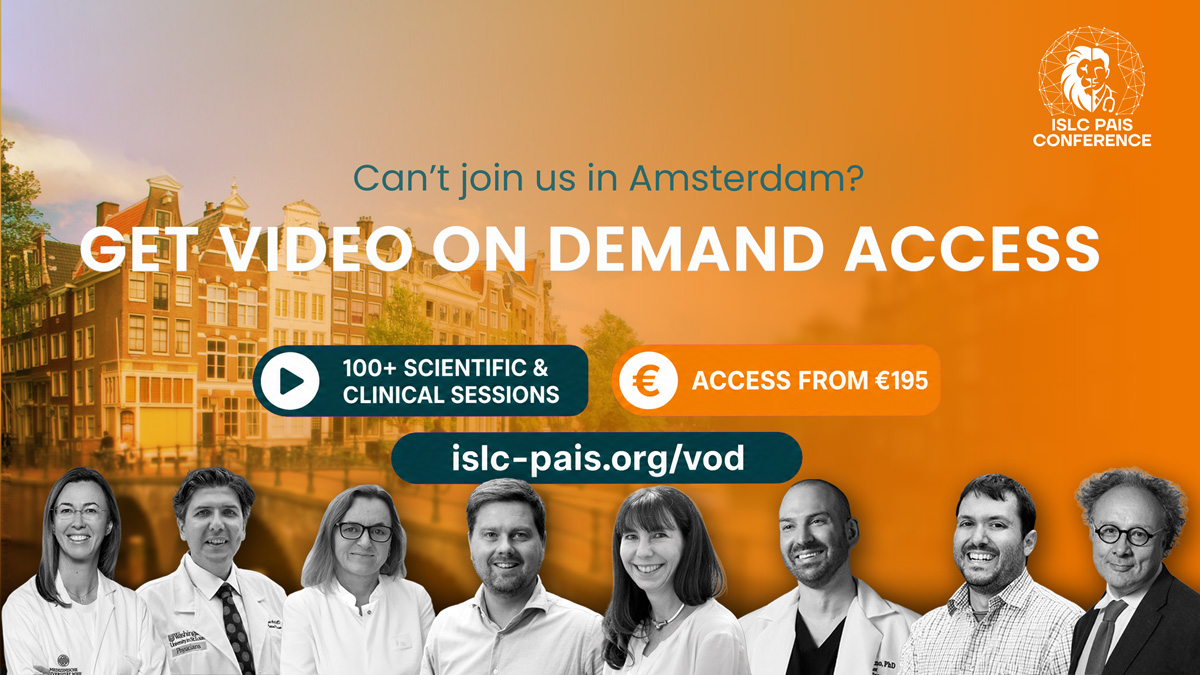
There’s a video on demand offering:

GET THE FULL ISLC-PAIS CONFERENCE PROGRAM – ON DEMAND​

Watch the Science. On Your Schedule.​

Get on-demand access to the recordings from the scientific program of the 2026 Amsterdam ISLC-PAIS Conference. A new international conference dedicated to Long COVID en other Post-Acute Infection Syndromes. Watch over a 100 recorded presentations and have access to the latest scientific and clinical developments. Wherever and whenever it suits you.

Prices are starting at

EARLY-CAREER VOD ACCESS​

€ 195​

Get Access

For students, trainees & early-career professionals​

• Full Scientific Program (100+ sessions)
• Personal on-demand access
• English, Dutch & German AI subtitles
• Presentation slides where available
• No fixed expiry date
 
@SWA Michelle,
Not sure if you wanted this here or in a message, but either way, I am interested in the below presentations/researches.
  1. 14:30 Thursday 27th: Mark Farghy - Towards a Systems-Level Framework of Post-Exertional Malaise in ME/CFS and Long COVID​

  2. 15:18 Thursday 27th: Leonardo Tamariz - Inefficient energy consumption is a hallmark of post-viral syndromes during cardiopulmonary exercise​

  3. 11:50 Friday 28th: Julia Berentschot - Microvascular Function and Endothelium-leukocyte Interactions in Long COVID​

  4. 11:34 Friday 28th: Chiara Amoroso - The Role of VSL#3® in the Treatment of Fatigue and Other Symptoms in Long Covid-19 Syndrome: a Randomized, Double-blind, Placebo-controlled Pilot Study (DELong#3)​

 
but either way, I am interested
I believe we need to understand every detail and stay informed about any progress in identifying a biomarker, since research so far has focused primarily on treating symptoms rather than identifying the underlying cause.
 
Hello - I am going to Amsterdam and presenting/chairing a session on rehab/pacing. Also involved in the patient recap session https://islc-pais.org/program/patient-recap/
If there are any sessions of particular interest, please do flag and I will try to get to as many as possible and share back what I can
(Michelle)
You could ask why people with ME/CFS are being asked to pay to contribute their lived experience and how that sits with good practice in PPI. Also is there anything at all that focuses on severe/very severe I couldn’t see it on skimming the agenda.
 
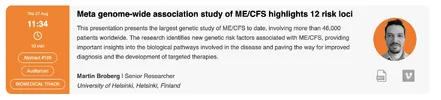
Too poor to buy online access to the conference but would be interested in hearing more about this presentation:
View attachment 33908
I remember a twitter discussion a couple of days ago where one of the organizers (a man) was put under a lot of pressure and as a result he offered 50% discounts for those in need when pm‘ing him.
You might get free access considering your frequent brilliant contributions.
 
@SWA Michelle,
Not sure if you wanted this here or in a message, but either way, I am interested in the below presentations/researches.
  1. 14:30 Thursday 27th: Mark Farghy - Towards a Systems-Level Framework of Post-Exertional Malaise in ME/CFS and Long COVID​

  2. 15:18 Thursday 27th: Leonardo Tamariz - Inefficient energy consumption is a hallmark of post-viral syndromes during cardiopulmonary exercise​

  3. 11:50 Friday 28th: Julia Berentschot - Microvascular Function and Endothelium-leukocyte Interactions in Long COVID​

  4. 11:34 Friday 28th: Chiara Amoroso - The Role of VSL#3® in the Treatment of Fatigue and Other Symptoms in Long Covid-19 Syndrome: a Randomized, Double-blind, Placebo-controlled Pilot Study (DELong#3)​

Mark and Leonardo are both presenting in the session I am chairing - will try and keep notes! I haven't worked out Friday yet!
 
Back
Top Bottom