News from Austria and Switzerland

Google Translate

Austria.
1600-word article.
This looks like a potentially worthwhile read.

Machine translation:


ME/CFS: When Help Needs to be Rethought​

How can people with ME/CFS be provided with appropriate care when even everyday activities, conversations, or touch can worsen their health condition?​
​
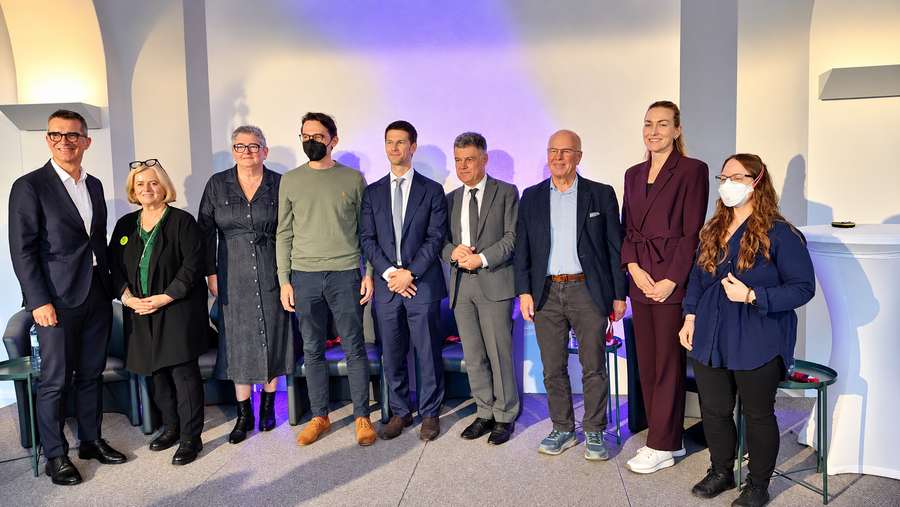
This question was the focus of the first ME/CFS specialist congress organized by CS Caritas Socialis on October 13, 2026, in the Pharmacist's Wing of Schönbrunn Palace in Vienna. Under the theme "Attitude – Knowledge – Action," experts from medicine, nursing, science, and ethics discussed new care models, existing gaps in care, and the societal responsibility toward those affected.​
​
It became clear that not only is more research needed, but also a fundamental change in how severely ill people are treated.​

Subheadings:
  • Giovanni Maio: Developing a Culture of Care
  • A Look at Norway: Specialized Care for the Most Severely Affected
  • Michael Stingl: Early Recognition, Appropriate Treatment
  • CS Nordlicht: Care Must Adapt to the Individual
  • New ME/CFS Clinic for Vienna Unveiled
  • Sandra Leiss: Taking the Perspective of Those Affected Seriously
  • Family Members Also Need Support
  • Eduard Spörk Prize Recognizes Journalistic Achievement
 
Google Translate

Machine translation:
A lot of this looks very good, though I am of course apprehensive of hearing "therapeutic and psychosocial professions". Hopefully it’s not what I think it is.
 
Google Translate

Austria.
850-word article.

Quite entertaining to read how they try to weasel themselves out of this.

Machine translation:
PVA [Pension Insurance Institution] employee engaged for Ministry of Social Affairs training

Following widespread criticism of assessments—particularly those by the PVA [Pension Insurance Institution]—the Ministry of Social Affairs has initiated continuing education for assessors of the Social Ministry Service. A PVA [Pension Insurance Institution] employee was engaged to give a presentation on the "challenges in the assessment of post-acute infectious syndromes (PAIS) and chronic fatigue syndrome (ME/CFS)." Criticism came from the patient advocacy group ÖG ME/CFS [Austrian Society for ME/CFS], which also lamented the lack of involvement of those affected in further reforms.

October 15, 2026, 5:08 AM
Reading time: 3 minutes

The Chief Medical Assistant of the PVA [Pension Insurance Institution] Vienna was engaged for the topic of PAIS and ME/CFS assessments; in recent professional presentations, he had emphasized the difficulty of objectifying ME/CFS and PAIS. "A solution to the cited problem areas in the assessment of PAIS and ME/CFS is not in sight," he wrote, for example, in a professional article published by Manz Publishing in the spring.

Criticism of the Selection of Speakers

In a written statement in response to an inquiry from the APA [Austria Press Agency], the ÖG ME/CFS [Austrian Society for ME/CFS] complained that the continuing education webinar held on September 30, according to the program, was conducted "without discernible professional involvement" from the National Reference Center for Post-Viral Syndromes at the MedUni Wien [Medical University of Vienna]. "At the same time, individuals were appointed as speakers whose previous positions on ME/CFS have provoked significant professional criticism," the society stated.

The patient organization referred not only to the involvement of the PVA [Pension Insurance Institution] employee but also to that of the second speaker: the head of the neurology department of the Tulln University Hospital was scheduled for the topic "Post-infectious Syndromes from a Neurological Perspective." The ÖG ME/CFS [Austrian Society for ME/CFS] pointed to his co-authorship of a professional journal article published in 2023 ("Der Nervenarzt"), in which "a psychosomatic etiology of ME/CFS was explicitly put forward for discussion"—which at the time had led to sometimes clear criticism, including within the professional community.
 
Back
Top Bottom