News from Austria and Switzerland

Google Translate

Austria.
1600-word article.
This looks like a potentially worthwhile read.

Machine translation:


ME/CFS: When Help Needs to be Rethought​

How can people with ME/CFS be provided with appropriate care when even everyday activities, conversations, or touch can worsen their health condition?​
​
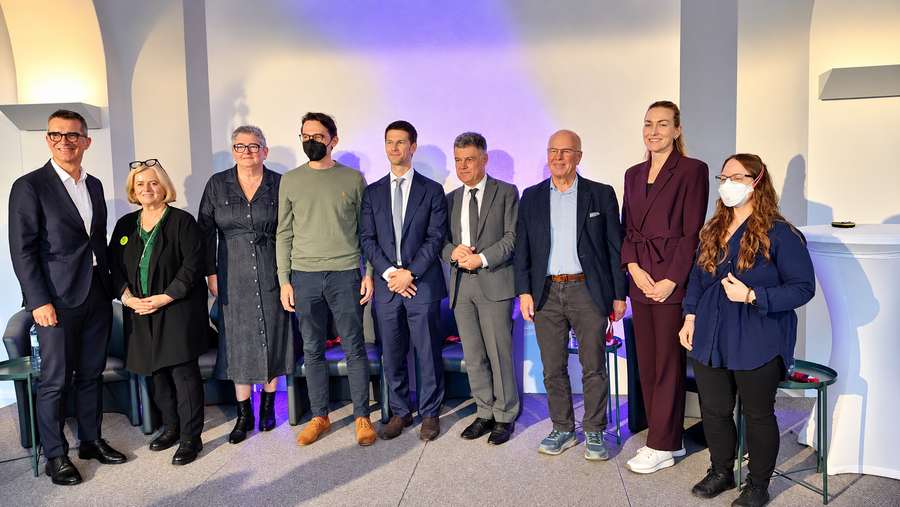
This question was the focus of the first ME/CFS specialist congress organized by CS Caritas Socialis on October 13, 2026, in the Pharmacist's Wing of Schönbrunn Palace in Vienna. Under the theme "Attitude – Knowledge – Action," experts from medicine, nursing, science, and ethics discussed new care models, existing gaps in care, and the societal responsibility toward those affected.​
​
It became clear that not only is more research needed, but also a fundamental change in how severely ill people are treated.​

Subheadings:
  • Giovanni Maio: Developing a Culture of Care
  • A Look at Norway: Specialized Care for the Most Severely Affected
  • Michael Stingl: Early Recognition, Appropriate Treatment
  • CS Nordlicht: Care Must Adapt to the Individual
  • New ME/CFS Clinic for Vienna Unveiled
  • Sandra Leiss: Taking the Perspective of Those Affected Seriously
  • Family Members Also Need Support
  • Eduard Spörk Prize Recognizes Journalistic Achievement
 
Google Translate

Machine translation:
A lot of this looks very good, though I am of course apprehensive of hearing "therapeutic and psychosocial professions". Hopefully it’s not what I think it is.
 
Google Translate

Austria.
850-word article.

Quite entertaining to read how they try to weasel themselves out of this.

Machine translation:
PVA [Pension Insurance Institution] employee engaged for Ministry of Social Affairs training

Following widespread criticism of assessments—particularly those by the PVA [Pension Insurance Institution]—the Ministry of Social Affairs has initiated continuing education for assessors of the Social Ministry Service. A PVA [Pension Insurance Institution] employee was engaged to give a presentation on the "challenges in the assessment of post-acute infectious syndromes (PAIS) and chronic fatigue syndrome (ME/CFS)." Criticism came from the patient advocacy group ÖG ME/CFS [Austrian Society for ME/CFS], which also lamented the lack of involvement of those affected in further reforms.

October 15, 2026, 5:08 AM
Reading time: 3 minutes

The Chief Medical Assistant of the PVA [Pension Insurance Institution] Vienna was engaged for the topic of PAIS and ME/CFS assessments; in recent professional presentations, he had emphasized the difficulty of objectifying ME/CFS and PAIS. "A solution to the cited problem areas in the assessment of PAIS and ME/CFS is not in sight," he wrote, for example, in a professional article published by Manz Publishing in the spring.

Criticism of the Selection of Speakers

In a written statement in response to an inquiry from the APA [Austria Press Agency], the ÖG ME/CFS [Austrian Society for ME/CFS] complained that the continuing education webinar held on September 30, according to the program, was conducted "without discernible professional involvement" from the National Reference Center for Post-Viral Syndromes at the MedUni Wien [Medical University of Vienna]. "At the same time, individuals were appointed as speakers whose previous positions on ME/CFS have provoked significant professional criticism," the society stated.

The patient organization referred not only to the involvement of the PVA [Pension Insurance Institution] employee but also to that of the second speaker: the head of the neurology department of the Tulln University Hospital was scheduled for the topic "Post-infectious Syndromes from a Neurological Perspective." The ÖG ME/CFS [Austrian Society for ME/CFS] pointed to his co-authorship of a professional journal article published in 2023 ("Der Nervenarzt"), in which "a psychosomatic etiology of ME/CFS was explicitly put forward for discussion"—which at the time had led to sometimes clear criticism, including within the professional community.
 
Google Translate

Austria.
850-word article.

Quite entertaining to read how they try to weasel themselves out of this.

Machine translation:
Austria.

From Twitter:
Machine translation:


Constanze Ertl @ErtlConstanze
The Ministry of Social Affairs has invited an assistant to the chief medical officer at the PVA—which has come under criticism over its medical assessments—to train assessors from the Social Ministry Service on the serious illness ME/CFS. Today also on Ö1.

The head of the responsible department at the Ministry of Social Affairs says: “The PVA employee was selected as a speaker in his capacity as a specialist in neurology. Working at the PVA does not mean that one lacks the relevant expertise.”
​

 
Google Translate

Austria.
850-word article.

Quite entertaining to read how they try to weasel themselves out of this.

Machine translation:
From the Austrian ME/CFS association on Twitter:
Machine translation:
Ö. Ges. für ME/CFS @oeg_mecfs
Four requests for a meeting. Still no follow-up meeting.

While key questions about care and social security remain unresolved for tens of thousands of people with ME/CFS, the ÖG ME/CFS has requested a meeting with the #Gesundheitsministerium four times in 2026 alone. No follow-up meeting has taken place to date.

At the same time, significant questions about the future of the #PAIS Action Plan remain unanswered under the federal target-setting process.

And now training sessions on ME/CFS and PAIS are taking place without a professional presentation from the National Reference Centre for Postviral Syndromes (NRZ), which was established specifically for this purpose—while people whose previous statements on ME/CFS have prompted significant professional criticism are involved.

This paints a worrying picture for us:

People affected are waiting.
Meetings are not taking place.
Recognised expertise is not being adequately brought in.
Existing structures are not being questioned consistently.

The problems that people with ME/CFS have been reporting for years in the area of social law, particularly in their dealings with the PVA, also need a political response at last.

Institutions are not ends in themselves.

When structures fail people who are seriously ill, the structures must be changed—not the people affected made to fit them.

We see just how urgent this is for ourselves: the support fund we set up together with LICHT INS DUNKEL and @RadioFM4 had to close to new applications just six and a half hours after it was announced, after receiving more than 150 requests for funding.

A patient organisation cannot make up for what the health and social care systems fail to provide.

We expect Health Minister @SchumannKorinna and State Secretary Ulrike #KönigsbergerLudwig to change course, resume dialogue and set a clear priority:

People who are seriously ill do not need institutions that protect one another. They need institutions that protect them.
 
Google Translate
Austria.
650-word article.

Seems to be a good article.
I'm lacking the energy to summarize properly.
ME/CFS care: What services are needed now

People with ME/CFS need more than an outpatient clinic. Why outreach care, specialized support, and better structures are essential.

By Lisa Haderer

On October 13, CS Caritas Socialis in Schönbrunn hosted the first specialist conference on ME/CFS. For us, that day was more than a professional conference. It was a sign that a group of people who often live literally in the dark are finally becoming more visible within the care system.

That experience led to the creation of “CS Nordlicht.” At CS Caritas Socialis, we have begun building a specialized form of support that meets people where they actually live: at home, and, when necessary, right at their bedside. Counseling, nursing, social work, support for family members, coordination, and trained volunteers work together. People should not have to be made to fit our system. Care must be designed to reach them.

An outpatient clinic can build expertise and monitor treatment. But it will not reach those who are so severely ill that they cannot leave their beds.

The author is an ME/CFS expert in nursing and care at “CS NORDLICHT.”
 
Paywall.

Machine translation:


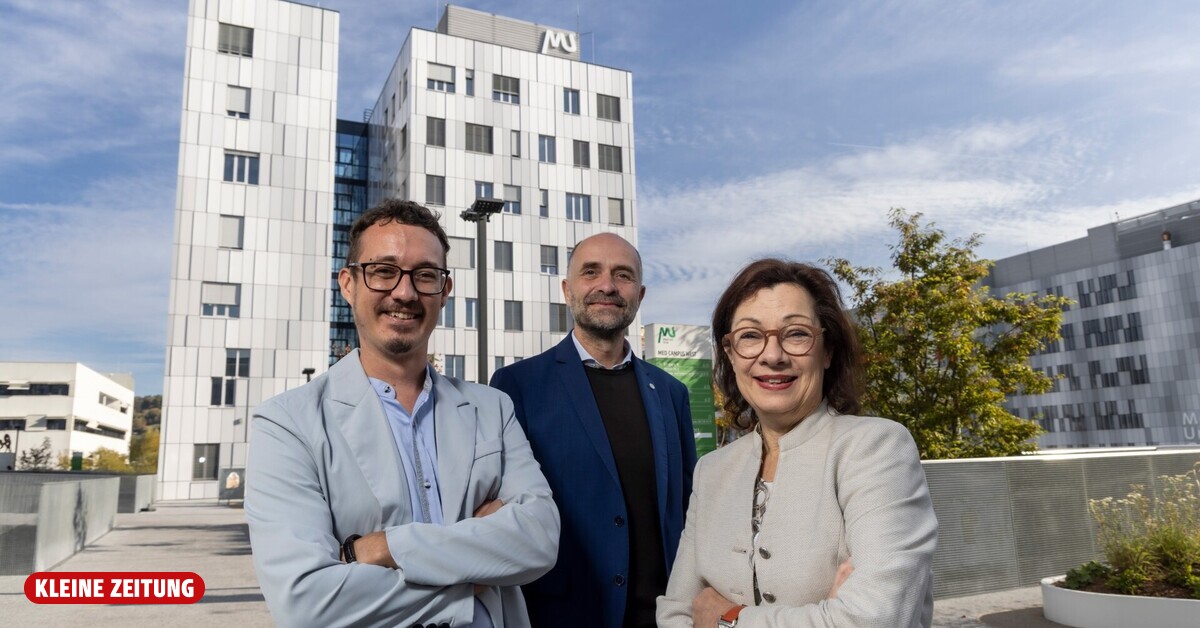
ME/CFS and Long COVID: New university program launched in Graz​

A new university program on post-viral syndromes has launched at Medical University of Graz.​
​
pais_lehrgang.jpg

© MedUni Graz/Lunghammer​
Program director Thomas Weber, Vice-Rector for Studies and Teaching Erwin Petek, and deputy program director Andrea Grisold (from left to right)​
 
Austria.

From Bluesky.
Machine translation:


An interesting webinar where one will likely get a good sense of the direction in which #ME/CFS care in Lower Austria will evolve.​
​
Has any of the speakers ever made a #MECFS diagnosis ... ?​


Google Translate

Website:
Webinar: PAIS – Post-acute Infection Syndromes
Seminar Number: 11061 / Continuing Education ID: 1072193
Training Date
Fri, Nov 20, 2026
3:00 PM – 6:00 PM
Location
Webinar
DFP
Medical Credits: 3
Participation Fee
Participation is free of charge!

Post-acute infection syndromes (PAIS), which include Long COVID and ME/CFS, among others, present major challenges to the healthcare system and particularly to primary care.

Many affected individuals suffer from persistent symptoms that are often difficult to categorize, significantly impairing their quality of life and ability to work. This makes early detection, a structured diagnostic workup, and coordinated, needs-based care all the more important. Current scientific findings on PAIS will be presented in three lectures.

Persistent symptoms following viral illness: the diagnostic process in primary care (MR Dr. Susanne Rabady)
Aspects of PAIS care from a neurological perspective (Prim. Univ. Prof. PD Dr. Walter Struhal)
PAIS – from a psychiatric perspective (Prim. Univ. Prof. PD Dr. Martin Aigner)
Registration absolutely required!

Via livestream – the link will be sent in due time before the date!

Speaker
MR Dr. Susanne Rabady [MR Dr. Susanne Rabady, Vice President of the Austrian Society for General and Family Medicine]

Prim. Univ. Prof. Prof. h.c. PD Dr. Walter Struhal, MSc, FEAN [Clinical Department of Neurology, UK Tulln-Klosterneuburg]

Prim. Univ. Prof. PD Dr. Martin Aigner [Clinical Department of Psychiatry and Psychotherapeutic Medicine, UK Tulln-Klosterneuburg]
 
Back
Top Bottom