Jonathan Edwards
Senior Member (Voting Rights)
My vote goes to @dave30th in a bathtub as presenter while JE is sitting next to him eating After Eight.
Choco Leibniz please. The chocolate is thicker and Swiss quality.

My vote goes to @dave30th in a bathtub as presenter while JE is sitting next to him eating After Eight.

Splendid, it looks like we’ve got the maestro on board for our project!Choco Leibniz please. The chocolate is thicker and Swiss quality.
The Long Covid Online Clinic is a specialized medical contact point for people with Long Covid, ME/CFS, MCAS, POTS, and other complex post‑infectious and multisystemic illnesses.
Under the medical direction of Dr. Corinna Geiger – specialist in internal medicine, gastroenterology, and hepatology – we combine evidence‑based medicine with a deep understanding of the reality faced by chronically ill patients.
On this channel, we share well‑founded information on diagnostics, pathophysiology, and therapeutic options – clearly presented, scientifically supported, and without false promises of cures.
Our content is aimed at affected individuals and their families as well as medical colleagues.
What guides us: Taking patients seriously instead of trivializing. Pacing instead of pushing. Science instead of miracle cures. Speisingerstr. 25/9, 1130 Vienna longcovidklinik.at
Pacing bei ME/CFS – Praktische Strategien für den Alltag | Long Covid Online Klinik
Pacing für Kinder mit ME/CFS – Was Eltern wissen müssen | Long Covid Online Klinik
Was tun im Crash? Soforthilfe bei ME/CFS | Dr. Corinna Geiger und Dr. Alina Kleinecke
ME/CFS und Schule – Wie Teilhabe gelingen kann | Long Covid Online Klinik

Sharing a translation of this article from the swiss-german state broadcaster because in my opinion it’s very good.ME/CFS-Schwerstbetroffene kämpfen um ihre IV-Rente
Untersuchungen auf Kosten der Gesundheit? ME/CFS-Patienten müssen oft ein für sie unzumutbares IV-Verfahren durchlaufen.www.srf.ch
Chronic Illness ME/CFS
Severely Ill – and the Disability Insurance Process an Ordeal
Examinations at the cost of one’s health? ME/CFS patients often have to go through disability insurance procedures that become a burden to them.
Author: Svenja Rimle — Today, 06:48
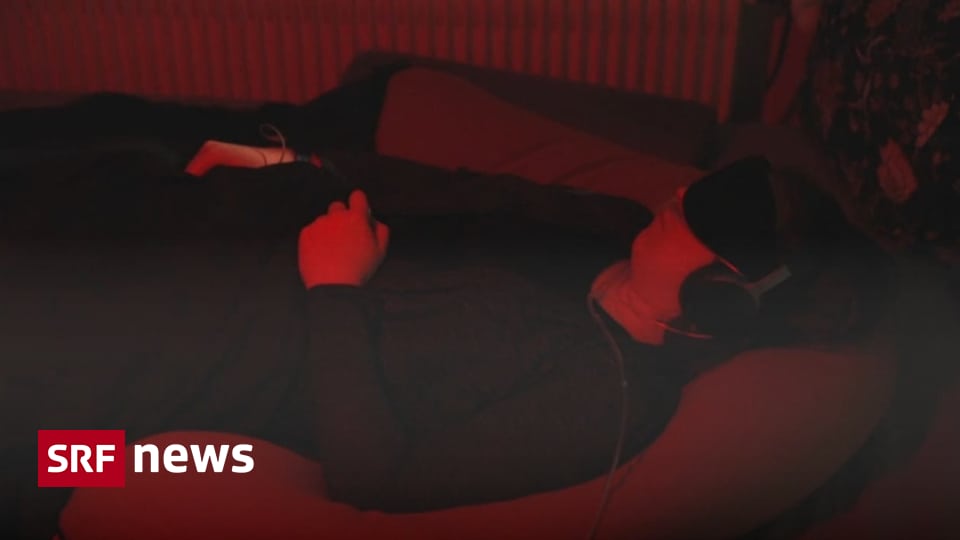
A one-room flat, lit only by a single red light bulb. The windows are covered, the kitchen has gone unused for some time. This is where Luisa lives — though she herself describes it more as “existing and vegetating.” Luisa wishes to remain anonymous, so she goes by a different name here.
Once a day, at 8 in the morning, a home-care nurse visits — that is Luisa’s only social contact. She can only speak a little, and quietly. She is fed and ventilated artificially. On good days, she manages the trip to the toilet.
“This is not a life”
Luisa is one of around 80,000 patients in Switzerland who have the neuroimmunological condition ME/CFS. She used to work as a care professional supporting people with severe disabilities. Today she can no longer even care for herself.
ME/CFS – What exactly is it?
Myalgic Encephalomyelitis/Chronic Fatigue Syndrome, or ME for short, is a severe chronic illness. Characteristic of it is extreme exhaustion following minimal exertion. Further symptoms can include severe muscle pain, sleep disorders, and cognitive impairments. In serious cases, those affected are bedridden and permanently dependent on care.
After contracting an infection at work in 2019, she developed ME. Three years later the illness had progressed to a severe stage. Work was no longer possible, and overnight the 36-year-old became bedridden. “This is not a life. It is pitiful. How do I feel? No longer like a human being,” she says.
No assessment, no money
To determine whether she is entitled to a disability pension, Luisa must undergo several external medical assessments. Although her doctors have confirmed she cannot be transported, and although these examinations can irreversibly worsen her symptoms, the regional medical service responsible in the canton of St. Gallen deemed the whole thing reasonable.
Having the assessment carried out at Luisa’s home is not considered an alternative. In a written statement, IV St. Gallen explained that certain tests and examinations are not possible in a private setting — though in individual cases an assessment could be waived.
Between existence and health
Luisa must choose: does she accept a deterioration in her condition in exchange for financial support? Many ME patients in Switzerland face this question, says Jonas Sagelsdorff, director of the Swiss Society for ME & CFS.
It is not only the assessment itself — the entire disability insurance process can have consequences for those affected. “In 90 percent of cases, patients experience a worsening of their health in the course of the procedure,” says Sagelsdorff. For one in five, that deterioration is severe and irreversible.
For a long time it looked as though the disability insurance office would not waive the external assessment in Luisa’s case. With the help of a lawyer, she fought for an assessment that would be manageable without transport. She won in court, whereupon those responsible at the IV office in St. Gallen dropped the external assessment. She has been receiving her pension since this year.
A life in isolation
Not all ME patients win in court. Many lack the strength to fight back. Luisa is glad she managed it. “It was a great relief,” she says when asked how she felt when her disability pension was approved.
Even so, it is cold comfort. Because what Luisa actually wants is her old life back. If she were suddenly healthy again, she would, for the first time in years, put on proper clothes and shoes, leave the flat, and run — to all the places she misses so deeply in her current state.
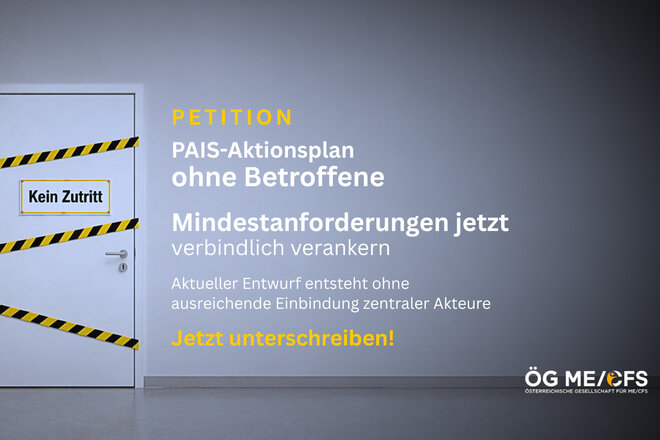
PAIS Action Plan Without Patient Representation: These Minimum Requirements Must Be Included in the Action Plan
Petition addressed to: Federal Government, Federal Ministry of Social Affairs, Health, Care and Consumer Protection, Federal States, Social Insurance Institutions
We call on the Federal Government, the federal states, and the social insurance institutions to rapidly and bindingly incorporate key minimum measures into the action plan on post-acute infection syndromes (PAIS). Many severely ill people are currently living with little to no access to adequate healthcare. This particularly concerns improvements in healthcare provision, education and training, social protection, biomedical research, as well as independent scientific structures and robust data foundations.
Rationale
The National Action Plan on Post-Acute Infection Syndromes (PAIS) was originally developed with broad participation from experts, patient advocacy groups, and institutions. Representatives of the Austrian Society for ME/CFS were officially part of the working groups and were substantively responsible for individual fields of action.
In the current process, this involvement is no longer taking place. The action plan is being revised without renewed structured participation of the originally involved patient representatives and professional experts. Parliamentary inquiry responses also indicate that external expertise is currently not being systematically considered in the process. Furthermore, according to current knowledge, key professional structures are not involved and themselves have no information about the current status.
As part of a request for information under the Freedom of Information Act (IFG), it also became apparent that key foundations for the planning and implementation of measures in the field of PAIS and ME/CFS are currently either still under development or are not being made accessible. According to information provided by the responsible federal ministry, for example, no further results regarding the reprioritization of measures are available, while essential decision-making documents have not been disclosed.
This underscores the existing deficits in transparency, governance, and participation and contradicts political statements claiming that adequate or nationwide care structures already exist.
There is therefore reason to fear that the action plan, scheduled for adoption at the end of June within the framework of the Federal Target-Based Governance system, will fall significantly short of the originally developed version, with key measures weakened and necessary content removed. In the current process, there is a risk that political and structural considerations will take precedence over the actual healthcare needs of those affected.
For this reason, we believe that at the very least those minimum requirements that are necessary for a real improvement in the care and living conditions of affected individuals must be bindingly included in the action plan.
Key Minimum Requirements That Must Be Included in the Action Plan
1. Healthcare Provision
Establishment of specialized, interdisciplinary contact points and treatment structures for PAIS, particularly ME/CFS, in all federal states, including outreach-based and telemedical care services.
2. Education and Training
Integration of PAIS, particularly ME/CFS, into the education, continuing education, and training of all health, nursing, and social care professions, as well as the development of corresponding standardized training content, since lack of expertise frequently leads to severe misdiagnosis and inadequate care.
3. Social Protection
Independent, quality-assured assessment bodies to ensure fair social security protection for affected individuals, as well as effective independent complaint mechanisms, including the establishment of appropriate independent bodies or the further development of existing institutions (e.g. expansion of competencies and powers of the Ombudsman Board, patient advocacy services, or comparable independent complaint structures).
4. Research
A coordinated national research initiative in line with international standards, with structural and long-term funding, modeled on Germany’s multi-year research funding framework in the multi-million-euro range, adjusted to Austria’s population size at a minimum of €5 million annually over a period of ten years, as well as a federal government initiative for a European research focus aimed at the targeted mobilization of EU research funding.
5. Scientific Structure
Safeguarding and sustainable further development of the National Reference Center for Postviral Syndromes (NRZ) as the central coordinating structure for healthcare provision, research, and education in the field of PAIS, including ME/CFS.
This includes in particular:
- permanent funding and institutional anchoring
- the development of evidence-based guidelines for PAIS and ME/CFS
- coordination of updates to existing guidelines (e.g. the S1 guideline “Management of Postviral Conditions Using Post-COVID-19 as an Example”) as well as the development of specific guidelines for ME/CFS
- training of professionals from various healthcare disciplines at specialized PAIS and ME/CFS centers
- development and establishment of standardized curricula in medical education and training
- mandatory training for relevant healthcare professions
- establishment and further development of central data foundations (e.g. on prevalence)
6. Participation and Transparency
Binding, structured, and legally anchored involvement of patient representative organizations in the development and implementation of medical guidelines and relevant measures in accordance with international standards (e.g. NICE).
Thank you for your support,
Austrian Society for ME/CFS
PAIS-Aktionsplan ohne Betroffene: Diese Mindestanforderungen müssen im Aktionsplan verankert werden
Petition richtet sich an: Bundesregierung, Bundesministerium für Soziales, Gesundheit, Pflege und Konsumentenschutz, Bundesländer, Sozialversicherungsträger
Wir fordern die Bundesregierung, die Bundesländer und die Sozialversicherungsträger auf, im Aktionsplan zu postakuten Infektionssyndromen (PAIS) zentrale Mindestmaßnahmen rasch und verbindlich zu verankern. Viele schwer erkrankte Menschen leben derzeit weitgehend ohne gesundheitliche Versorgung. Dazu gehören insbesondere Verbesserungen in Versorgung, Aus- und Weiterbildung, sozialrechtlicher Absicherung, biomedizinische Forschung sowie unabhängige wissenschaftliche Strukturen und belastbare Datengrundlagen.
Begründung
Der Nationale Aktionsplan zu postakuten Infektionssyndromen (PAIS) wurde ursprünglich unter breiter Beteiligung von Expert:innen, Betroffenenvertretungen und Institutionen erarbeitet. Vertreter:innen der Österreichischen Gesellschaft für ME/CFS waren offiziell Teil der Arbeitsgruppen und haben einzelne Handlungsfelder inhaltlich verantwortet.
Im aktuellen Prozess findet diese Einbindung nicht mehr statt. Der Aktionsplan wird ohne erneute strukturierte Beteiligung der ursprünglich eingebundenen Betroffenenvertretungen und fachlichen Expert:innen überarbeitet. Auch parlamentarische Anfragebeantwortungen zeigen, dass externe Expertise im Prozess derzeit nicht systematisch berücksichtigt wird. Zudem sind zentrale fachliche Strukturen nach aktuellem Kenntnisstand nicht eingebunden und verfügen selbst über keine Informationen zum aktuellen Stand.
Im Rahmen eines Informationsbegehrens gemäß Informationsfreiheitsgesetz (IFG) wurde zudem deutlich, dass zentrale Grundlagen für die Planung und Umsetzung von Maßnahmen im Bereich PAIS und ME/CFS derzeit entweder noch in Bearbeitung sind oder nicht zugänglich gemacht werden. So liegen laut Auskunft des zuständigen Bundesministeriums unter anderem keine weiterführenden Ergebnisse zur Neupriorisierung von Maßnahmen vor, während wesentliche Entscheidungsunterlagen nicht offengelegt werden.
Dies unterstreicht die bestehenden Defizite in Transparenz, Steuerung und Einbindung und steht im Widerspruch zu politischen Aussagen über eine bereits bestehende oder flächendeckende Versorgung.
Daher ist zu befürchten, dass der für Ende Juni geplante Beschluss des Aktionsplans im Rahmen der Bundeszielsteuerung deutlich hinter dem ursprünglich erarbeiteten Stand zurückbleibt, zentrale Maßnahmen abgeschwächt und notwendige Inhalte gestrichen werden. Im aktuellen Prozess besteht die Gefahr, dass politische und strukturelle Erwägungen Vorrang vor den tatsächlichen Versorgungsbedarfen der Betroffenen erhalten.
Gerade deshalb müssen aus unserer Sicht zumindest jene Mindestanforderungen verbindlich im Aktionsplan enthalten sein, die für eine reale Verbesserung der Versorgung und Lebenssituation von Betroffenen notwendig sind.
Zentrale Mindestanforderungen, die im Aktionsplan enthalten sein müssen
1. Versorgung
Aufbau spezialisierter, interdisziplinärer Anlaufstellen und Behandlungsstrukturen für PAIS, insbesondere ME/CFS, in allen Bundesländern, einschließlich aufsuchender und telemedizinischer Versorgungsangebote.
2. Aus- und Weiterbildung
Verankerung von PAIS, insbesondere ME/CFS, in der Aus-, Fort- und Weiterbildung aller Gesundheits-, Pflege- und Sozialberufe sowie die Entwicklung entsprechender standardisierter Ausbildungsinhalte, da fehlendes Fachwissen häufig zu schwerwiegender Fehl- und Unterversorgung führt.
3. Soziale Absicherung
Unabhängige, qualitätsgesicherte Begutachtungsstellen zur fairen sozialrechtlichen Absicherung von Betroffenen sowie effektive unabhängige Beschwerdemöglichkeiten, einschließlich der Schaffung geeigneter unabhängiger Stellen bzw. der Weiterentwicklung bestehender Einrichtungen (z. B. Kompetenz- und Befugniserweiterung der Volksanwaltschaft, Patientenanwaltschaft oder vergleichbare unabhängige Beschwerdestrukturen).
4. Forschung
Koordinierte nationale Forschungsoffensive nach internationalen Standards mit struktureller und langfristiger Finanzierung, orientiert am deutschen Modell einer mehrjährigen Forschungsförderung im Millionenbereich, entsprechend der Bevölkerungsgröße Österreichs im Umfang von zumindest 5 Millionen Euro jährlich über einen Zeitraum von zehn Jahren, sowie Initiative der Bundesregierung für einen europäischen Forschungsschwerpunkt zur gezielten Mobilisierung von EU-Forschungsmitteln.
5. Wissenschaftliche Struktur
Absicherung und nachhaltige Weiterentwicklung des Nationalen Referenzzentrums für postvirale Syndrome (NRZ) als zentrale koordinierende Struktur für Versorgung, Forschung und Ausbildung im Bereich PAIS, einschließlich ME/CFS.
Dazu gehört insbesondere:
6. Beteiligung und Transparenz
- die dauerhafte Finanzierung und institutionelle Verankerung
- die Entwicklung evidenzbasierter Leitlinien für PAIS und ME/CFS
- die Koordination der Aktualisierung bestehender Leitlinien (z. B. S1-Leitlinie “Management postviraler Zustände am Beispiel Post-COVID-19) sowie Entwicklung spezifischer Leitlinien zu ME/CFS
- die Schulung von Mitarbeiter:innen verschiedener Gesundheitsberufe an spezialisierten PAIS- und ME/CFS-Anlaufstellen
- die Entwicklung und Etablierung standardisierter Curricula in der medizinischen Aus- und Weiterbildung
- die verpflichtende Schulung relevanter Gesundheitsberufe
- der Aufbau und Weiterentwicklung zentraler Datengrundlagen (z. B. zur Prävalenz)
Verbindliche, strukturierte und gesetzlich verankerte Einbindung von Betroffenenvertretungen bei der Entwicklung und Umsetzung medizinischer Leitlinien und relevanter Maßnahmen nach internationalen Standards (z. B. NICE).
Vielen Dank für Ihre Unterstützung, Österreichische Gesellschaft für ME/CFS, Wien
 www.openpetition.eu

A neurologist on ME/CFS: “No one goes a year without washing just for fun”
Since the COVID-19 pandemic, more and more people have been suffering from ME/CFS. Behind these five letters lies not only a chronic illness, but often a great deal of suffering. Neurologist Michael Stingl explains how he approaches treatment. He also says that “there are people who are actively working against the establishment of standard medical care for ME/CFS.”
Going after AI manipulated images seems a viable strategy for getting studies retracted.AI flags suspicious research papers – Zurich university professor implicated
Several scientific papers on animal experiments, co-authored by Zurich’s leading anesthesiologist, have been retracted. The issue concerns controversial figures and images. The researcher denies any wrongdoing.
In brief:
- Four scientific papers published in the prestigious journal Frontiers in Immunology were retracted due to questionable figures and images. Sina Coldewey, a professor at the University of Zurich, was a co-author.
- She states that the papers’ conclusions remain reliable and that she was not involved in creating the figures that were criticized.

DOSSIER is taking legal action against the Pension Insurance Institution (PVA). The case concerns information on ME/CFS and post-Covid conditions that the PVA is refusing to disclose upon request.
In 2025, DOSSIER, ORF and APA evaluated more than 120 expert reports from the PVA (Austrian Pension Insurance Institution) and uncovered serious deficiencies: Key medical diagnostic criteria were almost never applied in the reports for ME/CFS and post-Covid cases.
Next, we wanted to know: What information does the PVA provide its experts and staff regarding ME/CFS and post-Covid? And what positions does it take in health policy negotiations?
These questions are highly relevant. Negotiations are currently underway at the federal level regarding the care of people with ME/CFS, post-COVID, and other post-viral illnesses. The PVA's positions have considerable influence in these negotiations.
Therefore, @ejakapeller.bsky.social, @constanzeertl.bsky.social and @haberhauer.bsky.social. a request was made under the Freedom of Information Act. The PVA responded by referring to already publicly available documents and stating that no further documents existed. However, there are indications to the contrary.
Training materials published by DOSSIER, APA, and ORF in May 2026 reveal, for example, that PVA (Austrian Pension Insurance Institution) experts are being trained with questionable content on ME/CFS and post-COVID conditions. At the same time, they suggest that documents exist which the PVA has not disclosed.
Therefore, DOSSIER is taking the Freedom of Information Act (FOIA) request to the Vienna Administrative Court. There, it will be decided whether the PVA has complied with its legal obligation to provide information.
“If these documents are representative of what is taught, it is a systematic devaluation,” says the internist and post-Covid specialist Christoph Bammer. “This serves to mentally reinterpret somatic diseases, to delegitimize reports of patients and to make access to social benefits more difficult – and that with a system.”

 www.woz.ch

Until 2015, an IV pension was unattainable for ME patients. The Federal Court had previously decided, based on the psychosomatic misconception of ME, that the disease could be overcome with a reasonable exertion of will (Federal Court 2008; Federal Court 2015). Even today this is an obstacle in pension procedures, because a large proportion of expert assessors still assume that ME is a psychosomatic disease (SGME 2021). In this way, BPS models are also directly partly responsible for poverty and great existential insecurity among ME patients.
Biopsychosocial and neuroplastic models in ME and Long Covid
Position statement of the patient organizations Swiss Society for ME & CFS and ME/CFS Switzerland
“Gaslighting has been applied to the entire ME/CFS community by misapplication and misuse of the biopsychosocial model.”
David F. Marks, psychologist and founder of the Journal of Health Psychology
Recently, one increasingly hears in Switzerland about “promising new therapeutic approaches” for Long Covid, whether in a podcast, from lifestyle coaches, or increasingly also from institutions in the healthcare system, even university and cantonal hospitals, which should actually be bound to evidence‑based standards when evaluating therapeutic approaches.
These concern biopsychosocial models (hereafter BPS) in the broad sense and neuroplastic models in the narrower sense. What is new about these approaches, however, is only the marketing concept. Since the 1980s there have been attempts to reinterpret the neuroimmunological disease myalgic encephalomyelitis (ME) as learned symptoms and behavior patterns as well as false illness beliefs or deconditioning. For more than ten years these hypotheses have clearly been refuted (IOM 2015, Tucker 2015).
When proponents of neuroplastic models claim “the body itself is healthy but reacts to certain triggers” (SRF News 2026), this is, in view of the contrary evidence, a scientific — and given the fatal consequences for those affected, also an ethical — gross failure.
BPS models ignore the complexity of ME and Long Covid
Currently these approaches are recommended primarily for Long Covid. The connection between Long Covid and ME is often left unmentioned. The term Long Covid denotes a complex and heterogeneous group of illnesses and syndromes that can occur after a SARS‑CoV‑2 infection. A significant portion (approx. 20%) of those affected by Long Covid suffer from ME, many of them without a correct diagnosis (Renz‑Polster, Scheibenbogen 2022).
ME can be distinguished from other illnesses by the presence of Post‑exertional Neuroimmune Exhaustion (PENE, also called Post‑exertional Malaise, PEM). PENE, the central pathomechanism of ME, is a neuroimmunological reaction that can follow even slight physical, cognitive, orthostatic, or sensory exertion and leads to a severe, long‑lasting and potentially irreversible worsening of symptoms (Hoffmann et al. 2024).
For this reason, pacing is at the center of disease management in ME. The aim of pacing is to find the right balance between rest and activity so that symptom deterioration due to overexertion can be consistently avoided. To do this, patients must know their limits very precisely and adhere to them using various aids such as a heart‑rate monitor, activity tracker, or a stopwatch. Pacing is regarded in the scientific literature as the most successful strategy for dealing with ME (IOM 2015; Geraghty et al. 2017; Renz‑Polster, Scheibenbogen 2022; Grande et al. 2023; Hoffmann et al. 2024).
Those with Long Covid who meet ME criteria are the ones with the most severe symptoms and the worst prognosis (Legler et al. 2023). Patients with ME after Covid are therefore the most vulnerable subgroup within Long Covid with the highest need for support. Consequently, approaches that are contraindicated in ME must not be recommended across the board for Long Covid. Anyone recommending approaches for Long Covid must take into account the evidence on ME and the particular risks of PENE.
BPS models contradict the research consensus
Proponents of biopsychosocial and neuroplastic models (hereafter: BPS models) argue that “the brain and nervous system learn symptoms and in certain cases continue them erroneously after an event such as Covid” (Bopp, Schäfert 2026). These explanatory patterns, however, are incompatible with the research consensus on ME and therefore also contradict a significant portion of Long Covid cases (Scheibenbogen et al. 2023).
The D‑A‑CH consensus, published jointly by all German‑speaking experts, describes ME as a severe chronic multisystem disease that can lead to considerable physical and cognitive impairments up to the need for nursing care and, in very severe cases, death (Hoffmann et al. 2024).
The authors of the D‑A‑CH consensus explicitly emphasize that the assumption of psychosomatic factors in the development and chronification of ME is false. On the contrary, modern diagnostics can demonstrate various pathobiological dysfunctions and organ‑pathological findings (Hoffmann et al. 2024). Accordingly, factors such as learned symptoms and behavior patterns as well as false illness beliefs or deconditioning must not be assumed to be causal or sustaining for the disease.
Some BPS proponents explicitly distance themselves from the view that ME is a psychosomatic disease and emphasize the organic cause of the illness. Nevertheless, they primarily explain the symptoms through (neuro‑)psychological processes rather than through the biological processes demonstrated in ME. Even where the organic cause of ME is acknowledged, the central assumptions of BPS models remain incompatible with the research consensus. The underlying hypotheses ultimately remain psychosomatic.
BPS models are not evidence‑based
Proponents of BPS models often complain about a “still dominant disease understanding that relies heavily on biomarkers” (Bopp, Schäfert 2026). However, this statement is out of touch with reality. It is precisely the BPS models that have strongly dominated ME research in past decades. Nevertheless, evidence for their effectiveness has never been demonstrated.
The British NICE conducted an evidence review of studies on various BPS models as part of its ME guidelines and consistently rated the quality of these studies as low or very low. The Lightning Process (a specific brain‑retraining program) is explicitly discouraged (NICE 2021). Initial results of a study funded with €6.5 million from the EU Horizon program (and thus also with Swiss tax money) found no efficacy for brain retraining in Long Covid (Kvarnström, Varonen 2026).
Proponents of BPS models often rely on anecdotal cure stories. This is scientifically problematic, because for almost every disease there are people who attribute their recovery to treatments without proof of efficacy. Anecdotes have no evidentiary value. After viral infections, postviral fatigue frequently occurs and usually goes into remission even without intervention. Spontaneous remissions can also occur in ME in rare cases (Renz‑Polster, Scheibenbogen 2022). This creates an ideal projection surface for supposed cure stories of all kinds.
Another BPS strategy is to claim that while not the underlying disease, symptoms such as fatigue or pain would improve. But symptoms in ME have demonstrable organic causes such as autoimmunity, neuroinflammation, dysfunction of the cardiovascular system, or mitochondrial dysfunction. In particularly severe cases the disease can be fatal (Hoffmann et al. 2024). ME must not be confused with nonspecific fatigue or pain symptomatology. The damage in the body cannot be imagined away.
As with any serious illness, ME patients should have access to psychotherapeutic support if they wish. This can help in coping with the burden of illness and with the psychological consequences of the disease and the poor care situation. BPS approaches are, however, unsuitable for this purpose. They encourage those affected to distrust their perception of exertional limits. This contradicts pacing, which is based on paying special attention to and respecting these limits (Grande et al. 2023).
Proponents of BPS models aim with Long Covid at a new disease label and operate with new marketing concepts. But these are already all the relevant novelties. We consider the debate about BPS models regarding ME (and the corresponding subgroup in Long Covid) to have been concluded years ago. We do not believe that every time someone tries to repackage long‑refuted hypotheses in new marketing concepts a new evidence and risk assessment must be carried out.
BPS models endanger those affected
BPS models are not only ineffective in ME but can potentially also be harmful. Because of PENE, any exceeding of energy limits carries the risk of a severe, irreversible deterioration of condition. Many BPS models, however, convey the idea that ME symptoms could be reduced by overcoming fear, avoidance behavior, or negative thought patterns. This can lead those affected to exceed their exertional limits and ignore the body’s warning signals.
ME patients should not unlearn perceiving their symptoms; on the contrary, they should learn and heed self‑monitoring and reliable body awareness (Grande et al. 2023). BPS approaches are not compatible with the principle of pacing. Any therapy that conveys going beyond energy limits and the body’s warning signals is contraindicated in ME because of PENE and can lead to cumulative deterioration with the risk of a higher degree of disability and need for care up to potentially life‑threatening courses (Hoffmann et al. 2024).
These approaches are particularly problematic when those affected have only limited say in their treatment. In rehabilitation clinics they are often under pressure to undergo such therapies — sometimes with severe deteriorations in condition (SRF Kassensturz 2024). We also observe that parents of affected children who reject such approaches are confronted with accusations of Münchhausen by proxy; in severe cases this can lead to loss of custody and forced activation, with potentially serious health consequences.
BPS models prevent care and research
Because of the dire care situation, ME patients depend on the personal commitment of professionals and relatives. When these people hear about BPS programs, they can be led into the false belief that cure is easily possible. This further fosters misunderstanding toward the disease and those affected.
The false attribution of psychological factors to ME leads to inadequate medical care and support for those affected. ME patients also frequently experience stigmatization by family members, relatives and the general public as well as medical gaslighting by professionals (König et al. 2021, König et al. 2023, Scheibenbogen et al. 2023). Instead of receiving help, patients in vulnerable dependency situations experience pressure to exceed their limits, which can lead to severe irreversible deteriorations.
Until 2015, an IV pension was unattainable for ME patients. The Federal Court had previously decided, based on the psychosomatic misconception of ME, that the disease could be overcome with a reasonable exertion of will (Federal Court 2008; Federal Court 2015). Even today this is an obstacle in pension procedures, because a large proportion of expert assessors still assume that ME is a psychosomatic disease (SGME 2021). In this way, BPS models are also directly partly responsible for poverty and great existential insecurity among ME patients.
ME patients face a double lack of research. ME research receives only about 7% of the funds that would be appropriate for the disease burden (Mirin et al. 2020). At the same time, scarce resources are directed into behavioral rather than biomedical research. Complicating matters further, BPS models work with nonspecific disease definitions and thereby produce biased results that harm those affected and further hinder research (AHRQ 2014).
Thus BPS models not only pose a direct danger to patients who make use of such offers. They harm all ME and Long Covid sufferers by distorting the reality of the disease. They suggest with flowery promises that cures already exist and that those affected have their health in their own hands. In doing so they place the responsibility for societal failure on individual patients and obscure the serious lack of research, medical care, nursing and social security.
BPS models take away hope
A term that is used inflationarily by proponents of BPS models is “hope.” A podcast wants to “give hope.” A university hospital promises “hope for Long Covid” through brain retraining. A lifestyle coach writes “There is hope and there is knowledge.” ME sufferers report the opposite: psychosomatic misdiagnoses lead in a large proportion to secondary depression, anxiety disorders and severe trauma (Sloan et al. 2025).
According to a Swiss study on the secondary burden on the mental health of ME patients, the most frequent reason for suicidal thoughts is hearing from doctors that the disease is only psychosomatic (König et al. 2023). Those affected are well aware that psychosomatic misconceptions are a central cause of the lack of research, the devastating care situation and the missing biomedical treatment options.
The consequence of the devastating care and research situation is also a sevenfold increased suicide rate in ME compared with the general population. In one study, reasons for the high suicide rate are cited — in addition to a low recovery rate, a high level of pain and disability and a greatly reduced quality of life — explicitly as missing treatment options, stigmatization, poverty and social and family isolation (Jason et al. 2016). BPS models thus take away life‑essential hope from ME sufferers for an improvement in their situation.
Conclusion
It is fundamentally the individual decision of patients to try non‑evidence‑based or complementary medical approaches. This applies to neuroplastic programs as well as to other procedures without proof of efficacy, such as kinesiology or homeopathy. Patients who wish to try such approaches can already do so today.
Like all sick people, ME and Long Covid sufferers depend on effective medical therapies being developed and potentially health‑endangering approaches being properly classified on the basis of the existing evidence. In particular, interventions that aim at overcoming symptoms, changing illness beliefs or increasing activity carry a considerable risk of potentially irreversible deterioration in ME (and thus in a significant portion of Long Covid).
The patient organizations therefore note with great concern that public bodies are using tax money to promote non‑evidence‑based and potentially harmful treatments. We are equally critical when public health institutions recommend such programs and when tax money is used to fund corresponding studies. Imagine a medication that at best does not help and at worst harms receiving this kind of official support.
As patient organizations we do not oppose those affected who want to try non‑evidence‑based or complementary medical treatments. However, we want to set down the following four points as a basis for dealing with such treatments:
The discussion about biopsychosocial and neuroplastic approaches is not an abstract scientific debate. It is about the lives of people with ME: our lives, the lives of our friends, partners, siblings, children and parents.
- All treatments that aim at a stepwise increase of performance limits are contraindicated in ME (including Long Covid with the presence of PENE).
- Severely and very severely affected patients are particularly vulnerable. Any deterioration of condition can reduce their functional capacity to an existentially threatening level. We advise them against biopsychosocial and neuroplastic treatments.
- Public funds for ME research and for improving the care situation are urgently needed. They should not be wasted on promoting and researching biopsychosocial models and harmful activating therapies.
- Public health institutions should not recommend treatments that are not evidence‑based and that carry a high risk of irreversible health deterioration.
While the exhausting debate about long‑refuted BPS models for ME must be repeated yet again, severely affected ME patients lie in dark, stimulus‑shielded rooms in their beds. Some must be fed artificially, wear diapers and are completely dependent on care.
They urgently need hope that those responsible in politics, healthcare and social insurance will do everything possible to improve their dire situation as quickly as possible. For all those who have already died from ME, any help comes too late.
Epilogue: Excerpt from the opening speech by Dr. Hans Kluge, WHO Regional Director for Europe, at the Invest in ME 2026 International ME Conference
People with ME have sadly had to endure far too much disbelief and delay. Many were healthy and active before they became ill. Today many live with severe limitations.
Not only regarding their health, but in their education, their work and their independence. This reality should concern us all.
ME is a severe, complex multisystem physical disease. The WHO classifies it as a neurological disease and it is important that we use this classification so that the true extent and impact of ME can be better understood in health data.
Those affected deserve to be believed, to receive an accurate diagnosis and, while we wait for effective treatments and cures, to have access to appropriate care and support for their daily needs.
So much about this disabling disease remains unknown. Progress depends on research, on clinics and scientists working together, sharing evidence and asking difficult questions.
A person living with ME once said: “Hope is not a cure, but it is what keeps us going until one is found.” Let us ensure that hope is accompanied by action and that the next generation looks back on this moment as the time when progress truly accelerated. We owe nothing less than that to every person living with ME.
There has been a podcast and multiple news articles recently that made the rounds in Switzerland that made it seem as if neuroplasticity might be the cure for Long Covid.
The two Swiss ME/CFS associations sgme.ch & mecfs.ch have now published a position paper on the topic.