Biopsychosocial and neuroplastic models in ME and Long Covid
Position statement of the patient organizations Swiss Society for ME & CFS and ME/CFS Switzerland
“Gaslighting has been applied to the entire ME/CFS community by misapplication and misuse of the biopsychosocial model.”
David F. Marks, psychologist and founder of the
Journal of Health Psychology
Recently, one increasingly hears in Switzerland about “promising new therapeutic approaches” for Long Covid, whether in a podcast, from lifestyle coaches, or increasingly also from institutions in the healthcare system, even university and cantonal hospitals, which should actually be bound to evidence‑based standards when evaluating therapeutic approaches.
These concern biopsychosocial models (hereafter BPS) in the broad sense and neuroplastic models in the narrower sense. What is new about these approaches, however, is only the marketing concept. Since the 1980s there have been attempts to reinterpret the neuroimmunological disease myalgic encephalomyelitis (ME) as learned symptoms and behavior patterns as well as false illness beliefs or deconditioning. For more than ten years these hypotheses have clearly been refuted (IOM 2015, Tucker 2015).
When proponents of neuroplastic models claim “the body itself is healthy but reacts to certain triggers” (SRF News 2026), this is, in view of the contrary evidence, a scientific — and given the fatal consequences for those affected, also an ethical — gross failure.
BPS models ignore the complexity of ME and Long Covid
Currently these approaches are recommended primarily for Long Covid. The connection between Long Covid and ME is often left unmentioned. The term Long Covid denotes a complex and heterogeneous group of illnesses and syndromes that can occur after a SARS‑CoV‑2 infection. A significant portion (approx. 20%) of those affected by Long Covid suffer from ME, many of them without a correct diagnosis (Renz‑Polster, Scheibenbogen 2022).
ME can be distinguished from other illnesses by the presence of Post‑exertional Neuroimmune Exhaustion (PENE, also called Post‑exertional Malaise, PEM). PENE, the central pathomechanism of ME, is a neuroimmunological reaction that can follow even slight physical, cognitive, orthostatic, or sensory exertion and leads to a severe, long‑lasting and potentially irreversible worsening of symptoms (Hoffmann et al. 2024).
For this reason, pacing is at the center of disease management in ME. The aim of pacing is to find the right balance between rest and activity so that symptom deterioration due to overexertion can be consistently avoided. To do this, patients must know their limits very precisely and adhere to them using various aids such as a heart‑rate monitor, activity tracker, or a stopwatch. Pacing is regarded in the scientific literature as the most successful strategy for dealing with ME (IOM 2015; Geraghty et al. 2017; Renz‑Polster, Scheibenbogen 2022; Grande et al. 2023; Hoffmann et al. 2024).
Those with Long Covid who meet ME criteria are the ones with the most severe symptoms and the worst prognosis (Legler et al. 2023). Patients with ME after Covid are therefore the most vulnerable subgroup within Long Covid with the highest need for support. Consequently, approaches that are contraindicated in ME must not be recommended across the board for Long Covid. Anyone recommending approaches for Long Covid must take into account the evidence on ME and the particular risks of PENE.
BPS models contradict the research consensus
Proponents of biopsychosocial and neuroplastic models (hereafter: BPS models) argue that “the brain and nervous system learn symptoms and in certain cases continue them erroneously after an event such as Covid” (Bopp, Schäfert 2026). These explanatory patterns, however, are incompatible with the research consensus on ME and therefore also contradict a significant portion of Long Covid cases (Scheibenbogen et al. 2023).
The D‑A‑CH consensus, published jointly by all German‑speaking experts, describes ME as a severe chronic multisystem disease that can lead to considerable physical and cognitive impairments up to the need for nursing care and, in very severe cases, death (Hoffmann et al. 2024).
The authors of the D‑A‑CH consensus explicitly emphasize that the assumption of psychosomatic factors in the development and chronification of ME is false. On the contrary, modern diagnostics can demonstrate various pathobiological dysfunctions and organ‑pathological findings (Hoffmann et al. 2024). Accordingly, factors such as learned symptoms and behavior patterns as well as false illness beliefs or deconditioning must not be assumed to be causal or sustaining for the disease.
Some BPS proponents explicitly distance themselves from the view that ME is a psychosomatic disease and emphasize the organic cause of the illness. Nevertheless, they primarily explain the symptoms through (neuro‑)psychological processes rather than through the biological processes demonstrated in ME. Even where the organic cause of ME is acknowledged, the central assumptions of BPS models remain incompatible with the research consensus. The underlying hypotheses ultimately remain psychosomatic.
BPS models are not evidence‑based
Proponents of BPS models often complain about a “still dominant disease understanding that relies heavily on biomarkers” (Bopp, Schäfert 2026). However, this statement is out of touch with reality. It is precisely the BPS models that have strongly dominated ME research in past decades. Nevertheless, evidence for their effectiveness has never been demonstrated.
The British NICE conducted an evidence review of studies on various BPS models as part of its ME guidelines and consistently rated the quality of these studies as low or very low. The Lightning Process (a specific brain‑retraining program) is explicitly discouraged (NICE 2021). Initial results of a study funded with €6.5 million from the EU Horizon program (and thus also with Swiss tax money) found no efficacy for brain retraining in Long Covid (Kvarnström, Varonen 2026).
Proponents of BPS models often rely on anecdotal cure stories. This is scientifically problematic, because for almost every disease there are people who attribute their recovery to treatments without proof of efficacy. Anecdotes have no evidentiary value. After viral infections, postviral fatigue frequently occurs and usually goes into remission even without intervention. Spontaneous remissions can also occur in ME in rare cases (Renz‑Polster, Scheibenbogen 2022). This creates an ideal projection surface for supposed cure stories of all kinds.
Another BPS strategy is to claim that while not the underlying disease, symptoms such as fatigue or pain would improve. But symptoms in ME have demonstrable organic causes such as autoimmunity, neuroinflammation, dysfunction of the cardiovascular system, or mitochondrial dysfunction. In particularly severe cases the disease can be fatal (Hoffmann et al. 2024). ME must not be confused with nonspecific fatigue or pain symptomatology. The damage in the body cannot be imagined away.
As with any serious illness, ME patients should have access to psychotherapeutic support if they wish. This can help in coping with the burden of illness and with the psychological consequences of the disease and the poor care situation. BPS approaches are, however, unsuitable for this purpose. They encourage those affected to distrust their perception of exertional limits. This contradicts pacing, which is based on paying special attention to and respecting these limits (Grande et al. 2023).
Proponents of BPS models aim with Long Covid at a new disease label and operate with new marketing concepts. But these are already all the relevant novelties. We consider the debate about BPS models regarding ME (and the corresponding subgroup in Long Covid) to have been concluded years ago. We do not believe that every time someone tries to repackage long‑refuted hypotheses in new marketing concepts a new evidence and risk assessment must be carried out.
BPS models endanger those affected
BPS models are not only ineffective in ME but can potentially also be harmful. Because of PENE, any exceeding of energy limits carries the risk of a severe, irreversible deterioration of condition. Many BPS models, however, convey the idea that ME symptoms could be reduced by overcoming fear, avoidance behavior, or negative thought patterns. This can lead those affected to exceed their exertional limits and ignore the body’s warning signals.
ME patients should not unlearn perceiving their symptoms; on the contrary, they should learn and heed self‑monitoring and reliable body awareness (Grande et al. 2023). BPS approaches are not compatible with the principle of pacing. Any therapy that conveys going beyond energy limits and the body’s warning signals is contraindicated in ME because of PENE and can lead to cumulative deterioration with the risk of a higher degree of disability and need for care up to potentially life‑threatening courses (Hoffmann et al. 2024).
These approaches are particularly problematic when those affected have only limited say in their treatment. In rehabilitation clinics they are often under pressure to undergo such therapies — sometimes with severe deteriorations in condition (SRF Kassensturz 2024). We also observe that parents of affected children who reject such approaches are confronted with accusations of Münchhausen by proxy; in severe cases this can lead to loss of custody and forced activation, with potentially serious health consequences.
BPS models prevent care and research
Because of the dire care situation, ME patients depend on the personal commitment of professionals and relatives. When these people hear about BPS programs, they can be led into the false belief that cure is easily possible. This further fosters misunderstanding toward the disease and those affected.
The false attribution of psychological factors to ME leads to inadequate medical care and support for those affected. ME patients also frequently experience stigmatization by family members, relatives and the general public as well as medical gaslighting by professionals (König et al. 2021, König et al. 2023, Scheibenbogen et al. 2023). Instead of receiving help, patients in vulnerable dependency situations experience pressure to exceed their limits, which can lead to severe irreversible deteriorations.
Until 2015, an IV pension was unattainable for ME patients. The Federal Court had previously decided, based on the psychosomatic misconception of ME, that the disease could be overcome with a reasonable exertion of will (Federal Court 2008; Federal Court 2015). Even today this is an obstacle in pension procedures, because a large proportion of expert assessors still assume that ME is a psychosomatic disease (SGME 2021). In this way, BPS models are also directly partly responsible for poverty and great existential insecurity among ME patients.
ME patients face a double lack of research. ME research receives only about 7% of the funds that would be appropriate for the disease burden (Mirin et al. 2020). At the same time, scarce resources are directed into behavioral rather than biomedical research. Complicating matters further, BPS models work with nonspecific disease definitions and thereby produce biased results that harm those affected and further hinder research (AHRQ 2014).
Thus BPS models not only pose a direct danger to patients who make use of such offers. They harm all ME and Long Covid sufferers by distorting the reality of the disease. They suggest with flowery promises that cures already exist and that those affected have their health in their own hands. In doing so they place the responsibility for societal failure on individual patients and obscure the serious lack of research, medical care, nursing and social security.
BPS models take away hope
A term that is used inflationarily by proponents of BPS models is “hope.” A podcast wants to “give hope.” A university hospital promises “hope for Long Covid” through brain retraining. A lifestyle coach writes “There is hope and there is knowledge.” ME sufferers report the opposite: psychosomatic misdiagnoses lead in a large proportion to secondary depression, anxiety disorders and severe trauma (Sloan et al. 2025).
According to a Swiss study on the secondary burden on the mental health of ME patients, the most frequent reason for suicidal thoughts is hearing from doctors that the disease is only psychosomatic (König et al. 2023). Those affected are well aware that psychosomatic misconceptions are a central cause of the lack of research, the devastating care situation and the missing biomedical treatment options.
The consequence of the devastating care and research situation is also a sevenfold increased suicide rate in ME compared with the general population. In one study, reasons for the high suicide rate are cited — in addition to a low recovery rate, a high level of pain and disability and a greatly reduced quality of life — explicitly as missing treatment options, stigmatization, poverty and social and family isolation (Jason et al. 2016). BPS models thus take away life‑essential hope from ME sufferers for an improvement in their situation.
Conclusion
It is fundamentally the individual decision of patients to try non‑evidence‑based or complementary medical approaches. This applies to neuroplastic programs as well as to other procedures without proof of efficacy, such as kinesiology or homeopathy. Patients who wish to try such approaches can already do so today.
Like all sick people, ME and Long Covid sufferers depend on effective medical therapies being developed and potentially health‑endangering approaches being properly classified on the basis of the existing evidence. In particular, interventions that aim at overcoming symptoms, changing illness beliefs or increasing activity carry a considerable risk of potentially irreversible deterioration in ME (and thus in a significant portion of Long Covid).
The patient organizations therefore note with great concern that public bodies are using tax money to promote non‑evidence‑based and potentially harmful treatments. We are equally critical when public health institutions recommend such programs and when tax money is used to fund corresponding studies. Imagine a medication that at best does not help and at worst harms receiving this kind of official support.
As patient organizations we do not oppose those affected who want to try non‑evidence‑based or complementary medical treatments. However, we want to set down the following four points as a basis for dealing with such treatments:
- All treatments that aim at a stepwise increase of performance limits are contraindicated in ME (including Long Covid with the presence of PENE).
- Severely and very severely affected patients are particularly vulnerable. Any deterioration of condition can reduce their functional capacity to an existentially threatening level. We advise them against biopsychosocial and neuroplastic treatments.
- Public funds for ME research and for improving the care situation are urgently needed. They should not be wasted on promoting and researching biopsychosocial models and harmful activating therapies.
- Public health institutions should not recommend treatments that are not evidence‑based and that carry a high risk of irreversible health deterioration.
The discussion about biopsychosocial and neuroplastic approaches is not an abstract scientific debate. It is about the lives of people with ME: our lives, the lives of our friends, partners, siblings, children and parents.
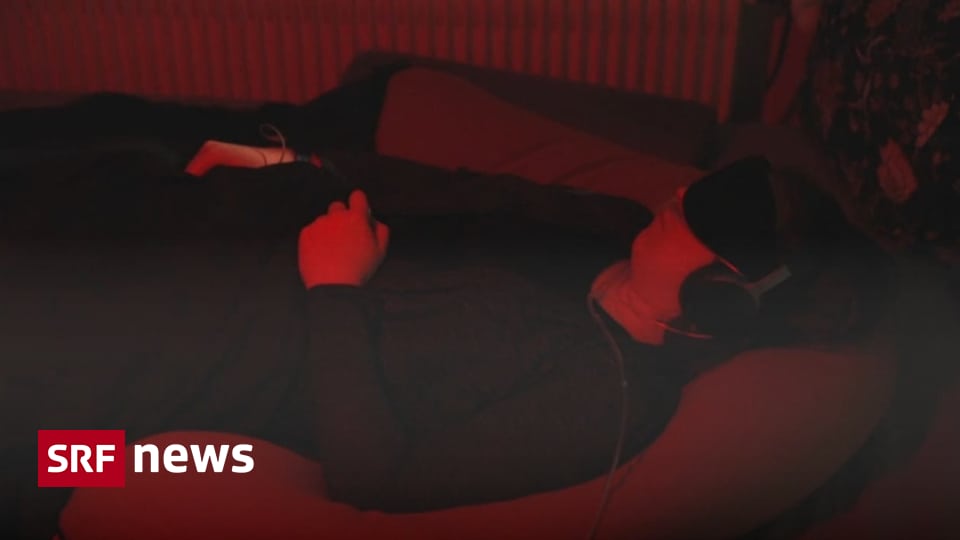
While the exhausting debate about long‑refuted BPS models for ME must be repeated yet again, severely affected ME patients lie in dark, stimulus‑shielded rooms in their beds. Some must be fed artificially, wear diapers and are completely dependent on care.
They urgently need hope that those responsible in politics, healthcare and social insurance will do everything possible to improve their dire situation as quickly as possible. For all those who have already died from ME, any help comes too late.
Epilogue: Excerpt from the opening speech by Dr. Hans Kluge, WHO Regional Director for Europe, at the Invest in ME 2026 International ME Conference
People with ME have sadly had to endure far too much disbelief and delay. Many were healthy and active before they became ill. Today many live with severe limitations.
Not only regarding their health, but in their education, their work and their independence. This reality should concern us all.
ME is a severe, complex multisystem physical disease. The WHO classifies it as a neurological disease and it is important that we use this classification so that the true extent and impact of ME can be better understood in health data.
Those affected deserve to be believed, to receive an accurate diagnosis and, while we wait for effective treatments and cures, to have access to appropriate care and support for their daily needs.
So much about this disabling disease remains unknown. Progress depends on research, on clinics and scientists working together, sharing evidence and asking difficult questions.
A person living with ME once said: “Hope is not a cure, but it is what keeps us going until one is found.” Let us ensure that hope is accompanied by action and that the next generation looks back on this moment as the time when progress truly accelerated. We owe nothing less than that to every person living with ME.