News from Austria and Switzerland

Austria:

Petition website:
Austria:
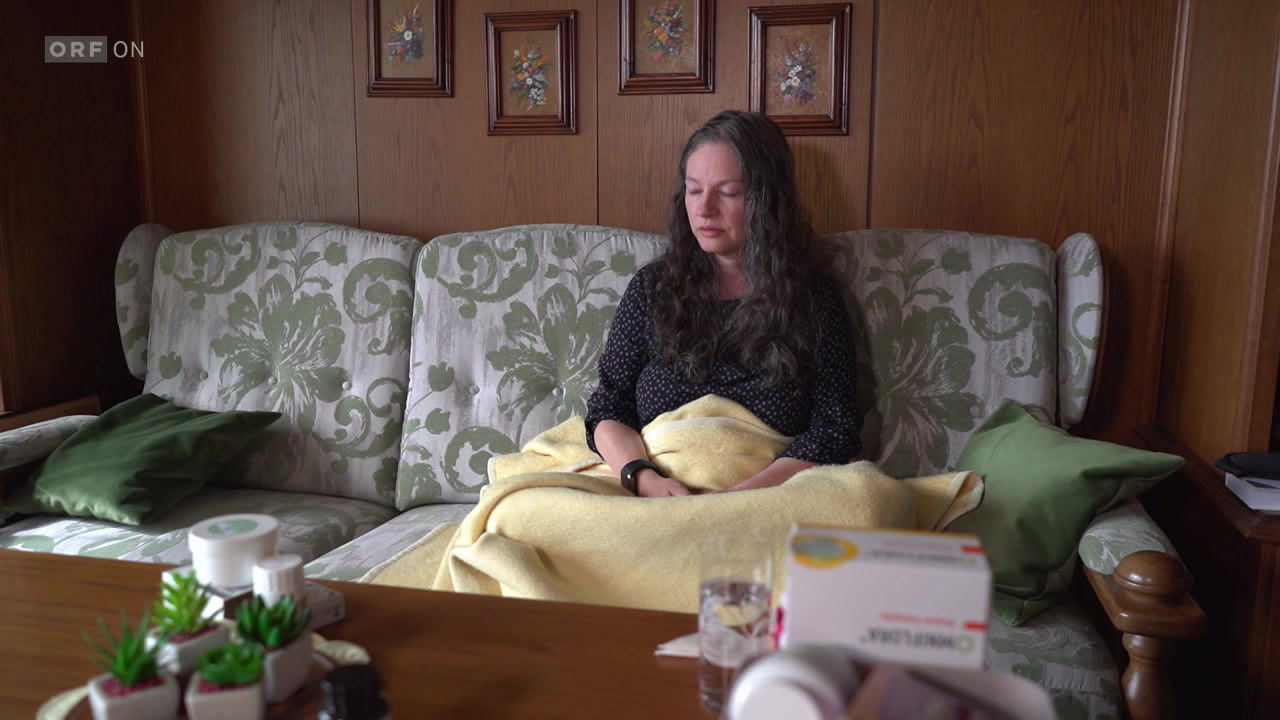
1:40min TV report by Constanze Ertl:
https://on.orf.at/video/14341051/16161986/reform-der-behindertenbegutachtung-gefordert

Machine Translation:

Calls for Reform of Disability Assessments​

Around 800,000 assessments are carried out each year to determine eligibility for benefits such as wheelchairs or care allowances. More than 30 organizations are now calling for comprehensive reform because those affected often experience the examinations as degrading.​
​

 
Switzerland is getting an ME/CFS Research Foundation!!


Translated tweet from Christoph Ströck:
I am absolutely thrilled: Switzerland will soon have a foundation for ME/CFS research! I have great confidence in Martin and his team. They have our full support.

This further strengthens the DACH region. Together, we can expand ME/CFS research and bring it to the forefront globally.

Watch this space!
 
From Austrian TV:
Bürgeranwalt

Occupational Disability: Dispute over Redacted Medical Assessments
22:20 min. Magazine

Due to health problems, Christina S. applies to the Pension Insurance Institution (PVA) for an occupational disability pension, but her application is rejected.

When she requests the medical assessments on which the decision was based, she receives them almost entirely redacted—even the summary of her condition is barely legible.

Representatives of affected persons criticize this practice, while the PVA refers to the need to protect testing procedures. How can those affected challenge such a decision?
 
Information regarding your own case is redacted?!
A bit off-topic but bear with me... That's the norm for the NHS GP records. You can read about it here.

I only scrolled down the page and I'm not sure their list of examples and reasons is extensive. For example, all text messages I received from the practice were completely redacted in my file. Not a single word left. I thought the messages were benign and had less sensitive info than anything any doctor wrote in the notes. It's messages informing me that a sick note has been issued, an invitation to book a cervical screening, generic messages to all patients,... Maybe they were automatically redacted by default.

And you know, if someone writes lies which would upset the patient, the following NHS guideline could apply:
Sensitive information must be redacted:
  • to protect the patient or another individual from serious physical or mental harm

So I can see how someone could get away by significantly redacting a medical assessment report, albeit in a different country. I don't speak German, so I can't easily dig into the Austrian guidelines, if there are any available online.

That's all to say that this might be a systemic global problem.
 
So I can see how someone could get away by significantly redacting a medical assessment report, albeit in a different country. I don't speak German, so I can't easily dig into the Austrian guidelines, if there are any available online.
According to the post, the insurer redacted the info to protect their testing procedures. That would not be a valid reason according to e.g. Norwegian law.

The NHS webpage appears to be saying the same thing, including this:
It is not enough to say that disclosure would cause upset or stress to the individual. Neither is it lawful to redact information that may protect a GP or other professional from criticism or challenge, or to hide an error or omission.
 
According to the post, the insurer redacted the info to protect their testing procedures. That would not be a valid reason according to e.g. Norwegian law.

The NHS webpage appears to be saying the same thing, including this:

But the NHS page also says:
There are few hard and fast rules with redaction. Information that may be fine to share with one patient, may need to be redacted for another.
Which is the crux of it. For every reason we can find why something should not be redirected, someone else can find a counterargument, and vice versa.

The insurers might fight hard to provide as little info as possible under the disguise of protecting the claimants in case the information was shared with third parties (carers, lawyers, charities and organisations helping disabled people,...) who "might use it against the claimant". Another thing is that it is not illegal to have a company's procedures confidential and while it's obvious why they're using it as an argument, there might be limits to how much they can be pushed to be transparent about it. It doesn't help that the way they work serves the government(s). I suspect that even if the procedure was turned into a tick-box exercise, there would be a clause allowing assessors to make a subjective discretionary decision, justified by "helping unique, complex cases to get the outcome they deserve".

I agree that what's reported in that Bluesky post is not acceptable but I'm just trying to say that what people are experiencing is like that by design without any of it being necessarily illegal, all the while defeating claimants by exhaustion. That's what we're up against.
 
But the NHS page also says:
Which is the crux of it. For every reason we can find why something should not be redirected, someone else can find a counterargument, and vice versa.
I think if you look at the laws, they are quite strict. I have no doubt some parties are trying to abuse them, but there is nothing about a medical assessment for an insurance claim that should need to be redacted.

I’m also not sure if this is about medical records or not, rather it might be about contract law or something like that - I don’t know how the Austrian system works.

If an insurer believes you do not fulfil the relevant criteria for receiving compensation, they have to explain why in a way that allows the insured (and by extension courts) to assess if the decision has been made on the correct grounds. They can’t just say nah, trust me bro.

The PVA argues that if the content of the tests and how they are evaluated is made public, people can cheat on the tests. That is a them problem, not a people problem.

Based on this an the related stories, it’s pretty clear that what’s going on at the PVA is vile:
 
30-min Wiener Wissen podcast episode on ME/CFS in Austria.
Austria: Another Wiener Wissen episode about ME/CFS.

Video Description:
Living with ME/CFS: “The disease is a monster”
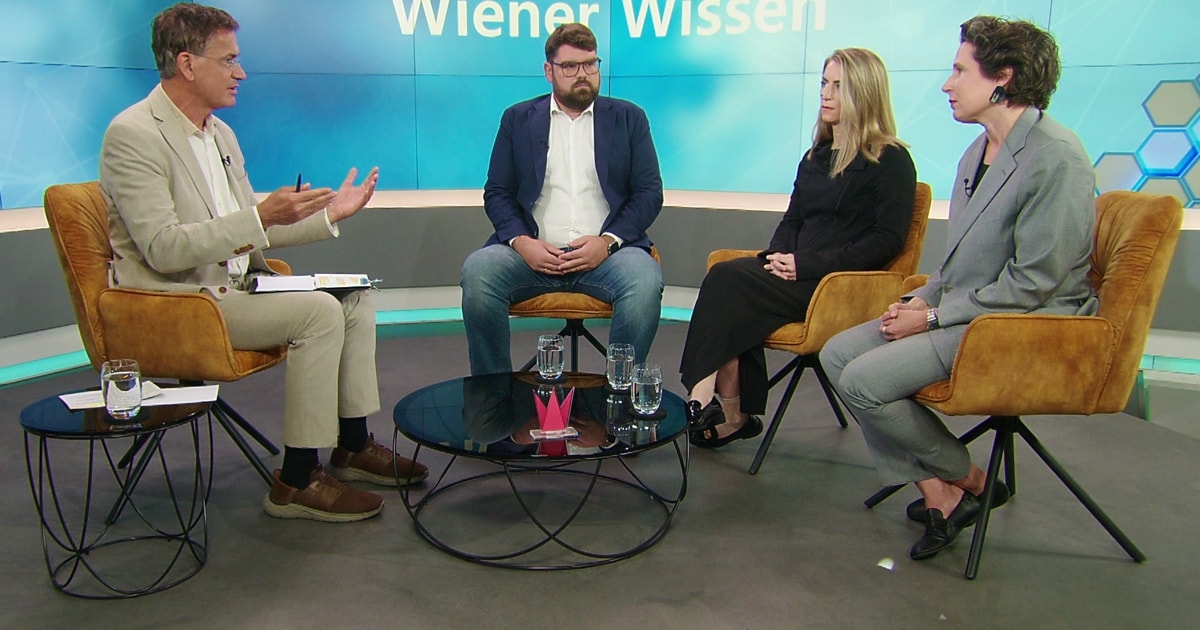
Wiener Wissen, 45min
October 4, 2026, 3:00 p.m.

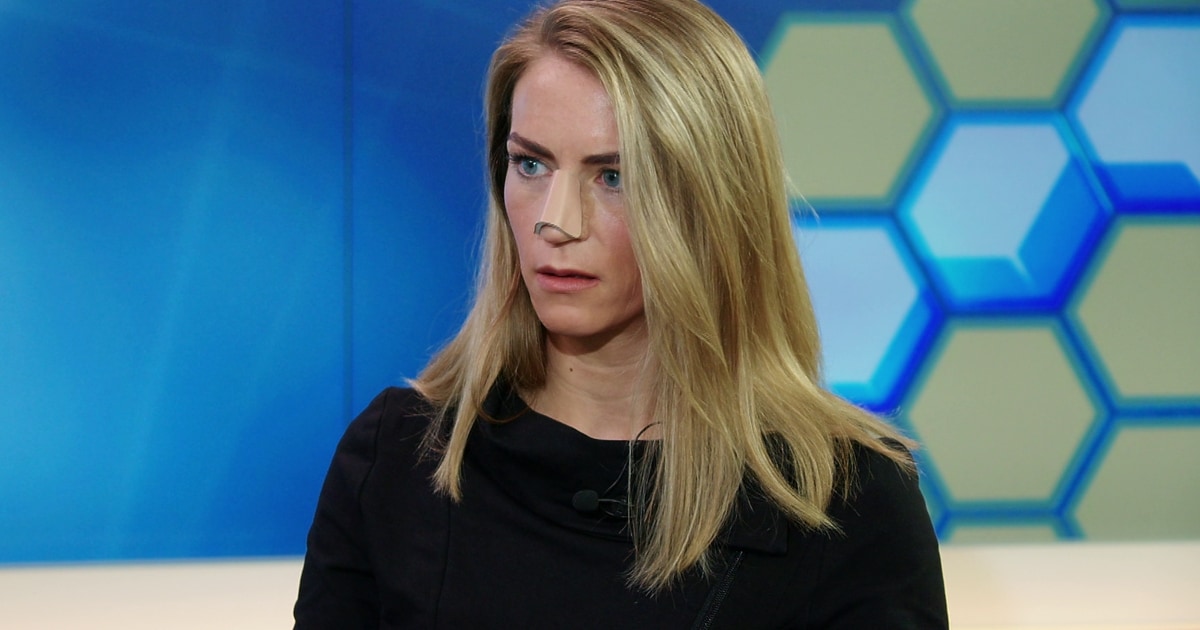
In the current edition of Wiener Wissen, entrepreneur and family caregiver of a person with ME/CFS Fabio Krois, MedUni Vienna public health expert Verena Hackl, and Caritas Socialis project manager Lisa Haderer analyze the everyday lives of people affected by ME/CFS in Austria.

Hackl says: “Their lives unfold as if their phone battery had only five percent of its charge left. Their strength and energy have to be rationed extremely carefully throughout the day to prevent the crash that follows. Speaking with affected individuals is often not possible; in such cases, we use nonverbal signals such as hand gestures. For some people, however, even simply listening is already too exhausting, because that also requires energy.”

Krois says: “My wife suffers from 40 different ME/CFS symptoms. On some days, things go better, but on others she is no longer able to get up. This makes planning the course of a day impossible.”

Hackl says: “Family caregivers have no room for interaction with people affected by ME/CFS. As a result, the lives of those affected become increasingly confined.”

Krois’s wife was able to recover after her initial illness, but developed ME/CFS again four years ago. He sums up the severity of her situation in stark terms: “The disease is a monster.”

“All These Horror Stories Are True”
Wiener Wissen Podcast
October 4, 2026

They lie in darkened rooms, often no longer able to speak, walk, or leave the house. Even a visit to the doctor can further worsen their condition. Verena Hackl, a senior scientist at the Medical University of Vienna, researches severe and very severe forms of ME/CFS. What she encounters in the process is deeply affecting even to the experienced researcher: “All these horror stories are true.”

For many people affected, the healthcare system thus becomes the problem of all things. ME/CFS patients with severe forms of the illness cannot simply go to hospital—or even make their way to a doctor. Transport, sensory stimuli, and even everyday activities such as brushing their teeth can be too much for them. On the Wiener Wissen podcast, Hackl puts it plainly: “There is no care available, and that really hurts.” The key to managing ME/CFS, she says, is to adapt the level of exertion to what the body can tolerate, rather than continually pushing a sick body beyond its limits.

Then there is the problem of knowledge. Hackl reports that ME/CFS was not covered during her own training. “How are you supposed to treat something you don’t know about?” Her research is intended to make this gap visible. But while research takes time, people who are ill do not have that time: “They are sick now. They have needed care since the day before yesterday.”
 
German speaking countries.

UN:LOCKJU – Association for the Visibility of Children and Adolescents with Long Covid and ME/CFS in Upper Austria warmly invites specialists and caregivers who work with children and adolescents with ME/CFS and PAIS to an introductory training workshop.

Speakers:
MMag. DDr. Markus Gole
Clinical Psychologist and Health Psychologist
Specializing in ME/CFS

Dipl.-Psych. Bettina Grande
Psychological Psychotherapist
Focus on ME/CFS and Post-COVID

Date & Time: Friday, October 9, 2026 · 10:00 a.m. – 1:00 p.m. – Online via Zoom
 
From Austrian TV:
From Bluesky:


The research by @haberhauer.bsky.social provides an occasion to discuss a sensitive area of medical assessment: symptom validity assessment. This involves determining whether symptoms are “credible.” In assessment reports, I have repeatedly encountered procedures that appear remarkably pseudoscientific.​
​
​
In the area of medical assessments, patient representatives complain that reports prepared by the Pension Insurance Institution are sometimes redacted. Psychological testing is particularly affected, among other things.​
​
One example is the Self-Report Symptom Inventory (SRSI). Patients select from a list the symptoms that apply to them. The list includes so-called pseudocomplaints—symptoms considered unlikely. Those who report many of them may be deemed not credible.​
​
The problem is that some of these presumed pseudocomplaints can in fact occur in ME/CFS. Examples include feeling barely able to remember anything on some days, or experiencing severe exhaustion after even minimal cognitive effort.​
​
During symptom validation, assessors are also expected to draw on their own observations. Assessment reports then contain oddly worded statements such as: A patient yawned “several times and very noticeably.”​
​
Or that a wheelchair was placed “demonstratively” to one side, while the patient moved around the doctor’s office “physiologically unrestricted.” Or: “When leaving the premises, the door was allowed to swing forcefully into the lock.”​
​
Another psychiatrist notes in several reports that patients described their symptoms in a “long-winded,” “logorrheic,” or “dramatic” manner.​
​
“She yawns several times and very noticeably,” a psychologist writes in the report concerning another patient.​
​
This approach appears particularly problematic in the case of fluctuating disabilities, where symptoms vary and apparent inconsistencies may arise at first glance.​
​
“In such cases, I should ask follow-up questions as an assessor,” says clinical psychologist Markus Gole.​
​
Yet this often seems not to happen. When those affected then receive the completed reports in redacted form, they do not even have the opportunity to comment on them afterward—for example, in court.​
​
We touched on this topic here before​
​


Paywall. Austria.


​
At Graz University Hospital: ME/CFS outpatient clinic set to open later this year​
​
In November 2025, a Styrian care concept for ME/CFS and Long COVID patients was approved. The “outpatient unit” is scheduled to launch in December. Its leadership has also now been finalized.​
​


Comment from Bluesky:
Michael Stingl @neurostingl.bsky.social
Things are also moving forward in Styria.

As always, we can only hope that the outpatient clinic there will operate in accordance with current knowledge about #ME/CFS and without psychologizing the condition.
 
Back
Top Bottom