
You are using an out of date browser. It may not display this or other websites correctly.
You should upgrade or use an alternative browser.
You should upgrade or use an alternative browser.
News from Germany
- Thread starter TiredSam
- Start date
-
- Tags
- germany me/cfs news regional thread


Chandelier
Senior Member (Voting Rights)
Day of Infection
Felicia Zeller
World Premiere
The healthcare and pension system is highly complex.
It is opaque, possibly unjust. It is absurd.
Huge sums of money are at stake, and it affects all of us.
A minefield tailor-made for Felicia Zeller.
What path does an application take? Why are claims rejected, the burden of proof reversed? Who holds interpretive authority over conditions that are hard to read yet deeply distressing, such as long Covid? What is an F diagnosis that can doom my application? And what happens after an objection is filed and before the case reaches the social court?
This is where unusual people and unusual cases come together: in the social court.
Felicia Zeller is one of the most successful and frequently performed playwrights of our time.
She has received numerous awards, including the Else Lasker-Schüler Prize, primarily for her dramatic work, and has developed a highly distinctive style: a highly musical—and therefore highly comic—tangling of language, with speech itself becoming an expression of social and psychological overload.
The sociotopes of her plays include job-creation schemes, fertility clinics, offices, and public authorities—Kafkaesque worlds.
Many of her plays have been nominated for the Mülheim Dramatists’ Prize, including The Tax Authority, which Christoph Diem premiered in Braunschweig in 2019.
Felicia Zeller has been connected for over twenty years through continuous collaboration with Christoph Diem, actress-director Ursula Thinnes, and former artistic director Dagmar Schlingmann.
Running time: approx. 2 hours 35 minutes, one intermission.
Tag der Ansteckung
von Felicia Zeller
Regie: Christoph Diem, Bühne, Kostüme & Video: Florian Barth, Dramaturgie: Holger Schröder.
Mit: Tobias Beyer, Valentin Fruntke, Gertrud Kohl, Klaus Meininger, Götz van Ooyen, Saskia Petzold, Ines Schiller, Ana Yoffe.
Premiere am 23. Januar 2026
Dauer: 2 Stunden 35 Minuten, keine Pause
www.staatstheater-braunschweig.de
Critique
Tag der Ansteckung – Staatstheater Braunschweig – Christoph Diems Uraufführung von Felicia Zellers Auftragswerk zu Long Covid ist ein Balanceakt zwischen Faktenfülle und Gerichtsgroteske
24. Januar 2026. Ein kleiner Husten. Ein leichter Schnupfen. Nichts Großes. Aber die Symptome der ehrenamtlichen Richterin Lydia L hängen als große bedrohlic
AI Summary:
Felicia Zeller’s new play Day of Infection, premiered at the Staatstheater Braunschweig in a production by Christoph Diem, tackles the realities of Long Covid—more specifically ME/CFS—through the frame of a courtroom drama.
At the center is the case of nurse Elke E, who hopes a legal ruling will finally secure recognition of her illness and her inability to work.
Notably, Elke herself never appears on stage; confined to her bed, her fate is debated in her absence.
Zeller focuses on the failures of the healthcare and insurance systems, exposing how sufferers are dismissed, pathologized as psychologically ill, or pushed through harmful rehabilitation programs.
True to Zeller’s style, the play operates at the fracture points of malfunctioning systems, using fragmented, verb-less language and sharp repetition.
While the accumulation of facts and legal details can at times feel dry or didactic, the Braunschweig ensemble brings wit, energy, and nuance to the text, preventing it from becoming merely documentary.
Florian Barth’s flexible stage design—conference tables constantly rearranged into an increasingly chaotic maze—visually mirrors the bureaucratic entanglements faced by patients.
Balancing advocacy and satire, Day of Infection emerges as both a passionate plea to take Long Covid seriously as a physical illness and a darkly comic courtroom grotesque that lays bare the structural failures of the healthcare system.

Dolphin
Senior Member (Voting Rights)
Has this been highlighted already? I can’t find it.
Brigitte, a mainstream German women's magazine, has published a special edition about #MECFS

 drvjdg.clicks.mlsend.com
Google translation
www-brigitte-de.translate.goog
Article on it in English:

 chroniclivingtherapy.com
Brigitte, a mainstream German women's magazine, has published a special edition about #MECFS
ME/CFS: Ein Leben im Dunkeln
Frauen erkranken dreimal häufiger an ME/CFS als Männer. Wie sieht ein Leben mit der Erkrankung aus? BRIGITTE hat mit Betroffenen, Angehörigen und Experten gesprochen.
drvjdg.clicks.mlsend.com
Google translation
ME/CFS: Ein Leben im Dunkeln
Frauen erkranken dreimal häufiger an ME/CFS als Männer. Wie sieht ein Leben mit der Erkrankung aus? BRIGITTE hat mit Betroffenen, Angehörigen und Experten gesprochen.
www-brigitte-de.translate.goog
Article on it in English:
‘BRIGITTE’ SPECIAL EDITION – MECFS
'Brigitte' Special Edition - MECFS - Chronic Living Therapy
Brigitte, a mainstream magazine with a large circulation in German-speaking countries, published an excellent special edition about ME/CFS.
chroniclivingtherapy.com

OrganicChilli
Senior Member (Voting Rights)
Has this been highlighted already? I can’t find it.
Brigitte, a mainstream German women's magazine, has published a special edition about #MECFS
ME/CFS: Ein Leben im Dunkeln
Frauen erkranken dreimal häufiger an ME/CFS als Männer. Wie sieht ein Leben mit der Erkrankung aus? BRIGITTE hat mit Betroffenen, Angehörigen und Experten gesprochen.
Google translation
ME/CFS: Ein Leben im Dunkeln
Frauen erkranken dreimal häufiger an ME/CFS als Männer. Wie sieht ein Leben mit der Erkrankung aus? BRIGITTE hat mit Betroffenen, Angehörigen und Experten gesprochen.
Article on it in English:
‘BRIGITTE’ SPECIAL EDITION – MECFS
'Brigitte' Special Edition - MECFS - Chronic Living Therapy
Brigitte, a mainstream magazine with a large circulation in German-speaking countries, published an excellent special edition about ME/CFS.
I think they published a single article a couple of months ago and people were urged to buy the magazine so the editors could get a sense of what everyone wants to read. It was shared widely on social media and I reckon pwME reached out to them and prompted them to pick up the topic again.

Yann04
Senior Member (Voting Rights)
Moved from News from Austria and Switzerland to news from Germany

 en.wikipedia.org
Edit: Done
Apparently it’s german so perhaps mods can move to news from germany thread?
Interesting. Thanks for sharing.Has this been highlighted already? I can’t find it.
Brigitte, a mainstream German women's magazine, has published a special edition about #MECFS
ME/CFS: Ein Leben im Dunkeln
Frauen erkranken dreimal häufiger an ME/CFS als Männer. Wie sieht ein Leben mit der Erkrankung aus? BRIGITTE hat mit Betroffenen, Angehörigen und Experten gesprochen.
Google translation
ME/CFS: Ein Leben im Dunkeln
Frauen erkranken dreimal häufiger an ME/CFS als Männer. Wie sieht ein Leben mit der Erkrankung aus? BRIGITTE hat mit Betroffenen, Angehörigen und Experten gesprochen.
Article on it in English:
‘BRIGITTE’ SPECIAL EDITION – MECFS
'Brigitte' Special Edition - MECFS - Chronic Living Therapy
Brigitte, a mainstream magazine with a large circulation in German-speaking countries, published an excellent special edition about ME/CFS.
Brigitte was the best-selling women's magazine in the first quarter of 2018 with a circulation of 389,279 copies
Brigitte (magazine) - Wikipedia
Edit: Done

John Mac
Senior Member (Voting Rights)

NDR 2 Spezial: ME/CFS - die unerforschte Krankheit
ME/CFS – nur fünf Buchstaben. Aber für hunderttausende bedeuten sie eine Diagnose, die das ganze Leben verändert.
 www.ndr.de
NDR 2 Spezial: ME/CFS - die unerforschte Krankheit
ME/CFS – nur fünf Buchstaben. Aber für hunderttausende bedeuten sie eine Diagnose, die das ganze Leben verändert.
www.ndr.de
NDR 2 Spezial: ME/CFS - die unerforschte Krankheit
Donnerstag, 05. Februar 2026, 18:00 bis 19:00 UhrME/CFS – Nur fünf Buchstaben. Aber für hunderttausende, alleine in Deutschland, eine Diagnose, die das ganze Leben verändert. Die Abkürzung steht für "Myalgische Enzephalomyelitis / Chronisches Fatigue Syndrom".

Es ist eine neurologische Erkrankung, häufig ausgelöst durch schwere Infektionen, zum Beispiel auch durch Corona. Offiziell sind mehr als 600.000 Menschen in Deutschland daran erkrankt, aber es dürften deutlich mehr sein. Erschöpfung und Müdigkeit, das sind die häufigen Symptome bei leichten Verläufen. Schwerer Erkrankte werden oft zu Pflegefällen. Gerüche, Töne, Berührungen oder auch Tageslicht sind dann kaum auszuhalten. Die Chancen auf eine Heilung stehen aktuell nicht gut, da die Krankheit ist bisher kaum erforscht. Wir sprechen mit Erkrankten, aber auch mit Pflegenden und Medizinern.
Zu hören im NDR2 Spezial am Donnerstag um 18 Uhr.
English translation
ME/CFS – Just five letters. But for hundreds of thousands, in Germany alone, a diagnosis that changes their entire life. The abbreviation stands for “Myalgic Encephalomyelitis / Chronic Fatigue Syndrome”.
It is a neurological disease, often triggered by serious infections, for example Corona. Officially, more than 600,000 people in Germany are suffering from it, but there are probably significantly more. Exhaustion and tiredness are the common symptoms of mild cases. People who are seriously ill often need to be cared for. Smells, sounds, touches or even daylight are then almost unbearable. The chances of a cure are currently not good, as the disease has hardly been researched yet. We talk to sick people, but also to nurses and doctors.
You can hear it on NDR2 Spezial on Thursday at 6 p.m.

Nightsong
Senior Member (Voting Rights)
Haven't had the opportunity to read through but, in my search alerts today, there was a link to a new book written by a health journalist about ME/CFS in the German media. For those with access it is downloadable via SpringerLink.
https://doi.org/10.1007/978-3-658-50566-0
https://doi.org/10.1007/978-3-658-50566-0
Chandelier
Senior Member (Voting Rights)
.jpg?w=1200&h=630&fit=crop-57-50-1)
Berufsunfähigkeit bei Long-Covid: Hohe Hürden für Versicherte
Wer an Long-Covid erkrankt ist und Leistungen aus seiner BU-Versicherung beziehen möchte, steht vor großen Hürden. Fachanwalt Björn Thorben M. Jöhnke appelliert deshalb an Makler, diese Menschen nicht allein zu lassen.
www.procontra-online.de
Translated Summary from the article:
Long story short
A diagnosis of long COVID on its own is not sufficient to qualify for disability insurance (occupational disability) benefits; what matters are objective medical findings.
In claims for disability benefits, the burden of presentation and proof lies entirely with the insured person. He or she must objectively demonstrate that health impairments exist, since when they have existed, and to what extent they impair the ability to perform the occupation.
For self-employed persons, the additional issue of reasonable reorganization arises. They must show why their work cannot be delegated to employees or adapted through organizational measures.

Adam pwme
Senior Member (Voting Rights)
There are two new videos about ME/CFS and Long Covid on German TV.
 www.ndr.de
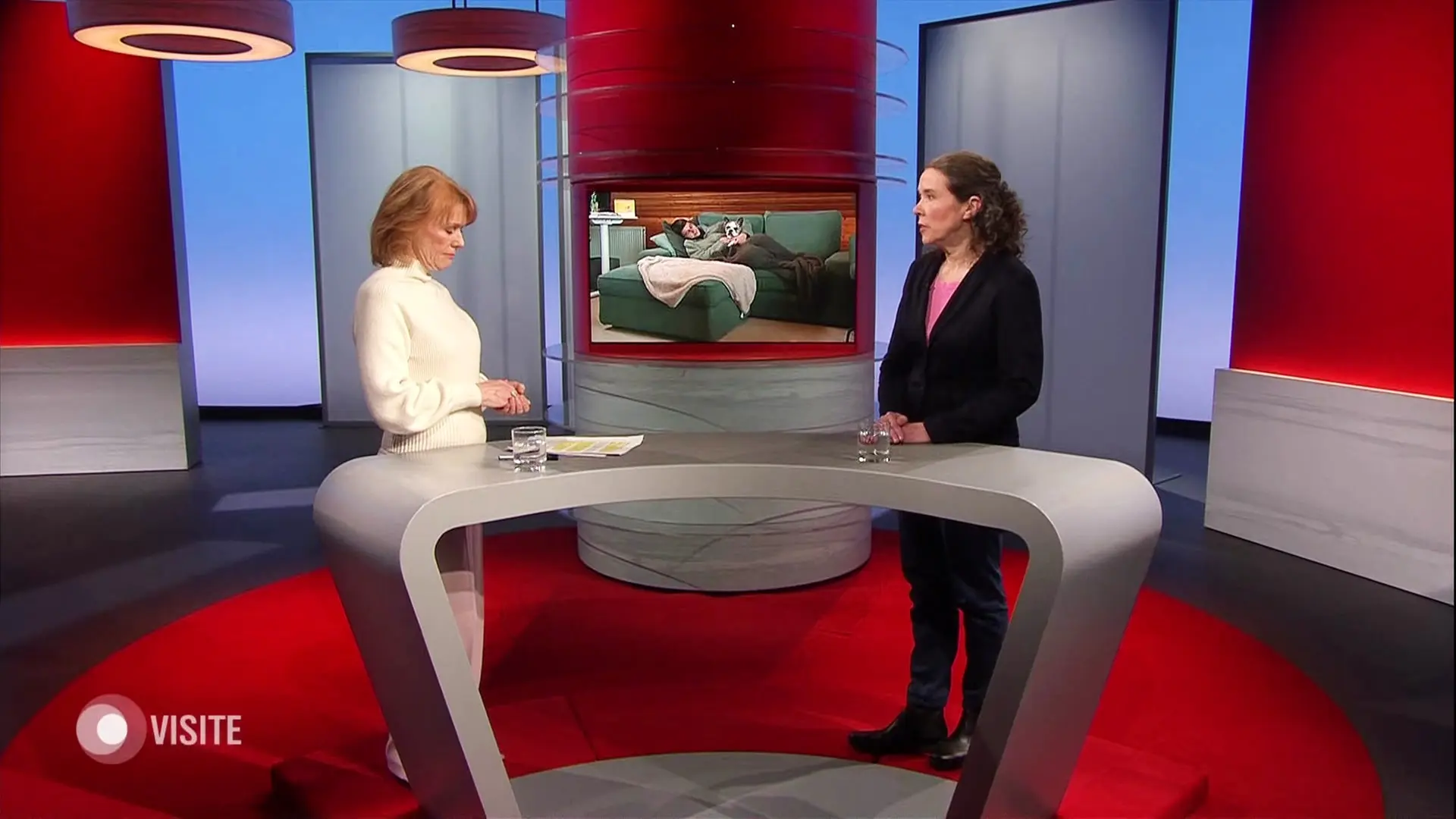 www.ndr.de
I’ve uploaded one to YouTube and managed to create English subtitles using Google translate.
Is anyone able to help check the transcription/translation?
If you’re comfortable editing text files, I can send the subtitle SRT file which can be edited in Notepad or a similar text editor. Otherwise, you can just let me know any mistakes and the timestamp and I can fix them.
If anyone is willing to have a look, I’d be very grateful. It doesn’t have to be perfect as long as it makes sense and there’s no obvious errors.
I’m gonna start recording and uploading the other one now
Many thanks.
Kaum erforscht und wenig Verständnis: ME/CFS bedeutet viel Leid für Betroffene
Die Krankheit ME/CFS schränkt das Leben Betroffener massiv ein. Die Symptome machen Anstrengung oft unmöglich. Das Problem: Sowohl die Diagnose als auch die Behandlung ist nach wie vor schwierig.
www.ndr.de
Long Covid: Symptome, Behandlung und Forschung
Welche Ausprägungen kann ME/CFS haben? Welche Symptome lassen sich lindern? Woran wird geforscht? Internistin Dr. Vega Gödecke informiert.
www.ndr.de
I’ve uploaded one to YouTube and managed to create English subtitles using Google translate.
Is anyone able to help check the transcription/translation?
If you’re comfortable editing text files, I can send the subtitle SRT file which can be edited in Notepad or a similar text editor. Otherwise, you can just let me know any mistakes and the timestamp and I can fix them.
If anyone is willing to have a look, I’d be very grateful. It doesn’t have to be perfect as long as it makes sense and there’s no obvious errors.
I’m gonna start recording and uploading the other one now
Many thanks.
Chandelier
Senior Member (Voting Rights)
The translation is pretty bad. I'm about 2 mins into the video so far.If anyone is willing to have a look, I’d be very grateful. It doesn’t have to be perfect as long as it makes sense and there’s no obvious errors.
I'll get back to you with an improved srt file via PM.
Adam pwme
Senior Member (Voting Rights)
Thanks Chandelier much appreciatedThe translation is pretty bad. I'm about 2 mins into the video so far.
I'll get back to you with an improved srt file via PM.
Chandelier
Senior Member (Voting Rights)
I used the german original SRT and pasted it into https://chatgpt.com/ .I’ve uploaded one to YouTube and managed to create English subtitles using Google translate.
The result was so good that I only had to correct the names of the two portrayed people.
Attachments
Adam pwme
Senior Member (Voting Rights)
Thanks for the quick turnaround!I used the german original SRT and pasted it into https://chatgpt.com/ .
The result was so good that I only had to correct the names of the two people portrayed.
Unfortunately I've tried using ChatGPT before, and it tends to mess up the timings, which it seems to have done again. That's why I used Google Translate, thanks for checking the translation though. It's good to know that it isn't up to scratch.
Good to know, ChatGPT handles the translation. I'm going to look into whether there's a way to automate this better without breaking the timecodes, or if there's an alternative.
Thanks again
Chandelier
Senior Member (Voting Rights)
Ahh, crap!Thanks for the quick turnaround!
Unfortunately I've tried using ChatGPT before, and it tends to mess up the timings, which it seems to have done again. That's why I used Google Translate, thanks for checking the translation though. It's good to know that it isn't up to scratch.
Good to know, ChatGPT handles the translation. I'm going to look into whether there's a way to automate this better without breaking the timecodes, or if there's an alternative.
Thanks again
Could you let ChatGPT write you a little script where it combines the timings line from the original file and the translation from the other one? Or is it more complicated than that?
Thank you for your amazing work with your YouTube channel!
Adam pwme
Senior Member (Voting Rights)
Thanks, I think I might have found something that uses ChatGPT just giving that a try nowAhh, crap!
Could you let ChatGPT write you a little script where it combines the timings line from the original file and the translation from the other one? Or is it more complicated than that?
Thank you for your amazing work with your YouTube channel!
Chandelier
Senior Member (Voting Rights)

Professor Bernhard Schieffer: „Wir sehen bei jeder Viruserkrankung mehr Intensivpatienten als zuvor“
Der Bund stellt zusätzliche 500 Millionen Euro für die Erforschung postinfektiöser Krankheiten zur Verfügung. Erhält auch das Universitätsklinikum Gießen-Marburg weitere Gelder? Ein Interview mit Klinikdirektor Professor Bernhard Schieffer.
Interview with Professor Schieffer, one of the few medical professionals in Germany who took long covid seriously right from the start.
Professor Bernhard Schieffer: “With every viral illness, we are seeing more intensive care patients than before.”
AI Summary:
Background and Funding for Post-Infectious Research
Professor Bernhard Schieffer, Director of the Clinic for Cardiology, Angiology and Internal Intensive Care Medicine at the University Hospital Giessen and Marburg (UKGM), aims to further advance research on Post- and Long-Covid.
The German federal government has announced 500 million euros over ten years for research into post-infectious diseases. According to Schieffer, earlier funding initially emerged from routine clinical work and, since 2022, was supported by a state-funded Network Coordination Office for Post Covid. This office sorts cases, informs colleagues, and treats particularly severely ill patients. After a visit by then Federal Health Minister Karl Lauterbach two years ago, additional project-based funding—amounting to nearly six million euros—was allocated to Marburg. Three major projects were funded and will continue until next year.
The newly announced 500 million euros will be distributed through project-based calls for proposals, guided by an expert advisory board. The goal is to improve patient care.
Increased Infection Susceptibility and Intensive Care Cases
Schieffer states that since the COVID-19 pandemic, people have become more susceptible to infections. With each wave of infections and new disease entities, there are more intensive care patients than before. He describes this as highly unusual.
He suggests that the body may require a long time to recover from viral infections such as COVID-19, even when the course of illness is mild. According to him, a certain immune deficiency can persist for up to six months after infection.
Research Goals: Biomarkers and Therapies
A key objective is to identify biomarkers that allow clearer diagnosis of the disease. Once identified, targeted therapies could be developed. The pharmaceutical industry is involved in developing joint vaccination strategies and therapies aimed at strengthening population immunity to avoid being caught unprepared in the future.
Schieffer and his team plan to apply for funding as part of a larger consortium. They are already involved in two medical consortia, including one focused on severely ill ME/CFS patients. A project called “ME/CFS Mobil” aims to optimize decentralized care for patients who are bedridden and unable to visit hospitals.
Institutional Structure and Approach
In 2024, the Center for Post-Infectious Syndromes (CEPIS) was founded in Marburg. Schieffer states that this structure is lacking at many other university hospitals. The center works transdisciplinarily and can directly adapt its biomarker and pharmaceutical research strategies.
Challenges in Post- and Long-Covid Research
Schieffer explains that Post-Covid does not fit into traditional medical categories. He describes it as a metabolic disease that causes long-term damage to the nervous system and brain, leading to immunological, neurological, and psychiatric disorders.
One central finding is that the disease progresses in waves. These waves are based on chronic inflammation that can damage various organs, including the heart, liver, and brain. Depending on the phase, patients present with a wide range of symptoms. He notes that physicians who do not regularly treat such cases often struggle with diagnosis, leaving many patients untreated.
Open Questions and Future Outlook
According to Schieffer, further understanding of the disease mechanisms is essential. A detailed understanding of what happens in the body would enable monitoring of disease progression, biomarker-based diagnosis, and the development of diagnostic tools that lead to appropriate therapies. He compares this expected development to past progress in HIV and polio research and predicts similar advances for COVID.
Chandelier
Senior Member (Voting Rights)

Finanzierung für ME/CFS KidsMobil überraschend eingestellt – Projekt in Gefahr
Krankenkassen stoppen Finanzierung in Hamburg überraschend. Projekt droht zu scheitern, obwohl bereits alles vorbereitet war.
 www.abendblatt.de
AI Summary:
Funding for ME/CFS KidsMobil Suddenly Withdrawn – Project at Risk
In Hamburg, health insurance companies have unexpectedly stopped funding the ME/CFS KidsMobil project shortly after its launch, despite previously successful negotiations. The decision now threatens the entire initiative.
The project was intended to provide mobile care for children suffering from ME/CFS, a severe illness that often leaves patients unable to leave their beds.
Many Long Covid patients are also affected by the syndrome.
According to the Child Care Network Hamburg and the Berufsverband Kinder- und Jugendärztinnen (BVKJ), the funding withdrawal represents a dramatic setback for affected families, especially for severely ill children and adolescents.
They are calling on all parties to return to the negotiating table.
After months of intensive preparation, the necessary structures for the project had already been established.
This included purchasing an accessible vehicle and assembling a multiprofessional care team consisting of doctors, nursing staff, and therapists.
A specialized documentation system for ME/CFS and technical equipment for structured documentation had also been set up, along with a planned evaluation and extensive conceptual groundwork.
Following the assessment of the first 13 affected children and their families, organizers found that the need for outpatient medical, nursing, and advisory support is highly complex, urgent, and cannot be postponed.
The organizations emphasize that ensuring care for severely ill children is a shared responsibility and must not be abandoned.
They are urging the responsible authorities, particularly the social and family affairs department, as well as the health insurance companies, to help find a reliable solution quickly.
Chandelier
Senior Member (Voting Rights)

ME/CFS bei Kindern: Emil (9) aus Hamburg hat Wohnung seit Wochen nicht verlassen
Der Junge aus Eimsbüttel leidet unter ME/CFS und kann das Bett kaum verlassen. Doch trotz Diagnose kamen Zweifel auf – mit gravierenden Folgen.
www.abendblatt.de
AI Summary:
Emil from Hamburg is so weak that he can no longer attend school. However, doctors are questioning the diagnosis and suspect other causes.
Nine-year-old Emil from Hamburg developed ME/CFS after a coronavirus infection.
On many days, he spends up to twelve hours in bed, and even small physical or cognitive efforts can significantly worsen his condition. The diagnosis was made by a clinic in North Rhine-Westphalia, but a Hamburg clinic has expressed doubts, suggesting that psychological factors may be responsible for his symptoms.
ME/CFS is described as a severe neuroimmunological disease that can occur after viral infections and is considered the most severe form of Long Covid.
It leads to substantial physical and cognitive impairments, with symptoms worsening after minimal exertion. Diagnosis is difficult and usually made by exclusion.
Emil’s mother, Annegret Juch, rejects the recommendation of a four-week outpatient psychosomatic treatment program because it would have required daily hours of activity that she believes her son could not manage without deteriorating further.
After she declined, the clinic reportedly urged her to send Emil back to school and indicated it might inform child protective services due to suspected child endangerment.
The youth welfare office is now involved and visits the family once a week.
Although the relationship has become trusting, the suspicion of child endangerment remains.
Juch says the visits require significant energy from Emil and feel burdensome.
She criticizes what she describes as the ongoing psychologization of the illness and fears that families may be advised to increase activity in ways that could cause irreversible deterioration.
At the same time, she acknowledges that new support structures have been created in Hamburg, including a pediatric network and a mobile medical service for severely affected children.
Juch continues to hope for improvement. In early January, Emil briefly went outside to play in the snow for 20 minutes.
It was the only time this year he left the apartment.
Afterwards, he experienced a crash from which he has not yet recovered.
Chandelier
Senior Member (Voting Rights)

Die Behandlung von Post-Covid-Patienten ist noch immer ein episches Desaster
Die Behandlung von Post-Covid-Patienten ist ein episches Desaster. Aller Forschung zum Trotz sind Betroffene noch immer auf sich gestellt.
 www.sueddeutsche.de
The Süddeutsche Zeitung published an opinion piece by Sara Maria Behbehani.
AI Summary:
The treatment of post-Covid patients remains an epic disaster
Around 500,000 people in Germany are estimated to have developed a condition resembling ME/CFS as a result of the coronavirus pandemic, a neurological disease classified by the World Health Organization since 1969.
Symptoms include severe exhaustion, widespread pain, cognitive difficulties, circulatory problems, muscle weakness, and, most notably, intolerance to exertion.
Even minimal activity—such as a short conversation, a shower, or a brief walk—can trigger a “crash,” leaving some patients housebound or bedridden.
Despite research funding and the establishment of specialized outpatient clinics, patients are still largely left to manage on their own.
Travel to clinics can already exceed their physical limits, and while clinics may provide diagnoses and recommend treatments, there is no approved therapy for ME/CFS.
A specialst clinic like the Charité may suggest a list of off-label medications, but these must be prescribed by general practitioners who may lack the necessary expertise and assume liability risks.
Patients frequently have to pay for these medications themselves.
Follow-up care is inconsistent, and patients must independently research new findings and treatment options.
Those who lack the strength or financial means are left behind.
The article argues that what is needed are home visits, physicians up to date with current research, and coverage of commonly used off-label medications.
Five years after the first lockdown, the author concludes, treatment for post-Covid patients remains deeply inadequate, while those affected cannot afford to wait years for approved therapies as their lives remain on hold.
Registration for the online livestream of the International ME/CFS Conference in May is now open.
 events.mecfs-research.org
 cloud.seatable.io
ME/CFS Research Foundation
ME/CFS Research Foundation is a non-profit organization dedicated to advancing research and understanding of Myalgic Encephalomyelitis / Chronic Fatigue Syndrome.
events.mecfs-research.org
Registrierung (Online-Livestream): International ME/CFS Conference 2026
Form from SeaTable
cloud.seatable.io