News from Germany

There’s an exposition at the Berlin History of Medicine Museum “Horizontal: The sickbed and the world from the laying down position”. I think it opened two days ago?

Post (in german)

Presumably since it’s made a buzz in germanophone ME/CFS circles it atleast partially covers ME/CFS.
There’s a livestream starting at 19:00 GMT+1:
For anyone interested who cannot attend the opening, we are offering a live stream (in German) with a digital tour of the special exhibition.


On May 28, we invite you to the opening of the new special exhibition “Horizontal – Politics and Poetics from the Sickbed”

The exhibition explores how perception and our relationship to the world change when the bed becomes the center of one’s life. Through historical objects and archival materials, artistic works, activist perspectives, and the voices of those affected, a multifaceted picture emerges in the exhibition spaces, presenting the hospital bed not only as a site of medical intervention but as a space where fundamental questions of our present converge—questions of participation, care, solidarity, and the conditions for rest in an exhausted society.


In the “Existieren oder Leben” talk from May 18th, Carmen Scheibenbogen said that they submitted another CD 19 antibody trial for the 2 Million ME/CFS Research Funding Programme& that they probably will also trial a CD 20 antibody as well.
She also said that if B Cell depletion wouldn’t work as well as they thought but they would be sure it would be an autoimmune disease still, she would start CAR T Cell Therapy with the Erlangen Team (they did the case series with Lupus etc) whom she knows very well -since she is originally from that group.


In the “Existieren oder Leben” talk from May 18th, Carmen Scheibenbogen said that they submitted another CD 19 antibody trial for the 2 Million ME/CFS Research Funding Programme& that they probably will also trial a CD 20 antibody as well.
She also said that if B Cell depletion wouldn’t work as well as they thought but they would be sure it would be an autoimmune disease still, she would start CAR T Cell Therapy with the Erlangen Team (they did the case series with Lupus etc) whom she knows very well -since she is originally from that group.


But unfortunately she believes in subgroups and consequently all trials will be based on this assumption. She also claims we have a good understanding of the mechanisms of the illness. Unbelievable.
 
But unfortunately she believes in subgroups and consequently all trials will be based on this assumption. She also claims we have a good understanding of the mechanisms of the illness. Unbelievable.
It looks like is their agenda in order to push for more grants on MABs trials, although its a bit unorthodox method (propagandising that we know good about a disease that we almost know nothing) thats not bad as far as they conduct proper trial without any ambiguity in the road. Both positive and negative results will help a lot the picture out whats going on.
 

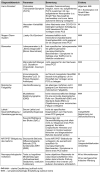
Wissenschaftliche Bewertung von Methoden für den Nachweis von „Post-/Long-COVID-Syndromen“ und ihrer Überlappung mit „ME/CFS“
Stellungnahme der Deutschen Gesellschaft für Neurowissenschaftliche Begutachtung“ (DGNB)

Erbguth, F., Tegenthoff, M., Böwering-Möllenkamp, C., Schain, H., Hansen, C., Widder, B.

Abstract
Bei der Bewertung und beim Nachweis subjektiver Beschwerdekomponenten des Post-/Long-COVID-Syndroms (im Folgenden abgekürzt als PCS) und seiner Überlappung mit der Konstellation eines mit Muskelschmerzen einhergehenden entzündlichen Prozesses des Zentralnervensystems (myalgische Enzephalomyelitis) in Kombination mit einem Chronic Fatigue Syndrom (ME/CFS) wird in ärztlichen Bestätigungen und Gutachten teilweise auf diagnostische Verfahren Bezug genommen, die als objektivierender Beleg für das Vorliegen der Beschwerden in einem kausalen Zusammenhang mit einer vorausgegangenen SARS-CoV-2-Infektion dienen sollen. Dies gilt auch für Fatigue-betonte sogenannte „Post-Vac“-Syndrome als Impfschäden. Viele diesbezügliche Verfahren sind jedoch nicht ausreichend wissenschaftlich validiert, womit ihnen keine beweisende Bedeutung im Zusammengang mit einem PCS zukommt.

Die vorliegende Stellungnahme stellt in interdisziplinärer Erarbeitung den aktuellen wissenschaftlichen Erkenntnisstand zu den hierbei am häufigsten genannten Verfahren dar. Sie berührt ausdrücklich nicht die Diagnostik von spezifischen z.B. neurologischen Komplikationen nach SARS-CoV-2-Infektionen wie etwa Enzephalopathien, Guillain-Barré-Syndromen, zerebralen arteriellen oder venösen Thrombosen bzw. Gefäßverschlüssen. Hier ist die erkrankungsspezifische Diagnostik anzuwenden. Weiterhin wird auf die DGUV-Empfehlung für die Begutachtung von Post Covid verwiesen (Deutsche Gesetzliche Unfallversicherung, DGUV, 2025).

Summary Table
Übersicht über die in der Stellungnahme kommentierten diagnostischen Verfahren mit Evidenzbewertung

table.png
 
Last edited:
Three different medical and psychological associations published their position statements on ME/CFS within the last year.
Here’s a short overview.

Deutsche Gesellschaft für Neurologie (DGN)
22. July 2025 – Statement by the German Neurological Association: https://www.dgn.org/artikel/zum-aktuellen-forschungsstand-bei-me-cfs

Critical reply by ME/CFS.de:


Deutsche Gesellschaft für Psychiatrie und Psychotherapie, Psychosomatik und Nervenheilkunde (DGPPN) & Deutsche Gesellschaft für Psychosomatische Medizin und Ärztliche Psychotherapie (DGPM)
14. April 2026 – Statement by the German Association for Psychiatry, Psychotherapy and Psychosomatics on Post-COVID-Syndrome:

Reply by Fatigatio.de:


Berufsverband Deutscher Psychologinnen und Psychologen (BDP)
7. May 2026 – Statement by the German Association of Psychologists:

Resolution/Summary:
 

Isn‘t it surprising that we still don‘t have good epidemiological data on ME/CFS and Long Covid?


LONG COVID IN SAXONY: GOVERNMENT STILL DOES NOT KNOW HOW MANY PEOPLE ARE AFFECTED

There is still considerable uncertainty about how many affected individuals there actually are: “The state government currently has no up‑to‑date findings. […] The state government expects to have information on the number of affected individuals in the 4th quarter of 2026,” according to the response to Löser’s minor inquiry in April.

The Green Party representative emphasizes that without a data foundation, providing care for people with Long Covid can hardly be ensured: “Because the figures have not yet been collected, we still lack an essential basis for targeted planning and management of care.”

In response to a TAG24 inquiry, the Saxon State Ministry for Social Affairs, Health and Social Cohesion (SMS) stated on Wednesday that “statistical uncertainties” in particular make data collection difficult.

This becomes clear, for example, in the case of the neuroimmunological disease ME/CFS: “ME/CFS can be a consequence of a COVID‑19 infection, but it can also occur independently. Uncertainties may also arise because symptoms of a post‑COVID condition are attributed to other illnesses and coded accordingly. An exact determination of the number of affected individuals is therefore difficult due to the complex symptomatology.”

Long‑Covid patients in Saxony will also have to wait a bit longer for another planned service: The Ministry of Health is currently working on a website that will compile general information about the illness, existing self‑help groups, and current research.
 
Isn‘t it surprising that we still don‘t have good epidemiological data on ME/CFS and Long Covid?

I am not sure that it is surprising. If you have a clinical concept as vague as Long Covid diagnostic ascertainment will inevitably be open to something like a fivefold uncertainty at the best. It is a bit like gathering data on how many people are tall or how many days had bad weather. Trying to fix a number for such a category is the wrong task.
 
you have a clinical concept as vague as Long Covid diagnostic ascertainment will inevitably be open to something like a fivefold uncertainty at the best.
True.
But if I remember correctly, there was state data in a recent lawsuit in Norway that showed that almost no one with ME/CFS returned to work.
This was used in that context to show that the default psychobabble therapy in Norway doesn’t work.
Shouldn’t it be possible for a sate to collect data on how many people have been off work for 2+ years due to an official diagnosis of ME/CFS?
Even if most cases were misdiagnosed and the usage of ME/CFS as a diagnosis would have started rather recently it would still be very valuable information, or am I missing something?
 
Shouldn’t it be possible for a sate to collect data on how many people have been off work for 2+ years due to an official diagnosis of ME/CFS?

Yes, but ME/CFS is much better defined than Long Covid and being off work is part of the calculation too.
it would still be very valuable information, or am I missing something?

I have never quite understood why these figures are useful. What matters is whether or not a health service is providing adequate access to diagnosis and/or care. You can tell that very simply - by the length of a sample of clinic waiting lists. If the wait is nine weeks it is inadequate. If it is a week it is doing well. The budget question will be 'Do we need to increase the number of clinic sessions?'. If the wait is nine weeks yes, if one week, no. The other relevant factor is cost-effectiveness of procedures. That is not dependent on numbers.
 
I have never quite understood why these figures are useful.
My interest in the data stems from the idea that it would greatly facilitate the communication of the urgency and the dimensions of the socioeconomic catastrophe that ME/CFS (and LC) is.
Similar to what the ME/CFS Research Foundation in Germany is pursuing.
As it stands, it is very difficult for the public and politicians to gauge what’s going on.
As the latest example, see the confusion in the wired article.

I‘m observing what a struggle it is for Chris Ponting and team to get the arguably most important analysis in ME/CFS history financed.
Wouldn’t the availability of better numbers make it much easier to communicate to politicians how non-sensical it is to not have the SequenceME study financed immediately?
Wouldn’t better numbers (like in the Norway lawsuit) help to quiet the neuroplasticity works!/psycho-babblers with facts?
 
Wouldn’t the availability of better numbers make it much easier to communicate to politicians how non-sensical it is to not have the SequenceME study financed immediately?

I don't honestly think numbers matter here. It is an issue of human value, of emotional response. Rare diseases get a lot of support. The impact on an individual is not affected by how many other people have the problem. We know the problem is huge. What more do we need to know? The problems Chris Ponting has had are due to quite different issues as I see it. Disbelief, basically. Numbers don't affect disbelief.
 
I‘m surprised to see an article about ME/CFS in Der Freitag.
I remember a video clip from a few years ago where the publisher Jakob Augstein was laughing about the notion of Long Covid.

Maybe that’s a positive sign that things are slowly changing.
People like Augstein are opportunists.

As soon as they sense the mood is shifting, they change their tune.

But it’s good to see that the mood is shifting! (at least in Germany)
 
Last edited:
But it’s good to see that the mood is shifting! (at least in Germany)
It truly seems as if a shift has happened!
I just discovered Der Freitag’s ME/CFS topic site.
They are featuring articles almost by the week lately:

Long Covid and ME/CFS: Why is there still no medication?​

Five years after the first Long Covid cases, an effective treatment is still missing.
New data show that even expensive specialized therapies fail. Why is the research taking so long?

Von Martin Rücker
05.06.2026

Living with ME/CFS: The black hole in which hundreds of thousands disappear​

Leon Eichelbaum is suffering from ME/CFS and has not been able to leave his home for almost a year.
Von Text und Fotos: Leon Eichelbaum
05.06.2026
 
Not really news and apologies if I missed it but couldn't find anything on the forum yet:


ME/CFS Quality of Life Index
@meqli-prom.bsky.social

The MEQLI study is developing and validating a questionnaire that measures health-related quality of life in people with ME/CFS.
Team & contact form: www.patient-reported-outcomes.com

From the website:

"We are a multidisciplinary research group of the Institute for Health Care Research in Dermatology and Nursing (IVDP) at the University Medical Center Hamburg-Eppendorf (UKE). Our mission is to strengthen the focus on the patient perspective in medicine by using patient-reported outcome measures (PROMs) and by learning about the needs and experiences of people living with a chronic disease.

"
We develop and validate PROMs, use them in quantitative surveys, and enhance the understanding of the patient perspective with the help of qualitative methods. We are part of the Hamburg Center for Health Economics (HCHE) and collaborate with national and international research groups, institutions, and clinical partners."


Edit: Couldn't find a link to the MEQLI study, but on the website under 'research' there's some info about their other work on ME/CFS and LC, among others this:

Baalmann AK, Blome C, Stoletzki N, Donhauser T, Apfelbacher C, Piontek K. Patient-reported outcome measures for post-COVID-19 condition: a systematic review of instruments and measurement properties. BMJ Open. 2024 Dec 20;14(12):e084202. doi: 10.1136/bmjopen-2024-084202. PMID: 39806627; PMCID: PMC11667390.
 
Last edited:

German state TV station NDR with an episode of the BewegungsDocs ("They treat illnesses through exercise™") about a 58 year old woman with LC but without PEM (which is explicitly mentioned in the diagnosis phase by the docs).
She is sent to rehabilitation and improves her walking distance from 325 meters to 513 meters and also scores in the normal range again in cognitive tests.

The show ends on a happy ending wording:
Angela has succeeded.
The consequences of her COVID infection are now a thing of the past.

Collage of the subtitles, machine translated:
What is known about the patient:

She has had COVID twice —
and since then, nothing has been the same.

“I can no longer live my life
the way I want to.
I want to be happier.
I am a positive,
cheerful person.
All of that has fallen away.”

She is 58 years old.

She suffers from post-COVID syndrome,
is constantly exhausted,
lacks energy, and becomes short of breath easily.

“I feel resigned.
I no longer have confidence in the future.
Sometimes I think
I can’t cope with all of this anymore
and I’ve reached a point
where I simply don’t know what to do.”

Her physical capacity is
significantly reduced
because she lacks both breath
and strength.

We have the report
from the pulmonary specialist.
It shows
that her inspiratory muscle strength
has been reduced to 60%.
This is
a considerable impairment.

“I have gained weight because
I can no longer move around
the way I would like to.
All of this affects my mood.”

She can barely manage
her part-time office job anymore.


About the Movement Docs​

That is about to change
with the help of the Movement Docs.

They treat illnesses
through exercise:

Cardiologist Melanie Hümmelgen,
rehabilitation physician Christian Sturm,
and sports medicine specialist Helge Riepenhof.


The Movement Docs’ Perspective​

She avoids physical exertion
and becomes increasingly inactive.

The question for the doctors is:
How much exercise
can Angela Kück tolerate?

Does she experience severe exhaustion
after exertion to the point where she says:

“I completely crash
if I exert myself physically?”

She describes
typical fatigue symptoms.

She has this leaden tiredness
and does not recover well.

However, she does not have
post-exertional malaise (PEM)—
what patients often describe
as a “crash.”

That means worsening symptoms
after physical
or emotional exertion.

So she is allowed to exercise.

In that case,
I would apply for rehabilitation with her.

That will help her
most effectively.

Specifically,
through a holistic post-COVID rehabilitation program
with Melanie Hümmelgen
at the Mühlenberg Clinic in Malente.

Angela begins
the four-week program
with a fitness test.

“You will walk continuously
for six minutes
at your own pace,
as far as you can.

Each time you walk the length
of the hall,
take one marble.

Each marble
represents 50 meters,
which makes counting easier.”

The test begins.

How many meters
can Angela walk
in the allotted six minutes?

325 meters.

“That is a low result
for six minutes.
We typically see distances like this
in patients with heart failure.”

Next comes
a neurological assessment.

Angela must complete
a fatigue questionnaire.

“You scored a total of 58 points.
The average score is 38,
which means the scale indicates
a very pronounced level
of fatigue.”

Additional tests show
that since her COVID infection,
Angela has also been suffering from memory problems
and difficulty concentrating.

These symptoms affect her daily life considerably.

“Sometimes I’m looking for something
or going to get something,
for example in my pantry.
I walk ten steps,
and when I get there,
I have no idea
why I went there.

I can no longer concentrate
on several things at once.

I really have to pull myself together
to stay on top of things.”

It is time
for something to change.

Movement Doc Melanie Hümmelgen
has developed a training program.

Point 1: Train the brain​

“Our neuropsychology colleagues
at the neighboring August Bier Clinic
can help.

With computer-based
cognitive training,
we can see
whether it benefits you.”

Point 2:​

Improve Angela’s physical capacity
through strength and endurance training.

Point 3:​

Breathing exercises.

Pulmonary specialist Sabrina Rottmann
from Grosshansdorf Lung Clinic
consults Angela via video appointment.

“You saw a pulmonologist
back in March 2024.

He noticed that your diaphragm
had been somewhat affected
by the viral illness.

The lungs themselves
are not muscles.
They cannot move on their own.

To expand
and allow air to flow in,
they need assistance
from the muscles.

The diaphragm
is particularly important.

This muscle
pulls the lungs downward.

In post-COVID patients,
the diaphragm can be weakened.”

Angela has only 60%
of normal respiratory muscle strength.

The specialist recommends
a breathing trainer.

Angela should inhale slowly
against resistance.

The small ball rises
and should be kept
within the target zone.

This strengthens the diaphragm.

“You can repeat this
several times,
multiple times per day.”

The rehabilitation program can begin.


The first item on the agenda
is breathing therapy.

“Let the air flow in.
And now slowly breathe out
through pursed lips.”

We repeat the exercise.

The focus
of breathing therapy is:

“We are trying
to train the diaphragm
to encourage deeper breathing
for longer periods
and achieve
a longer exhalation.

This helps people cope better
with resistance or exertion,
such as climbing stairs,
which is often difficult.

If you have limitations,
the goal is to help you withstand them
or manage them more effectively.”

In exercise therapy,
light muscle-building exercises follow.

Physiotherapist Lea Giebelstein
ensures correct technique.

“Keep your shoulders relaxed.
Engage the muscles
between your shoulder blades,
open your chest,
and straighten up.

This strengthens
the muscles in your back
so that you can walk more upright.”

During a break,
Angela uses her breathing trainer.

Time to process
her first impressions
of rehabilitation.

“I’ve never been
to rehab before.
This is completely new territory.

I really like it,
because people understand
what I’m struggling with.”

The next therapy session:
computer-based cognitive training
to address Angela’s forgetfulness.

“This is an exercise
for concentration and attention.

Here is an example image.

I’d like you
to find the picture
that is exactly identical
and tap it.”

Just as with muscles,
the same principle applies
to the brain:

Use it or lose it.

The brain must be challenged,
otherwise it deteriorates.

“It’s difficult because
there are so many details,
so many colors.

The pictures
look very similar.

I think I used to be
faster at this.

This is pretty mean.”


“Good morning!

I wanted to give
a quick update
from my rehabilitation.

I have a full schedule
almost every day.”

The effort pays off.

Day by day,
Angela improves
her strength and endurance.

For four weeks
she trains under supervision.

The challenge will be
continuing at home afterward
and not falling back
into old habits.

Will she succeed?


One month later​

Has Angela managed
to integrate the exercise program
into her daily life?

“At home,
it’s difficult
to fit everything in.

You still have to work,
and there simply aren’t enough hours
in the day.”

She has learned
to manage her energy.

“I continue
with my breathing exercises.”

She also does endurance training
several times a week.

Whether in the water...

...or on land.

“I actually enjoy exercise now.

The only thing I don’t enjoy:
I would never go outside
when it’s raining.”

On those days,
she completes her workouts
on a stationary bike.

“When I’ve done it,
I feel satisfied
and proud of myself.”

And she is not only strengthening
her muscles—
she is also training her brain.

“There are various apps
that I use in everyday life.

They focus on memory training,
concentration,
and mental arithmetic.

I practice doing calculations
in my head.

I’m still very motivated.”

Will this help her
gain control over
her post-COVID symptoms?


Two months after rehabilitation​

Angela Kück
and Melanie Hümmelgen
meet again.

They discuss
the results
of the final assessment.

“Your cognitive difficulties
caused you a great deal of distress
and uncertainty.

Combined with
the fatigue syndrome,
the exhaustion.”

Three months earlier,
Angela scored
58 points
on the fatigue questionnaire,
which was a poor result.

“Now your score is 28,
which is considered normal.

Normal doesn’t mean zero—
anything below the mid-30s
is considered normal.”

“Wonderful.
I’m very happy about that.”

The cognitive training
was also successful.

“My memory
has improved significantly.

I no longer have to make
unnecessary trips around the house.”

And what about
her physical performance?

Looking back:

Three months earlier,
Angela had managed only
325 meters
in the six-minute walk test.

“At the time,
I explained that 325 meters
was comparable
to a patient
with severe heart failure—
a seriously poor result.

Now your result
is completely normal.

I would expect
a healthy woman
to walk more than 500 meters.

And you walked 513 meters
while chatting at the same time.”

This improvement
is also due to
stronger respiratory muscles.

“Your inspiratory muscle weakness,
which had reduced your capacity
to 60%,
has now returned
to normal lung function.

You now have
normal respiratory muscle strength.”

“That’s sensational.”

“Thank you.”

On top of that,
she has lost
more than ten kilograms.

“I’m extremely satisfied
with the results.

I knew things were
much better
because I can manage
my everyday life so much more easily.

Because I can breathe better.

But I never expected
the results
to be this good.”

Angela has succeeded.

The consequences
of her COVID infection
are now a thing of the past.

 

And another article by Der Freitag about ME/CFS. Paywall still standing.
ME/CFS: How Long Covid Is Destroying Children’s Daily Lives

Fatigue, concentration problems, missed school: Long Covid is fundamentally changing the lives of many children and their families. New research shows why the illness progresses differently in children than in adults

By Ulrike Baureithel
 

Dresden Biobank Specifically Collects Samples from Children and Adolescents

A pediatric biobank for Long COVID research is being established in Dresden. Blood, urine, and hair samples are being collected there to help researchers better understand the causes of the condition.
Yes, they are also collecting samples from severe patients at home, let’s go! :party::party:

According to the University Hospital, patient samples such as blood, urine, hair, as well as nasal and throat swabs, are being collected under strict quality standards and made available for research projects through a special allocation process. The goal is to identify new biomarkers, understand the causes and mechanisms of Long COVID–like illnesses, and ultimately develop targeted treatment approaches.

In line with guidelines for the collection of pediatric samples, a joint biobank infrastructure has been established at the Dresden and Freiburg sites, reports Dr. Nicole Töpfer. The physician at the University Hospital heads Pednet-LC, a federally funded network dedicated to researching post-infectious diseases in children and adolescents.

In the long term, the facility will be able to store up to five million different samples. At present, 220,000 samples are already stored.

Until now, the biobank’s primary focus has been on cancer therapy. With the establishment of the pediatric biobank, researchers also hope to achieve scientific breakthroughs in the study of rare diseases, according to Prof. Reinhard Berner, Head of Pediatrics and Adolescent Medicine at the University Hospital.

One special feature of the pediatric biobank is the possibility of collecting samples at home. Using specially designed self-sampling kits, even severely ill patients can participate in the research.
 

Direct link for donations:

Martin Rücker is a German journalist that publishes a lot of articles on ME/CFS.
He is part of the cooperative RiffReporter.
Many libraries in Germany offer free access to their articles.
A major source of funding has been lost and thus they are forced to run a crowdfunding campaign.

RiffReporter is under economic pressure. We are asking for support to ensure independent reporting on issues that affect people in their everyday lives – topics that other media outlets often drop far too quickly.

What is this project about?​

RiffReporter is an independent, ad‑free online magazine. We are not backed by a publishing house but by a cooperative of freelance journalists. What defines RiffReporter is this: our authors don’t chase quick headlines. They stay with the issues that matter — care work, Long Covid, women’s health, mobility, biodiversity, climate, science, and the digital public sphere.

RiffReporter has now reached a critical moment. A major source of funding has fallen through. We have already reduced costs, redistributed tasks, and streamlined our structures. Even so, we need additional support so that our authors can continue researching and reporting in the coming months.

That is why we are launching this campaign. Over six weeks, we will show why the topics our authors cover are essential to people’s everyday lives. Each week offers a different perspective:

1. For health that doesn’t leave anyone behind​

Illness changes families, work, finances, daily routines, and dignity. Our authors report on what people face when they must care for loved ones or when they fall ill with Long Covid or ME/CFS. They cover gaps in healthcare, chronic illnesses, family caregivers, and the question of what people need when the system leaves them on their own.
 
Back
Top Bottom