News from Germany

As a counterbalance, it seems that the state German health insurance posted on Instagram for ME/CFS day about the magical wonders of psychobehavioral therapies. Some have been removed following complaints, though not all.


Fortunately, there isn’t just *one* state health insurance provider in Germany, but 93.
Taken together, the AOKs have the largest membership.
They are also independent of the state and are therefore referred to as statutory health insurance providers.

Still, it’s utterly and incomprehensibly stupid.
I suspect the AOK wants to be able to offload its sick pay recipients onto the pension fund more quickly, but who knows?
 
(Paywalled)

ME/CFS: "I'm not exhausted — I'm seriously ill"
ME/CFS is a chronic illness that robs those affected of everything that makes life worth living. Who suffers most from it, why it is so little understood and researched, and what would help those affected.
A report by Elena Jaekel

I‘m surprised to see an article about ME/CFS in Der Freitag.
I remember a video clip from a few years ago where the publisher Jakob Augstein was laughing about the notion of Long Covid.

Maybe that’s a positive sign that things are slowly changing.
 
There’s an exposition at the Berlin History of Medicine Museum “Horizontal: The sickbed and the world from the laying down position”. I think it opened two days ago?

Post (in german)

Presumably since it’s made a buzz in germanophone ME/CFS circles it atleast partially covers ME/CFS.
 
There’s an exposition at the Berlin History of Medicine Museum “Horizontal: The sickbed and the world from the laying down position”. I think it opened two days ago?

Post (in german)

Presumably since it’s made a buzz in germanophone ME/CFS circles it atleast partially covers ME/CFS.
There’s a livestream starting at 19:00 GMT+1:
For anyone interested who cannot attend the opening, we are offering a live stream (in German) with a digital tour of the special exhibition.


On May 28, we invite you to the opening of the new special exhibition “Horizontal – Politics and Poetics from the Sickbed”

The exhibition explores how perception and our relationship to the world change when the bed becomes the center of one’s life. Through historical objects and archival materials, artistic works, activist perspectives, and the voices of those affected, a multifaceted picture emerges in the exhibition spaces, presenting the hospital bed not only as a site of medical intervention but as a space where fundamental questions of our present converge—questions of participation, care, solidarity, and the conditions for rest in an exhausted society.


In the “Existieren oder Leben” talk from May 18th, Carmen Scheibenbogen said that they submitted another CD 19 antibody trial for the 2 Million ME/CFS Research Funding Programme& that they probably will also trial a CD 20 antibody as well.
She also said that if B Cell depletion wouldn’t work as well as they thought but they would be sure it would be an autoimmune disease still, she would start CAR T Cell Therapy with the Erlangen Team (they did the case series with Lupus etc) whom she knows very well -since she is originally from that group.


In the “Existieren oder Leben” talk from May 18th, Carmen Scheibenbogen said that they submitted another CD 19 antibody trial for the 2 Million ME/CFS Research Funding Programme& that they probably will also trial a CD 20 antibody as well.
She also said that if B Cell depletion wouldn’t work as well as they thought but they would be sure it would be an autoimmune disease still, she would start CAR T Cell Therapy with the Erlangen Team (they did the case series with Lupus etc) whom she knows very well -since she is originally from that group.


But unfortunately she believes in subgroups and consequently all trials will be based on this assumption. She also claims we have a good understanding of the mechanisms of the illness. Unbelievable.
 
But unfortunately she believes in subgroups and consequently all trials will be based on this assumption. She also claims we have a good understanding of the mechanisms of the illness. Unbelievable.
It looks like is their agenda in order to push for more grants on MABs trials, although its a bit unorthodox method (propagandising that we know good about a disease that we almost know nothing) thats not bad as far as they conduct proper trial without any ambiguity in the road. Both positive and negative results will help a lot the picture out whats going on.
 

Wissenschaftliche Bewertung von Methoden für den Nachweis von „Post-/Long-COVID-Syndromen“ und ihrer Überlappung mit „ME/CFS“
Stellungnahme der Deutschen Gesellschaft für Neurowissenschaftliche Begutachtung“ (DGNB)

Erbguth, F., Tegenthoff, M., Böwering-Möllenkamp, C., Schain, H., Hansen, C., Widder, B.

Abstract
Bei der Bewertung und beim Nachweis subjektiver Beschwerdekomponenten des Post-/Long-COVID-Syndroms (im Folgenden abgekürzt als PCS) und seiner Überlappung mit der Konstellation eines mit Muskelschmerzen einhergehenden entzündlichen Prozesses des Zentralnervensystems (myalgische Enzephalomyelitis) in Kombination mit einem Chronic Fatigue Syndrom (ME/CFS) wird in ärztlichen Bestätigungen und Gutachten teilweise auf diagnostische Verfahren Bezug genommen, die als objektivierender Beleg für das Vorliegen der Beschwerden in einem kausalen Zusammenhang mit einer vorausgegangenen SARS-CoV-2-Infektion dienen sollen. Dies gilt auch für Fatigue-betonte sogenannte „Post-Vac“-Syndrome als Impfschäden. Viele diesbezügliche Verfahren sind jedoch nicht ausreichend wissenschaftlich validiert, womit ihnen keine beweisende Bedeutung im Zusammengang mit einem PCS zukommt.

Die vorliegende Stellungnahme stellt in interdisziplinärer Erarbeitung den aktuellen wissenschaftlichen Erkenntnisstand zu den hierbei am häufigsten genannten Verfahren dar. Sie berührt ausdrücklich nicht die Diagnostik von spezifischen z.B. neurologischen Komplikationen nach SARS-CoV-2-Infektionen wie etwa Enzephalopathien, Guillain-Barré-Syndromen, zerebralen arteriellen oder venösen Thrombosen bzw. Gefäßverschlüssen. Hier ist die erkrankungsspezifische Diagnostik anzuwenden. Weiterhin wird auf die DGUV-Empfehlung für die Begutachtung von Post Covid verwiesen (Deutsche Gesetzliche Unfallversicherung, DGUV, 2025).

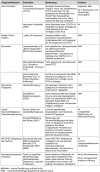
Summary Table
Übersicht über die in der Stellungnahme kommentierten diagnostischen Verfahren mit Evidenzbewertung

table.png
 
Last edited:
Three different medical and psychological associations published their position statements on ME/CFS within the last year.
Here’s a short overview.

Deutsche Gesellschaft für Neurologie (DGN)
22. July 2025 – Statement by the German Neurological Association: https://www.dgn.org/artikel/zum-aktuellen-forschungsstand-bei-me-cfs

Critical reply by ME/CFS.de:


Deutsche Gesellschaft für Psychiatrie und Psychotherapie, Psychosomatik und Nervenheilkunde (DGPPN) & Deutsche Gesellschaft für Psychosomatische Medizin und Ärztliche Psychotherapie (DGPM)
14. April 2026 – Statement by the German Association for Psychiatry, Psychotherapy and Psychosomatics on Post-COVID-Syndrome:

Reply by Fatigatio.de:


Berufsverband Deutscher Psychologinnen und Psychologen (BDP)
7. May 2026 – Statement by the German Association of Psychologists:

Resolution/Summary:
 

Isn‘t it surprising that we still don‘t have good epidemiological data on ME/CFS and Long Covid?


LONG COVID IN SAXONY: GOVERNMENT STILL DOES NOT KNOW HOW MANY PEOPLE ARE AFFECTED

There is still considerable uncertainty about how many affected individuals there actually are: “The state government currently has no up‑to‑date findings. […] The state government expects to have information on the number of affected individuals in the 4th quarter of 2026,” according to the response to Löser’s minor inquiry in April.

The Green Party representative emphasizes that without a data foundation, providing care for people with Long Covid can hardly be ensured: “Because the figures have not yet been collected, we still lack an essential basis for targeted planning and management of care.”

In response to a TAG24 inquiry, the Saxon State Ministry for Social Affairs, Health and Social Cohesion (SMS) stated on Wednesday that “statistical uncertainties” in particular make data collection difficult.

This becomes clear, for example, in the case of the neuroimmunological disease ME/CFS: “ME/CFS can be a consequence of a COVID‑19 infection, but it can also occur independently. Uncertainties may also arise because symptoms of a post‑COVID condition are attributed to other illnesses and coded accordingly. An exact determination of the number of affected individuals is therefore difficult due to the complex symptomatology.”

Long‑Covid patients in Saxony will also have to wait a bit longer for another planned service: The Ministry of Health is currently working on a website that will compile general information about the illness, existing self‑help groups, and current research.
 
Isn‘t it surprising that we still don‘t have good epidemiological data on ME/CFS and Long Covid?

I am not sure that it is surprising. If you have a clinical concept as vague as Long Covid diagnostic ascertainment will inevitably be open to something like a fivefold uncertainty at the best. It is a bit like gathering data on how many people are tall or how many days had bad weather. Trying to fix a number for such a category is the wrong task.
 
you have a clinical concept as vague as Long Covid diagnostic ascertainment will inevitably be open to something like a fivefold uncertainty at the best.
True.
But if I remember correctly, there was state data in a recent lawsuit in Norway that showed that almost no one with ME/CFS returned to work.
This was used in that context to show that the default psychobabble therapy in Norway doesn’t work.
Shouldn’t it be possible for a sate to collect data on how many people have been off work for 2+ years due to an official diagnosis of ME/CFS?
Even if most cases were misdiagnosed and the usage of ME/CFS as a diagnosis would have started rather recently it would still be very valuable information, or am I missing something?
 
Shouldn’t it be possible for a sate to collect data on how many people have been off work for 2+ years due to an official diagnosis of ME/CFS?

Yes, but ME/CFS is much better defined than Long Covid and being off work is part of the calculation too.
it would still be very valuable information, or am I missing something?

I have never quite understood why these figures are useful. What matters is whether or not a health service is providing adequate access to diagnosis and/or care. You can tell that very simply - by the length of a sample of clinic waiting lists. If the wait is nine weeks it is inadequate. If it is a week it is doing well. The budget question will be 'Do we need to increase the number of clinic sessions?'. If the wait is nine weeks yes, if one week, no. The other relevant factor is cost-effectiveness of procedures. That is not dependent on numbers.
 
I have never quite understood why these figures are useful.
My interest in the data stems from the idea that it would greatly facilitate the communication of the urgency and the dimensions of the socioeconomic catastrophe that ME/CFS (and LC) is.
Similar to what the ME/CFS Research Foundation in Germany is pursuing.
As it stands, it is very difficult for the public and politicians to gauge what’s going on.
As the latest example, see the confusion in the wired article.

I‘m observing what a struggle it is for Chris Ponting and team to get the arguably most important analysis in ME/CFS history financed.
Wouldn’t the availability of better numbers make it much easier to communicate to politicians how non-sensical it is to not have the SequenceME study financed immediately?
Wouldn’t better numbers (like in the Norway lawsuit) help to quiet the neuroplasticity works!/psycho-babblers with facts?
 
Back
Top Bottom