
Long Covid: Crashkompetenz ist entscheidend
Pacing oder Brain-Retraining? Die aktuellen Grabenkämpfe um die «richtige» Behandlung von Long Covid werden weder der komplexen Erkrankung noch den Betroffenen gerecht.
 www.woz.ch
 www.woz.ch


 www1.wdr.de
Charity Run for a Seriously Ill Classmate
July 6, 2026,
Students at Carolus-Magnus-Gymnasium in Marsberg are voluntarily running laps around the school's sports field. Through this fundraising event, they hope to help their seriously ill classmate, Lenja.
It started as an aww-story and ended as what appears to be a misinformation nightmare.Lenja and her family now have renewed hope: a specialized treatment could help ease her symptoms, and there is even a possibility of a full recovery.
A physician at Charité in Berlin, who specializes in her condition, has recommended a therapeutic blood filtration procedure (often referred to as blood washing). However, Lenja's health insurance provider has refused to cover the cost. To support the 15-year-old, her classmates have laced up their running shoes and are taking part in a charity run to raise money for her treatment.

2026 is a wild time to be alive.
Bernd Löwe, clinical director of the UKE Hamburg, is given the opportunity to bestow other medical doctors with the blessings of his fantasies in Ärzteblatt.
Meanwhile, there are real world hearings about the failings of that very clinic with reactions like these:
This is something that's going to have to give some. All of this happening in secret has contributed to the disaster, we are way past the point at which public inquiries are needed, and blame deserves to be assigned. We can't trust the people who failed to solve their own mess in private, without oversight, without any pressure to deliver.The criticism of the Children’s UKE is likely to have consequences: Marylyn Addo, the well-known infectious disease specialist at the University Medical Center Hamburg-Eppendorf, announced that the criticism would be discussed internally.
It's really hard to tell without additional context the decade in which this was written. It takes specific clues giving its timeline and cultural environment, because most of this might as well have been written in the late 19th century. What an incredible mess, medicine is basically "negging" not only what is its only reliable tool, science, but the source of some of the most transformative progress in human history, bar none.Long Covid: Crashkompetenz ist entscheidend
Pacing oder Brain-Retraining? Die aktuellen Grabenkämpfe um die «richtige» Behandlung von Long Covid werden weder der komplexen Erkrankung noch den Betroffenen gerecht.

You have summarised my feelings as I read that item perfectly.It started as an aww-story and ended as what appears to be a misinformation nightmare.
I assume this is IVIG rather than aphaeresis for micro clots, but, even so, to put a child and their family through all of that including the exposure of the public fund-raising. And promising the chance of a full recovery... Where is the evidence to support that?A physician at Charité in Berlin, who specializes in her condition, has recommended a therapeutic blood filtration procedure (often referred to as blood washing).

I would need help with that.If anyone has some time, there is information on this thread
What does that mean exactly?that could be usefully transferred to other threads,
What does that mean exactly?made more accessible for non-German speakers and expanded upon
When the AI overlords take over, then perhaps we will have consistency. Until then, things will be messy and imperfect.I once created a thread about malpractices at the children’s hospital in Basel, Switzerland and it was merged into the News from Switzerland thread by the mods.

The medical profession has proved beyond any doubt that it is quite simply incapable of any fair, robust, and timely self-correction on this matter.This is something that's going to have to give some. All of this happening in secret has contributed to the disaster, we are way past the point at which public inquiries are needed, and blame deserves to be assigned. We can't trust the people who failed to solve their own mess in private, without oversight, without any pressure to deliver.
This whole "we will investigate ourselves" thing can't stand anymore. It's true that in most cases experts need to be free of political interference, there are huge potential pitfalls to this, but the medical profession has proven itself incapable of handling this, and basically needs guardianship. Things are that bad, just look at them talk, FFS, and what they're planning.
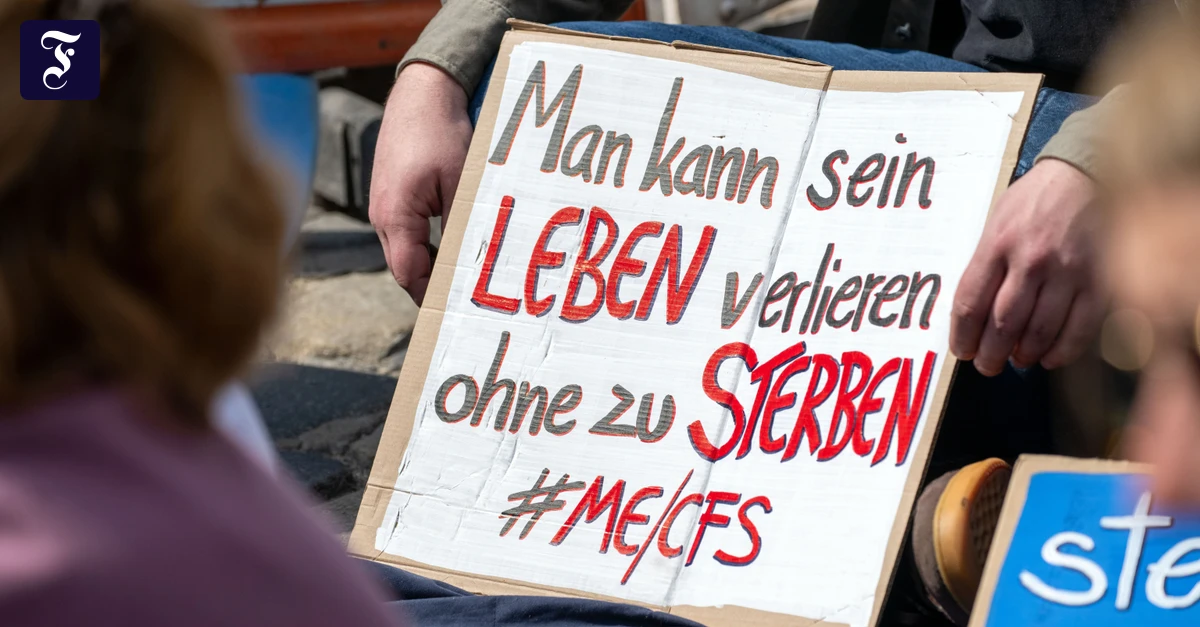
 www.faz.net
"Entire Families Simply Disappear from Life"
By Thorsten Winter July 7, 2026
Whether it is a young woman or a man in the prime of life, COVID-19 has derailed many lives. The families of people who are bedridden with ME/CFS and severe fatigue say they have been left to cope on their own by the social welfare system. A newly formed self-help group is now calling for a series of reforms.
First, the group [a small self-help group] is calling on policymakers to establish an appropriate care framework for building a comprehensive outpatient care system.
Some family physicians still make house calls, "but you can forget about that when it comes to specialists," Pilz [a retired gp] points out.
One possible solution, the paper argues, would be to include ME/CFS within Germany's specialized outpatient palliative care system, which provides services for people with incurable, progressive, and advanced illnesses on behalf of the statutory health insurance funds.
Alternatively, patients could receive care from office-based physicians, although this would require specialized training for both doctors and nursing staff.
Existing specialist clinics should also offer video consultations and be reliably available by telephone.
Second, both patients and their heavily burdened family members should receive psychological support.
The paper stresses that people with ME/CFS are by no means "imaginary patients" or individuals with "a minor psychological problem" who simply need to stop dwelling on the illness in order to return to their former lives.
"A considerable number of young people with this disease have already chosen medically assisted suicide," the position paper states.
According to Pilz and Marion, Pilz's daughter and Marion's husband have themselves already contacted the German Society for Humane Dying to seek information.
Austrian care guidelines as a model
Family members also say they lack clear points of contact within public authorities.
One of their greatest concerns is the uncertainty over what would happen to their loved ones with ME/CFS if they themselves were suddenly hospitalized.
"That simply isn't an option," Pilz says, referring to Marion.
But if such a situation were to arise, there would have to be a workable solution—yet no one can say what that would be.
Other countries have already made more progress in this area.
The position paper points to care guidelines issued by Austria's professional society for ME/CFS.
These recommend, for example, assembling a dedicated care team as an essential requirement.
"The care team includes everyone responsible for essential caregiving tasks such as feeding, washing, oral hygiene, and personal care.
A wider circle of supporters can help with tasks such as cooking or shopping.
In both groups, reliability and a willingness to accommodate the patient's special needs are paramount."
"We need an integrated care system," Marion says, pointing to the kinds of support networks already available to people with cancer and their families.
Until comparable services exist for ME/CFS, she says, she lives "in a constant state of alert."
She also faces the risk of financial hardship, since she is unable to work while caring for her husband.

 www.gea.de
Tübingen Scholar Warns: The Long-Term Costs of Long COVID and ME/CFS Are Dramatically High
Many people continue to suffer from the long-term effects of COVID-19, while others are living with ME/CFS. All are affected by profound exhaustion, and many are no longer able to work. Professor Nils Goldschmidt of Tübingen warns that the societal costs of these illnesses must not be ignored.
ME/CFS THREATENS THE ECONOMY AND SOCIETY
By now, almost everyone in Germany knows someone in their own circle who has developed Long COVID, Post-COVID syndrome, or ME/CFS (Myalgic Encephalomyelitis/Chronic Fatigue Syndrome). What has long imposed severe health, financial, and structural burdens on those affected has also become a major economic and social policy challenge. Professor Dr. Nils Goldschmidt, Director of the Weltethos Institute, warns against continuing to overlook the societal and economic implications of these illnesses.
Various studies estimate the annual economic costs of these conditions at approximately 1–1.5% of Germany's GDP. While these estimates—like any estimates—are subject to uncertainty, there are strong reasons to believe that people with Long COVID, Post-COVID syndrome, and ME/CFS suffer from a lack of effective advocacy. By comparison, the annual societal costs of cancer are estimated at around 0.55% of GDP. Increased funding for research and the provision of appropriate treatment options must therefore become a significantly higher priority and receive genuine political commitment in order to improve our understanding of the societal impact of these diseases. Given the major social policy challenges our society will face in the coming years, we cannot afford to ignore what may become a substantial burden on our social security systems. Beyond this social policy imperative, "it is also an ethical obligation to acknowledge the suffering of people living with Long COVID and ME/CFS and to enable effective support," says Nils Goldschmidt. He therefore identifies a dual need for action from both an ethical and an economic perspective:
Photo: Weltethos Institute / Emil Schmid
Greater Recognition and Inclusion for Those Affected—Both in Society and in the Healthcare System
"People living with Long COVID or ME/CFS often experience not only serious health limitations but also the loss of social participation. Recognition is not a luxury—it is the first form of support."
According to Goldschmidt, many patients' experiences are characterized by helplessness, accusations of malingering, and not being heard. Social participation is not merely a romantic social ideal—it is a hard economic fact. Germany's Social Market Economy depends on enabling participation and fostering social cohesion. This is not a luxury but a fundamental prerequisite for Germany's economic and political stability.
Higher Priority in Federal Government Funding Decisions
The long-term consequences of the pandemic are already affecting people's ability to work, the labour market, social security systems, and productivity. Although the full extent of these effects is difficult to quantify, they appear to be of a magnitude that is not reflected in current levels of research funding. Even from a purely economic cost-benefit perspective, it is simply too risky to ignore a threat that could cost 1–1.5% of GDP each year. Given the already considerable pressure on social security systems, Germany cannot afford, from an economic policy standpoint, to disregard this risk. The National Decade Against Post-Infectious Diseases is therefore an important step, but it urgently requires broader public and political attention.
Margarete Stokowski returning for once back to DER SPIEGEL with a 2000+-word essay.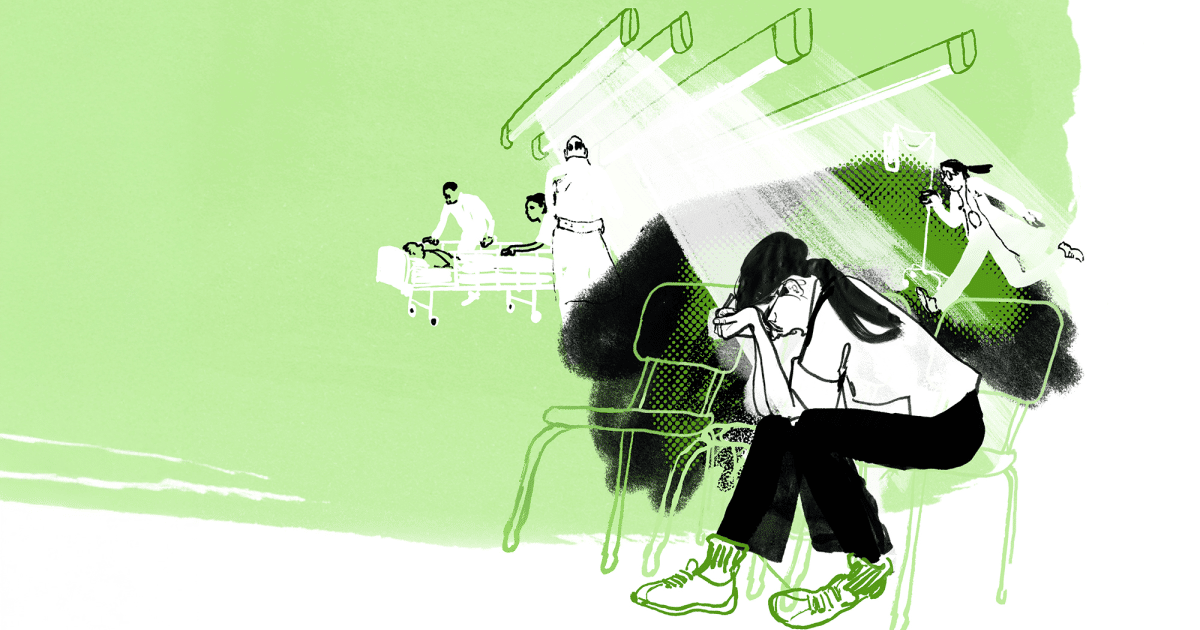
Long-Covid-Kolumne von Margarete Stokowski: Warum viele Menschen mit ME/CFS Notaufnahmen meiden
In der Notaufnahme tun alle ihr Bestes. Nur ist das für Menschen mit ME/CFS nicht immer gut, erklärt Margarete Stokowski in ihrer Long-Covid-Kolumne.www.apotheken-umschau.de
A new column by journalist and pwME Margarete Stokowski.

 www.spiegel.de
A medical certificate required from the first day of sick leave? Behind it lies a message that shows contempt for human dignity.
An essay by Margarete Stokowski
July 8, 2026
There are countless chilling predictions about what would happen in Germany if the AfD came to power.
Some concern individual federal states, others the country as a whole, and all of them are deeply alarming.
Yet however justified such considerations may be, they should not distract from the fact that the authoritarian transformation is already well underway: the transformation toward a state that is harsher and more punitive than before, one that regards the supposedly weak as the root of all problems.
Alongside it comes the transformation of a society that distrusts anyone suspected of not contributing enough—or worse, of becoming a burden on public resources.
The message is this: people who are sick, disabled, elderly, or poor are a burden on "the rest of us." Those who do not work are seen as a nuisance. Those who are ill are treated with suspicion. And anyone who depends on state support is portrayed as standing in the way of the prosperity of an imagined broader public, weighing it down like a ball and chain.
The federal government's plan to require a medical certificate starting from the very first day of sick leave is only a tiny part of this broader development.
It is no coincidence that many of the explanations accompanying the government's current plans revolve around words such as "tough," "strong," and "weak."
Chancellor Friedrich Merz said of the new rule: "We know this is a tough decision, but we can no longer afford this competitive disadvantage caused by prolonged absences from work."
And in an ARD special broadcast, he added: "I want to get our economy out of this state of weakness."
Finance Minister Lars Klingbeil, meanwhile, said on ZDF: "If we want Germany to remain a strong country, then we have to make decisions for the future now—we have to cut through the Gordian knot."
Violence instead of reason
That, in essence, already contains the entire message—even in the metaphor of "cutting through the Gordian knot."
According to legend, the Gordian knot was an exceptionally intricate knot that was meant to be untied, but Alexander the Great chose instead to slice through it with his sword.
Today we might call that "thinking outside the box"—but it was, after all, force instead of reason.
Book description:Bettina Grande. @bettinagrande.bsky.social
Today, the textbook Long COVID is being published.
Together with @tilmangrande.bsky.social, we wrote the chapter on psychotherapy for ME/CFS.
Psychotherapy is not a curative treatment for ME/CFS.
It provides a protected therapeutic space and serves as a corrective to the psychologization of a physical illness.
Per Otto Schüller (Ed.) | Christian Gogoll (Ed.)
Long COVID
An Interdisciplinary Approach to Accurate Diagnosis and Treatment
Long COVID is estimated to affect around three million people in Germany, many of them for months at a time. The resulting functional impairments not only place a substantial burden on affected individuals but also have significant social, public health, and economic consequences.
The textbook Long COVID aims to do justice to this complexity. It brings together contributions from a range of medical specialties, provides a nuanced overview of the underlying pathophysiology and symptom complexes, outlines established diagnostic and therapeutic strategies, and offers practical guidance for both outpatient and inpatient care.
- A clear and comprehensive overview of post-COVID syndrome
- Guidance in a dynamic and rapidly evolving field
- Integration of current scientific evidence with practical approaches to clinical care
Most of the book will probably not age well.Contents
Part I: Foundations
1. Introduction: An Overview of Post-COVID Syndrome.................................................................. 3
Per Otto Schüller
2. Epidemiology of Post-COVID Syndrome: Current Studies and Statistics...................................... 9
Christian Apfelbacher, Doreen Wolff, Heike Heytens, Hans Nikolaus, and Karl-Philipp Drewitz
3. The Societal Costs of Long COVID and ME/CFS.......................................................................... 19
Jörg Heydecke, Simon Schöning, James Daniell, Johannes Brand, Dirk Paessler, and Amy McLennan
4. Pathophysiology and Mechanisms of Long COVID: Neuroimmunological Foundations............ 23
Eva Milena Johanne Peters
Part II: Clinical Manifestations and Diagnosis: Diverse Presentations and Their Impact
1. Cardiovascular Aspects of Long COVID....................................................................................... 35
Christian Meyer and Ann-Kathrin Kahle
2. Pulmonology................................................................................................................................. 41
Christian Gogoll and Rembert Koczulla
3. Gastrointestinal Symptoms in Post-COVID Syndrome................................................................. 49
Andreas Stallmach and Philipp Reuken
4. Vascular Medicine: Endothelial Dysfunction and Microcirculatory Disorders............................ 57
Michael Kacik
5. Sleep and Post-COVID Syndrome: Bidirectional Interactions....................................................... 63
Claudia Schilling
6. Long COVID: Fatigue, Post-Exertional Malaise, Pathophysiology, Therapeutic Approaches, and Prevention............................................................................................................................................ 69
Christian Puta
7. Myalgic Encephalomyelitis/Chronic Fatigue Syndrome in Clinical Practice................................ 81
Carmen Scheibenbogen, Kirsten Wittke, and Judith Bellmann-Strobl
Special Topic: Long COVID in Children and Adolescents................................................................. 85
Uta Behrends, Nicole Töpfner, Folke Brinkmann, and Phillip Theis
8. COVID-19-Associated Loss of Smell............................................................................................ 91
Maximilian R. W. Stolz-Fink and Thomas Hummel
9. Cognitive Function in Long COVID: Neuropsychological Assessment......................................... 97
Catherine N. Widmann and Susan Seibert
10. Psychosomatic Aspects of Post-COVID Syndrome................................................................... 105
Volker Köllner
Special Topic: Vaccination and Long COVID.................................................................................. 115
Caroline Peine and Thomas Harder
Special Topic: Post-Vaccination Syndrome (Post-Vac Syndrome).................................................. 121
Christian Gogoll
11. Psychological Aspects: Long COVID and ME/CFS from the Perspective of Two Psychotherapy Practices............................................................................................................................................ 129
Bettina Grande and Tilman Grande
12. Neurological Manifestations of Long COVID........................................................................... 135
Peter Berlit
Part III: Therapeutic Approaches: Evidence-Based Treatments and Multimodal Care
1. Preface to Therapeutic Approaches in Long COVID .................................................................. 143
Christian Gogoll and Diana Schneider
2. The Role of Primary Care and Interdisciplinary Collaboration in Long COVID Care: Opportunities and Challenges............................................................................................................................... 147
Sandra Stengel, Verena Zimmermann-Schlegel, and Nicole Lindner
3. The Role of Medical Specialists in Long COVID Care................................................................. 155
Christian Gogoll
Special Topic: Long COVID in Clinical Practice—Experiences from a Specialized Outpatient Clinic...................................................................................................................................................... 167
Astrid Weber and Ann Kristin Specht
4. Rehabilitation............................................................................................................................. 173
Rainer Gloeckl, Volker Köllner, and Ralf Harun Zwick
5. Physical and Rehabilitation Medicine in Long COVID ............................................................... 183
Anett Reißhauer, Max Emanuel Liebl, and Maria Friderichs-Nedohibchenko
6. Occupational Therapy................................................................................................................ 193
Miriam Leventic
7. Speech and Language Therapy in Long COVID.......................................................................... 203
Cordula Winterholler
Special Topic: Environmental Medicine Approaches to Post-COVID Syndrome............................ 211
Vanessa M. Eichel and Johannes Naumann
8. Nutrition in Post-COVID Syndrome.......................................................................................... 221
Lheanne Pauckner
Part IV: Living with Long COVID, Research, and Support: Looking Toward the Future
1. Social Medicine and Return to Work........................................................................................ 231
Tanja Trefzer, Maren Gehring, and Susanne Weinbrenner
2. Long-Term Consequences of COVID-19: Risk Factors and Participation.................................. 239
Mercedes Rutsch and Ruth Deck
3. Future Directions in Long COVID Research.............................................................................. 249
Per Otto Schüller
Special Topic: The Patient Perspective—Long COVID Germany: Living with Long COVID, Support Services, and Research............................................................................................................................ 255
Daniela Köder-Yangyuoru, Annett Conrad, and Natascha Lüsgo
Special Topic: Living with Long COVID—Advice and Information for Patients and Their Families...................................................................................................................................................... 263
Per Otto Schüller and Christian Gogoll
4. Conclusion: Summary and Outlook............................................................................................ 267
About the Editors.......................................................................................................................... 270
Index............................................................................................................................................. 271
Description from one of her talks at the ME/CFS Research Foundation:Professional Exchange for PEM-Sensitive Care
Our nationwide network brings together and supports licensed psychotherapists who provide psychotherapeutic care for people with ME/CFS. Through continuing professional education, guideline development, and the exchange of clinical experience, we promote PEM-sensitive care.
More infos from Charité Berlin:Bettina Grande presented the role of psychotherapy in ME/CFS and introduced the Psychotherapy Network ME/CFS, which she co-founded.
She emphasised that psychotherapy in ME/CFS does not aim to be curative; rather, it must serve as a supportive, protective space in which patients are neither psychologised nor their symptoms trivialised.
She described the distressing living conditions faced by many severely ill patients, noting that they frequently lack access to primary or specialised medical care.
For many affected individuals, psychotherapists represent their last remaining link to the healthcare system.
The Psychotherapy Network ME/CFS—which is accredited by the Chamber of Psychotherapists in Baden-Württemberg—emerged from the need for peer exchange and support.
The network adopts a multi-modal approach to psychotherapy, adheres to a clear consensus regarding the role of psychotherapy in ME/CFS, and offers education, case consultations, and professional guidance for practitioners.
The network currently comprises around 300 members. The aim is to establish the network as a permanent professional and political structure.
ME/CFS Psychotherapy Network
Networking, Exchange & Expertise for the Psychotherapeutic Care of People with ME/CFS
Are you a licensed psychological or medical psychotherapist interested in providing competent psychotherapeutic support to people with ME/CFS?
Then join our network!
Our goal is to collaboratively develop competent, patient-centred psychotherapeutic support for people with ME/CFS and to establish it within publicly funded statutory health insurance care.
We offer professional exchange, continuing education, and peer support, guided by current medical evidence and the lived realities of people with ME/CFS.
ME/CFS (Myalgic Encephalomyelitis/Chronic Fatigue Syndrome) is a serious neuroimmunological disease that continues to receive insufficient recognition in both medical and psychotherapeutic care.
Licensed psychotherapists—including medical psychotherapists, psychological psychotherapists, and child and adolescent psychotherapists—play an important role in the care of people with ME/CFS. Their role is not to cure or improve the underlying physical disease itself, but to support patients in coping with the psychological and social challenges associated with living with the illness.
Many people with ME/CFS actively seek psychotherapeutic support because of the burden imposed by their often severe symptoms, the social isolation resulting from the disease, the lack of adequate healthcare provision, and the stigma surrounding the illness in both their social environment and parts of the wider public.
Several characteristics of ME/CFS—most notably post-exertional malaise (PEM)—require a specific therapeutic approach that differs substantially from the psychotherapeutic treatment of other chronic illnesses.
Meetings
Every second Thursday of the month, 7:00–8:30 p.m. (online)
Accredited with 3 CME credits by the Baden-Württemberg State Chamber of Psychotherapists.
URGENT:
Tomorrow, we're back to work on the S2k Guideline for Long COVID/Post-COVID.
Weighing every formulation.
Debating every term.
Because a single sentence can shape how people with the illness are seen—and how they are treated.
For patient safety.
Minor part of this, but it's annoying that even this is just plain wrong. Of course they're just bullshit excuses to throw people in the trash, but there is no issue of competitive disadvantage on an issue that affects all of humanity. Every society has illness and disability, no one is at a competitive disadvantage compared to any other in how they deal with it. Somehow every government is arguing it, knowing full well this is the case, and thus that it's factually wrong.We know this is a tough decision, but we can no longer afford this competitive disadvantage caused by prolonged absences from work

 www.np-coburg.de
Exhaustion-related illness: No physician list, no campaign
dpa, July 9, 2026
Two years after a state parliament initiative aimed at improving the situation of those affected, Thuringia still does not have a directory of physicians specializing in the treatment of the exhaustion-related illnesses Myalgic encephalomyelitis/chronic fatigue syndrome and Long COVID. This emerges from a response by the Ministry of Health to an inquiry from Lena Saniye Güngör, a member of the parliamentary group of The Left.
"A directory of physicians does not currently exist," the response states.
The same applies to a campaign to raise public awareness of the particular challenges faced by people with these illnesses. According to the ministry's response, "such a public awareness campaign is not currently planned."
In its response, the ministry—now led by the Social Democratic Party of Germany—states that a number of preparatory steps are still required before a directory of specialized physicians can be established. For example, standardized criteria must first be defined to determine which physicians qualify as specialists in this field. The Academy of the Thuringian State Medical Association is currently working on this issue.
"Following this, a corresponding network of specialized physicians could be established and a directory of physicians created."
Güngör said she was dismayed by the state of implementation.
She said the ministry's response showed that the Christian Democratic Union of Germany/Bündnis Sahra Wagenknecht/Social Democratic Party of Germany state government does not take these medical conditions seriously and evidently does not understand them. She added that the response also states that no centralized contact and advisory center for people with Myalgic encephalomyelitis/chronic fatigue syndromeand Long COVID is planned, instead referring patients to various existing services."I would have assumed that we would be further along."
She argued that those affected often lack the strength to go from one doctor to another or from one advisory service to the next."That is nothing short of cynical," Güngör said.
Güngör called for at least the physician directory and the public awareness campaign requested by the state parliament at the time to be implemented as quickly as possible. She said it was evident that the will expressed by the state parliament in its earlier resolution had still not been carried out.
IS THERE RELIABLE CARE IN BERLIN?
92%say there is no reliable care
141 of 154 say No or Rather not. A simple question that received an almost unanimous response. 11 say Partly, 2 had no answer.
Not a single person answered Yes.
“CARE” THAT HARMS
With PEM, activation is dangerous. Overexertion can permanently decrease the baselines of people with ME/CFS, and yet:
56%
of respondents were pushed toward exercise, activation or rehab despite exertion intolerance.
51%
of respondents say a medical or rehab measure made their condition worse.
1063 PLEAS FOR HELP.
154 people responded. Across several free-text questions, this became a collection of 1063 approved responses. Search and filter by question, language, severity and perspective.
READ THEM ALL.
The article in the Ärztezeitung is written by Bernd Löwe, the clinical director of the UKE Hamburg.
That hospital has got some bad press recently:
First report on yesterday’s meeting.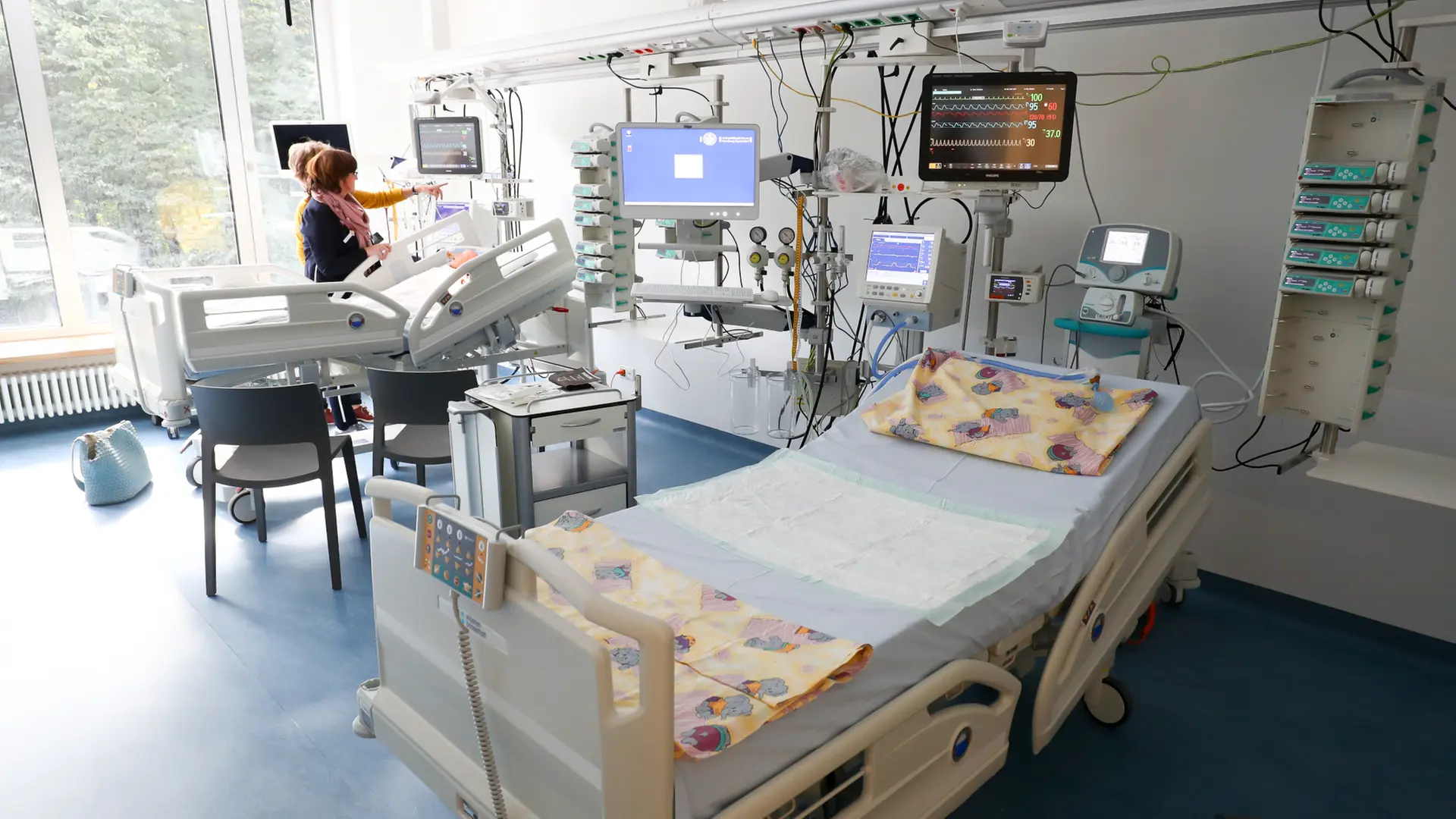
<strong>Hamburg: Eltern erheben schwere Vorwürfe gegen Kinder-UKE wegen Long-Covid-Folgen bei Kindern</strong>
Betroffene Eltern erheben schwere Vorwürfe gegen das Kinder-UKE. Nach ihrer Überzeugung nehmen Ärztinnen und Ärzte der Klinik die Erkrankung ihrer Kinder nicht ernst. Konkret geht es um ME/CFS - eine schwere Folgeerkrankung, die nach einer Corona-Infektion auftreten kann.www.ndr.de
Affected parents are making serious accusations against the Children’s UKE (Pediatric and Adolescent Medicine Center of the University Medical Center Hamburg-Eppendorf).…the doctors at the Children’s UKE allegedly did not want to hear anything about the diagnosis of ME/CFS, a form of Long Covid. Instead, they spoke, among other things, of psychological causes, the mother told the parliamentary committee....
Long Covid bei Kindern - ist Hamburg gut aufgestellt?
Die Erkrankung ME CFS schränkt das Leben von betroffenen Kindern massiv ein. Viele Familien fühlen sich nicht ernst genommen.
2 min video about the dire situation for children with long covid in Hamburg.
They mention that the local hospital Children’s UKE (Pediatric and Adolescent Medicine Center of the University Medical Center Hamburg-Eppendorf) has only given the diagnosis LC for one kid and that they heavily imply that the actual problem are the mothers that can't accept that their children are healthy.
Video Subtitles:
Johanna from Hamburg-Ottensen has two children who both suffer from ME-CFS, a neurological illness that...

Hamburg: Lie-In Demonstration with VdK Participation
To mark Severe ME/CFS Awareness Day on Saturday, 8 August, the #LiegendDemo Hamburg initiative is organizing a lie-in demonstration directly in front of the main entrance of Hamburg-Eppendorf University Medical Center (UKE). VdK Nord will participate with a speech.
Event Information
When?
Date: 8 August 2026
Time: 12:00 p.m.
Where?
Venue: Hamburg-Eppendorf University Medical Center (UKE)
Who?
Organizer: #LiegendDemo Hamburg initiative
Together with ME/CFS Kinder, the organizers aim to raise awareness among healthcare staff and the public and to bring the call for better research, improved medical care, and greater recognition to where it belongs. You are warmly invited to join the demonstration.

Since the introduction of COVID-19 vaccines during the pandemic, Germany's Standing Committee on Vaccination (STIKO) had recommended COVID-19 vaccination for all adults.
That recommendation has now been withdrawn. It remains in effect only for a limited number of groups.
According to the updated guidance, people at particularly high risk are still advised to receive an annual COVID-19 booster in late summer or early autumn.
This routine booster is now recommended for adults aged 75 and older; previously, the age threshold was 60.
An annual booster is also recommended for people with underlying medical conditions, residents and staff of long-term care facilities, and healthcare workers, including those working in intensive care units.
 mecfs-paivs-hilfe.de
Dear community,
We have a major announcement: The ME/CFS and PAIVS Hilfe e.V., with whom we organized the last #LyingDemo (a protest held while lying down to symbolize the severity of ME/CFS) in #Hannover, is establishing a non-profit, fully digital private medical practice for #MECFS, #LongCOVID, and related conditions.
Our goal is to improve access to care through individualized medical consultations, treatment options, and medication management—without patients having to leave their homes.
As a non-profit organization, we aim to keep costs as low as possible for patients.
We are now looking for dedicated physicians to join our team:
mecfs-paivs-hilfe.de/bewerbung.html
Please share this post within your networks.
#MECFS #LongCOVID #PostCOVID #PAIS
WHAT IT'S ABOUT
Why We Are Building a New Medical Practice
Many people living with ME/CFS and Long COVID are currently facing a severe lack of adequate medical care. Specialized centers are overwhelmed, waiting times are extremely long, and even after finally securing an appointment, treatment often ends without concrete therapeutic support or medication options.
At the same time, many patients report that certain off-label medications, as well as non-pharmacological approaches, have significantly improved their quality of life. Yet only a small number of physicians are currently willing to explore these treatment options together with their patients. This is exactly where we want to make a difference.
THE PROJECT
A Non-Profit, Fully Digital Medical Practice
The ME/CFS and PAIVS Hilfe e.V. is currently establishing a non-profit, fully digital private medical practice employing physicians dedicated to the care of patients with ME/CFS, Long COVID, and related conditions. This means that patients can receive medical care without ever having to leave their homes.
Our goal is to create a new model of care based on evidence-informed patient education, individualized medical advice, therapeutic options, medication management, and a genuine understanding of these illnesses. As a non-profit organization, we are committed to keeping costs as low as possible for patients.
We cannot cure these conditions—currently, no one can. But we can help make life more livable for many people. In the long term, our goal is to become Germany's leading point of contact for ME/CFS, Long COVID, and related conditions—for patients, their families, and healthcare professionals.
100% Telemedicine
Video consultations instead of travel—ideal for severely affected patients and convenient for you.
Work from Home & Flexible Schedule
10–30 hours per week, with the option to increase to full-time. Flexible working hours.
Interdisciplinary Team
Regular case discussions, flat hierarchies, and efficient communication.
AI-Assisted Documentation
Significantly reduced administrative workload, giving you more time to focus on patients.

