News from Germany

Paywall.

Current top story on spiegel.de:
View attachment 34030
Assisted Dying for ME/CFS

Kim Linke’s Final Months​

Kim Linke spent years battling a disease that some medical professionals still do not recognize: ME/CFS.
Then she fought for the right to die.
She was 25 years old.
Her parents recount what she had to endure until the very end.

By Nina Weber
August 30, 2026
From Bluesky, machine translation:


I think this is the most shocking article I’ve read so far.​
It addresses the fact that Kim herself had to fight for recognition even on her deathbed, and that Kim’s way of dealing with dying was practically pathologized and led to suspicion.​
Horrible.​


The author was in a bicycle accident and suffered a mild concussion.
I didn't know that post-concussion symptoms can last up to 5 years and may include the following:
  • Difficulty concentrating and memory problems
  • Dizziness
  • Anxiety
  • Sleep disturbances
  • Depressive moods
  • A feeling of being slowed down
  • Irritability, restlessness
  • Hypersensitivity to bright light or noise
"You feel emotionally unstable and unusually tired and exhausted, no matter how much you sleep—fatigue is the technical term for this... [...] What's really annoying for me, as someone who usually sleeps six hours, is that I'm still tired even after ten hours of deep sleep."

"Research is providing increasing evidence that the accident causes minor damage to the nerve pathways, disrupting communication between certain areas of the brain. “Such nerve damage is generally not visible in standard brain imaging,” says Andreas Gonschorek, chief physician at the Neurocenter at the Berufsgenossenschaftliches (BG) Klinikum Hamburg. “A great deal happens at the molecular level within the nerve cells after the accident, which we are not yet able to detect with our current methods.”

I don't know if this helps us in any way, but I found the parallels fascinating.

(paywall)
 
  • Difficulty concentrating and memory problems
  • Dizziness
  • Anxiety
  • Sleep disturbances
  • Depressive moods
  • A feeling of being slowed down
  • Irritability, restlessness
  • Hypersensitivity to bright light or noise
This sounds a lot like the symptoms of I've come to think of as my prodromal phase of MECFS, and I had quite a few head injuries/concussions around then. So maybe I didn't get MECFS until 2017 after all...

Whatever was going on with me, it does seem like there are some connections here that could be useful to explore.
 

Machine Translation:


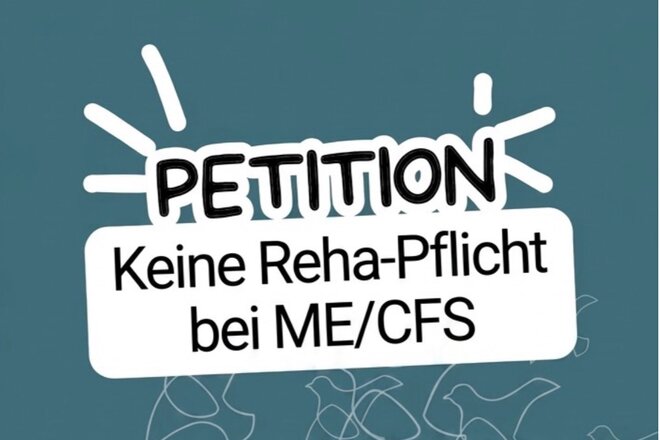
Petition: No Mandatory Rehabilitation for ME/CFS – Rehabilitation Must Be Voluntary​

​
2,740 of 30,000 signatures required for the quorum in Germany​
​
SIGN THE PETITION​
​
Petition addressed to: German Bundestag Committee on Petitions​
​
We demand that people with medically confirmed ME/CFS and disease-specific Post-Exertional Malaise (PEM) be allowed to decide for themselves whether they wish to undergo medical rehabilitation.​
​
People affected by ME/CFS must not be required to undergo rehabilitation against their will. Those who voluntarily choose suitable and individually adapted rehabilitation should, of course, have the opportunity to do so.​
​
At the same time, refusing or not participating in rehabilitation must not result in disadvantages under social welfare or social security law. Rehabilitation can only truly be voluntary if people are not effectively forced to participate by the potential loss of social benefits.​
​
We are therefore not calling for a general ban on rehabilitation for people with ME/CFS. We are calling for the right to self-determination and a genuine freedom of choice.​
​

Rationale​

ME/CFS (Myalgic Encephalomyelitis/Chronic Fatigue Syndrome) is a severe, chronic multisystem disease. A key and characteristic feature of the disease is Post-Exertional Malaise (PEM). Even minor physical, cognitive, or emotional exertion can lead to a significant worsening of symptoms, which may persist for days, weeks, or even longer.​
​
This characteristic worsening of the condition following exertion (PEM) is fundamentally at odds with many conventional rehabilitation concepts.​
​
Rehabilitation often requires people to remain regularly active, participate in various therapeutic activities, and cope with physical or cognitive demands. For people with ME/CFS and PEM, this can trigger a significant deterioration in their health. Some patients subsequently require a very long time to regain their previous level of functioning. Some never fully regain it.​
​
For this reason, medical guidelines and the current state of scientific knowledge have led to a fundamental change in the approach to treating ME/CFS. In particular, non-individually tailored programs involving gradually increasing levels of exertion are viewed critically or are explicitly not recommended. Studies examining rehabilitation in ME/CFS have also shown that some patients experience a deterioration in their condition following rehabilitation.​
​
Nevertheless, people with ME/CFS in Germany continue to be encouraged or required to undergo rehabilitation and, under certain circumstances, may face pressure under social welfare or social security law. Even when people explain, based on their illness and PEM, that they are unable to tolerate rehabilitation, it may still be determined that they are “fit for rehabilitation” and must participate.​
​
For people with ME/CFS, this can create a profound conflict: they are forced to choose between protecting their health and fulfilling requirements under social welfare and social security law.​
​
This must not be the reality for people living with a disease whose defining characteristic includes pronounced exertion intolerance.​
​
We therefore call for legislation that gives people with medically confirmed ME/CFS and PEM a genuine choice: anyone who wishes to undergo suitable rehabilitation should be able to do so. Anyone who does not wish to or is unable to undergo rehabilitation because of their illness must not be forced to participate and must not suffer disadvantages under social welfare or social security law as a result of that decision.​
​
This is not about denying people access to a potentially beneficial treatment. It is about allowing them to make decisions concerning their own bodies and their own health.​
​
Rehabilitation for ME/CFS must be an option – not a coercive measure.​


Last edited:
Scheibenbogen’s NKSG
Google Translate link

Machine Translation:

National Clinical Trial Group (NKSG) for ME/CFS and Post-COVID-19 Syndrome​
​
The National Clinical Trial Group (NKSG) is an interdisciplinary network of physicians and scientists dedicated to developing translational research and clinical trials aimed at the treatment of Myalgic Encephalomyelitis/Chronic Fatigue Syndrome (ME/CFS) and Post-COVID-19 Syndrome (PCS).​


National Clinical Study Group (NKSG) Post-COVID Syndrome and ME/CFS

Funding reference:
01EP2201
Funding amount: EUR 9,983,205
Funding period: 2022–2026
Project Lead: Prof. Dr. Carmen Scheibenbogen
Address:
Charité – Universitätsmedizin Berlin
Campus Virchow-Klinikum
Institute of Medical Immunology
Augustenburger Platz 1
13353 Berlin
Germany

Approximately 10% of all patients with mild or moderate acute COVID-19 who were not hospitalized continue to experience persistent symptoms six months after infection that impair their daily lives. This condition is referred to as Post-COVID Syndrome (PCS).

An observational study conducted at Charité has demonstrated significant overlap between PCS and Myalgic Encephalomyelitis/Chronic Fatigue Syndrome (ME/CFS). ME/CFS is a complex and severe disease that can develop following various infections. The Charité Fatigue Centre has many years of expertise in the diagnosis and treatment of ME/CFS, with an interdisciplinary outpatient clinic and a translational research center.

To date, there are no targeted therapies available for either ME/CFS or PCS. For PCS, only a limited number of interventional studies investigating pharmacological treatments have been initiated. The pathomechanisms underlying PCS are not yet well understood and appear to be heterogeneous. Initial studies have provided evidence of persistent inflammation, autoantibodies, vascular inflammation and dysfunction of the vascular system, as well as the persistence of non-replicating viral fragments in patients’ blood.

The aim of the National Clinical Study Group (NKSG) is to initiate and conduct Phase II clinical trials (proof-of-concept studies) investigating the efficacy of already approved medicinal products and medical devices in ME/CFS and PCS. Repurposing established medicinal products for new indications will enable accelerated clinical development.

All clinical trials will be accompanied by a comprehensive biomarker program to elucidate the pathomechanisms relevant to treatment response and to identify companion diagnostics. Collaboration with the pharmaceutical industry is being pursued to facilitate rapid licensing and to incorporate additional therapeutic agents into further development.

National Clinical Study Group (NKSG) Post-COVID Syndrome and ME/CFS – Phase 2

Funding reference:
01EP2601
Funding amount: EUR 7,999,049
Funding period: 2026–2029
Project Lead: Prof. Dr. Carmen Scheibenbogen
Address:
Charité – Universitätsmedizin Berlin
Campus Virchow-Klinikum
Institute of Medical Immunology
Augustenburger Platz 1
13353 Berlin
Germany

Post-acute infection syndromes (PAIS) occur following various infectious diseases. Post-COVID Syndrome (PCS) is now the most common form of PAIS and affects approximately 5% of individuals following mild COVID-19. COVID-19 has also become the most common trigger of ME/CFS, a complex and severe disease. The underlying pathomechanisms of PAIS are heterogeneous and remain insufficiently understood, and no causal therapies are currently available.

During the first funding period, beginning in 2022, the NKSG was established as a platform for clinical trials and translational research with the aim of developing therapies for PCS and ME/CFS. Three randomized controlled trials (RCTs) and two Phase II trials were initiated to target key pathomechanisms in defined patient subgroups. These studies investigated the removal of autoantibodies through immunoadsorption, the efficacy of drugs that improve blood flow, and whether breathing pure oxygen under hyperbaric conditions could positively influence disease progression (hyperbaric oxygen therapy).

In parallel, comprehensive biomarker and diagnostic analyses were conducted to identify prognostic markers of treatment response and to improve the understanding of the underlying pathomechanisms. The results obtained by the NKSG to date indicate that autoantibodies and inflammation are key pathogenic factors in PCS and ME/CFS.

Based on these findings, the second phase will focus on drugs that may induce sustained clinical improvement through the temporary depletion of autoantibody-producing cells, as well as on an immunomodulatory and neuromodulatory approach with high therapeutic potential. The pharmacological trials will again be accompanied by comprehensive biomarker analyses to identify and validate predictive markers of treatment response and companion diagnostics.
 

Post-COVID: Online Seminars​
​
Marburg. Starting Wednesday, August 19, Marburg University Hospital will be hosting three online seminars on the topic of Post-COVID.​
Prof. Bernhard Schieffer, Director of the Department of Cardiology, Angiology and Medical Intensive Care, will explore various aspects of post-infectious illnesses under the title “understand.support.together.”​
​
The seminars will take place on Wednesdays at 3 p.m.:​
  • August 19: “What Happens with Post-COVID: Questions and No Answers?”
  • September 9: “Post-Infectious Illnesses – What Can We Do Today?”
  • September 30: “Post-COVID – How Can We Develop Better Treatments?”
The seminars are aimed at patients affected by the condition, as well as relatives and anyone interested. Registration is available via:​

Paywall.

Machine translation:


​
Under the motto “Understand. Support. Together.”, the University Hospital Giessen and Marburg (UKGM) in Marburg has launched a series of online events exploring the challenges of post-COVID syndrome.​
The first webinar featured Professor Bernhard Schieffer, Director of the Department of Cardiology, Angiology and Medical Intensive Care.​
His goal was to provide patients, family members and interested members of the public with information and practical advice on dealing with the condition.​
​
The series comprises three sessions.​
On August 19, Schieffer explored the limits of current scientific knowledge in a webinar entitled “What Happens in Post-COVID: Questions and No Answers?”​
Nearly 270 people tuned in at the peak of the live broadcast.​
Two further sessions, scheduled for Wednesday, September 9, and Wednesday, September 30, will delve deeper into post-infectious illnesses and emerging treatment approaches.​
​
…​
​
While scientists are still struggling to understand what causes post-COVID, patients are searching for ways to ease their symptoms.​
Schieffer takes a pragmatic approach to treatment, focusing on the early detection of metabolic disorders, cautious use of medication and targeted dietary changes.​
​
According to Schieffer, low-dose metformin could help stabilize glucose metabolism and potentially even promote the elimination of the virus.​
In many cases, he said, patients also experienced an improvement in their symptoms.​
Certain statins, when used at low doses, can support lipid metabolism and have anti-inflammatory effects.​
​
A low-carbohydrate, gluten-free diet has also proved helpful for many patients.​
Short-chain fatty acids and proteins, he said, can serve as important sources of energy while taking into account the reduced physical activity of patients.​
Schieffer recommends a Paleo diet.​
​
“They need their protein, but they don’t need carbohydrates.​
And if they do eat carbohydrates, they should choose those that they tolerate well.​
Hard cheese, for example, would be one option.​
Camembert, on the other hand, is not—it just goes straight to the hips.”​
The remark prompted a wave of laughing emojis from viewers.​
​
…​
​
General practitioners, Schieffer said, need to work closely with specialist clinics.​
So far, however, there has been limited interest in doing so.​
Relatively few physicians have recently participated in webinars aimed specifically at healthcare professionals.​
​
“That was also very frustrating for us,” Schieffer said.​
​
Where research is still urgently needed and scientific knowledge remains incomplete, uncertainty is inevitably high.​
Nevertheless, Schieffer struck a confident note during the webinar.​
​

 
Last edited:

Via chatgpt:
Scheibenbogen gives an up-to-date overview of ME/CFS research and treatment. She sees infections as a common trigger and stresses that ME/CFS is biologically heterogeneous. Autoantibodies and B cells remain important research areas, but apparently only in a subset of patients. Particularly interesting are immunotherapies such as daratumumab and inebilizumab. Immunoadsorption and BC007, however, have produced mixed or inconclusive results so far. Overall, she is hopeful that identifying biological subgroups and using biomarkers will enable more targeted treatments. The frustrating bottom line: research is moving forward and several approaches look promising, but there is still no established disease-modifying treatment for ME/CFS.
 

Via chatgpt:
Scheibenbogen gives an up-to-date overview of ME/CFS research and treatment. She sees infections as a common trigger and stresses that ME/CFS is biologically heterogeneous. Autoantibodies and B cells remain important research areas, but apparently only in a subset of patients. Particularly interesting are immunotherapies such as daratumumab and inebilizumab. Immunoadsorption and BC007, however, have produced mixed or inconclusive results so far. Overall, she is hopeful that identifying biological subgroups and using biomarkers will enable more targeted treatments. The frustrating bottom line: research is moving forward and several approaches look promising, but there is still no established disease-modifying treatment for ME/CFS.
The more time passes, the more Scheibenbogen’s style of communication really rubs me the wrong way. In this interview, she claims, among other things, “We know for certain that ME is autoimmune in 50% of those affected.”

First of all, that’s simply not correct, because even if she may see signs pointing in that direction, there’s no study to date that would prove this. Studies on ME=autoimmunity have mostly been small and inconclusive, some even pointed against this hypothesis.

Second, it’s absolutely foolish to expose oneself completely unnecessarily by presenting assumptions as definitive evidence—and on top of that, pulling a precise percentage out of thin air when it’s completely unclear where she got it from.

Because if her claim of 50% autoimmunity is not confirmed—that is, if either her theory of autoimmune-related ME is not substantiated or if only a significantly lower percentage is found—her credibility will suffer enormously.

I wouldn’t care about that in and of itself if she weren’t the best-known ME researcher and physician in the German-speaking world, and if her failures weren’t consequently applied to the overall understanding of the disease.

The vast majority of patients in German-speaking countries naturally hang on her every word and consider everything she says to be the absolute truth.
In part, this stems from the common inability to evaluate the available evidence without bias or wishful thinking; on the other hand, it’s also somewhat understandable, because it’s really hard to believe how often she, as a researcher and scientist, allows herself to be carried away into making hasty statements.
 
The more time passes, the more Scheibenbogen’s style of communication really rubs me the wrong way. In this interview, she claims, among other things, “We know for certain that ME is autoimmune in 50% of those affected.”

First of all, that’s simply not correct, because even if she may see signs pointing in that direction, there’s no study to date that would prove this. Studies on ME=autoimmunity have mostly been small and inconclusive, some even pointed against this hypothesis.

Second, it’s absolutely foolish to expose oneself completely unnecessarily by presenting assumptions as definitive evidence—and on top of that, pulling a precise percentage out of thin air when it’s completely unclear where she got it from.

Because if her claim of 50% autoimmunity is not confirmed—that is, if either her theory of autoimmune-related ME is not substantiated or if only a significantly lower percentage is found—her credibility will suffer enormously.

I wouldn’t care about that in and of itself if she weren’t the best-known ME researcher and physician in the German-speaking world, and if her failures weren’t consequently applied to the overall understanding of the disease.

The vast majority of patients in German-speaking countries naturally hang on her every word and consider everything she says to be the absolute truth.
In part, this stems from the common inability to evaluate the available evidence without bias or wishful thinking; on the other hand, it’s also somewhat understandable, because it’s really hard to believe how often she, as a researcher and scientist, allows herself to be carried away into making hasty statements.
Yes she has become incredibly blinkered and completely sure of her hypothesis and I think it's very unhelpful. I'm glad these upcoming trials will show if there's any merit to her hypothesis (if the is any effect I think it is likely to be from isatuximab and probably due to some off target effect of anti CD38 rather than due to antibodies, but I'd love for the problem to be simpler and CS to be completely correct).

It will be a blow to the credibility of the field if she is proven wrong in a way that it would not be for Fluge and Mella because they do not talk with such religious conviction about their hypothesis. It's not scientific to be talking certainties without any good evidence.
 
You shouldn’t take it too literally. A lot of this is political. Their research is largely funded by taxpayers’ money. How do you think the public would react if they were told that we still don’t know that much about the disease, but that we nevertheless want to spend millions on research into it? She knows that too.
 
You shouldn’t take it too literally. A lot of this is political. Their research is largely funded by taxpayers’ money. How do you think the public would react if they were told that we still don’t know that much about the disease, but that we nevertheless want to spend millions on research into it? She knows that too.
I disagree. If she takes huge amounts of that money for autoantibody studies of the back of her going around saying she's certain this will work, then those studies all fail, it tanks her credibility. She can't then say 'ah guess we need to do basic research'. Or 'ah lets try this treatment approach next.' You don't see Fluge and Mella saying they know anything for sure, even though they also have an autoantibody hypothesis, for this reason.

I think that if the public were told the honest truth about how disabling MECFS is and how common it is, and the fact it can seemingly happen to anyone, spending millions on resarch into it would become very popular indeed.

Also if she doesn't believe what she's saying it's deeply unethical to give false hope by saying she's certain in that way. But I think she does and it isn't political.
 
How do you think the public would react if they were told that we still don’t know that much about the disease, but that we nevertheless want to spend millions on research into it?

That doesn't make sense to me.

How is the public expected to react if they know they were being taken for a ride?

And surely if we still do not know much abut the disease, that is the most powerful of all reasons for spending millions on research? You might not give the millions to the people who keep saying they have made progress and then get no further forward, I grant you.
 
I have a strange feeling that she is going to set ME/CFS research back by five years.
In a way she is years behind anyway, her ideas and hypothesis she pursued for the last years were basically what Flugge + Mella proposed before 2015. Now she didn't move on but just limits the exact same hypothesis to a smaller group of patients.
That said I don't think her being demonstrably wrong would be catastrophic for ME-research per se, but for German speaking countries I fear it would be a horrible signal for politics as well as pharma and the still ongoing struggle with BPS and other woowoo methodists. To end with something positive; correct me if I am wrong but I doubt that policymakers and researchers in English speaking countries like UK, USA, AUS, CAN care that much about Dr. Scheibenbogens work, so I think negative impact would be more limited there.


Yes she has become incredibly blinkered and completely sure of her hypothesis and I think it's very unhelpful. I'm glad these upcoming trials will show if there's any merit to her hypothesis (if the is any effect I think it is likely to be from isatuximab and probably due to some off target effect of anti CD38 rather than due to antibodies, but I'd love for the problem to be simpler and CS to be completely correct).

It will be a blow to the credibility of the field if she is proven wrong in a way that it would not be for Fluge and Mella because they do not talk with such religious conviction about their hypothesis. It's not scientific to be talking certainties without any good evidence.
Yes, that's exactly what I meant, it's just extremely dangerous and wrong to communicate the way she does. It's also absolutely unnecessary, I see absolutely no way her statements would make a positive impact now, neither for ME research in general nor for herself personally, while they definitely could be detrimental in the near future.
 
That doesn't make sense to me.

How is the public expected to react if they know they were being taken for a ride?

And surely if we still do not know much abut the disease, that is the most powerful of all reasons for spending millions on research? You might not give the millions to the people who keep saying they have made progress and then get no further forward, I grant you.


That was an exaggeration on my part. Of course, we know from experiments, for example, that IgG from people with ME can induce ME like symptoms or other disease-relevant changes in mice. This is one of the strongest experimental lines of evidence supporting an autoimmune mechanism. However, it is still not sufficient to say with absolute certainty that ME is an autoimmune disease.

Anyone who has followed her even a little knows that she is very frustrated with the lack of funding for ME and that she genuinely cares about the people affected by the disease.
 
You shouldn’t take it too literally. A lot of this is political. Their research is largely funded by taxpayers’ money. How do you think the public would react if they were told that we still don’t know that much about the disease, but that we nevertheless want to spend millions on research into it? She knows that too.
don't think that's a strong argument here, as, additionally to what Mr. Edwards and VRT said above, she already has secured funding for the Uplizna and Isatuximab trials as far as I know.

How much more money could she spend in a reasonable way at this point in time researching this exact same hypothesis and type of treatment? I'd argue that until the results of the first studies on these drugs that attack B cells are available, it doesn't make much sense to keep launching more and more studies with similar drugs.

What would make sense following her own claims would be to try and secure money for the 50% of people that DO NOT have autoimmunity so you could study those in parallel as long as you wait for the results. And to do that it wouldn't be necessary to make bold and definitive claims about autoimmunity.
That was an exaggeration on my part. Of course, we know from experiments, for example, that IgG from people with ME can induce ME like symptoms or other disease-relevant changes in mice. This is one of the strongest experimental lines of evidence supporting an autoimmune mechanism. However, it is still not sufficient to say with absolute certainty that ME is an autoimmune disease.

Anyone who has followed her even a little knows that she is very frustrated with the lack of funding for ME and that she genuinely cares about the people affected by the disease.
I don't think anybody doubts that, but this doesn't make her statements any more smart or correct.
 
One question keeps coming back to me : why didn’t Carmen Scheibenbogen wait for Fluge and Mella’s results on the autoimmune hypothesis before investing so many resources in the same direction herself ? Fluge and Mella have been working on this hypothesis for years and seem to have real expertise in the area. You could argue that other substantial funding might have been better directed towards different avenues, precisely to avoid concentrating too many resources on the same mechanism.

Scheibenbogen did mention DecodeME at the latest Berlin conference and clearly praised the work of Ponting and his team. Yet, after checking what I could find, I have never seen an interview or talk where she actually goes through the DecodeME findings in detail, discusses the loci identified, or tries to offer a biological interpretation of them.

That is what bothers me a little. It is difficult, on the one hand, to present DecodeME as a major advance and praise Ponting’s work, while on the other hand barely discussing publicly what those findings might imply for our understanding of the disease.

Especially since Scheibenbogen receives substantial funding compared with many other researchers in the field. That is not a criticism in itself : if her hypotheses are correct, all the better. But when someone has access to significant resources, I would like to see more diversification of research directions and a much more direct engagement with the DecodeME findings.

Has anyone ever heard her explain in detail how she interprets DecodeME, and how those results do — or do not — fit with her autoimmune model ?
 
Back
Top Bottom