News from Germany


Paywall. 2600-word article.

Machine translation:


Everyone in the Family Has ME/CFS: When an Entire Family Disappears from Everyday Life​

The ME/CFS Kids Mobile visits patients who are barely able to leave their homes. The *Abendblatt* was able to accompany the team on one of its visits.​


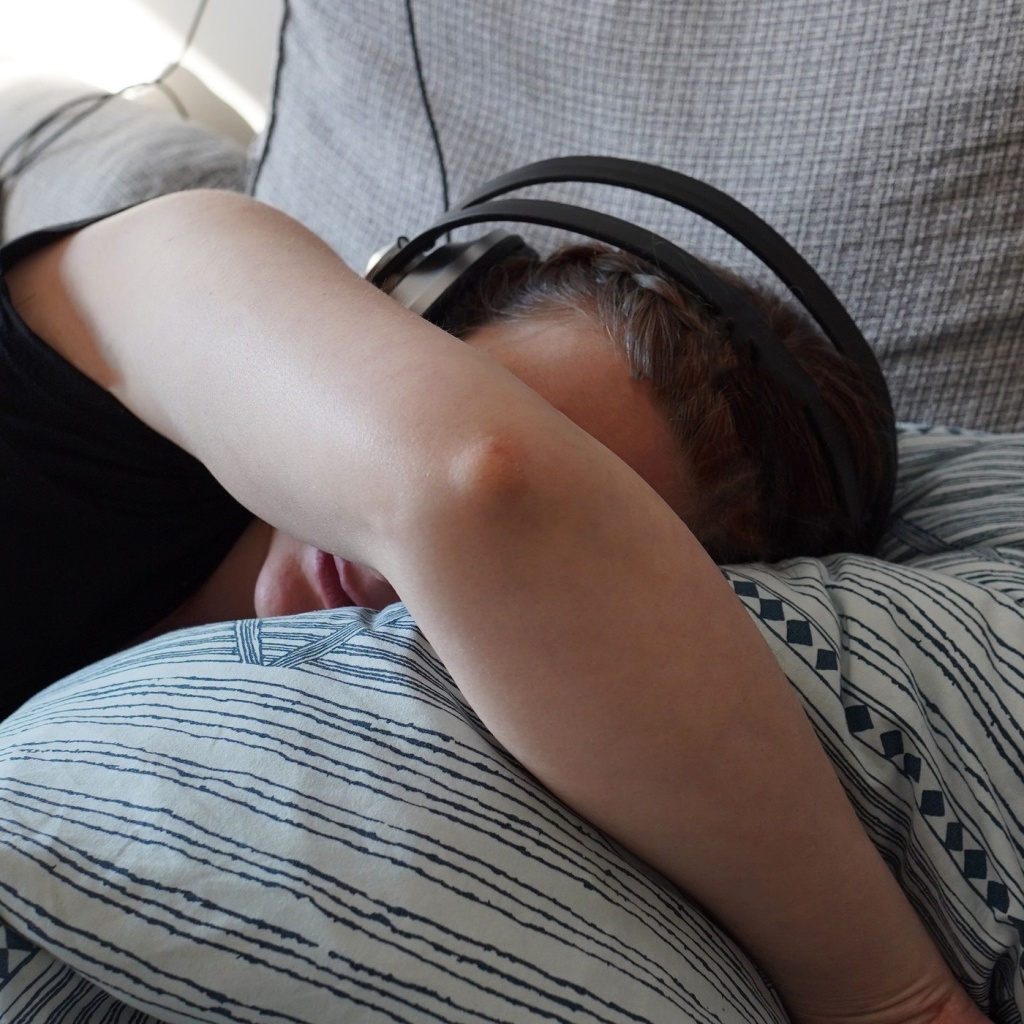
This is the life of a father who worked for Airbus for 23 years. The life of a mother who loved her job as a childcare worker. And the life of a daughter who liked horses and loved playing outdoors. Today, there are three beds in the middle of the family’s living room: one for the mother, Enrike; one for her husband, Marco; and one for their eight-year-old daughter, Nele. All three are seriously ill. All three have ME/CFS.

On this Friday afternoon in August, the father, mother, and daughter have managed to make it from their beds to the dining table. They have carefully rationed their energy to do so. The visitors they have been waiting for have arrived: the ME/CFS Kids Mobile.

Since February, multidisciplinary teams have been travelling from their headquarters in Hamburg-Eppendorf to the homes of children who are so seriously ill that even making the journey to a doctor’s office can be too much for them. So far, the project has been financed entirely through donations. The team is now caring for more than 60 families in Hamburg and the surrounding area. The S. family is one of the particularly severe cases, because here it is not “just” the child who is ill—the parents are affected as well.

Today, the S. family does not have to go anywhere to receive help. There is no difficult journey to the car, no waiting room, and no conversation in which they have to explain everything all over again. Instead, paediatrician Sönke Siefert and Kirsten Mainzer, co-founder of the Kids Mobile, are sitting with them in the place that was once the central setting of the family’s life: the dining table.

Is there a medical explanation for why three members of the S. family have become so seriously ill? Siefert shrugs. “No, there isn’t,” he says.

Then he adds something that says a great deal about the idea behind the Kids Mobile: “That isn’t decisive for our work, either. Most people affected already have more than enough to deal with in terms of doubt and pressure. We are here first of all to listen, and then to organise help wherever it is most urgently needed.”

The team therefore focuses on what is possible—on the practical adjustments that can be made in everyday life. Sometimes a family needs help applying for an assistive device. Sometimes it needs nutritional counselling because a child no longer has the strength to eat. Sometimes someone has to speak with a school, daycare centre, or youth welfare office. That is why the team includes not only doctors and nursing professionals, but also psychosocial support staff, nutritional counsellors, a social services team, and music therapists.

And sometimes helping also means warning families about something. Precisely because there is no curative treatment, families are particularly vulnerable to promises, Siefert says. Part of his job is therefore to advise against procedures whose potential harm is greater than their possible benefit. Above all, however, the team tries not to focus exclusively on the sick child.


The ME/CFS Kids Mobile Needs Support

The idea for the ME/CFS Kids Mobile arose from the Hamburg Outpatient Paediatric Care Network (KVN). Since February 2026, the project has been supporting seriously ill children and adolescents, as well as their families, through medical, nursing, and psychosocial assistance in the home. Its aim is to provide early training, advice, and support for affected young people and their family members who provide care, thereby sustainably improving the care situation at home.

So far, the Kids Mobile has been financed entirely through donations. After initial hopes of finding a quick solution, the health insurance funds announced at the beginning of 2026 that they would not cover the project’s costs for the time being. As things currently stand, there is still no solution in sight.

The care provided to date has been made possible thanks to the Holistic Health Institute, *Ein Herz für Kinder*, *Hamburg macht Kinder gesund*, and the Blunk Foundation. The ME/CFS Kids Mobile depends on donations. Anyone wishing to support the project can do so using the following bank details:

IBAN: DE66 2019 0003 0009 2495 08
BIC: GENODEF1HH2,
Betreff: KinderVersorgungsNetz Hamburg
 

From Bettina Grande‘s Psychotherapie-Netzwerk ME/CFS.

Machine Translation:


For a differentiated, respectful, and factually appropriate approach to people with ME/CFS​

Regarding the Joint Statement from Healthcare and Academia​
​
Endorsed by more than 30 signatories from the fields of medicine, psychotherapy, and academia.​
​
Published on 15 September 2026.​


Joint Statement from Healthcare and Academia

In Support of a Differentiated, Respectful, and Factually Appropriate Approach to People with ME/CFS​

In our medical, psychotherapeutic, and/or scientific work, we regularly encounter people with ME/CFS who are living in an exceptionally challenging situation. Most are severely restricted by their illness in their independence, social participation, and ability to pursue their professional and private lives. At the same time, only limited therapeutic options are currently available. Adequate healthcare structures are still largely lacking, and all too often people affected by the disease are, in practical terms, left to cope with their severe illness largely on their own by our healthcare system.

Against this background in particular, in our clinical and/or scientific work we frequently experience a high degree of gratitude and appreciation from people with ME/CFS for reliable support, careful diagnostic assessment, and an approach that fully recognizes and takes into account their individual limits of exertion as well as the often devastating extent of the limitations caused by their illness. Many people affected also have a strong interest in professional and scientific matters. They closely follow developments in research, engage thoughtfully with new findings, and often themselves devote what little energy they have left to improving healthcare, public awareness, and research.

Our shared experience is that the vast majority of people affected approach medical, therapeutic, and scientific questions in a constructive, reflective, and solution-oriented manner. Many contribute their own experiences in ways that provide important additional insights for healthcare and research. As medical and psychotherapeutic practitioners or scientists, we can benefit from this wealth of experience. Particularly in view of an illness that remains insufficiently understood and the existing deficiencies in healthcare provision, the perspective of those affected can be of considerable value.

As in any other patient population, there may of course occasionally be difficult or conflictual encounters involving people with ME/CFS. In our experience, however, such situations are neither characteristic of this patient population nor more frequent than in other medical contexts. Individual negative experiences must therefore never be generalized or used as the basis for attributing particular characteristics to an entire group.

Against this background, we are particularly concerned by portrayals that characterize people with ME/CFS as having a “combative and accusatory tone,” emphasize “aggressiveness” among affected individuals as a characteristic problem, or otherwise frame this patient population as generally “difficult.” Such sweeping statements turn individual negative experiences into a purported distinctive feature of this patient population, even though our experience in clinical practice and research provides no basis for such a characterization. Such portrayals can foster unwarranted mistrust of people with the disease, encourage the premature psychologization of physical symptoms, and contribute to medical concerns not being assessed without prejudice. In this way, they further impede the already inadequate healthcare available to people with ME/CFS.

We therefore strongly advocate for differentiated, respectful, and factually appropriate language, as well as a corresponding attitude toward this patient population. Both are essential prerequisites for trusting and effective healthcare and for constructive scientific collaboration.


The undersigned listed below support this statement in their personal capacity. Information regarding their professional roles and institutional affiliations is provided solely for professional context; it does not imply endorsement of the statement by the institutions named.

Dr. med. Christoph Bammer
Specialist in Internal Medicine and Nephrology; PAIS Clinic, BKH Kufstein.

Dr. med. Michaela Bauer
Specialist in Psychiatry and Psychotherapy (FMH); private practice, Bern.

Dr. med. Judith Bellmann-Strobl
Specialist in Neurology; Head of PAIS/Post-COVID Clinic; Senior Physician, Neuroimmunology Outpatient Clinic, Experimental and Clinical Research Center (ECRC), Charité – Universitätsmedizin Berlin and Max Delbrück Center for Molecular Medicine (MDC).

Dr. med. Anna Brock
Specialist in Internal Medicine; PAIS Practice Brock, Erbach; Charité Fatigue Center, Charité – Universitätsmedizin Berlin.

Ronja Büchner, M.Sc.
Psychologist and Research Associate; Faculty of Medicine, Leipzig University.

Dr. med. Monika Dräger
Physician, lecturer, and author specializing in ME/CFS, Long COVID, and PAIS; Dr. Lindner Medical Practice, Berlin.

PD Dr. rer. nat. Laura Froehlich
Acting Professor of Social Psychology; Faculty of Psychology, FernUniversität in Hagen.

Prof. Dr. med. Patrick Gerner
Specialist in Pediatrics and Adolescent Medicine; Chief Physician, Department of Pediatrics and Adolescent Medicine; Ortenau Klinikum Offenburg.

Dr. med. Christian Gogoll
Specialist in Internal Medicine and Pulmonology; Head of the Long COVID Network of the Association of Statutory Health Insurance Physicians (KV) Berlin; Lungen-MVZ Weißensee, Johannesstift Diakonie, Berlin.

Dipl.-Psych. Bettina Grande
Psychological Psychotherapist; Charité – Universitätsmedizin Berlin; Board Member, Psychotherapie-Netzwerk ME/CFS e.V.

Dr. Dipl.-Psych. Tilman Grande
Psychological Psychotherapist; Charité – Universitätsmedizin Berlin; Board Member, Psychotherapie-Netzwerk ME/CFS e.V.

Dr. med. Isabelle Greber
Physician in private practice, Dr. Isabelle Greber Medical Practice, Boppard-Buchholz.

Dr. med. Lotte Habermann-Horstmeier, MPH, MSc
Director, Villingen Institute of Public Health, Villingen-Schwenningen.

Univ.-Prof. Dr. med. Kathryn Hoffmann, MPH
Head of the Department of Primary Care Medicine, Center for Public Health; Medical University of Vienna.

Prof. Dr. med. Dr. phil. Martina King
Full Professor of Medical Humanities; Faculty of Science and Medicine, University of Fribourg/Switzerland.

Prof. Dr. rer. soc. Eva-Maria Klinkisch
Catholic University of Applied Sciences Freiburg.

Prof. Dr. Vivienne Matthies-Boon
Head of the Department of Ethics and Political Philosophy; Radboud University, Nijmegen.

Dr. med. Julia Möbius
Specialist in Internal Medicine; Diamedikum, Potsdam.

Prof. Dr. Bhupesh K. Prusty
Associate Professor, Institute of Microbiology and Virology, Rīga Stradiņš University, Riga.

Dr. med. Herbert Renz-Polster
Specialist in Pediatrics and Adolescent Medicine, Vogt.

Dr. med. Wolfgang Ries
Specialist in Internal Medicine, Nephrology, Angiology, and Internal Intensive Care Medicine; Dr. Wolfgang Ries Medical Practice, Handewitt.

Dr. med. Claudia Schilling
Specialist in Psychiatry and Psychotherapy; Specialist in Neurology; Sleep Medicine; Department of Psychiatry and Psychotherapy, Central Institute of Mental Health, Mannheim.

Prof. Dr. med. Georg Schomerus
Specialist in Psychiatry and Psychotherapy; Director, Department and Outpatient Department of Psychiatry and Psychotherapy, Leipzig University Hospital.

Ann-Kristin Specht, M.A.
Sociologist; Weber-Bartz-Papendieck Group Practice, Long-/Post-COVID Anchor Center Rhineland-Palatinate, Koblenz.

Univ.-Prof. Dr. med. Dr. h.c. Jürgen Michael Steinacker
Specialist in Internal Medicine, Cardiology, Sports Medicine, and Rehabilitation Medicine; Institute for Rehabilitation Medicine Research, Ulm University.

Dr. med. Michael Stingl
Specialist in Neurology, CerePrax – Practice for Neurology & Psychology, Vienna.

Dr. med. Maja Strasser
Specialist in Neurology, Neurology Practice, Solothurn.

Jesko Streeck
Diploma-qualified Physiotherapist, lecturer, and professional textbook author; Osteofit Practice, Alzey.

Dipl.-Sozialpäd. Philipp Theis
Child and Adolescent Psychotherapist; Munich Chronic Fatigue Center for Young People (MCFC), TUM University Hospital Rechts der Isar, Munich.

Dr. med. Astrid Weber
Specialist in Internal Medicine and Psychotherapy; Weber-Bartz-PapendieckGroup Practice, Long/Post-COVID AnchorCenter Rhineland-Palatinate, Koblenz.

Dr. med. Andreas Weiß
Specialist in Anesthesiology and Emergency Medicine, Oberreute.

PDF in German:
 
A team of German journalists has started an investigation into Münchhausen-by-Proxy accusations that parents of children with complex illnesses face sometimes.
You can help by filling out this form if you or someone close to you had to go through such nightmare accusations:

Machine Translation;

These journalists are asking for donations.

From Bluesky:


Mirja Nicolas @privilegienschreck.bsky.social

An investigative team is researching medical kidnapping* and still needs donations to support its work:

*Suspicion directed toward children with chronic illnesses and disabilities and their families, which can ultimately lead to children being taken into protective custody.

https://bcause.com/one-pager/transaction/sozialheldinnen-germany/frc-324872256173219840


There's a 54-minute interview with Georg Schomerus, Professor of Psychiatry on the Podcast Hör mal, wer da liegt.
Schomerus has published some good papers and I generally regard him as an important voice in Germany.
See
What is the Role of “the Psyche”? Long COVID and ME/CFS as Test Cases for Evidence-Based and Patient-Centered Psychiatry and Psych..., 2026, Schomerus or
[GER] UNCOVER – Understanding and Reducing Barriers to Care for Long COVID and ME/CFS, Büchner, Hussenöder, Schomerus as examples.


Why We Pigeonhole People | Prof. Georg Schomerus on Stigmatization | HMWDL #48​


I added an auto-translated transcription of the interview as attachment.
There are [SPEAKERXX] tags that don't really work reliably but sometimes can give you an idea when the active speaker has changed.
 

Attachments


Paywall. 2600-word article.

Machine translation:


Everyone in the Family Has ME/CFS: When an Entire Family Disappears from Everyday Life​

The ME/CFS Kids Mobile visits patients who are barely able to leave their homes. The *Abendblatt* was able to accompany the team on one of its visits.​


The ME/CFS Kids Mobile Needs Support

The idea for the ME/CFS Kids Mobile arose from the Hamburg Outpatient Paediatric Care Network (KVN). Since February 2026, the project has been supporting seriously ill children and adolescents, as well as their families, through medical, nursing, and psychosocial assistance in the home. Its aim is to provide early training, advice, and support for affected young people and their family members who provide care, thereby sustainably improving the care situation at home.

So far, the Kids Mobile has been financed entirely through donations. After initial hopes of finding a quick solution, the health insurance funds announced at the beginning of 2026 that they would not cover the project’s costs for the time being. As things currently stand, there is still no solution in sight.

The care provided to date has been made possible thanks to the Holistic Health Institute, *Ein Herz für Kinder*, *Hamburg macht Kinder gesund*, and the Blunk Foundation. The ME/CFS Kids Mobile depends on donations. Anyone wishing to support the project can do so using the following bank details:

IBAN: DE66 2019 0003 0009 2495 08
BIC: GENODEF1HH2,
Betreff: KinderVersorgungsNetz Hamburg
From Bluesky:


https://bsky.app/profile/marsonautin.bsky.social
The doctor and nurse from CFS Kids Mobil spent an hour and a half with us, listening carefully to everything—absolutely everything—related to our sick child, documenting it, and providing valuable guidance and support. The services provided by the Kinderversorgungsnetz Hamburg are worth their weight in gold—indeed, even more than that! Anyone living in or around Hamburg with a child affected by Long COVID or ME/CFS should contact CFS Kids Mobil.​


From Bluesky:


​
The Bayerische Rundfunk program mehr/wert recently visited Bianca, who is affected by #MECFS, as well as the severely ill siblings Anna and Moritz, in their homes for a current report on #MECFS. Anna and Moritz’s parents talk about the profound functional limitations and high symptom burden associated with the disease, the significant financial strain, and the lack of recognition of #MECFS within the social and medical care system. The report also features the siblings’ treating physician, Dr. Wolfgang Ries.​
​
The report is available as a 29-minute video and in a shorter 14-minute radio version.​
​
Video version:​
​
Radio version:​


Machine Translation:


Getting an Appointment Is Like Winning the Lottery: Long Covid Care in Hesse Is a Matter of Luck​
​
Published: September 18, 2026, 4:22 p.m.​
By Jutta Rippegather​
​
A Green Party symposium highlights the difficulties faced by people in Hesse suffering from Long Covid: there are hardly any places they can turn to for help. To this day, there is not even a binding policy on the schooling of children affected by the illness. In the state parliament, expert Streek is giving evidence before the investigative committee.​


What's the state of medical care for the 1.5 million people across Germany who suffer from ME/CFS or Long Covid? In Hesse, it depends on where they live and on the doctor treating them. That is the sober conclusion to emerge from an interdisciplinary symposium hosted by the Green parliamentary group in Wiesbaden in recent days.

There are individual points of contact, but getting an appointment there is about as likely as winning the lottery jackpot. Those affected feel left alone and not taken seriously. They encounter gaps in knowledge and a lack of willingness to help among doctors, the Medical Service and health insurance providers.

Schooling for Children with ME/CFS​

Patient representatives criticised the lack of binding and structured participation, said Claudia Ebel of the Fatigatio Federal Association for CFS. To this day, the Ministry of Education has failed to issue binding guidance on the schooling of children and adolescents who are ill. “Childhood cannot be made up for,” added Katharina Dietz-Michalski of the Nichtgenesenkids association.

Outpatient Clinic for Children​

Kassel has a specialist outpatient clinic for children and adolescents, the PEDNET-LC Comprehensive Care Center Kassel, whose work was presented by paediatrician and co-project lead Nina Kollmar. A second clinic is scheduled to open in Frankfurt next year.

That is not enough to fulfil all the necessary tasks: giving presentations at schools and to community-based physicians, organising care close to home for severely affected patients, and integrating telemedicine. It is a successful model designed to be expanded across the region, but its funding remains on shaky ground.

A Complex Disease​

In the concluding discussion, representatives of health insurers and the medical profession made clear that the problem does not lie with them personally, but with a system that creates obstacles—because of funding constraints and because the machinery of bureaucracy is not designed to provide care for this complex disease, which can manifest itself in very different ways.

The high level of suffering is reflected in the many comments posted by participants. Around 300 people joined the symposium online.
 

7-min radio feature.

From Bluesky.
Machine Translation:


​
In the Deutschlandfunk Kultur program Zeitfragen, Christopher Weingart examines the issue of medical gaslighting in ME/CFS and the associated adverse health consequences. Lina Vollmer reports on how, during a hospital stay, her ME/CFS symptoms were reinterpreted as psychosomatic and not taken seriously.​
​
As a result of the lack of appropriate consideration for her condition, she repeatedly experiences crashes and, after one month in hospital, finds herself in a dramatically worsened state of health.​
​
Program duration: 7:31 min.​
​
[Deutschlandfunk Kultur – Medical Gaslighting: Why People with ME/CFS Are Being Misdiagnosed and Mistreated]​


From the personal website of the journalist:


Welcome!​
​
My name is Christopher Weingart. I am a freelance journalist and podcaster, currently working on topics including science denialism—particularly AIDS denialism, in collaboration with Jonas Reese—as well as conspiracy beliefs, spirituality, and religion. I also cover topics relating to the United States and Italy.​
​
In addition to numerous publications in, among others, Deutschlandfunk, Bayerischer Rundfunk, taz, and Süddeutsche Zeitung, I was invited to speak at the 2024 Munich AIDS and Infectious Diseases Conference and by the University of Siegen, and was invited by the HIV Competence Network to participate in a panel discussion.​


The German Association for Psychiatry, Psychotherapy and Psychosomatics (DGPPN) will hold a symposium at their upcoming congress in November called:
“Who Develops Post-COVID?”


Chair / Co-Chairs​
Prof. Georg Schomerus​
Dr. Claudia Schilling​
​
Contributors & Speakers​
​
Epidemiology of Post-COVID: Risk Factors, Evidence, and Remaining Uncertainties​
Raphael Peter​
​
Genetic Vulnerability to Post-COVID: The Contribution of Polygenic Risk Scores​
Dr. Claudia Schilling​
​
Stigma and Institutional Discrimination in Post-Infectious Diseases​
Prof. Eva-Maria Klinkisch​
​
Gender, Stigma, and Illness Experience in Post-COVID​
Ronja Büchner​

Chair / Co-Chair
Prof. Georg Schomerus
Dr. Claudia Schilling

Beiträge & Sprecher

Epidemiologie von Post-COVID: Risikofaktoren, Evidenz und verbleibende Unsicherheiten
Raphael Peter

Genetische Vulnerabilität für Post-COVID: Beitrag polygenetischer Risikoscores
Dr. Claudia Schilling

Stigmatisierung und institutionelle Diskriminierung bei postinfektiösen Erkrankungen
Prof. Eva-Maria Klinkisch

Gender, Stigma und Krankheitserfahrung bei Post-COVID
Ronja Büchner


Channel description:
On this channel, you will find recordings of the medical training course “Diagnosing and Treating ME/CFS and Post-Acute Infection and Vaccination Syndromes.” The course was held in a hybrid format on Friday, 17 July 29026, at the Stuttgart Public Health Department.

This channel was created in collaboration with several self-help centres and patient organisations in Baden-Württemberg.

Links
Baden-Württemberg ME/CFS flyer:

 
Long Covid: Annabelle fights ME/CFS

Annabelle has to be in bed most of the time. Since a corona infection, she has been permanently ill. Gymnastics, school, playing outside: she wishes back what she used to enjoy. What can Annabelle help? Together with her parents, she is committed to more research. With an avatar, Annabelle sometimes participates in class. But she usually can't make it. Even her friend can rarely come to visit because it is too exhausting.

(I think this is a kids' TV channel)


Invisible, Uncared For​
​
OTHERS MOVE ON. For most people, the Covid-19 pandemic has long since become a thing of the past. For those of us living with Long Covid and ME/CFS, it remains part of everyday life to this day.​
​
Commentary by Barbara Wimmer.​
​
An article in the new issue of MO – Magazine for Human Rights.​


The last couple of paragraphs:
This invisibility has consequences: our needs are overlooked. Although Long Covid and ME/CFS affect so many people, adequate medical care is still lacking. Public services and points of contact are only now gradually being established. Specialists have waiting lists stretching for months or are not accepting new patients. Many doctors still have little knowledge of these conditions or underestimate their severity.

Added to this are existential concerns. Those who become seriously ill often lose their jobs, social connections, and financial security. Many of us are also forced to fight for recognition from public authorities and insurance providers. This takes energy that we simply do not have.

This is not about individual cases, but about human rights: the right to healthcare, social security, and participation in society. People must not be overlooked simply because their illness is not visible from the outside.

We need more research, comprehensive access to specialized care, well-trained medical professionals, and fair procedures under social and welfare law. We need our reality to finally be seen. Because the pandemic may be over for many. For us, it continues to this day.
 
From Bluesky:


​
With ME/CFS, grief and hopelessness may be appropriate responses to severe illness and absent treatment.

Psychotherapy can support coping.

But presenting improved coping as improvement of the disease shifts medical failure onto patients and turns positivity toxic.

#MECFS​
Black-and-white stick-figure illustration: A severely ill person lies exhausted in bed. A psychotherapist sits casually in an armchair with crossed legs and holds a grotesquely grinning mask in front of the patient’s face. In the background, a medical professional leaves the room, taking an IV stand, medical equipment and a doctor’s bag. The image symbolises toxic positivity being offered as a substitute for somatic medical care.

 
Long Covid: Annabelle fights ME/CFS

Annabelle has to be in bed most of the time. Since a corona infection, she has been permanently ill. Gymnastics, school, playing outside: she wishes back what she used to enjoy. What can Annabelle help? Together with her parents, she is committed to more research. With an avatar, Annabelle sometimes participates in class. But she usually can't make it. Even her friend can rarely come to visit because it is too exhausting.

(I think this is a kids' TV channel)
Some voices from Twitter, machine translated:


Christina Koch
@CK65375
1h​
​
A real scandal.​
​
Sabine, the mother of little Annabelle, who is among the most severely affected patients (#MEcfs #MCAS etc.), is currently answering questions on Instagram. And some of the information is truly maddening. The child needs a midline catheter (which she is scheduled to receive next week) in order to receive adequate fluids and nutrition.​
​
Who pays for the catheter to be inserted at home? The patients/their families. That is, if they can even find someone who is able and willing to do it. It’s simply unbelievable. Annabelle is no longer able to be transported.​
​
With ME/CFS, MCAS, and related conditions, you are simply left completely on your own. Financially as well.​
​

​
​
Michael Stingl
@neurostingl
18h​
​
It’s sad that the children’s channel KiKa has to report on ME/CFS.​
​
Even sadder is that it does so much closer to reality than some medical authorities do.​
​

​
​
HalbigH
@h_halbig
23h​
​
This illness is unimaginable. Our son also became ill at around the age of 10; he is now 17. What will the future hold?????​


Some voices from Twitter, machine translated:
Continued:


Katharina Rost​
@KatharinaRost3​
​
I’m at the hospital with my daughter. No pediatric hospital would admit her. She is now receiving good care here, but she was only able to be admitted because I signed up for a specialized private ward, at a cost of €200 per day. The stay is 21 days. It’s all absurd.​
​

​
The doctors who are willing to help are facing massive problems; the costs of caring for ME/CFS patients are too high. They cannot admit them. Hospital financing is a huge problem.​
​
​

 
From Bluesky:


​
With ME/CFS, grief and hopelessness may be appropriate responses to severe illness and absent treatment.​
​
Psychotherapy can support coping.​
​
But presenting improved coping as improvement of the disease shifts medical failure onto patients and turns positivity toxic.​
​
Black-and-white stick-figure illustration: A severely ill person lies exhausted in bed. A psychotherapist sits casually in an armchair with crossed legs and holds a grotesquely grinning mask in front of the patient’s face. In the background, a medical professional leaves the room, taking an IV stand, medical equipment and a doctor’s bag. The image symbolises toxic positivity being offered as a substitute for somatic medical care.

And of course

The normal ‘help to cope’ like practical changes, getting guidelines in employment and school regulations so people get genuine change to make things workable, support with admin or make getting adaptations made not an exhausting idyssey and making sure misinformation is corrected so that people find the world gets it and knows what level of consideration different severities need eg don’t flash up flashing pics on a video call to gee people up thinking it’s fun and realise a noisy place for a coffee isn’t ok when someone thought they were meeting somewhere quiet , or the same with the ‘let’s just walk somewhere further’ trick so many play games with claiming good intentions and it’s horrific coercion they take no responsibility for the consequences they are causing to the point the final as they don’t want to hear

This is another part that all other serious illnesses get first as well as actual medical care before anyone starts talking about ‘someone not coping’ being that they just need counselling - because psychology says take the foot of the neck and the hand off the hot stove first before you tell them to think of ‘how to live with it’ unless it’s an illness where they want people to suffer a foot on neck and hot stove daily and the issue is they won’t do everyone else’s work for them too (because the wrong dystopian guidelines put one in that position where if they aren’t indispensable then they are vulnerable as people just accuse it of mindset instead of disability according to the legal stuff when the bps warped describing as the disability is treated by mindset) and keep smiling and not eventually get worse because of it.
 
Personal Website | Google Translate

Dr. med. Monika Dräger is a psychiatrist specialized in the treatment of children and adolescents.
She's a pwME and has a YouTube channel that educates about ME/CFS.
This is not an endorsement as I haven't watched any of the videos.


Video list:
  • What Nurses Should Know AboutME/CFS and Long COVID
  • 8. ME/CFS: Rehabilitation and Return toWork
  • 7b. ME/CFS: Care for Severely AffectedPatients in 2026
  • 7a. ME/CFS: Medical Care for SeverelyAffected Patients in 2026
  • 6. Living with ME/CFS in Hospitals andMedical Practices (Revised)
  • 5. Treatment of ME/CFS (As of 2025)
  • 4. ME/CFS and Long COVID—…
  • 3. Diagnosing ME/CFS (As of 2025)
  • 2. ME/CFS, Long COVID, Post-COVID,Post-VAC, and PAIS
  • 1. ME/CFS and the Key Symptom PEM(Post-Exertional Malaise)
 
Back
Top Bottom