rapidboson
Senior Member (Voting Rights)
I would see it a bit more nuanced, but fair enough. 


This is my n=1: I’ve had plenty of instant PEM when I was gaslit into exercising 6-24 months post covid. I fully believed that I did not have PEM because it was not delayed. Nobody told me that I didn’t have PEM, they just told me that exercise would make things better.
In retrospect, it’s obvious that I had PEM, because it looked exactly like the often delayed PEM that I now experience when I’m unable to pace properly, 36 months post covid.
Differences in the way individual's body works and the demands on them and how they manage their activity will all impact on how PEM manifests. E.g. I had crashes from onset, but when my ME/CFS improved to mild and I was able to work half-days, I did not get severe crashes like others describe, and like I had previously experienced. But I remember very clearly that even though there was variation in how I felt at the beginning of the day, every single day, I would start feeling awful every day at about 11/11.30am. I had to go to bed as soon as I got home from work. The exacerbation of symptoms started during the exertion, and continued for the rest of the day. Not calling that PEM doesn't make sense to me."ME needs PEM and PEM needs to be delayed" goes well beyond cohorting and may leave many patients int the netherworld of MUPS, thrown out of the ME boat into the hands of whom? If PEM is observably delayed in the majority of patients with ME diagnosis then it is reasonable to hypothesise that the delay is related to the overall ME biology but it may be that patients with similar biology simply present PEM in another way. That happens in many conditions.
I'm not sure this is universally true.PEM is a term created by clinicians listening to patients and discussing with other clinicians, and giving a name to a pattern of worsening way out of proportion to exertion their patients described. That pattern including a delay between the patient doing a bit more activity than usual, and getting much sicker a day or two later, and in many cases that lasted for days or weeks, and the amount of worsening would be way out of proportion to the exertion, which would have not caused any symptoms before the illness.
It is this observed pattern those doctors named PEM. And this pattern that more clinicians writing guidelines and definitions named PEM.
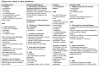
That alone suggests to me that the primary feature of PEM is not the delay, but the prolonged nature of it.Younger patients do not always experience the delayed onset of symptoms after increased physical or cognitive activity, but they generally do have a prolonged recovery period after activity.
They go into more detail here:Post-Exertional Malaise and/or Fatigue: There is an inappropriate loss of physical and mental stamina, rapid muscular and cognitive fatigability, post exertional malaise and/or fatigue and/or pain and a tendency for other associated symptoms within the patient's cluster of symptoms to worsen. There is a pathologically slow recovery period-usually 24 hours or longer.
The malaise that follows exertion is difficult to describe but is often reported to be similar to the generalized pain, discomfort and fatigue associated with the acute phase of influenza. Delayed malaise and fatigue may be associated with signs of immune activation: sore throat, lymph glandular tenderness and/or swelling, general malaise, increased pain or
cognitive fog. Fatigue immediately following activity may also be associated with these signs of immune activation. Patients who develop ME/CFS often lose the natural antidepressant effect of exercise, feeling worse after exercise rather than better. Patients may have a drop in body temperature with exercise. Thus fatigue is correlated with other symptoms,
often in a sequence that is unique to each patient. After relatively normal physical or intellectual exertion, a patient may take an inordinate amount of time to regain her/his pre-exertion level of function and competence. For example, a patient who has bought a few groceries may be too exhausted to unpack them until the next day. The reactive fatigue of post-exertional malaise or lack of endurance usually lasts 24 hours or more and is often associated with impairment of cognitive functions. There is often delayed reactivity following exertion, with the onset the next day, or even later. However, duration of symptoms also varies with the context. For example, patients who have already modified their activities to better coincide with the activity level they can handle without becoming overly fatigued will be expected to have a shorter recovery period than those who do not pace themselves adequately.
PENE: a pathological, low threshold of fatigability
• post-exertional exhaustion & symptom flare
- immediate or delayed, & not relieved by rest
• prolonged recovery period
Post- Exertional Neuroimmune Exhaustion (PENE pen-e)
Normal fatigue is proportional to the intensity and duration of activity, followed by a quick restoration of energy. PENE is characterized by a pathological low threshold of physical and mental fatigability, exhaustion, pain, and an abnormal exacerbation of symptoms in response to exertion. It is followed by a prolonged recovery period.
In my view, that's because the disproportionate and prolonged parts are the absolutely essential ones.Post-exertional malaise after activity in which the worsening of symptoms:
-is often delayed in onset by hours or days
-is disproportionate to the activity
-has a prolonged recovery time that may last hours, days, weeks or longer.

Yes, sorry, I'm not having a nuance sort of day.I would see it a bit more nuanced, but fair enough.

I agree with this interpretation.The 2021 NICE guidelines use the words "often" and "typically" to qualify delay in PEM, but do not qualify the disproportionate or prolonged nature of it at all:
In my view, that's because the disproportionate and prolonged parts are the absolutely essential ones.
Those people are at a much higher level of functioning, and it might be that PEM behaves differently at that point.What I'm trying to understand is if someone who needs the lie down after work, but can also increase their activity without crashing, are the getting PEM?
Yeah, I think this is what PEM is. And then we could possibly give reports of how different people experience it. But very briefly, like ‘often delayed’, ‘from stimuli’, etcIn the end I think the main thing is to include everyone who gets disproportionate worsening after activity at a level they easily coped with before they were ill, and that worsening isn't just the aching and tiredness that healthy people get after exercise, it's feeling much more ill and having to stop for hours or longer.
From that info alone, I don't think you could definitively say, that is or isn't PEM. But you could say, that's not normal. If I read about someone with anaemia or back pain or post-surgery having to do that, I would think nothing of it - they're fatigued. For what it's worth, for most of the time I was able to work half-days, I was only able to heat up meals in the microwave, and would not have been able to do anything like look after kids had I had any.A question on how you interpret prolonged.
Someone who gets home from a half day at work, and has to lie down for an hour or two before getting dinner, and can do the same day after day. Is that prolonged enough to call it PEM?
I would say needing a lie-in after a night of dancing is normal.If they go dancing one weekend night, need a lie in the next morning, but can get upand go out to lunch and go back to work on Monday as usual. Is that PEM?
Yeah, I think you could argue they are if you had the "more info" I talked about above, but it's mild and improving ME/CFS, the stuff of dreams for people with more severe ME/CFS, but the stuff of nightmares for healthy people.What I'm trying to understand is if someone who needs the lie down after work, but can also increase their activity without crashing, are the getting PEM?

Those people are at a much higher level of functioning, and it might be that PEM behaves differently at that point.

If they go dancing one weekend night, need a lie in the next morning, but can get upand go out to lunch and go back to work on Monday as usual. Is that PEM?
This is why it’s so difficult to learn to judge your threshold, because the symptoms and warning signs can change.To add, I also experienced flu-like symptoms like Peter describes during that time. But I no longer have flu-like symptoms during PEM for the last 22 years.

well to me, the use of the word 'can', precludes it being 'always' on its own (ie without the addition of a qualifier such as 'often')... Otherwise it would say patients report that it 'is'.In my personal opinion (I might not be correct at all), we should say that it is reported that it can often be delayed.
So something like this (changes in red):
Patients with PEM report that it can (list is not exhaustive yet):
- Often be delayed by up to multiple days
- Have a gradual or instant onset
- Last for up to days, weeks and months
- Also be triggered by stimuli or sensory overload
- Not be alleviated by rest
 sory if not pls ignore
One thing i will mention, that i did learn over my more mild/moderate yrs back 10yrs or so ago, is that the PEM that at the time i thought was immediate (after some exertion or other), actually wasnt.
It was actually delayed PEM from the effects of culmulative but small (so not noticed individually) over-exertions, that had happened during the previous few days. And then i'd go & do the final small over-exrt, & would crash either immediately after, or even during that exertion.
I believe ‘report’ is essential to include exactly because we don’t have definitive studies. We can’t risk giving off the impression that the descriptions of PEM are based on ironclad evidence.I also question whether specifying that patients 'report' it neccessary.... We have no biomedical evidence, so pateint reports are all we have. Seems redundant to me.
That was the intention behind ‘often’. I take often to mean at least 50 % of the time. I don’t think we have good data here, and I don’t think we’ll strengthen the factsheet if we try to give a more exact estimate.And most importantly I dont think most healthy people have problems understanding feeling rotten immediately after doing something. So while we need to make sure we dont use language that means someone like yourself @Utsikt rules out their immediate uptick in symptoms being PEM, I dont think it would be accurate or helpful to make it seem as though it's just as likely to be immediate as delayed.
The key is that we simply don’t know if PEM is instant or delayed or accumulative. As you say, it can certainly seem one way or another, but it could just as well be correlation and not causation. Which is another reason for including ‘report’ for accuracy. And it’s why I think we should cover all three options.I mean obviously i cant guarantee that was/is the case but it certainly became what seemed like a recognisable pattern which only started to appear/make sense once i read someone somewhere talking about the cumulative effect of things over a wk or a month etc.
I’ll add some brief comments to explain my wording and current opinion (which might be wrong or inaccurate). Bolding is mine.
I believe ‘report’ is essential to include exactly because we don’t have definitive studies. We can’t risk giving off the impression that the descriptions of PEM are based on ironclad evidence.
That was the intention behind ‘often’. I take often to mean at least 50 % of the time. I don’t think we have good data here, and I don’t think we’ll strengthen the factsheet if we try to give a more exact estimate.
The key is that we simply don’t know if PEM is instant or delayed or accumulative. As you say, it can certainly seem one way or another, but it could just as well be correlation and not causation. Which is another reason for including ‘report’ for accuracy. And it’s why I think we should cover all three options.
LOL
The key is that we simply don’t know if PEM is instant or delayed or accumulative.
One thing i will mention, that i did learn over my more mild/moderate yrs back 10yrs or so ago, is that the PEM that at the time i thought was immediate (after some exertion or other), actually wasnt.
It was actually delayed PEM from the effects of culmulative but small (so not noticed individually) over-exertions, that had happened during the previous few days. And then i'd go & do the final small over-exrt, & would crash either immediately after, or even during that exertion.
(I didnt know then that the cumulative effect of multiple small seemingly innocuous things still came out of the overall 'weekly exertion budget')
When this happened my mother & I would puzzle over how 3 wks previously I'd done that same exertion & not crashed because of it, without realising that it was actually the culmination of the smaller less noticable things that I was having a delayed reaction to, rather than the one that seemed implicated in the seemingly 'immediate' onset crash.