
I'm aware this is a lot to go through but it's all interesting and at least should reassure you that brain retraining is not some 'cult.' There IS theory and science underpinning the ideas:So instead of telling us about anecdotes of people whose stories we aren't able to verify or even see, because they are rightly kept private, and which therefore gets us nowhere, how about presenting us with a coherent account of that theory, a description of what brain retraining actually involves, and linking the research so we can review and discuss it.
https://link.springer.com/article/10.3758/s13415-021-00958-x - this is good
Also really interesting:
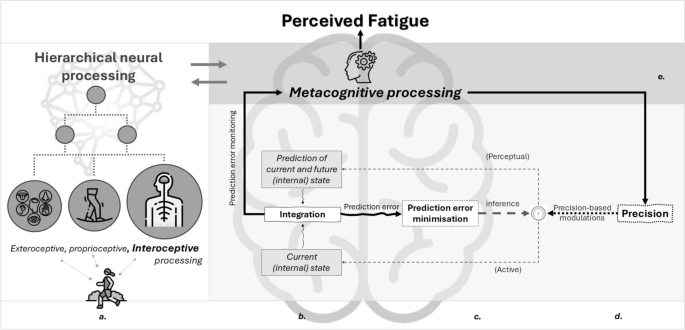
A New Framework to Understand and Study Exercise-Induced Perceived Fatigue as a Metacognitive Inference of Dyshomeostasis - Sports Medicine
Novel theories have emerged in the past decade pertaining to how the brain processes internal body sensations and how such processes underpin not only perception but also how we act in the world. These neuroscientific advances offer new perspectives for research and practice allied to medicine...
 link.springer.com
Mats Lekander, 'The Inflamed Feeling' is a very good book laying things out in a way that is more readable.
Predictive processing pain papers are also key (as they seem to be the same mechanism, just different symptoms), such as:
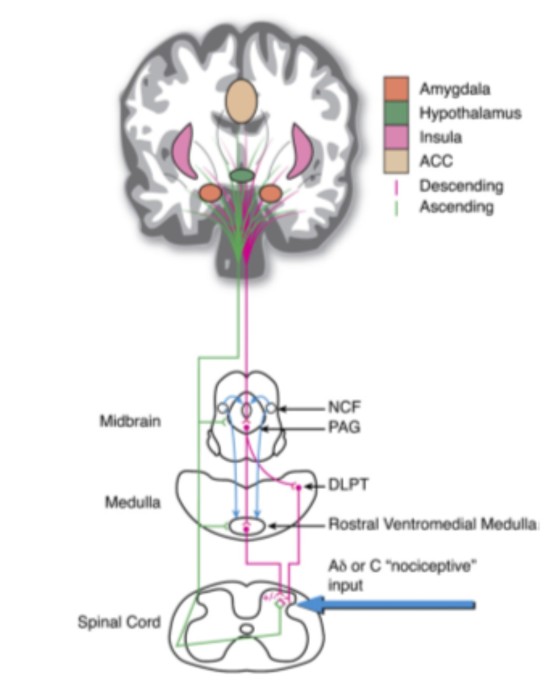
An Embodied Predictive Processing Theory of Pain Experience - Review of Philosophy and Psychology
This paper aims to provide a theoretical framework for explaining the subjective character of pain experience in terms of what we will call ‘embodied predictive processing’. The predictive processing (PP) theory is a family of views that take perception, action, emotion and cognition to all work...
link.springer.com
Frontiers | The body does not keep the score: trauma, predictive coding, and the restoration of metastability
The Body Does Not Keep the Score: Trauma, Predictive Coding, and the Restoration of Metastability By Steven Kotler, Michael Mannino, Glenn Fox, Karl Friston ...
 www.frontiersin.org
No rush to read it all.


