Predictive processing, predictive coding - a BPS theory of causation

So instead of telling us about anecdotes of people whose stories we aren't able to verify or even see, because they are rightly kept private, and which therefore gets us nowhere, how about presenting us with a coherent account of that theory, a description of what brain retraining actually involves, and linking the research so we can review and discuss it.
I'm aware this is a lot to go through but it's all interesting and at least should reassure you that brain retraining is not some 'cult.' There IS theory and science underpinning the ideas:

https://link.springer.com/article/10.3758/s13415-021-00958-x - this is good

Also really interesting:
Mats Lekander, 'The Inflamed Feeling' is a very good book laying things out in a way that is more readable.

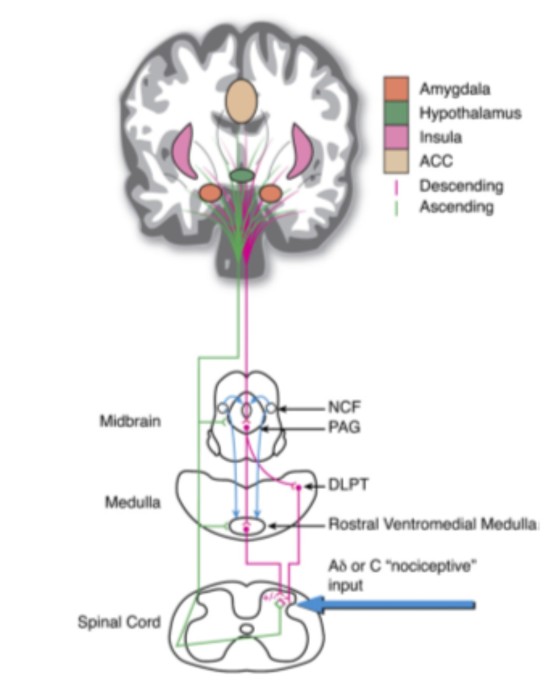
Predictive processing pain papers are also key (as they seem to be the same mechanism, just different symptoms), such as:
No rush to read it all.
 

It is terrible.

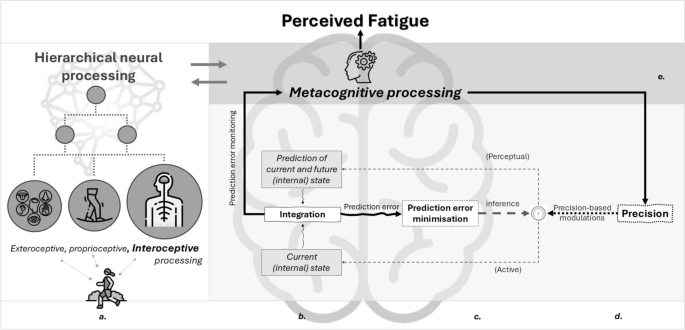
"The metacognitive theory of dyshomeostasis (Stephan et al., 2016) states that pathological fatigue emerges from the metacognitive mechanism in which the detection of persistent mismatches between prior interoceptive predictions and ascending sensory evidence (i.e., prediction error) signals low evidence for internal generative models, which undermine an agent’s feeling of mastery over the body and is thus experienced phenomenologically as fatigue."

This is just blather, and as i pointed out, backwards.

Can you not see that? Are you unable to understand the basics of the theory?
 
@UkPoster (just clarifying that everything I'm about to say is of course my own subjective opinion coming from my personal experience and viewpoint)
I find it so depressing and disheartening and bleak that you are here trying to advance these frankly completely absurd and nonsensical ideas, and that there are so many others like you.
I know you obviously won't agree with me, but I suppose there's no harm in me adding my voice to the chorus, even though I am fairly sure it won't cause you to reflect or reconsider anything you're saying.
Unfortunately as a very sick disabled person with very limited energy, I don't have the capacity right now to go through everything you've said line by line and refute it, so I will acknowledge that this is a general emotional response to the general impression I have formed from reading your posts.

What you are suggesting as a "mechanism" just fundamentally doesn't make any sense.
I'm 37 years old, from when I was 19 to about 28 I was incredibly physically active. I cycled long distances across London pretty much every day, cycling was by far my principal mode of transport and I was working as a freelancer all over the city, from Barking to Notting Hill, to Finchley, to Peckham almost always doing it all on my bike. I was easily averaging 10 miles per day of cycling around London.
On top of that, I was carrying heavy equipment (amplifiers), working in the evenings (performing live music), hiking, surfing and running for pleasure and exercise.

Around age 27/28, my physical activity started declining because I started to find it harder to maintain all this physical exercise. Cycling began to feel difficult, walking up stairs began to feel difficult. Despite this, I pushed through for years, refusing to reduce my activity levels unless I physically couldn't move, which started to happen more and more frequently - a day would come up where I physically wouldn't be able to leave the house, because my muscles were aching so much, I had such extreme fatigue, headaches etc. I would rest for a day or two, feel better, and then get straight back to cycling, running etc etc.
Over 2/3 years, the stretches of feeling well and able to do physical stuff got shorter and shorter, and the days when I couldn't move became more and more frequent.
Despite this, I kept pushing on (doubtless because of all the absolute guff that is so prevalent that has wormed it's way into all of our consciousnesses whether we like it or not - that we're "scared" of activity bla bla bla").
I kept pushing on, my capacity kept reducing, I kept pushing on, my capacity kept reducing, etc etc.
This continued until I had sold all my bikes (I couldn't cycle at all any more), stopped hiking, stopped surfing, stopped live performance, and now am lucky to be able to walk 3000 steps in a day.

I think, as far as I'm aware, from talking to many other people with ME, that a lot of people have a similar trajectory. They start to notice that they are less physically able, push through, become even less physically able, etc etc etc, until they are able to do very little at all, and possibly become housebound or bedbound.

Your claim that somehow we become worse because we don't do enough because we're scared, is completely backwards and illogical.
How would that fit my experience, or the experience of many others that is similar?

At what point in my decline was I not doing enough? At what point was there some perfect amount that I should have been doing that would have then expanded my capacity again?

I think we get very frustrated because on such a fundamental level, what you are saying does not work as a way of explaining the trajectory of our experience. It's completely backwards. I really don't know how else to put it.
 
Right, I looked up somatic tracking. Turns out I've been doing it for 15 years. It's mindfulness and affirmations. Plenty of people have been teaching this for years. There's nothing new here; it's just got new labels and new acolytes.

It has never made a dent in my ME/CFS, but I do find it soothing while doing it, I enjoy feeling calm during and after, and it gives me some good quality rest. I do my best to extend it into the rest of my day, with varying success. The only effect on symptoms is removing "the second arrow" aka any extra layer of suffering caused by distress/resisting etc. So if I've tensed up because of pain I can remove or at least reduce that extra tension, but the pain that prompted the tensing up remains. I've never found it did anything for fatigue, apart from giving some rest that feels like it's good quality.

I had a look at the abstracts of the papers in post #63*. These are all hypotheses. Just things someone has thought. Brain retraining enthusiasts should be the first to be sceptical of thoughts.

* Mod note: post number has changed after moving some posts, refers to post upthread that includes 'Mats Lekander'
 
Last edited by a moderator:
UkPoster said:
can you see that pushing through pain and crashes is a threat to the brain? Particularly when it happens across a long period of time
No. I get the impression that the brain loves it. I’d say that in our case, the problem is the lack of progress and even regression, which are perceived consciously.
I want to second that.
It’s so much fun and a great feeling for me to push through.
I‘d so much prefer to carry my body in 0.5x granny speed to a location than lay in the dark and do nothing.
And on the way to that location I can do all the relaxation techniques, breaks, meditation, deep breathing I want, it doesn’t help.

The real problem starts 1-3 days later, at a point in time where I struggle to logically associate the worsening with the previous action.
There were countless times where I was in complete disbelief that a previous action could have led to my PEM.
Only through tedious systematic testing could I convince myself eventually that there was a connection.
And it’s still the same surprise and disbelief whenever a new fun task pops up that brings me to my knees.
 
If we have experienced trauma or are sensitive/intelligent, the nervous system is likely oversensitive about generating this sickness response the same as with pain
So higher intelligence is a risk factor for chronic pain?

This prospective study shows the exact opposite:
Risk of having [Chronic Widespread Pain] rose in a stepwise fashion as intelligence fell
The link between lower intelligence in childhood and higher risk of CWP was at least partially statistically mediated through lower socioeconomic position and higher BMI in midlife. Educational attainment, smoking habits, and symptoms of psychological distress did not have significant mediating effects on the association. Additional analyses showed that lower intelligence in childhood was also linked to increased reporting of pain symptoms in childhood and earlier in adulthood.

Excerpt from discussion, formatted for easier reading (much of this is unpalatable):
Part of the effect of childhood intelligence on risk of CWP was statistically mediated through greater BMI and more disadvantaged socioeconomic position in adult life, but intelligence remained an independent predictor of CWP independently of these factors and other covariates.

One possibility is that people with poorer mental abilities may be less able to interpret bodily symptoms correctly [5] and have a heightened sensitivity to the workings of their body. This is consistent with other findings linking lower intelligence to somatoform problems [13], [16], [21], and with our observations in the present study that the link between lower intelligence and increased pain reporting appears, in some individuals at least, to start early in life.

Another possibility is that people with lower intelligence may be less able to apply appropriate coping strategies when faced with pain, increasing the likelihood that it becomes chronic. Evidence in children suggests that those with higher intelligence have a more internal locus of control [12]. Having a greater perception of control over one’s life makes people better able to adopt active coping strategies that may reduce pain and disability [8], [29].

It is also possible that people with lower intelligence are less able to seek out, understand, and make use of information about pain, perhaps leading to a poorer outcome.
 
It is terrible.

"The metacognitive theory of dyshomeostasis (Stephan et al., 2016) states that pathological fatigue emerges from the metacognitive mechanism in which the detection of persistent mismatches between prior interoceptive predictions and ascending sensory evidence (i.e., prediction error) signals low evidence for internal generative models, which undermine an agent’s feeling of mastery over the body and is thus experienced phenomenologically as fatigue."

This is just blather, and as i pointed out, backwards.

Can you not see that? Are you unable to understand the basics of the theory?
Are you not the one at odds here? You think it's terrible. MANY other reputable neuroscientists think it's on the right track. It's not about me and my understanding, it's about lots and lots and lots of other medical professionals and neuroscientists thinking this work is valid.

Why are they all wrong and you are right?
 
You may not have consciously developed fear of exercise, I believe you and I believe in the resilience of people in this community pushing through pain but can you see that pushing through pain and crashes is a threat to the brain? Particularly when it happens across a long period of time. How could the brain feel safe in those circumstances? If you are repeatedly triggering pain, believe me the brain is learning it isn't safe, even if you are feeling ok in yourself emotionally and pushing on.

So yes, it does make sense, with some nuanced understanding, in this model.
Oh well, it looks like I got drawn in anyway.

You say "you may not have consciously developed fear of exercise".

So, the implication there is obviously that we have unconsciously developed a fear of exercise. It's a superficially plausible-seeming idea, most people seem to agree there is something called the unconscious and that we can have unconscious thoughts.
The problem with that idea in the context of science, and indeed a science forum with science in the name, is that we have no scientifically recognized way of defining the subconscious, or defining whether a given thought is conscious or subconscious.
So your implication that we have subconsciously developed a fear of exercise is impossible to prove or disprove.
Which, for our purposes, makes it useless.

You say "can you see that pushing through pain and crashes is a threat to the brain"
To me, this is so vague as to be meaningless. For this to be a scientifically useful assertion, we would have to agree on some definitions, most immediately "pushing through", "threat" and "to the brain".
These words might all have obvious meaning in a general conversational sense, but if you start trying to define them scientifically, I don't think you will be able to.

You say "how could the brain feel safe in those circumstances" - again - what does this mean? What does it mean for a brain to feel safe?
I don't think it means anything. The terms are not well defined enough.

You say "If you are repeatedly triggering pain, believe me the brain is learning it isn't safe"
Why should anyone have to believe you? The great thing about science is that it doesn't matter what we believe.
I'm not interested in anything that requires me to believe you. I'm interested in evidence.

I can see now that in response to my post about all my cycling etc - you will presumably say that I was causing "a threat to the brain" by pushing through, but also that if I did less exercise - that would be a result of the brain not feeling safe about doing exercise.
So too much exercise caused the brain to "feel unsafe" - why?
Presumably there would have to be some real negative consequences of doing too much exercise that would cause the brain to feel unsafe about doing too much exercise?
If there are not real negative consequences, why would the brain not feel safe about it?

The model you are proposing seems to say:

exercise is fine and there are no negative consequences,

therefore you need to do exercise in order to retrain your brain to the truth - that there are no negative consequences

but also, you need to not do "too much", because if you do, your brain won't feel safe because you keep pushing through and doing too much, which would obviously make the brain feel unsafe

even though there are no negative consequences from physical exercise


Which seems to leave the conclusion that for every patient there is some very very individualized and specific amount of exercise that they need to do in order to tick both boxes of
a) not being so little that the brain becomes in entrenched in it's belief that exercise is harmful
and also
b) not being so much that the brain becomes scared of the patient pushing through the (presumably imaginary, according to the model) negative consequences of doing too much

I just can't find a way for any of it to make coherent sense.
 
MANY other reputable neuroscientists think it's on the right track.

I think you live in a very small goldfish bowl here. Trendy ideas in reviews appeal to a small group of people who like trendy ideas. The vast majority of medics and scientists will see that this is all speculation and, if they look closely, incoherent speculation.

I am also interested to know if you have professional indemnity? You talk of 'helping people' which presumably means directing them down or at least towards treatment pathways. If that turns out to be harmful, are you insured for the possible implications?

Most professionals do not go around like Jehovah's Witnesses pronouncing dogma and giving advice on patient forums. Maybe you are not a professional and have no indemnity. If so I would worry.
 
I think you live in a very small goldfish bowl here. Trendy ideas in reviews appeal to a small group of people who like trendy ideas. The vast majority of medics and scientists will see that this is all speculation and, if they look closely, incoherent speculation.

I am also interested to know if you have professional indemnity? You talk of 'helping people' which presumably means directing them down or at least towards treatment pathways. If that turns out to be harmful, are you insured for the possible implications?

Most professionals do not go around like Jehovah's Witnesses pronouncing dogma and giving advice on patient forums. Maybe you are not a professional and have no indemnity. If so I would worry.
No insurance because my help involves pointing people in the direction of resources where the person linked to those resources is insured. I'm making suggestions that many others are making, because we're a big community now. I'm referring people to books or YouTube videos not the courses costing money, before anyone makes that assumption.
 
Right, I looked up somatic tracking. Turns out I've been doing it for 15 years. It's mindfulness and affirmations. Plenty of people have been teaching this for years. There's nothing new here; it's just got new labels and new acolytes.

It has never made a dent in my ME/CFS, but I do find it soothing while doing it, I enjoy feeling calm during and after, and it gives me some good quality rest. I do my best to extend it into the rest of my day, with varying success. The only effect on symptoms is removing "the second arrow" aka any extra layer of suffering caused by distress/resisting etc. So if I've tensed up because of pain I can remove or at least reduce that extra tension, but the pain that prompted the tensing up remains. I've never found it did anything for fatigue, apart from giving some rest that feels like it's good quality.

I had a look at the abstracts of the papers in post #63. These are all hypotheses. Just things someone has thought. Brain retraining enthusiasts should be the first to be sceptical of thoughts.
It's actually not mindfulness and affirmations although it definitely borrows things from mindfulness.

It's a reappraisal of symptom in the moment, while teaching safety so the brain is trained to drop the symptoms. You do more than notice it, there is a reappraisal that is needed over and over for it to work. And what use are affirmations if they aren't truly absorbed by the brain? We teach the brain to feel safer, we don't just parrot at it 'you're safe.'

Unfortunately like it or not, accepting these ideas is a key step in recovery. It has to resonate for things to start changing. I know that idea won't be popular but there we go, it is part of how people can recover. Because it forms part of making a reappraisal about your symptoms. If you still fear your symptom as meaning something is wrong with you physically, you can't get to the point of your brain dropping it.
 
It's a reappraisal of symptom in the moment, while teaching safety so the brain is trained to drop the symptoms. You do more than notice it, there is a reappraisal that is needed over and over for it to work. And what use are affirmations if they aren't truly absorbed by the brain? We teach the brain to feel safer, we don't just parrot at it 'you're safe.'
This sounds like psychotherapy for anxiety. Why would people do brain retraining when CBT does just about the same thing? CBT has been proven to be ineffective for ME/CFS. How is this different? Likewise, psychologists have to be trained for many years to be allowed to practice CBT. What is the training and regulation for brain retraining providers?

Also, how can you meaningfully distinguish anxiety from ME/CFS when the treatment is so similar? By this logic, it sounds like everyone with ME/CFS has GAD, agoraphobia, or something of the sort.
 
This sounds like psychotherapy for anxiety. Why would people do brain retraining when CBT does just about the same thing? CBT has been proven to be ineffective for ME/CFS. How is this different? Likewise, psychologists have to be trained for many years to be allowed to practice CBT. What is the training and regulation for brain retraining providers?

Also, how can you meaningfully distinguish anxiety from ME/CFS when the treatment is so similar? By this logic, it sounds like everyone with ME/CFS has GAD, agoraphobia, or something of the sort.
CBT targets distress AROUND symptoms. Their claim is that can reduce disability related distress and quality of life
Brain retraining targets the actual pain/symptom (signal) and tries to switch if off completely. Which would understandably reduce distress but the target isn't the distress.

No, not everyone would have GAD or agoraphobia, this is just a different manifestation of fear, perhaps. Brain retraining definitely draws on CBT, although it builds on it, I would argue.
 
Is the brain itself sentient? Can a brain feel unsafe?
No offence, but if this is the level of biology brain training is dealing in, I have some magic beans for sale.

Why do people who recover through brain training all seem to work as brain trainers?

Why do brain training enthusiasts constantly interject in spaces where people disagree with their methods?
I don’t believe in Christianity but I’m not hanging around on IloveJesusHeIsMySaviour.com telling everyone I feel sorry for them believing in a fairy tale and they would be happier if they just agreed the bible was written hundreds of years after his adventures on earth.
I think it's important to take a few steps back and note how there is no such thing as "brain training" or "re-training", as it's usually called, it's just a marketing term equivalent to detoxifying. It clearly resonates in a way that convinces a lot of people, but there is zero basis behind any of this, it's just a mish-mash of every bad pop psychology that's ever been fashionable.

It's conversion therapy, derived from a belief in the conversion disorder. I have no idea why people started adopting this obvious propaganda.
 
everyone with ME/CFS has GAD
Interestingly / frustratingly I developed GAD after deteriorating from mild to a period of severe ME/CFS.

I've started to notice that some of the alarm systems going off in my body are physiological, and my anxiety got so much worse when I got covid. Repeatedly. But it didn't feel like the anxiety I had before, it felt like there was something in my body driving it, (I also get periods of reactive hypoglycemia when my symptoms are really bad) and my anxiety is less awful when I'm not crashed.

There is definitely a link, but I don't think it's the one that is generally assigned to it.
 
It's actually not mindfulness and affirmations although it definitely borrows things from mindfulness.

It's a reappraisal of symptom in the moment, while teaching safety so the brain is trained to drop the symptoms. You do more than notice it, there is a reappraisal that is needed over and over for it to work. And what use are affirmations if they aren't truly absorbed by the brain? We teach the brain to feel safer, we don't just parrot at it 'you're safe.'
I watched a video by Kent Bassett. What he's doing is the same as what I have been doing for 15 years. I do more than notice it too.

CBT targets distress AROUND symptoms. Their claim is that can reduce disability related distress and quality of life
Brain retraining targets the actual pain/symptom (signal) and tries to switch if off completely. Which would understandably reduce distress but the target isn't the distress.
The supportive CBT that is currently the only type recommended for ME/CFS is supposed to target distress. But the activity-increasing mind-changing CBT that many of us on here did pre-2020 very much tried to turn ME/CFS off at what it saw as the source:

PACE trial White et al. 2011 said:
CBT was done on the basis of the fear avoidance theory of chronic fatigue syndrome. This theory regards chronic fatigue syndrome as being reversible and that cognitive responses (fear of engaging in activity) and behavioural responses (avoidance of activity) are linked and interact with physiological processes to perpetuate fatigue. The aim of treatment was to change the behavioural and cognitive factors assumed to be responsible for perpetuation of the participant’s symptoms and disability. Therapeutic strategies guided participants to address unhelpful cognitions, including fears about symptoms or activity by testing them in behavioural experiments. These experiments consisted of establishing a baseline of activity and rest and a regular sleep pattern, and then making collaboratively planned gradual increases in both physical and mental activity. Furthermore, participants were helped to address social and emotional obstacles to improvement through problem-solving.
 
Interestingly / frustratingly I developed GAD after deteriorating from mild to a period of severe ME/CFS.

I've started to notice that some of the alarm systems going off in my body are physiological, and my anxiety got so much worse when I got covid. Repeatedly. But it didn't feel like the anxiety I had before, it felt like there was something in my body driving it, (I also get periods of reactive hypoglycemia when my symptoms are really bad) and my anxiety is less awful when I'm not crashed.

There is definitely a link, but I don't think it's the one that is generally assigned to it.
I’m really sorry to hear you’ve developed GAD as a result of this illness. I had it as a teenager. It’s so difficult to live with.

I find my mental health worse when crashed. I think it just comes with being in such a horrible state.

Because of this conversation, I want to maintain that ME/CFS and anxiety are still different. I got ME/CFS when my mental health was so much better. It wouldn’t make sense for this to be that my brain is always feeling “unsafe” now when I had a period of life that was exactly that. If there is a biological link, it might be like how asthma is genetically positively correlated with anxiety or how they’re both more neurological disorders.
 
I’m really sorry to hear you’ve developed GAD as a result of this illness. I had it as a teenager.
Thank you. Much appreciated

It’s so difficult to live with.
Isn't though?!

And "anxiety" gets mentioned at every single medical appointment and consultation I have had ever since, whether relevant or not..I also have PTSD, which might actually be the wider issue.

If there is a biological link, it might be like how asthma is genetically positively correlated with anxiety or how they’re both more neurological disorders
I had no idea! And I've had asthma since 1983.

What a fascinating thread this has turned out to be.

Edit to correct spelling error.
 
And "anxiety" gets mention that every single medical appointment and consultation I have had ever since, whether relevant or not..
I’m very lucky that it has rarely been mentioned in my case. I know many people don’t have the luck of encountering even semi-decent health professionals.
I had no idea! And I've had asthma since 1983.

What a fascinating thread this has turned out to be.
Right?! To avoid me derailing the thread, you can find my shocked surprise on the thread about the GWAS I’m talking about.
 
Back
Top Bottom