Research news from Bhupesh Prusty

The molecular signature between ME/CFS and long COVID can’t be compared easily as majority of the ME/CFS patients accumulate secondary biological features over time. It seems that how the body adopts to the stress of the disease over time makes it different.​

I assume he means 'adapts'?

It would be very surprising if there were no changes over time. Not just molecular, of course, but across all relevant health domains.

With at least some of those changes being necessary adaptations in order to survive such a major chronic adverse change in health and general life status. The rest being largely unavoidable adverse consequences, only mitigable to varying degrees.
 
That sounds kina like a guy whose academic career has drained him of the joy of discovery. He's focused on the pain of the process not the potential for patients.

I know he recently moved university to sustain or get funding. Can't be easy. Hope he keeps trying. He hasn't thrilled me yet but I'm ready to ride through the trough of disiluisonment with this guy and pop out the other side.
 
That sounds kina like a guy whose academic career has drained him of the joy of discovery. He's focused on the pain of the process not the potential for patients.
A follow on tweet was very interesting where he posted this link that shares many publishers use AI peer review of submitted papers and thus submissions can be rejected very quickly.

He then followed up with an example where the AI peer review process fails.

"Anything which is novel & out of the conventional knowledge can be rejected by AI review process. Every novel work may not be attractive to general audiences or editors. Papers should be judged by their content, relevance to science and society and rigorous nature of experiments."
The wonders of AI..
 
It's somewhat surprising (to me) that there isn't a lot of discussion about this Preprint:

ME/CFS and PASC Patient-Derived Immunoglobulin Complexes Disrupt Mitochondrial Function and Alter Inflammatory Marker Secretion​


"Good to see that our results are replicated in different cohorts using different methods. Scientific research is brutal where popularism is favored over out of the box ideas. But it is also exciting to see that we are much closer to understanding this disease than before".
 
"Good to see that our results are replicated in different cohorts using different methods. Scientific research is brutal where popularism is favored over out of the box ideas. But it is also exciting to see that we are much closer to understanding this disease than before".

What part of his work is he claiming is replicated here?
 
"1. Heartbroken to see our Horizon proposal for ME/CFS did not pass the cut-off. Every aspect was positively evaluated and got high appreciation. But some unfair negative comments killed the chances of success. Wonder who evaluates these proposals and if they understand ME at all"
 
"2. One point was the exclusion of patients based on the current treatment and co-syndromes. The argument given is that a large proportion of ME/CFS patients already meet the exclusion criteria. Don’t you agree that stringent patient selection is a strength rather than a weakness?"
 
From LinkedIn:

I find it increasingly difficult to understand, and therefore trust, the logic of the European Horizon grant evaluation system.

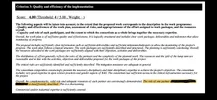
When an evaluation states repeatedly that the work plan is logical, sufficiently structured, convincing, appropriately resourced, supported by adequate milestones and deliverables, backed by suitable risk-mitigation measures, and implemented by a consortium with the necessary interdisciplinary expertise, infrastructure, open-science competence, and gender expertise, one naturally expects the score to reflect that assessment.

Yet the evaluation receives 4 out of 5. (Similar evaluation for all 3 categories)
Why?

The only concrete shortcoming identified is that “the role of one partner is insufficiently described.” There is no explanation of why this single, relatively specific weakness warrants the loss of an entire point, nor any indication of how it materially compromises the quality or feasibility of the project.
This is precisely where the Horizon evaluation system needs greater transparency and accountability. A numerical score should be traceable to clearly articulated deficiencies. If a proposal loses 20% of the available score for a criterion, applicants deserve to understand exactly what was missing, how serious the deficiency was, and why it justified that deduction. Otherwise, the scoring becomes impossible to learn from, impossible to challenge scientifically, and difficult to distinguish from subjective reviewer preference.

After investing enormous scientific, administrative, and institutional effort into these applications, researchers deserve more than a collection of largely positive statements followed by a score that does not logically follow from them.

There is also a growing perception among researchers that professionally packaged proposals, particularly those prepared with substantial involvement from specialized Horizon consultancy agencies, may have an advantage over proposals written primarily by scientists themselves. Whether or not this perception reflects reality, the fact that it exists should concern the European Commission. Horizon funding should reward the best science, strongest consortium and greatest potential societal impact, not mastery of a specialized grant-writing industry.

I am not arguing that every good proposal must be funded. Competition is extraordinarily high, and difficult choices have to be made. But those choices must be intellectually defensible. When scores determine the fate of years of scientific work and multimillion-euro research programs, “sufficiently convincing” everywhere and one narrowly defined shortcoming cannot simply become 4/5 without a transparent explanation.

Researchers can accept rejection. What is much harder to accept is an evaluation in which the written reasoning and the numerical score appear not to speak the same language.

IMG_9053.webp
 
Back
Top Bottom