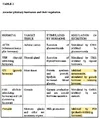
In the correspondence discussed above, the authors helpfully linked some other dopamine-specific prolactin tests in migraine:
I already posted about refs 17 and 19. Taking a look at 18 now.
--------
L-deprenyl test in migraine: neuroendocrinological aspects (1993, Cephalalgia)
P Calabresi, M Silvestrini, F Stratta, L M Cupini, G Argiro, G P Atzei, G Bernardi
This was a study of prolactin and growth hormone response to L-deprenyl, also known as selegiline. It is an MAO-B inhibitor, so it increases dopamine signalling. It also affects some other chemicals like norepinephrine, though the paper says norepineprhine effects typically occur at higher doses than used here. Some info from Wikipedia:
Cohort
10 females with migraine (5 with and 5 without aura).
10 age and weight matched female healthy controls.
Tested during late follicular phase.
No use of specific anti-migraine drugs for at least 2 months prior, but use of non-steroidal painkillers was not exclusionary.
Test
L-deprenyl (5 mg, orally)
Findings
Baseline levels of prolactin and growth hormone were similar in the two groups.
There was a significantly different prolactin response between groups. In controls, prolactin remained stable up to the end of the test at minute 120, while in migraine patients, prolactin decreased over time.
There was no significant difference in growth hormone response between groups.
Author interpretation
The decrease of prolactin only in migraine patients after administration of a dopamine-enhancing agent may suggest altered sensitivity of dopamine receptors.
-------
The data are presented as raw prolactin and growth hormone values at each timepoint for each individual:

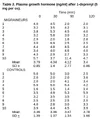
It's hard to conceptualize those raw numbers, so I plotted them.
Here is prolactin response, with migraine on the right. There appears to be a fairly clear difference in the trends between the groups:
No such difference for growth hormone:
They note that l-deprenyl would make for a good test because of the lack of side effects:
It's interesting that they chose to use a dose so low that it has no effect on healthy people. I would have been worried it'd be so low it wouldn't affect migraine patients either. Maybe they had seen this effect in migraine patients at this dose previously. Or maybe it is known that a dose only slightly higher causes prolactin release in healthy people.
Edit: This plot that instead shows the change from baseline in prolactin for each individual makes the trends for each group much clearer:

17. Murialdo G, Martignoni E, De Maria A, Bonura ML, Sances G, Bono G, et al. Changes in the dopaminergic control of PRL secretion and in ovarian steroids in migraine. Cephalalgia 1986; 6: 43–9. Crossref. PubMed. Web of Science.
18. Calabresi P, Silvestrini M, Stratta F, Cupini LM, Argiro G, Atzei GP, et al. L-deprenyl test in migraine: neuroendocrinological aspects. Cephalalgia 1993; 13: 406–9. Crossref. PubMed. Web of Science.
19. Nappi G, Savioldi F, Bono G, Martignoni E. Reserpine – headache and PRL release in migraine. Headache,1979; 19: 273–7. Crossref. PubMed. Web of Science.
20. Nattero G, Corno M, Savi L, Isaia GC, Priolo C, Mussetta M. PRL and migraine: effect of L-dopa on plasma PRL levels in migraineurs and normals. Headache 1986; 26: 9–12. Crossref. PubMed. Web of Science.
21. Bussone G, Frediani F, Lamperti E, LaMantia L, Vescovi A, Peccarisi C, et al. Piribedil test in migraine: neuroendocrinological aspects. Headache 1986; 26: 482–5. Crossref. PubMed. Web of Science.
22. Capellan JIL, Dacosta CV, Garcia JMG, Servan PR, Cermeno JCA. Tuberoinfundibular dopaminergic tonus in common migraine. Headache 1990; 30: 282–4. Crossref. PubMed. Web of Science.
18. Calabresi P, Silvestrini M, Stratta F, Cupini LM, Argiro G, Atzei GP, et al. L-deprenyl test in migraine: neuroendocrinological aspects. Cephalalgia 1993; 13: 406–9. Crossref. PubMed. Web of Science.
19. Nappi G, Savioldi F, Bono G, Martignoni E. Reserpine – headache and PRL release in migraine. Headache,1979; 19: 273–7. Crossref. PubMed. Web of Science.
20. Nattero G, Corno M, Savi L, Isaia GC, Priolo C, Mussetta M. PRL and migraine: effect of L-dopa on plasma PRL levels in migraineurs and normals. Headache 1986; 26: 9–12. Crossref. PubMed. Web of Science.
21. Bussone G, Frediani F, Lamperti E, LaMantia L, Vescovi A, Peccarisi C, et al. Piribedil test in migraine: neuroendocrinological aspects. Headache 1986; 26: 482–5. Crossref. PubMed. Web of Science.
22. Capellan JIL, Dacosta CV, Garcia JMG, Servan PR, Cermeno JCA. Tuberoinfundibular dopaminergic tonus in common migraine. Headache 1990; 30: 282–4. Crossref. PubMed. Web of Science.
I already posted about refs 17 and 19. Taking a look at 18 now.
--------
L-deprenyl test in migraine: neuroendocrinological aspects (1993, Cephalalgia)
P Calabresi, M Silvestrini, F Stratta, L M Cupini, G Argiro, G P Atzei, G Bernardi
This was a study of prolactin and growth hormone response to L-deprenyl, also known as selegiline. It is an MAO-B inhibitor, so it increases dopamine signalling. It also affects some other chemicals like norepinephrine, though the paper says norepineprhine effects typically occur at higher doses than used here. Some info from Wikipedia:
It is a selective inhibitor of monoamine oxidase B (MAO-B) at lower doses but additionally inhibits monoamine oxidase A (MAO-A) at higher doses. MAO-B inhibition is thought to result in increased levels of dopamine and β-phenethylamine, whereas MAO-A inhibition results in increased levels of serotonin, norepinephrine, and dopamine. Selegiline is also a catecholaminergic activity enhancer (CAE) and enhances the action potential-evoked release of norepinephrine and dopamine. Through its active metabolites levomethamphetamine and levoamphetamine, selegiline acts as a weak norepinephrine and/or dopamine releasing agent.
Cohort
10 females with migraine (5 with and 5 without aura).
10 age and weight matched female healthy controls.
Tested during late follicular phase.
No use of specific anti-migraine drugs for at least 2 months prior, but use of non-steroidal painkillers was not exclusionary.
Test
L-deprenyl (5 mg, orally)
Findings
Baseline levels of prolactin and growth hormone were similar in the two groups.
There was a significantly different prolactin response between groups. In controls, prolactin remained stable up to the end of the test at minute 120, while in migraine patients, prolactin decreased over time.
There was no significant difference in growth hormone response between groups.
Author interpretation
The decrease of prolactin only in migraine patients after administration of a dopamine-enhancing agent may suggest altered sensitivity of dopamine receptors.
-------
The data are presented as raw prolactin and growth hormone values at each timepoint for each individual:
It's hard to conceptualize those raw numbers, so I plotted them.
Here is prolactin response, with migraine on the right. There appears to be a fairly clear difference in the trends between the groups:
Regarding prolactin:

Finally, the Group x Time interaction was significant (F = 13.8, p < 0.001 with 3 and 54 df). While in controls circulating prolactin remained stable, in migraine patients a significant and gradual decrease was observed after 1-deprenyl administration (Table 2).
No such difference for growth hormone:
* Note that I changed the table's prolactin value for migraine patient 8 at minute 90 from 32 to 3.2, as the former appears to be a typo or scanning error. Using the latter makes the values match the paper's provided mean value.

They note that l-deprenyl would make for a good test because of the lack of side effects:
Finally, the absence of side effects after the administration of this drug, due to the pharmacological selectivity of 1-deprenyl for MAO-B system, permits wide utility of this test.
It's interesting that they chose to use a dose so low that it has no effect on healthy people. I would have been worried it'd be so low it wouldn't affect migraine patients either. Maybe they had seen this effect in migraine patients at this dose previously. Or maybe it is known that a dose only slightly higher causes prolactin release in healthy people.
Edit: This plot that instead shows the change from baseline in prolactin for each individual makes the trends for each group much clearer:
Last edited: