The buspirone challenge test clearly distinguishes ME/CFS patients from healthy controls: why is it not being developed and deployed?

In my opinion, the prolactin response line of research should be a top priority. It should have been a top priority 20 years ago. There were fairly consistent results finding increased prolactin response in ME/CFS in the 1990s and 2000s, and then, for no clear reason, it just..stopped? As far as I can tell, the most recent study testing prolactin response was published in 2010 (Weaver et al).

Surely there must be straightforward avenues to continue this research. It seems that after those old studies, there were still disputes about whether the findings implicated serotonin or dopamine. Aren't there many safe agonists of serotonin or dopamine? Why not try more of them, to help triangulate which specific neurotransmitters or receptors are involved?

I don't know what's going on. It doesn't make sense to me that the research into this just stopped. I'd think that an objective marker like this would be seen as an amazing opportunity.
I couldn’t agree more. It’s a no brainer to me honestly. Buspirone is probably easy to get, prolactin is easy to test. The method used sounds like the challenges I’ve done before for investigating diabetes and lactose intolerance: get a baseline, ingest something, wait, take another measurement, repeat as often as necessary. I’ve never worked in a lab, but this seems just so simple to me.

I’ve gotten increasingly frustrated seeing funding being announced for studies into immunology and metabolism but seemingly less for neurology. As you say, this should be top priority. We could see if dopamine, serotonin, or some other neurotransmitter is not functioning normally as was proposed thirty years ago.

I reached out to a lab at UBC a month ago who seem like they would be perfect for this. They’ve never done ME/CFS research before, so I sent them an email with my story and asking if they’d consider researching our illness. I got an initial positive response, so I sent a follow-up with research including this one. I unfortunately haven’t heard back yet.

I’m also considering reaching out to the people who did the Loss of vesicular monoamine transporter 2 in striatum of long COVID and relationship to neuropsychiatric symptoms paper. It’s a loose connection of dopamine between the two, but I think it could be worth it. It would be cool to have them use their neuroimaging at the same time as measuring the prolactin.

I think we need to reach out to as many people as possible to tell them about this. Hopefully someone will end up picking it up. We can’t let this be forgotten again.
 
I found another, newer (2010) ME/CFS study on prolactin response, except they used intravenous tryptophan instead of buspirone. Prolactin response was increased only in CFS women, not CFS+fibromyalgia women, CFS men, or CFS+fibromyalgia men.

Sex Differences in Plasma Prolactin Response to Tryptophan in Chronic Fatigue Syndrome Patients With and Without Comorbid Fibromyalgia
Weaver, Shelley A.; Janal, Malvin N.; Aktan, Nadine; Ottenweller, John E.; Natelson, Benjamin H.
Background:
Some think chronic fatigue syndrome (CFS) and fibromyalgia (FM) are variants of the same illness process. This would imply that CFS patients with and without comorbid FM have similar biological underpinnings. To test this, we compared serotonergic-based responses, plasma prolactin (PRL), and self-reported measures of fatigue to intravenous infusion of tryptophan among patients with CFS alone, CFS + FM, and healthy controls.

Methods:
Men and women with CFS alone or CFS + FM and healthy subjects, none with current major depressive disorder (MDD), were given 120 mg of l-tryptophan per kg lean body mass intravenously (i.v.). Before and after tryptophan infusion, blood samples were collected, and plasma PRL, tryptophan, and kynurenine concentrations were determined.

Results:
Women with CFS alone, but not CFS + FM, showed upregulated plasma PRL responses compared with controls. There were no differences among groups of men. Plasma tryptophan and kynurenine concentrations did not differ among groups.

Conclusions:
These results indicate that women with CFS alone have upregulated serotonergic tone that is not seen in those with comorbid FM. The lack of effect in men suggests a mechanism that might explain, in part, the increased prevalence of CFS in women. The data support the interpretation that CFS in women is a different illness from FM.
Web | DOI | PMC | PDF | Journal of Women's Health | Open Access on PMC | 2010

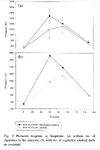
1778903858048.png
Looking again at this one that looked at prolactin response from tryptophan, and where it was only significant in women with CFS + fibromyalgia.

Even though the study's conclusion is "These results indicate that women with CFS alone have upregulated serotonergic tone that is not seen in those with comorbid FM", those charts look like very weak evidence for an effect related to serotonin, considering three out of four groups showed no increase.

They say the men not showing an increase is possibly pointing to a sex-specific effect. And that the CFS+FM women not showing an increase could be due to fibromyalgia showing opposite serotonin effects of ME/CFS.
Nonetheless, the data reported here using the same experimental protocol to study women and men with CFS do support a biological difference between the sexes that requires further study.
In fact, the proposed increase in central 5-HT in CFS is virtually opposite that proposed for FM patients. The 5-HT metabolite, 5-HIAA, was at a lower level in the cerebrospinal fluid of patients with FM compared with healthy controls, thus suggestive of decreased central serotonergic tone.

A study of prolactin response from buspirone in women with fibromyalgia found an increased response (previous post in this thread, Malt 2003). And multiple studies found that males with ME/CFS showed increased prolactin response to buspirone.

So I think this is evidence in favor of the main buspirone/prolactin effect not being serotonin-mediated.
 
I'm looking around for other drugs which stimulate prolactin. There is the D2 and D3 receptor antagonist Domperidone:

Quotes from Wikipedia:
It blocks D2 receptors in the lactotrophs of the anterior pituitary gland increasing release of prolactin which in turn increases lactation.

A single 20 mg oral dose of domperidone has been found to increase mean serum prolactin levels (measured 90 minutes post-administration) in non-lactating women from 8.1 ng/mL to 110.9 ng/mL (a 13.7-fold increase).[10][73][74][75] This was similar to the increase in prolactin levels produced by a single 20 mg oral dose of metoclopramide (7.4 ng/mL to 124.1 ng/mL; 16.7-fold increase).
The increase in prolactin levels observed with the two drugs was much greater in women than in men.[74][75] This appears to be due to the higher estrogen levels in women, as estrogen stimulates prolactin secretion from the pituitary gland.[76]

unlike other D2 receptor antagonists, it minimally crosses the blood–brain barrier

There are safety concerns, but they seem to be about prolonged use, as opposed to one-time administration:
The US Food and Drug Administration (FDA) has expressed concerns about serious adverse side effects and concerns about its effectiveness.[34] The FDA identified serious cardiac adverse events associated with domperidone use in lactating individuals, including arrhythmias, cardiac arrest, and sudden death. Additionally, discontinuation or tapering of domperidone has been linked to severe neuropsychiatric adverse events such as agitation, anxiety, and suicidal ideation. Because of these risks, the FDA strongly cautions against the use of domperidone to enhance lactation.[34]

A review by Health Canada also found a link between the sudden discontinuation or tapering of domperidone when used off-label for lactation, and psychiatric withdrawal events, particularly daily doses greater than the maximum recommended dose of 30 mg per day.[37] A 2021 study found that postpartum usage of domperidone increased across five Canadian provinces from 2004 and 2017 with usage plateauing in 2011 and a drop in usage after a 2012 Health Canada advisory warning about domperidone.[38]

A few other drugs that Wikipedia says may increase prolactin levels (all are D2 receptor antagonists, but some have other effects):

Edit: Other drugs which can increase prolactin:

Overview of Hyperprolactinemia: General Approach and Reproductive Health Implications (2024, Archives of Medical Research)
Antidepressants such as selective serotonin reuptake inhibitors (SSRIs), monoamine oxidase inhibitors (MAOI) and some tricyclic antidepressants (TCA) can also result in hyperprolactinemia. Other drugs include benzodiazepines, prokinetics, antiemetics, estrogens, antihypertensives, H2 antagonists, anticonvulsants, and opiates (Figure 4) (Table 1). In most instances, drug-induced hyperprolactinemia is mild and does not exceed 100 ng/mL, except for risperidone and amisulpride, which have been reported to increase PRL levels to up to 200 ng/mL (Figure 5) (3).
 
Last edited:
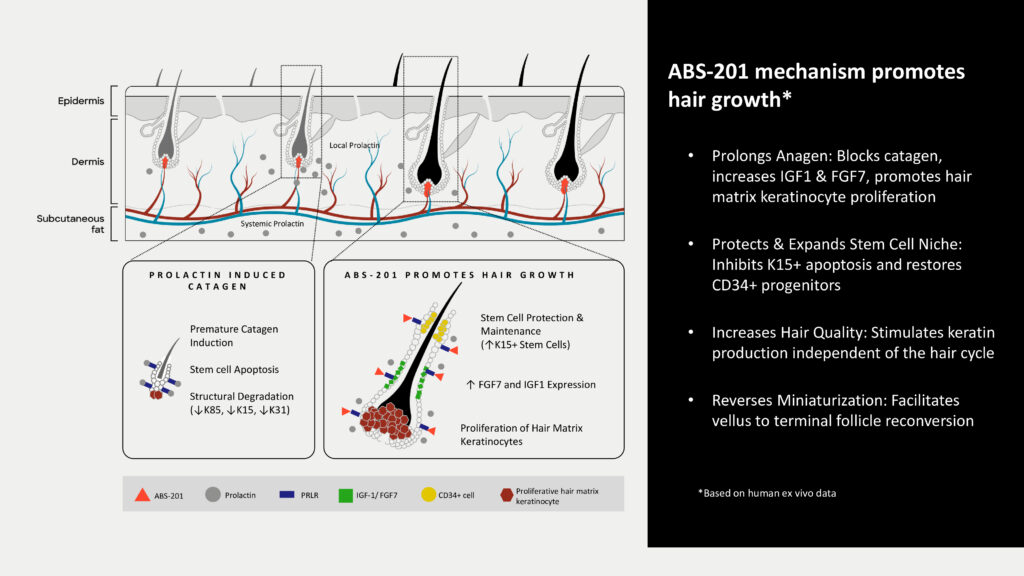
There’s some very interesting prolactin receptor inhibiting monoclonals coming out for endometriosis and hair loss, 3-5 years. However they do not cross the blood brain barrier. I do wonder what they would do as well… though not crossing the BBB might be the opposite of what ME/CFS is needed. It is interesting how expressed the prolactin receptor is across the body.


I do remember though that the dopamine prolactin “ying yang” is in a very small area of the brain that is a closed looped system. I’d have too look it all up again… I was trying to find out if disabling prolactin systematically across the body with the monoclonals would effect brain levels.
 
There’s some very interesting prolactin receptor inhibiting monoclonals coming out for endometriosis and hair loss, 3-5 years. However they do not cross the blood brain barrier. I do wonder what they would do as well… though not crossing the BBB might be the opposite of what ME/CFS is needed. It is interesting how expressed the prolactin receptor is across the body.


Yes, maybe a prolactin receptor antagonist could also increase prolactin. A paper describes how prolactin self-regulates by binding to prolactin receptors and thus increasing dopamine levels, to decrease further prolactin production:

TIDAL WAVES: Network mechanisms in the neuroendocrine control of prolactin release (2014, Frontiers in Neuroendrocrinology)
Prolactin is no exception and controls its own release by changing dopamine content in the portal vasculature and pituitary. Mechanistically, this phenomenon has been attributed to prolactin augmenting [tyrosine hydroxylase] activity via transcription and allosteric modification in the form of phosphorylation . Prolactin can act directly (though not necessarily exclusively directly) on TIDA [tuberoinfundibular dopamine] neurons as these cells express the prolactin receptor.

It says the prolactin-regulating cells that prolactin would bind to are in the hypothalamus:
The population which plays the most prominent role in the hypothalamic regulation of pituitary prolactin release is the tuberoinfundibular dopamine (TIDA) neurons. These parvocellular neurons – part of the A12 group according to Fuxe’s and Dahlström’s alphanumerical terminology (Dahlström and Fuxe, 1964) – are located in the dorsomedial arcuate nucleus in the mediobasal hypothalamus.

However, for one of the drugs you mentioned, BAY-1158061, I found this study that seems to say it does not affect prolactin levels:

Monoclonal Antibody Against Prolactin Receptor: A Randomized Placebo-Controlled Study Evaluating Safety, Tolerability, and Pharmacokinetics of Repeated Subcutaneous Administrations in Postmenopausal Women (2019, Reproductive Sciences)
BAY 1158061 is a potent monoclonal prolactin (PRL) receptor antibody [...] The PRL concentration—time profiles over 24 hours showed no differences between verum- and placebo-treated participants.
 
It has no effect on prolactin levels but does occupy the prolactin receptors on cells. I guess until we understand why prolactin rises these are monoclonals are not very interesting to cfs. I do wonder if blocking prolactin across a wide variety of immune cells would do something positive, but huge guess!

If I remember correctly these monclonals would have no effect on prolactin in the hypothalamus
 
I found very interesting data in a 1986 study on prolactin response in migraine: Changes in the dopaminergic control of prolactin secretion and in ovarian steroids in migraine (Cephalalgia)

They were studying females with menstrual migraines (MM) (migraines only during or within 5 days before menstruation) or non-menstrual migraines (NMM) compared to healthy volunteers (N).

They tested the effect of four different drugs on prolactin levels: two dopamine receptor antagonists (sulpiride and domperidone) and two dopamine agonists (lisuride, a dopamine receptor agonist, and nomifensine, a dopamine reuptake inhibitor). There was overlap in which women tested each drug, but the groups weren't exactly the same. The tests were done at both the follicular and the luteal phase.

At baseline, there were no statistically significant differences in prolactin levels between groups (although slightly lower prolactin in migraine groups compared to healthy) or between menstrual cycle phases (although slightly higher prolactin in the luteal phase in all groups).

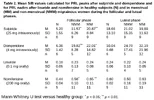
Table 1 has the main results of stimulus to basal ratio (S/B) of prolactin (how much it increased after drug administration, with 1 being no change) in each group and in each phase.

1784332242947.webp

During the follicular phase, prolactin increased significantly more in both migraine groups after administration of sulpride and domperidone, and it decreased significantly less in both migraine groups after administration of nomifensine. The effect was not significant during the luteal phase (although it looks like it was probably close to significance for domperidone). Prolactin change due to lisuride showed slightly less (non-significant) inhibition in migraine in the follicular phase.

For sulpiride, domperidone, and nomifensine, and only in healthy controls, the difference in prolactin response was significantly different between follicular phase and luteal phase.

The authors interpret these findings as suggesting decreased pre-synaptic levels of dopamine leading to hypersensitivity of dopamine receptors on prolactin-releasing cells.
Taken together, these experimental results indicate an increased lactotrophe PRL reserve in migraine (10, 15). Lactotrophic DA receptor supersensitivity could be assumed to explain an increased PRL reserve generating an enhanced response after DA-receptor blockers.

The decrease of the available neurotransmitter in the presynaptic neuron may induce a supersensitivity of the postsynaptic receptor. This may be true also for lactotrophic DA receptors, which may be considered postsynaptic.

Our nomifensine data, showing a smaller inhibitory effect on PRL secretion in migrainous subjects than in controls, suggest a decrease of the DA available for lactotrophin receptors.

So there are three drugs that have not yet been tested for their effect on prolactin in ME/CFS, but would make sense to test.
 
The above study also tested 17-ß-estradiol and progesterone levels. These were the findings:
Mean 17E2 [17-ß-estradiol] serum levels in the follicular phase were significantly higher in the MM and NMM groups than in N women. Both P [progesterone] serum concentration and P/E2 ratios were unchanged (Table 2). In the luteal phase, 17E2 absolute levels were higher in MM and in NMM women than in N women. P values were lower in both headache groups when compared with healthy controls, so that the P/E2 ratio was significantly decreased (Table 2).

Some other interesting things mentioned in the above paper that could be tested in ME/CFS. I bolded those specific parts:
For instance, Fanciullacci et al. (2) have demonstrated changes of the adrenergic control of iris motility, and Del Bianco et al. (3) found supersensitivity to DA and 5-HT when studying the motility of the wall in the vein of the back of the hand.
Autonomic symptoms, such as nausea, vomiting, and orthostatic hypotension, which occur during migrainous attacks, have been taken as evidence of a DA receptor supersensitivity (4), and two direct DA agonists, bromocriptine and lisuride, induce these autonomic effects more frequently and intensely in migrainous than in healthy subjects (5).
Reserpine induces a greater and more prolonged rise of PRL serum levels in this condition than in healthy subjects (9). Similar data have been obtained after the administration of sulpiride, a DA receptor “blocker (5, 10, 11) and of benserazide, an aromatic amino acid decarboxylase inhibitor (5, 10).
We have also studied the inhibitory effects on PRL secretion by DA agonists, such as lisuride and nomifensine. The latter drug, a selective DA re-uptake inhibitor, has been proposed as a tool to investigate the tuberoinfundibular DA (TIDA) neuron monoamine pool and the DA regulation of PRL secretion (13).
These observations confirm previous findings on sulpiride effects in migrainous subjects by Nappi et al. (5) and by Horowski (11).
The fact that the differences related to the ovarian phases disappear in migraine suggests the existence of an altered oestrogen modulation of PRL secretion.
Nappi et al. (29) and Facchinetti et al. (25, 30, 31) [...] also found a decreased luteinizing hormone (LH) response to naloxone administration in the middle and late luteal phase of women with NMM and in the late luteal phase of women with MM.

2. Fanciullacci M, Pietrini U, Boccuni M. Disruption of iris adrenergic transmission as an index of poor endorphin modulation in headache. Adv Neurol 1982;33:365-73

3. Del Bianco PL, Franchi G, Anselmi B, Sicuteri F. Monoamine sensitivity of smooth muscle in vivo in nociception. Adv Neurol 1982;33:391-7

4. Sicuteri F, Fanciullacci M. Dopamine as an agonist in opiate and endogenous opioid (migraine) abstinence. In: Calne DB, McDonald RJ, Horowski R, Wuttke Weds Lisuride and other dopamine agonists. New York: Raven Press 1983:481-8

5. Nappi G, Martignoni E, Bono G, Savoldi F, Murialdo G, Polleri A. THDA system function in migraine. In: Clifford Rose F, Zilkha KJ eds Progress in migraine research. London: Pitman 1981;1:110-23

9. Nappi G, Savoldi F, Bono G, Martignoni E. Reserpine: headache and prolactin release in migraine. Headache 1979;19:273-7

10. Polleri A, Nappi G, Masturzo P, Martignoni E, Murialdo G, Bono G, Testa E, Savoldi F. Neuroendocrine approach to headache. Adv Neurol 1982;33:173-82

11. Horowski R. Role of monoaminergic mechanisms in the mechanism of action of ergot derivatives used in migraine. In: Clifford Rose Fed Advances in migraine. New York: Raven Press 1982:187-98

13. Müller EE, Genazzani AR, Murru S. Nomifensine: diagnostic test in hyperprolactinemic states. J Clin Endocrinol Metab 1978;47:1352-7

25. Facchinetti F, Sances G, Volpe A, Sola D. D'Ambrogio G, Sinforiani E, Genazzani AR. Hypothalamus pituitary-ovarian axis in menstrual migraine: effect of dihydroergotamine retard prophylactic treatment. Cephalalgia 1983;3(suppl 1):159-62

29. Nappi G, Facchinetti F, Martignoni E. Sola D, Sanches G, Petraglia F, Genazzani AR. Failure of central opioid tonus in headache. In: The Migraine Trust, 5th International Symposium 1984. London: 1984: Abstract 5-7

30. Facchinetti F, Nappi G, Petraglia F, Volpe A, Genazzani AR. Oestradiol/progesterone imbalance and the premenstrual syndrome. Lancet 1983;2:1302

31. Facchinetti F, Martignoni E, Petraglia F, Di Meo G, Battaglia C, Nappi G, Genazzani AR. Transitoria riduzione dell'attivitá oppiode nelle pazienti affette da sindrome premestruale. VIII Congr Naz Societá Iraliana per lo studio delle cefalee 1985. Belgirate. Abstract 62-63
 
Agree with your thoughts about the tryptophan study. One thing to note on this:
A study of prolactin response from buspirone in women with fibromyalgia found an increased response (previous post in this thread, Malt 2003).
I took a closer look at that one (sci-hub) and their result is a little nuanced (or arguably a little p-hacky). This is their main result:
Screenshot 2026-07-17 at 5.34.41 PM.webp
If I'm understanding their description of the stats, there was not a 'significant effect of diagnosis' until they included cigarette smoking in the analysis, lol. (The mean number of cigarettes smoked daily by patients was 8.9 and 5.6 for controls.) To be fair, nicotine could be altering dopamine release, but it starts to feel more exploratory. Also, from what I can tell, they also collected other data like coffee, tea and alcohol consumption so you wonder if they checked those too and what they found.

I still think fibromyalgia patients could well be releasing more prolactin than controls, maybe it's just a smaller effect than in ME/CFS and this study wasn't powered to catch it. I am also confused about what is going on with their participants and menopause. In the abstract, they say that everyone was premenopausal, but also that their patients were 45 +- 9.2 years, and their controls 43 +- 10.9 years, so that seems unlikely?? Not to mention I think women have hormonal changes all through perimenopause. They later say “all premenopausal woman were tested within the follicular phase”, which is good — except that makes it sound like indeed not everyone is premenopausal? So it's possible not controlling for hormone levels weakened their results.
 
Not bring this up over and over, I have in the LDN thread, but it saddens me that no one has tracked prolactin in any LDN study:


Behavioural and endocrine effects of naltrexone in male talapoin monkeys​


“Changes in prolactin in response to naltrexone depended upon the pre-treatment level of this hormone: in males in which levels were low, there was a significant elevation in prolactin, while in those with high pre-treatment prolactin, levels were unchanged by the drug.“
 
Wow I thought there was no human data on naltrexone and prolactin but turns out there is!

The influence of opioid blockage on the sexual response cycle: A randomized placebo-controlled experiment with relevance for the treatment of Compulsive Sexual Behavior Disorder (CSBD)​


“Naltrexone increased prolactin levels and blunted the orgasm-induced prolactin rise.”

What if the LDN theory on “inflammation” is not actually what’s occurring and it’s mediating some odd prolactin response.
 
One thing to note on this:
I took a closer look at that one (sci-hub) and their result is a little nuanced (or arguably a little p-hacky). This is their main result:
Good points.

It seems like fibromyalgia is another condition with surprisingly little research in this field. Apart from the two studies mentioned above, I found one more interesting prolactin-response study from a PubMed search of "fibromyalgia prolactin":

Secretory pattern of GH, TSH, thyroid hormones, ACTH, cortisol, FSH, and LH in patients with fibromyalgia syndrome following systemic injection of the relevant hypothalamic-releasing hormones (1998, Zeitschrift für Rheumatologie)
we injected sixteen FMS patients and seventeen controls a cocktail of the hypothalamic releasing hormones: Corticotropin-releasing hormone (CRH), Thyrotropin-releasing hormone (TRH), Growth hormone-releasing hormone (GHRH), and Luteinizing hormone-releasing hormone (LHRH)
Following injection of the four releasing-hormones, we found in FMS patients an augmented response of ACTH, a blunted response of TSH, while the prolactin response was exaggerated.
The effects of LHRH stimulation were investigated in six FMS patients and six controls and disclosed a significantly blunted response of LH [luteinizing hormone] in FMS.
 
So there are three drugs that have not yet been tested for their effect on prolactin in ME/CFS, but would make sense to test.
Seems like nomifensine is out of commission.


Withdrawal from market​

edit
Due to a risk of haemolytic anaemia, the U.S. Food and Drug Administration (FDA) withdrew approval for nomifensine on March 20, 1992. Nomifensine was subsequently withdrawn from the Canadian and UK markets as well.<a href="https://en.wikipedia.org/wiki/Nomifensine#cite_note-12"><span><span>[</span>12<span>]</span></span></a>Some deaths were linked to immunohaemolytic anemia caused by this compound, although the mechanism remained unclear.<a href="https://en.wikipedia.org/wiki/Nomifensine#cite_note-13"><span><span>[</span>13<span>]</span></span></a>
 
Edinburgh has a Centre for Discovery Brain Sciences,

"Centre for Discovery Brain Sciences (CDBS) is an interdisciplinary research centre within the Institute for Neuroscience and Cardiovascular Research (INCR), part of the School of Neurological and Cardiovascular Sciences. CDBS, along with other university-wide, often philanthropically funded, themed research centres, make up Edinburgh Neuroscience"

Research within this Centre is structured in themes, several of which would seem to be of likely interest to us,
 
There is the D2 and D3 receptor antagonist Domperidone:

I'm not quite sure of the significance of prolactin, but I have taken this drug as well as metoclopramide. Both were for unexplained vomiting (which was later found to be h. pylori gastritis).

Domperidone just made me throw up more, although it took me nearly a fortnight to work that out because the sickness had been getting worse anyway. I thought it had just ramped up several steps at once. Turned out two relatives had been given it as part of pre-op dosing, and it took several surgeries between to work out they wouldn't have repeated and painful post-surgery vomiting if they refused to take domperidone. I stopped it and my sickness reduced straight away. It had no effect on ME/CFS.

I then took metaclompramide for a month, which sorted out the sickness but again had no effect on ME/CFS.

Obviously both drugs were given at the recommended dose for vomiting, which might be different to that proposed to affect prolactin.
 
I'm not quite sure of the significance of prolactin, but I have taken this drug as well as metoclopramide. Both were for unexplained vomiting (which was later found to be h. pylori gastritis).

Domperidone just made me throw up more, although it took me nearly a fortnight to work that out because the sickness had been getting worse anyway. I thought it had just ramped up several steps at once. Turned out two relatives had been given it as part of pre-op dosing, and it took several surgeries between to work out they wouldn't have repeated and painful post-surgery vomiting if they refused to take domperidone. I stopped it and my sickness reduced straight away. It had no effect on ME/CFS.

I then took metaclompramide for a month, which sorted out the sickness but again had no effect on ME/CFS.

Obviously both drugs were given at the recommended dose for vomiting, which might be different to that proposed to affect prolactin.
The use of the drugs described in the thread is mostly about just poking part of the system and seeing if something weird happens (i.e. does prolactin increase more than expected after taking them) to try to narrow down which part of the system isn't operating normally (dopamine? serotonin?)

But still good to know about your experience with them, thanks for sharing.
 
Domperidone just made me throw up more
Interesting. Incidentally, the buspirone studies in ME/CFS reported that patients experienced more nausea than controls (as did some folks earlier on this thread). Hm..

As forestglip mentioned, wiki says Domperidone is considered a peripheral D2 antagonist because it doesn't cross the blood brain barrier (unlike buspirone). But wiki also says that the pituitary is outside the blood brain barrier and so Domperidone can still act on it and raise prolactin levels (like buspirone). Could be useful to have both options if some question about D2 receptors in the brain arises.
 
Back
Top Bottom