The buspirone challenge test clearly distinguishes ME/CFS patients from healthy controls: why is it not being developed and deployed?

One of the things I find really interesting about this is the case report that this abnormal buspirone stimulated prolactin release returned to normal in a patient once they had recovered from MECFS.
It was mentioned here:
The other study mention is a case report on only 1 patient, claiming the prolactin release returned to normal once the patient had recovered from ME/CFS.
Recovery from chronic fatigue syndrome associated with changes in neuroendocrine function - PMC
Direct link to pdf of the 2001 case study - here
 
Last edited:
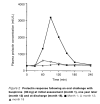
Here are the results of the buspirone challenges for the 2001 case study of the post-menopausal woman, linked above.
Screenshot 2026-05-20 at 6.30.19 AM.png

The result at month 18 (post-recovery) is actually abnormal - there was virtually no response to the buspirone challenge. Normally prolactin peaks at approximately double the baseline 60 to 90 minutes after buspirone administration. (I haven't checked the absolute values.)

This case study claims that the prolactin response to a buspirone challenge was a biomarker for recovery, a recovery due to graded exercise. There's a lot about that that does not add up. I wonder if a drug, an anti-depressant or hydrocortisone (possibly not reported to the researchers) might be a confounding factor.

If this claimed finding was true, surely it would have been taken further by the BPS proponents? Here you have a biomarker that supposedly tracks recovery from CFS, a recovery due to graded exercise. One of the authors of the case study was funded by the ME Association.

It might be useful to put all the studies in a timeline, noting the authors and the funders, to understand how the thinking about this evolved over time, who was doing what.
 
If this claimed finding was true, surely it would have been taken further by the BPS proponents? Here you have a biomarker that supposedly tracks recovery from CFS, a recovery due to graded exercise.

I am not sure anyone would want to bother with that. If you think your treatment worked you don't need to do a tedious test to show a largely uninterested medical community that it did.

I agree that some quality control is in order here and needs to be built in to replication but at least at the moment I think that replication cries out to be done - for trying to triage 'Long Covid' if nothing else.
 
But it would probably be easier to do for a team that’s already to access to patients of both groups. The Germans perhaps?

That sounds a possibility. It needs an open minded physician prepared to work through a lot of unexpected answers - someone interested in finding the right answer - which isn't so common.

There may be people in London who have access to Long Covid patients. ME/CFS recruitment is a bit more problematic at present but may not be impossible.

I am not in a good place to make enquiries myself just at present but things may be easier in a few weeks.

Fluge and Mella might be able to recruit patients and they have the right approach.
 
Fluge and Mella might be able to recruit patients and they have the right approach.
I was about to suggest F&M - it would be interesting if dara produces more 'responses' to see what would happen if they tested for this before and after giving dara/improvement.


This case study claims that the prolactin response to a buspirone challenge was a biomarker for recovery, a recovery due to graded exercise. There's a lot about that that does not add up.
Was not aware of this part! Maybe just naturally ocurring remission? Except you mention the prolactin peak is way too low after.
 
This case study claims that the prolactin response to a buspirone challenge was a biomarker for recovery, a recovery due to graded exercise. There's a lot about that that does not add up.

Yes, not least that the patient was diagnosed as having CFS using the Oxford criteria. She was clearly ill for a long time and could well have had ME/CFS, but those criteria are very broad and the description of the symptoms could apply to all kinds of things. Also, the history and the framing of the illness are the authors', not hers.

I don't think we can learn much from it.
 
Maybe we have thought enough about the hippocampus.

It is most often talked of in relation to memory.

However, it is clearly involved in interpreting sensory data, as in computing what 'place' you are in from input from vision.

In my case, the sense of space has disappeared in one night, so it was obvious. My vision lacks depth, and I no longer have a sense of my position in 3D.

I even wonder if this might affect sound and other sensations, which all seem to be indistinguishably ‘inside’, with no sense of distance or skin barrier.
 
Well, I think it's probably no great shame this person isn't working in MECFS research anymore if they think many/most pwME have a somatisaion disorder.
Yeah I've had a quick look and it seems maybe they were looking at it in the sense of the challenge test for MDD vs anxiety (particularly social phobia?) had different directions with MDD blunted or normal whereas apparently an enhanced response in those with anxiety

And they probably were thinking of the drug buspirone as being an antidepressant and the challenge test envisaged less about open-mindedly working out what the condition was and more about in the context of them being people who prescribed drugs working on 5-HT etc to people/markets they thought might need it and getting the dosage right.

THe 'what does this tell us about the illness' bit then being contextually tunnel-visioned because of, certainly at that time, preconceptions (that likely also influenced who they thought was a 'proto/stereotype of cfs' in recruitment') combined with why they were doing the challenge test in those other areas and then using it.

Unless - I haven't looked up any other non-psychiatric conditions they were doing the same challenge tests on? then it was putting those with cfs on their scale of those types of disorders/conditions for what they perhaps saw as 'x-feature' or response ie 'sensitivity'. I say senstivity thinking of the double-meaning of it really - how much you need to give someone for them to react as much as the stuff about hypothalamus or other biology.

I'm now trying to have a look at stuff to do with why it was developed before all the cfs stuff.

I've found the following: https://jamanetwork.com/journals/jamapsychiatry/article-abstract/495052

Preliminary Evidence of a Serotonin (5-HT-1-Like) Component to the Prolactin Response to Buspirone Challenge in Humans

  1. Emil F. Coccaro, MD; Steven Gabriel, PhD; Theresa Mahon
  2. et al (1990)

Abstract
To the Editor.— The role of serotonin 1 (5-HT-1—like) receptors in the action of psychopharmacologic agents and in psychiatric disorders is an increasing focus of research.1 However, there are few agents available for clinical use that assess the function of 5-HT-1—like receptors in humans. Buspirone hydrochloride (Buspar), a nonbenzodiazepine compound currently marketed as an anxiolytic, is reported to have high affinity for the central 5-HT-la receptor.2 Hence, examination of neuroendocrine responses (eg, prolactin [PRL], growth hormone [GH], corticotropin [ACTH], cortisol [CORT]) to acute challenge with buspirone3-6 may enable an assessment of 5-HT-la receptor sensitivity in humans.3 However, since buspirone is reported to have antidopamine activity in some,7 although not all,8 studies, the PRL response to buspirone challenge, in particular, may be confounded by its action on central dopaminergic neurons. In fact, some have suggested that the PRL response to buspirone challenge is due to
 
Last edited:
Yeah I've had a quick look and it seems maybe they were looking at it in the sense of the challenge test for MDD vs anxiety (particularly social phobia?) had different directions with MDD blunted or normal whereas apparently an enhanced response in those with anxiety

And they probably were thinking of the drug buspirone as being an antidepressant and the challenge test envisaged less about open-mindedly working out what the condition was and more about in the context of them being people who prescribed drugs working on 5-HT etc to people/markets they thought might need it and getting the dosage right.

THe 'what does this tell us about the illness' bit then being contextually tunnel-visioned because of, certainly at that time, preconceptions (that likely also influenced who they thought was a 'proto/stereotype of cfs' in recruitment') combined with why they were doing the challenge test in those other areas and then using it.

Unless - I haven't looked up any other non-psychiatric conditions they were doing the same challenge tests on? then it was putting those with cfs on their scale of those types of disorders/conditions for what they perhaps saw as 'x-feature' or response ie 'sensitivity'. I say senstivity thinking of the double-meaning of it really - how much you need to give someone for them to react as much as the stuff about hypothalamus or other biology.

I'm now trying to have a look at stuff to do with why it was developed before all the cfs stuff.

I've found the following: https://jamanetwork.com/journals/jamapsychiatry/article-abstract/495052
I just found this as well, which is not an article for cfs and is a reply to someone with another theory to do with gastric emptying from back then in the 90s. But as it used buspirone challenge test saying it was about the 5-HT receptors there is a reply questioning that assertion that it is about serotinin rather than eg dopamine effects


It is hard to cut and paste anything from because it is a copy of a pdf by the looks so not easily selectable.

This seems to be the paper that they were replying to: https://pmc.ncbi.nlm.nih.gov/articles/PMC1882744/
 
Last edited:
Here are the results of the buspirone challenges for the 2001 case study of the post-menopausal woman, linked above.
View attachment 32421

The result at month 18 (post-recovery) is actually abnormal - there was virtually no response to the buspirone challenge. Normally prolactin peaks at approximately double the baseline 60 to 90 minutes after buspirone administration. (I haven't checked the absolute values.)

This case study claims that the prolactin response to a buspirone challenge was a biomarker for recovery, a recovery due to graded exercise. There's a lot about that that does not add up. I wonder if a drug, an anti-depressant or hydrocortisone (possibly not reported to the researchers) might be a confounding factor.

If this claimed finding was true, surely it would have been taken further by the BPS proponents? Here you have a biomarker that supposedly tracks recovery from CFS, a recovery due to graded exercise. One of the authors of the case study was funded by the ME Association.

It might be useful to put all the studies in a timeline, noting the authors and the funders, to understand how the thinking about this evolved over time, who was doing what.
this seems to be the insert: https://www.accessdata.fda.gov/drugsatfda_docs/nda/2000/21-190_BuSpar_Prntlbl.pdf

struggling to read it well myself but it does seem to touch on things like taking it before or after meals/fasting etc and the impact on 'free buspirone' (not the same as impact just metabolising it type things so far),

and similarly some drugs taken alongside - aspirin gets a mention so far for example

might be worth a read but I don't know how much /what is required to go into these things to be 'fda approved' etc.
 
Last edited:
It seems the debate has been going on for a while. This one from 2004 is two authors debating whether the increased prolactin response in migraine is related to serotonin or dopamine receptors: Buspirone Challenge is not a valid Probe of Central 5-HT1A Receptor Function
indeed, I think this is back from the 80s/90s so it is interesting when there are papers that don't reference this possibility but just seem to be eg of the mindset when making inferences of implications that it is the 5-HT-related receptors sensitivity type thing that differences point to.

I mean I get that you might go into an experiment with a hypothesis (and null) to test and maybe there are also limited words to discuss every angle of implications. But..

As an aside from this being directly about prolactin (but doesn't seem unrelated given 'what is it affectin most'/mechanisms happenning) I also find it intriguing, nosing round just to get a sense of this drug, where it is being for exmaple looked at for how it might be usefully used in other conditions and perhaps alongside other medications eg: https://cdn.mdedge.com/files/s3fs-public/CP01901020.PDF and some of the things/impacts it talks about 'adding in' above (eg the SSRI someone might already be taking and they are adding it to) just from a layperson thinking stereotype of dopamine vs serotonin type cliches you'd think would make people wonder before parroting the patter. Such as it helping with loss of libido in women (that might be related to the antidepressant they are also on) or mention of it maybe helping in some patients with schizophrenia etc.
 
Back
Top Bottom