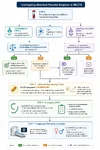
Flow chart derived from
@forestglip paper from chat GPT. Does this look ok? Please edit if not OK. Thanks
@forestglip
If it looks OK, I may send to OMF along with the review.
p.s. I have no idea how to edit these things.
View attachment 33887
I think that the point of being careful about which drugs and whether 'matched pairs' and other methodological aspects are used are because it so far indicates that it is just buspirone, d-fenfluramine and
not serotinin 'in general' causing a spike .... YET historically this perhaps got lost because those testing it were just looking quite simplistically at assuming those with serotonin in were 'serotinin caused' and even thought that buspirone was a proxy for testing 'sensitivity to serotonin'
even when there were some responses in the peer review talking about certain drugs being 'dirty' ie not that straightforward.
So on the decision chart it is more about testing eg buspirone vs d-fenfluramine and not 'does serotinin work' does 'dopamine work' and if one does and the other doesn't because the drugs aren't just those but also because it is a case of comparing the reactions in the drugs that are more 'dirty' I guess.
Plus both pure dopaminagenic (and potentially serotonigenic for pwme) come with real risks and issues. It might be useful to rule-in/out have comparators of the impact of the more pure version
but it comes down to issues with controlling for a range of issues with pwme in methodology and in recruitment. Things that relate to exertion for us cause spikes in prolactin in normal people (over-exertion being one, sleeplessness that also relates to over-exertion, heat etc), every individual has a different severity level + situation/things that cause issue (eg noise vs sitting uncomfortably vs other comorbidities, being further distances from 'the lab' having a hectic time etc) - yet just 'getting the same person' doesn't then make them a matched pair for themself because of that too due to PEM/medium-longer term impact of the exertion of each of these.
I'd even throw in that knowing what we know now about some of these wider drugs depending on the methodology even controls gets tricky - and certainly making sure it is externally valid rep of the population given we have migraine etc and other illnesses (and RLS is linked to dopamine, many other things to serotonin) and method of recruitment might well pick up 'controls' who have other things in a poster for ME/CFS more than certain other illnesses?
I think that doing this sort of thing 'right' will help, I'm not sure repeating the issues in a circle everyone went round for what looks like over a decade is a good idea.
I do think that scan possibilities have moved on massively given that fMRI's back in the late 90s were things a uni would show off about having in their brochure as a 'big thing' and I'd hope techniques and knowledge have grown on those and other options. Maybe
@SNT Gatchaman can point if there is some new magic option/advice on whether scans can offer things today?
From what I get you can't just use a scan to see these receptors working or which ones are being blocked and how many of them are there getting the brake put on by running a scan, certainly not without knowing what it is you'd be looking for as an indicator of this and getting the timings right etc. the brain is tricky like that. And it seems to be the drugs were a lot is going on /are 'dirty' that are the ones with the effects which
Yeah maybe the dopamine system in ME/CFS is less responsive so that those natural stimuli that reduce it centrally have less impact and thus we see a blunted prolactin response.
But when you don't impact the dopamine system itself but simply block the dopamine that's already there, we see an exaggerated response because the lactotrophs had compensated by being more responsive to changes.
this is the bit I'm trying to think around. So in buspirone where the effect could be direct from antagonist on D2, 3, 4 receptor (?) leading to much larger spike in prolactin that controls (and I guess both the 'peak' size and overall amount of prolactin is interesting here). Is it that the difference is in blocking 'more' of the receptors in ME/CFS or that the reaction (prolactin release) is more exaggerated/immediate when the same amount of 'blocking' of the same ratio of receptors occurs?
If that causes drop in dopamine which in turn causes increase in prolactin release then is it the dopamine drop [causing a faster or bigger 'brake'] or the size of prolactin release
in response to the same size of dopamine drop [brake]
and then d-fenfluramine has an indirect effect but it is on the D1 receptor?