The Sick Times: A journalist-founded website chronicling the Long Covid crisis

40-min podcast.

What can professional athletes teach us about Long COVID and rest?​

Oonagh Cousins was preselected for the Tokyo Olympics as a professional rower on the British team — until Long COVID derailed everything.

In this episode of Still Here, co-hosts Miles Griffis and Betsy Ladyzhets talk to Cousins about developing severe Long COVID at the start of the pandemic, her years-long attempt to return to elite training, and the relapse that ultimately forced her retirement in 2022.
She is one of many professional athletes grappling with infection associated chronic conditions, including NHL player Jonathan Toews, tennis player Emily Radacanu, and many more.
Cousins reflects on how her athletic background reshaped her understanding of rest, toughness, and listening to her body, and speaks candidly about pushing back on harmful “brain retraining” programs.
 

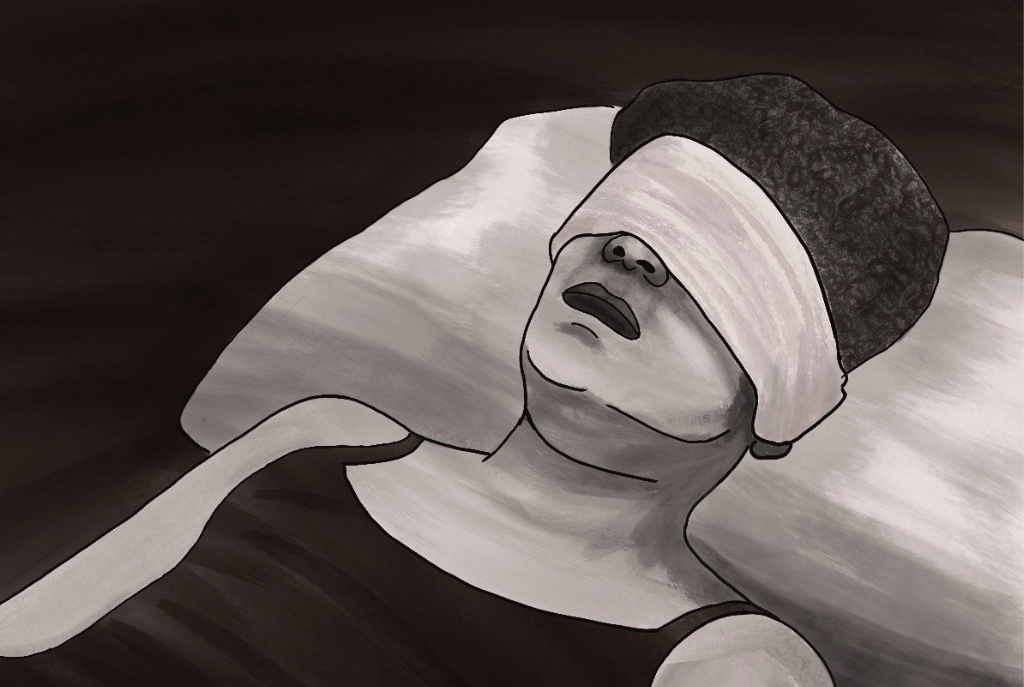
Abandoned by our governments, people with severe ME and Long COVID are supported by severely ill peers​

Written by Whitney Fox
July 20, 2026

Mari, a Black Canadian woman with severe myalgic encephalomyelitis (ME), is supported by fellow people with ME in the absence of institutional care.


How to interpret clinical trial results for Long COVID​

Written by Simon Spichak
July 21, 2026

Even when results are “statistically significant,” the treatment might not actually work.


Key points you should know:
  • There are currently no approved treatments for Long COVID. Experts say that the diversity of symptoms and severity makes it more difficult to run clinical trials.
  • Trials of new drugs and devices are stratified by phases. Only phase 3 trials are designed to prove that a treatment is effective.
  • When reading a study, experts say it’s important to note whether the primary outcome, which determines whether a trial succeeds, is both statistically significant and clinically meaningful. A statistically significant outcome does not necessarily mean an intervention will meaningfully improve one’s daily life.
  • To understand whether an off-label medication may benefit you, experts say it’s important to understand whether the studied population has similar symptoms and clinical presentation to you, and to work with a medical provider to ensure a treatment is trialed safely.
Simon Spichak also wrote a resource for evaluating clinical trial results that accompanies this story.
 

Dysautonomia conference centers biomarkers and post-exertional malaise​

Written by Rachel Fairbank July 28, 2026

The 14th annual Dysautonomia International conference outside Houston included presentations on the role of autoimmunity in dysautonomia and a biobank initiative for POTS research.

Key points you should know:
  • Over 400 clinicians, researchers, and people with dysautonomia gathered in person in The Woodlands, Texas, with an additional 1,000 joining virtually for over 50 sessions. The conference was organized by the advocacy group Dysautonomia International.
  • Some of the conference themes included the growing evidence that dysautonomia is an inflammatory and autoimmune condition and the role of mast cell dysfunction in driving symptoms.
  • Dysautonomia International is launching a biobank initiative, called POTS BRAIN, to help facilitate POTS research. Their first study will be looking at markers for iron storage and inflammation. They are hoping to eventually recruit remote participants.
  • Multiple sessions discussed myalgic encephalomyelitis (ME) as a common comorbidity, and offered advice on how to recognize and mitigate the challenges of post-exertional malaise (PEM).
 
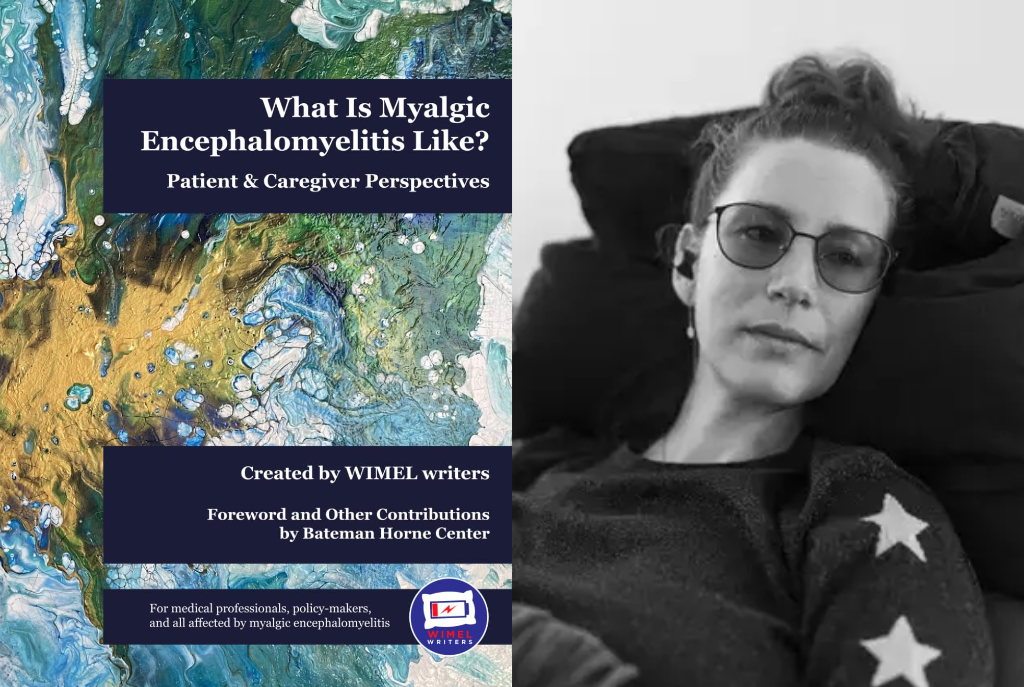
“This exhaustion is cellular”: Excerpts from the new book ‘What Is Myalgic Encephalomyelitis Like?’

Essays focusing on Severe Myalgic Encephalomyelitis (ME), from a new book by an international group of writers documenting their ME experiences.
 

VIPER aims to fast track Long COVID biomarkers. Here’s how it works.​

Written by David Tuller
August 11, 2026

Led by researchers at UCSF, the research program plans to validate promising candidates for noninvasive tests that can be used to advance clinical trials.


Key points you should know:
  • Long COVID’s heterogeneity and range of clinical presentations have made the search for biomarkers extremely complicated and resource-intensive.
  • With a $1.35 million donation from PolyBio Research Foundation, the University of California, San Francisco has recently launched VIPER, a program designed to coordinate and accelerate the biomarker search. VIPER stands for Viral Immunopathogenesis and Persistence Repeat Donor Cohort.
  • VIPER’s initial focus is on biomarkers related to viral persistence, although the project expects to expand to other possible biological pathways in future efforts.
  • The program will include a “well-defined” cohort of 150 participants — 100 with Long COVID and 50 who had COVID-19 but recovered.
  • Researchers are planning fast-track promising candidates for noninvasive tests into clinical trials and, if the results are good, to scale up dissemination as quickly as possible.
 
It is interesting to see that about the VIPER study. But Long Covid is not like AIDS. AIDS was the clinical presentation of a new epidemic virus. We knew how to produce tests for viruses. It actually took a bit longer than usual to get a test for that virus. Long Covid probably isn't even a disease. It is more like back pain or dizziness. To me, the idea of a 'biomarker for back pain' or a 'biomarker for dizziness' doesn't make a lot of sense.

No doubt Peluso and Polybio, both of whom are selling the idea of viral persistence, like the bimarker jargon but to me it isn't a word that a serious scientist would use in the context. If someone has a test showing persistent virus and it correlates clinically (which it seems to be spectacularly failing at so far) then there is a test for a virus, not a biomarker.

I get grumpy like this from time to time.
 
If someone has a test showing persistent virus and it correlates clinically (which it seems to be spectacularly failing at so far) then there is a test for a virus, not a biomarker.

I guess it will become clearer whether searching for tests that correlate with clinical status, which is of course the goal, will be successful. If they are found, I don't think it matters much whether those are called biomarkers or "tests for a virus." As you say, HIV is a different matter, as the story also makes clear. I have zero idea whether this search will fall flat or not, but I'm glad they're giving it a thorough look.
 
I am often confounded by the faith in contemporary virus diagnostics. For example, how do you test for Bourbon Virus? In the US, Bourbon virus is a big deal.

Perhaps just as important, if a pathogen is behind things like ME/CFS and LC, how do we know it's a virus and not a parasite or bacteria or mold?

We don't know what agent is at play, be it genetic or acquired , or a twisted tandem of the two.

Any research that is competent and unbiased, that is receptive to what the science reveals, is ok by me.

Snake oil pedlers have a way of coming out in the wash.
 
I understand. I'm not sure the word "biomarker" is the most optimal target for a grumpiness stand, but I understand fully the grumpy impulse as I approach the end of my 70th year.
You and I and my wife are the same age. To truly date her, at least, she saw the Greatful Dead 10 times and Grand Funk and The Eagles and The Rolling Stones and...

I never wanted to see any of them. I never did. I wanted Pat Conroy's signed edition, or Herman Wouk's, or James Clavell's, or Norman Mailer's before he died even though he was such an American dick..

But you're CA now and I'm a "somewhere east of the Mississippi', and there is a vast biosphere full of biosphere lore in between.
 
Last edited:
No doubt Peluso and Polybio, both of whom are selling the idea of viral persistence, like the bimarker jargon but to me it isn't a word that a serious scientist would use in the context. If someone has a test showing persistent virus and it correlates clinically (which it seems to be spectacularly failing at so far) then there is a test for a virus, not a biomarker.
I'm sorry, I'm not sure what any of this signifies, It merely smacks of someone who dislikes the idea of persistence, at least to me. I am inclined toward persistence - not convinced - but inclined, and I assure you that I am serious.
 
You and I and my wife are the same age. To truly date her, at least, she saw the Greatful Dead 10 times and Grand Funk and The Eagles and The Rolling Stones and...

I never wanted to see any of them. I never did. I wanted Pat Conroy's signed edition, or Herman Wouk's, or James Clavell's, or Norman Mailer's before he died even though he was such an American dick..

But you're CA now and I'm a "somewhere east of the Mississippi', and there is a vast biosphere full of biosphere lore in between.
I saw Peter, Paul & Mary. My family were folkies. I didn’t rebel or break away thru music but used other strategies. A few years ago I saw Diana Ross and Barbra Streisand. Both were great and I never need to see either again.
 
I'm not sure the word "biomarker" is the most optimal target for a grumpiness stand

Oh it is, it is a word that I have heard a thousand times from the mouths of people who thin they are doing science but aren't. I never hear it from real scientists. It nearly always indicates a lack of understanding of the question in hand. It gets things backwards, assuming that the 'disease' exists first and that you just need a marker. The marker is the disease when you find it and the assumed 'disease' fades away.
 
Back
Top Bottom