The Sick Times: A journalist-founded website chronicling the Long Covid crisis

How to interpret clinical trial results for Long COVID​

Written by Simon Spichak
July 21, 2026

Even when results are “statistically significant,” the treatment might not actually work.​


Key points you should know:
  • There are currently no approved treatments for Long COVID. Experts say that the diversity of symptoms and severity makes it more difficult to run clinical trials.
  • Trials of new drugs and devices are stratified by phases. Only phase 3 trials are designed to prove that a treatment is effective.
  • When reading a study, experts say it’s important to note whether the primary outcome, which determines whether a trial succeeds, is both statistically significant and clinically meaningful. A statistically significant outcome does not necessarily mean an intervention will meaningfully improve one’s daily life.
  • To understand whether an off-label medication may benefit you, experts say it’s important to understand whether the studied population has similar symptoms and clinical presentation to you, and to work with a medical provider to ensure a treatment is trialed safely.
Simon Spichak also wrote a resource for evaluating clinical trial results that accompanies this story.
The Science for ME forum gets a mention in this article.
 

Congress’s 2027 budget could include new funding for Long COVID and ME​

Written by Betsy Ladyzhets
August 18, 2026

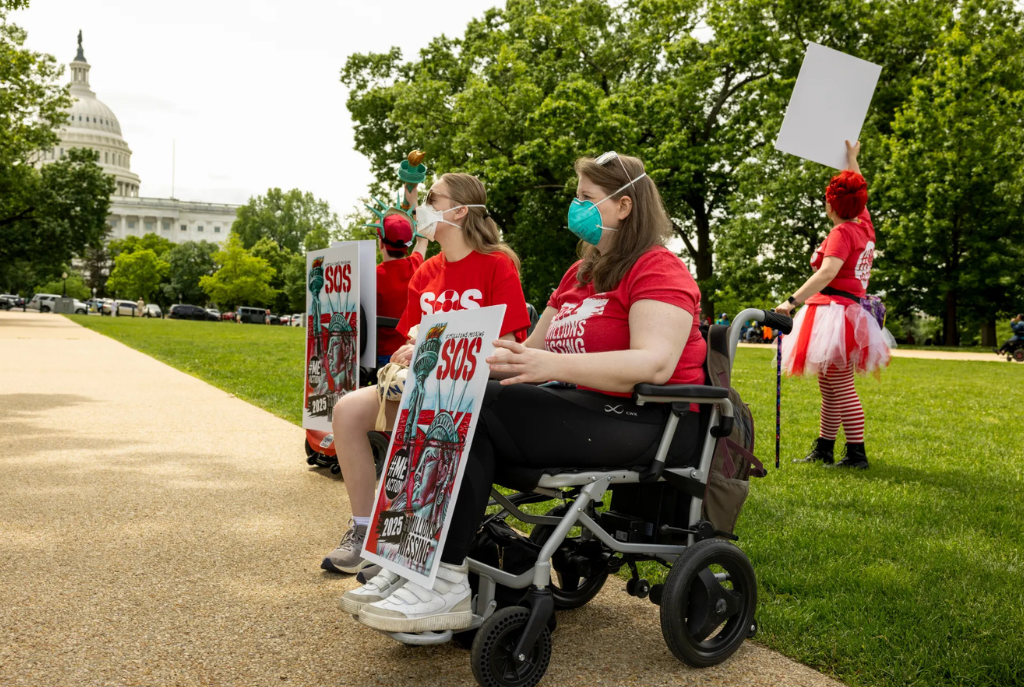
Advocates are calling on senators and representatives to include the ME/CFS Research Roadmap and new Long COVID funding in the fiscal year 2027 budget as legislators debate appropriations bills in the coming weeks.​


Key points you should know:
  • Congress is legally required to pass a federal budget every year. The budget process, called appropriations, can be an opportunity to secure new research funding more quickly than specific, standalone bills.
  • Advocates are pushing for the fiscal year 2027 budget to include $50 million for the ME/CFS Research Roadmap, a detailed plan to advance ME research from the National Institutes of Health (NIH).
  • Some 2027 budget proposals include opportunities for new Long COVID and infection-associated chronic condition (IACC) funding across the NIH, other health agencies, and the Department of Defense.
  • Advocates are focusing on contacting senators, as Senate offices are still drafting appropriations bills in the next few weeks while the House versions of these bills are already written.

Edit: This might be a year old confusingly though its linked in that article I’m confused and am too ill to dig further.

Here’s the MEAction open letter anyone (including organisations) can sign
 

Help The Sick Times’ newsletter reach more readers​


Then, you’ll get a customized newsletter sign-up link you can share with friends, family members, neighbors, your medical providers, and so on.​
You can send it to them directly in an email or text, post it on social media, or share it in any other way you prefer.​
​
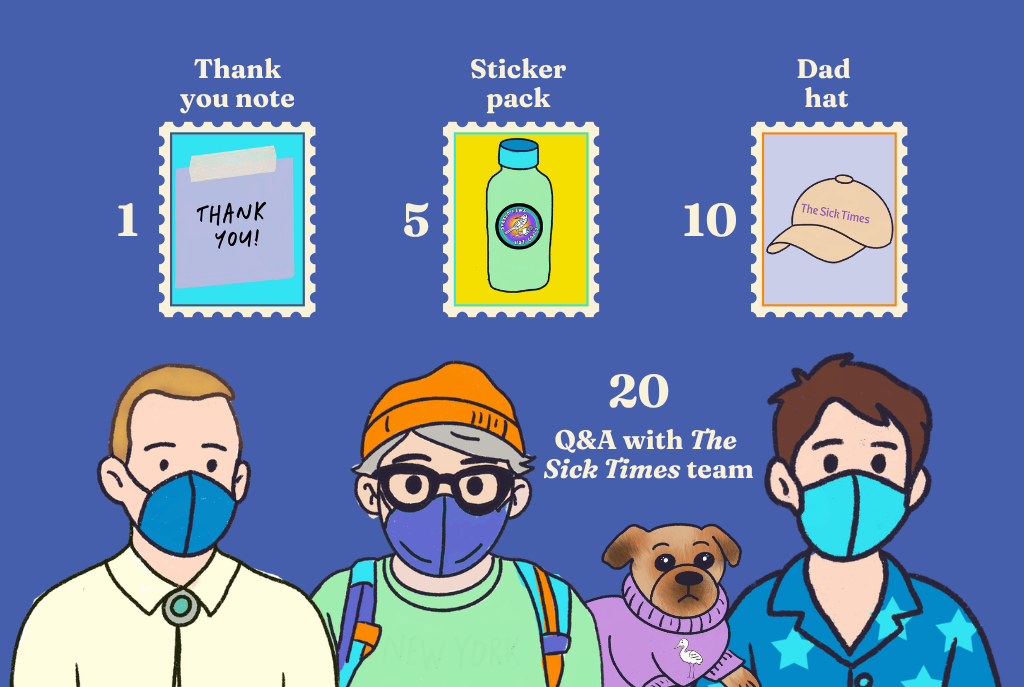
If you’re successful in helping friends and community members sign up for our newsletter, we will say thank you by sending you rewards. Here’s what we have planned so far:​
  • With one successful referral, you’ll receive a thank-you note from our team.
  • With five referrals, we will mail you a pack of Sick Times stickers*, designed by artists in the Long COVID community.
  • With ten referrals, we will mail you a Sick Times hat!*
  • With twenty referrals, you’ll be invited to a one-on-one Q&A call with one of our editors, Miles and Betsy.
*While supplies last.​
​
With this referral campaign, we are aiming to gain 1,000 new newsletter subscribers over the next ten days.​
If it’s successful, we will keep the referral program going over the coming months.​
​
Help champion our journalism by sharing The Sick Times!​


​

Miles W. Griffis​

​
Co-founder/editor @TheSickTimes.org
Columnist @HighCountryNews.org
miles@thesicktimes.org #LongCOVID​
​
BREAKING: The Department of Defense is funding a new clinical trials program for Long COVID with an initial grant of $8 million.​
Called PROBE-PASC, the program will focus on mechanistic trials that will study the disease’s underlying biology in tandem with testing treatments.​
​
A graphic features an aerial photo of the U.S. Pentagon building. Text overlaid on the photo reads, “The Sick Times: Breaking: Department of Defense announces $8 million grant for Long COVID clinical trials”.
​
​
The first trial will test the monoclonal antibody Pemgarda along with the immune-modulating drug hydroxychloroquine, including arms with both drugs by themselves and the two in combination.​
​
​
Further studies in the PROBE-PASC program will follow similar approaches in testing potential hypotheses about what causes Long COVID at the same time as they test potential treatments.​
​
​
We're working on a full story about this news. If you have more information, tips, or thoughts, you can email us at editors@thesicktimes.org​
​
​
Funding for PROBE-PASC comes through the Congressionally Directed Medical Research Programs (CDMRP), programs in which the Department of Defense supports biomedical research for specific diseases and topics that Congress has designated as priorities.​


1400-word article.


“We’re going to stop the gaslighting right now”: How I’m fighting back as a Black woman with Long COVID​

Written by Kelly Sealey​
August 28, 2026​

Despite prior experience working in public health, I’ve faced challenges getting care for Long COVID and chronic seizures​


I had 80 seizures that year — more than one a week. They came without warning and quickly took over my life.
When one neurologist told me I was “just depressed and anxious,” I finally said, “We’re going to stop the gaslighting right now.”
 
Was excited til I read this part.
Seriously how are all these institutions trying the same old drugs over and over. Anti cd38 would have been better. Or campath. Or a drug based on the recent findings implicating dopamine. Its not 2021 anymore, why are we still doing anti covid monoclonals and expecting different results?
 
BREAKING: The Department of Defense is funding a new clinical trials program for Long COVID with an initial grant of $8 million.​
Called PROBE-PASC, the program will focus on mechanistic trials that will study the disease’s underlying biology in tandem with testing treatments.​


Department of Defense funds $8 million grant for Long COVID trials​

Written by Betsy Ladyzhets​
September 1, 2026​

The first study in a new mechanistic clinical trials program will test Pemgarda and hydroxychloroquine alone and in combination.​


Key points you should know:​
  • A new U.S. clinical trials program called PROBE-PASC was announced on Friday at a Long COVID conference in Amsterdam. The program received initial funding of $8 million from a Department of Defense (DOD) grant.
  • This DOD grant, through the Congressionally Directed Medical Research Programs (CDMRP), supports biomedical research for specific diseases and topics that Congress has designated as priorities. Past grants have supported cancer, tick-borne illnesses, traumatic brain injuries, and more.
  • The first clinical trial in the series will test the monoclonal antibody Pemgarda, along with the immune-modulating drug hydroxychloroquine. The study will include arms with both drugs by themselves and the two in combination.
  • The funding shows the DOD’s interest in Long COVID, which research has shown affects the military. A 2023 CDMRP grant supported the clinical trial of the novel drug bezisterim for Long COVID.


2100-word article.


I interviewed five people with Long COVID in prison. They are invisible in the system.​


Written by October Krausch​
September 29, 2026​
​

While there are no data sources on Long COVID in prison, experts suspect rates of the disease may be higher there than in the general population. They face high reinfection risks and poor access to medical care.​


​
Key points you should know:​
  • Prisons in the U.S. experienced extraordinarily high SARS-CoV-2 infection rates in the early years of the pandemic. As a result, rates of Long COVID among the prison population may be even higher than those in the general population.
  • No systematic source of data exists on Long COVID rates in prisons, and there is very little information about how the disease affects this population.
  • Healthcare in prison is characterized by cost-cutting and neglect. As a result, some people give up on seeking medical care.
  • Many people in prison may have no idea what Long COVID is or if it explains their symptoms due to lack of information and lack of dedicated and informed medical care.
  • Advocates can include people in prison in their efforts at patient education and can consider how blanket policy adoptions will impact or benefit this population.


October Krausch, PhD, is a freelance sociologist, activist, and writer in the Detroit metro area. Their writing has been published in Truthout, In These Times, Inside Higher Ed, and The Progressive, and they are the editor of the forthcoming book The Struggle Is Always Worth It.

Readers interested in connecting with and/or supporting the people with Long COVID interviewed for this story can contact October at
rebelprof@proton.me or @freeze.16 on Signal.
 
The Sick Times: "I interviewed five people with Long COVID in prison. They are invisible in the system."


Key points you should know:​
  • Prisons in the U.S. experienced extraordinarily high SARS-CoV-2 infection rates in the early years of the pandemic. As a result, rates of Long COVID among the prison population may be even higher than those in the general population.
  • No systematic source of data exists on Long COVID rates in prisons, and there is very little information about how the disease affects this population.
  • Healthcare in prison is characterized by cost-cutting and neglect. As a result, some people give up on seeking medical care.
  • Many people in prison may have no idea what Long COVID is or if it explains their symptoms due to lack of information and lack of dedicated and informed medical care.
  • Advocates can include people in prison in their efforts at patient education and can consider how blanket policy adoptions will impact or benefit this population.

 
Hi all! As you might have seen in our recent newsletters, The Sick Times is currently running a reader survey to ask for feedback and better understand our audience. I wanted to share the survey here as we always appreciate the discussions in this forum! It should take around five minutes to complete, and saves as you go if you need to take a break and return to it later.

You can also always DM me or email (betsy@thesicktimes.org) with specific feedback, story ideas, etc.
Hello Betsy!

Thank you for all of your vital & collaborative work around sickness, disability and public health.


Managed to fill out the survey and found it relatively accessible in format. Was pretty weary by the end. Because had stuff to say, and have particular difficulty with cognitive fatigue.

I'd recommend the survey here, the questions are well framed, an opportunity to offer feedback around accessibility and areas of work that are most wanted or needed.
 
Last edited:


Trans people with Long COVID navigate a new “dark age” in trans health​

Written by Khalil (Kae) Dennis
October 13, 2026
We spoke with and surveyed dozens of trans people navigating gender-affirming care and Long COVID during Trump’s second term.

Key points you should know:
  • Both Long COVID disability and anti-trans policies limit access to gender-affirming care through varying mechanisms, including increased medical stigma, upcoming Medicaid work requirements, and symptom pathologization.
  • Unreliable electronic health records, funding constraints, and cisgender-centered research all contribute to the lack of research into trans people with Long COVID.
  • Trans people with Long COVID face similar medical, financial, and social barriers as people with HIV during the early years of the AIDS epidemic, necessitating a closer look at patient-first care models.
  • Solidarity from queer community members and trans health advocates is needed to bolster documentation, and subsequent social services, for this growing, vulnerable group.

 
1500-word article


Conferences and advocacy events for IACCs must require masking​

Written by Whitney Fox
October 19, 2026

Advocates, clinicians, and researchers must prioritize prevention and demonstrate the gravity of infection-associated chronic conditions like Long COVID by providing and wearing masks at public events.​

​

 
Back
Top Bottom