
V.R.T.
Senior Member (Voting Rights)
I was just about to post this. Cryotherapy and vagus nerve stuff. Doesn't bode well...The Reddit thread

I was just about to post this. Cryotherapy and vagus nerve stuff. Doesn't bode well...The Reddit thread

Thanks for all the replies. I've just sent an email to the editor of the Observer, using Chris P's figures above, calling for full finding for Sequence. It's always a long-shot to get a letter published in a newspaper -- particular as mine wasn't in response to a prominent article -- but worth a try.I’m composing a letter to a newspaper about Beth’s campaign. What do people consider to be the most reliable estimate of the cost to the Treasury of ME/CFS? Sources appreciated.
I used to use the £3.5 billion p/an estimate but that was a while back.


The Jason study is very, very far from representative. DSQ also has a substantial false positive rate:Currently, my best guess: Updating the UK’s 2017 estimate of “at least £3.3 billion”. Accounting for cumulative inflation since then (36.55%), increasing the ME/CFS prevalence from 250,000 to 400,000 (Samms & Ponting, 2025a, Samms & Ponting, 2025b), and adding 260,000 to 1,174,000 people who have long Covid symptoms meeting ME/CFS diagnostic criteria (ref; ref), we can update this to: £11.9 billion to £28.4 billion, annually.
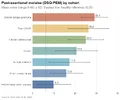

I think the letter has gone off now anywayThe Jason study is very, very far from representative. DSQ also has a substantial false positive rate:
View attachment 35087
I do not think we have any reliable data on how many that develops ME/CFS after a covid infection. We don’t even know if it’s a risk for everyone, or if more frequent infections in general will make the ones that would likely have gotten it anyways just get it a bit sooner. That will increase the total prevalence, but by a much smaller ratio than if covid has a covid-specific added risk of ME/CFS relative to other infections.
From an advocacy standpoint the safest bet is to focus on prevalence rates that can actually be confirmed and mention that the pandemic has added to the burden.
Poor Beth having to deal with that sort of question when she is so unwell and relatively inexperienced as an advocate. I’m pleased if she managed to deal with it well but it’s not a question she should have been asked without forewarning IMO.I thought Beth did really well, even though she had to put up with being shown a clip of Miranda Hart speaking about her illness.
Yvette Cooper is reported to have had ME/CFS in her twenties and recovered. She has not been particularly helpful in the past. See: https://s4me.info/threads/uk-house-...-people-and-questions.707/page-58#post-708187Was interviewed by Suzanna Reed, and Ed Balls (former Labour MP and husband of DHSC SOS Yvette Cooper

Yes, that is really important and I should have included it above. I only didn’t because I think Hart was unwell for several years before she reported that she had recovered, and recovery is much less likely after 2 years.for most post-viral syndrome cases, recovery is not only possible but likely, and that there is no evidence for attributing some recoveries to anything other than the effluxion of time.
Miranda is also complicated by the query of a long onset - her account seems to be Lyme as a teen, some intermittent problems since then, leading to ME in her 40sYes, that is really important and I should have included it above. I only didn’t because I think Hart was unwell for several years before she reported that she had recovered, and recovery is much less likely after 2 years.
To me Garner and Hart are quite different cases. For all her unhelpful assertions, Hart seems to be a genuinely kind and sympathetic person, and she seems to have backtracked a bit on her previous zeal. (See Miranda Hart thread.)
I don’t want to comment on Garner’s character but to me everything he has written about the course of his illness is consistent with a typical post-viral syndrome that resolved naturally within 2 years.
Yes she's doing such a great thing for us but really hope she can look after herself too and pace out these interviews so the toll on her isn't too severe.She’s doing great making the point “yes, there are clinics but they don’t have any Drs” I am concerned for her with the amount she’s doing as I can see she’s a lot less composed/seems like she’s crashing

It's a horrible responsibility to have really. You shouldn't have to be an Olympian for people to listen and it puts alot of pressure on her. Beth is severe and having to do interviews must be having a significant impact.Yes she's doing such a great thing for us but really hope she can look after herself too and pace out these interviews so the toll on her isn't too severe.
Asking for full SequenceME funding is the right ask imo. It's what the community needs. Building good services will take time and requires getting the right people involved. Asking for it in this context as you say would probably mean just getting screwed over by BACME again.She’s asking for the rest of SequenceME to be funded, that’s a specific ask but it’s a big figure. I hope the attention can be capitalised on by the fundraisers as a big PR opportunity for some company, as I’m uncertain the government will pay it.
I think she’s got more chance of them agreeing to do an NHS service and my worry is they stick a GP in, over a BACME clinic, and make them accept severe = here’s a Dr in a service
There’s a difference between whether we ask for it - we should, and the likelihood of the government handing over £10mil or soAsking for full SequenceME funding is the right ask imo. It's what the community needs. Building good services will take a lot of time and asking for it now in this context as you say would probably mean just getting screwed over by BACME again.
SequenceME isn't that expensive compared to spending on other illnesses. I don't see why we shouldn't ask for what we need most.
But I don't see why they won't with enough pressure.There’s a difference between whether we ask for it - we should, and the likelihood of the government handing over £10mil or so