USA: News from the Bateman Horne Center

ahimsa

Senior Member (Voting Rights)
This thread has news updates from the BHC.
For threads on useful resources provided by BHC see the Resources forum.


Ever-Growing Awareness
by Lucinda Bateman, MD
Mar 2, 2022

https://batemanhornecenter.org/evergrowing-awareness/
batemanhornecenter.org said:
It has been my life’s work to raise awareness of ME/CFS. In 2000, I typed out “raise awareness of CFS and FM” in large font on a piece of paper and placed it under the glass of my desktop. Without a doubt, there was consistent slow progress over time, but now it has become exponential growth.

Journalists have been interviewing Dr. Yellman and me regarding Long COVID and its relevance to ME/CFS. Recent news stories have appeared in USA Today, National Geographic, Yahoo News, Vox, and North Jersey News. Journalists are asking more informed questions and articulating these long overlooked and understudied areas of science and medicine. We must all keep the conversations going in every arena. I admire and thank the patients who have shown the courage to speak out.
...
Before I close, I must say how proud I am of our BHC team that produced the “ME/CFS Crash Survival Guidebook.” Since the online introduction of the guidebook on February 3rd, there have been more than 18,000 webpage views and thousands reached on Twitter and Facebook. Feedback to BHC, especially from the severely ill, has warmed our hearts. Please share widely with anyone who may benefit.
 
Last edited by a moderator:
Four New Clinical Trials in 2022

"Many investigators pivoted to SARS-CoV-2 and COVID-19 science and medicine in 2020. We did too at BHC because we understood the opportunity the pandemic provided for “real-time” clinical research of post-COVID-19 sequelae and to share all we know about ME/CFS – prototypical post-viral illness. It has paid off. By June, we will have four studies for ME/CFS and Long COVID underway. We are accustomed to running multiple clinical trials each year but until now, it has been predominantly fibromyalgia trials. That all four of these trials are for ME/CFS and Long COVID is a testament to the growing awareness the pandemic has caused."

https://batemanhornecenter.org/four-new-trials-2022/
 
Adding to this thread to cross reference information about Bateman Horne Center (BHC) research that has been posted in other threads.

The BHC website currently lists three items on their active recruiting page:

* Endothelial Function and Upright Activity in ME/CFS and Long COVID
[forum thread on this study here - https://www.s4me.info/threads/usa-e...ight-activity-in-me-cfs-and-long-covid.28141/ ]

* RESTORE ME: A RandomizEd Double Blind Placebo Control Trial to Determine the EffectS of OxaloaceTate On ImpRoving FatiguE in ME/CFS

[forum thread on this study here - https://www.s4me.info/threads/usa-r...acetate-on-improving-fatigue-in-me-cfs.28140/ ]

* We Want You! Healthy Volunteers to Participate in Research


More details, and a link to sign up, can be found here: https://batemanhornecenter.org/research/#active-recruiting

EDIT: Updated to include another link
 
Last edited:
New blog post from the Bateman Horne Center, Why the 10-Minute NASA Lean Test?

https://batemanhornecenter.org/why-the-10-minute-nasa-lean-test/
Bateman Horne Center said:
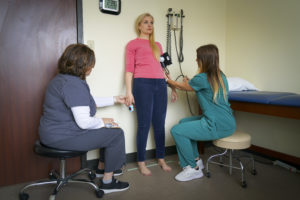
Researchers at BHC, the University of Utah and Columbia University teamed up to publish our most recent paper, Orthostatic Challenge Causes Distinctive Symptomatic, Hemodynamic and Cognitive Responses in Long COVID and Myalgic Encephalomyelitis/Chronic Fatigue Syndrome.

The purpose of the paper is to show that orthostatic stress (i.e. standing in place) leads to abnormal, measurable changes in circulation that cause illness symptoms and negatively impact function in many people with ME/CFS and Long COVID.

dsc06773-300x200.jpg


This abnormal circulation triggers symptoms like fatigue or weakness, brain fog, achiness, palpitations, cold hands and feet, nausea, exercise intolerance and even PEM. The general term that describes this phenomenon is orthostatic intolerance (OI), which simply means that illness symptoms develop while upright, and tend to resolve or improve when lying down.
 
"Big news! We are pleased to announce the Open Medicine Foundation (OMF) Supported Medical Education Resource Center (MERC) at Bateman Horne Center.
As OMF's 7th Center this expansion of BHC's education program will increase the number of #healthcareprofessionals equipped to diagnose and manage multi-system chronic complex disease (msCCD) like ME/CFS, FM, long COVID, and common coexisting conditions.
By joining forces we will expand the reach and impact on medical education https://batemanhornecenter.org/merc/"

https://www.facebook.com/batemanhor...gSn11oeZCUdP6bkaLCCvBnhgjXJ98irjK7WV3xycsgcXl
 
Blog post from Bateman Horne Center on the same subject as the previous post, OMF and BHC Join Forces to Improve Patient Care.
Lucinda Bateman said:
I am proud–and excited–to announce a new and important collaboration between BHC and OMF. We are jointly launching the Medical Education Resource Center (MERC) for multisystem chronic complex diseases (msCCD). Our two respected organizations will bring complementary strengths together, with a primary goal of improving access to informed and compassionate medical care for our stakeholders. We know that research progress and access to care are critical needs. We also know that well-educated providers will diagnose more patients and provide better care, which in turn will fast-track research progress.
...

Within the last 15-20 years, we have learned about conditions like, or comorbid with, ME/CFS, FM, and related illnesses, such as mast cell activation syndrome (MCAS), syndromes of orthostatic intolerance (OI), small fiber polyneuropathy (SFPN), hypermobile Ehler’s Danlos syndrome (hEDS), and others. We want to teach clinical providers to identify and manage these comorbid conditions, along with long COVID, which can lead to significant improvements in functional capacity and quality of life.

Our strategy and outreach will be broad and informed by oversight committees which include patients, caregivers, and professionals.
 
Can some body please summarize the following video for me?


I watched that the other day, its not very helpful it really is mostly about Insomnia being mental illness, that people should be checked for Sleep apnea and central hypersomnia. It was actually pretty dismissive of the problem with Covid based insomnia and provided no light as to the cause and just doctors should check for the usual stuff. Nothing new or of note at all.
 
Last edited:
I received the following invite from the Bateman Horne Center, making me wonder if there's any actual science behind the assumptions noted:

Support Group: Tuesday, October 11th @ 1 pm MT


Join us on October 11th for our online Support Group led by Meredith Mehner, a licensed clinical social worker (LCSW) who has personal experience with illness.

TOPIC: Childhood Trauma

Special note. This support group session is to discuss:

  • how childhood trauma can be connected to chronic illness
  • therapy ideas that have worked for you pertaining to childhood trauma
  • stress patterns related to childhood trauma


It is not a group to process individual childhood trauma or share specifics of your experience. We encourage sharing ideas of what has moved you forward in your chronic illness journey or helped you understand yourself better to help you experience more peace physically or emotionally.
 
I think if it's approached from the point of view that some people with chronic illness will have also suffered childhood trauma, and that some people who suffered childhood trauma may find the stress/distress related to that makes their chronic illness worse, the some may find such a session helpful.

The problem with such discussions is that some may assume ME is caused by childhood trauma, and that therapy for this will cure their ME. There's no credible evidence of any causal link.
 
There are very strong correlations between childhood trauma and serious illnesses. For example, the ACE study. The current hypothesis is that ACEs adversely impact brain development, which leads to mental impairments, making it harder for people to take care of their health, increasing the risk of disease and early death.

As ME just strikes people randomly, it doesn't fit in this model. So I'm skeptical of any correlation between childhood trauma and ME. If it's true, it's probably the same factor causing both trauma and illness. (E.g. Poverty? Gender?)
 
from July
Endothelial Function Interim Results
In February of this year, we began enrolling for a study to evaluate endothelial function in people with ME/CFS and Long COVID. “Endothelial” refers to the cells that line the inside of blood vessels. Endothelial cells are actively involved in contracting/relaxing the blood vessels, blood clotting, and immune function.

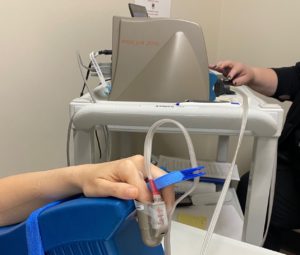
Endopat-image-May-2022-1-300x255.jpg
Our aim is to assess endothelial function using the Endo PAT 2000 device, which measures Peripheral Arterial Tone (PAT) signal changes using non-invasive monitoring at the fingertip. We measure PAT at baseline, then again after reducing blood flow, and again after restoring normal blood flow. This process is called a reactive hyperemia challenge. Specifically, it consists of a brief baseline PAT recording, followed by a 5-minute PAT recording of blood flow during occlusion to one arm using an inflated blood pressure cuff, and 5 minutes of recording after the cuff pressure is released. This data generates a reactive hyperemia index (RHI) which is the post-to-pre occlusion PAT signal ratio in the occluded arm compared to the other arm that is not occluded.

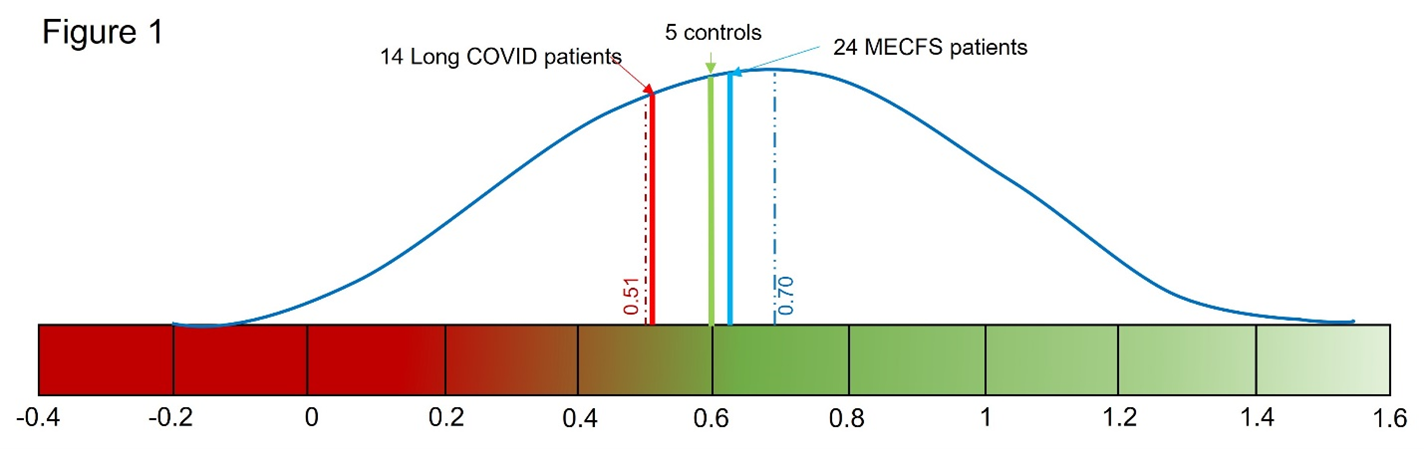
The RHI is a measure of endothelial function. Normal endothelial function RHI scores are >0.51 and abnormal scores are <0.51 (the red dotted line in the figure below shows the 0.51 demarcation). What is abnormal and normal was determined by the company that makes the Endo PAT 2000 by analyzing 10,000 data points collected from different study cohorts worldwide. The Endo PAT 2000 also measures arterial stiffness from the PAT signal. Arterial stiffness is not necessarily correlated to endothelial function but may provide information as well.

We are at the halfway point of enrollment for this study and wanted to share the interim analysis. Figure 1 shows the RHI results for 24 ME/CFS patients, 14 Long COVID patients, and 5 controls. The average RHI scores for Long COVID patients was 0.53, 0.63 for ME/CFS patients, and 0.59 for controls. Remember that an RHI of <0.51 is abnormal. While the average RHI is normal (>0.51) for each of the 3 groups is normal, 8/14 (57%) of the Long COVID patients had an abnormal RHI score, 9/24 (38%) of ME/CFS patients had an abnormal RHI score, and 2/5 (40%) of controls had an abnormal RHI score. Enrolling more patients will give a stronger signal to let us know whether endothelial dysfunction is a significant finding in Long COVID and ME/CFS patients.

Endopat-pic-1.png


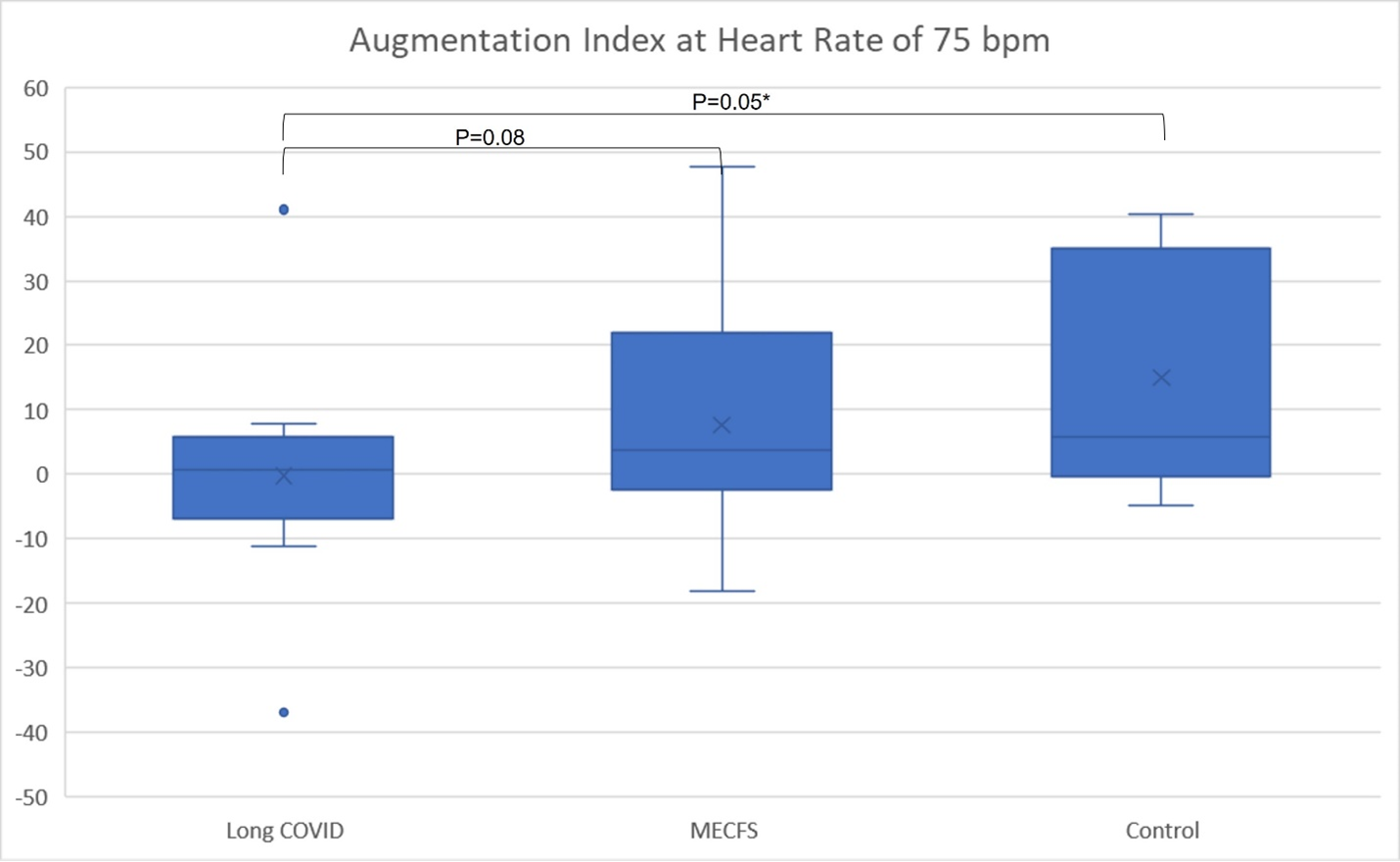
Augmentation index (AI) measures arterial stiffness and is measured at a heart rate of 75 beats per minute (bpm). Lower AI values (including negative results) reflect more arterial elasticity. AI usually increases with age and is higher in women. The interim results for arterial stiffness are shown in Figure 2. The average AI for Long COVID patients was -0.24, 7.6 for ME/CFS patients, and 15 for controls. Long COVID patients had significantly lower arterial stiffness and thus higher arterial elasticity than controls (p=0.05) and ME/CFS (p=0.08).

Figure 2

Endopat-pic-2.png


We are continuing to enroll for this important study and we need at least 5-10 more ME/CFS patients, 15-20 more Long COVID patients, and 10-15 more controls. The study requires a 2-hour in-person visit and continues for seven days with brief tests and surveys that are done from the comfort of your home. The in-person visit will start with you giving informed consent, answering questionnaires, and having a blood draw. Then we will take about 15 minutes to measure
Uptime-device-Angela-May-2022.jpg
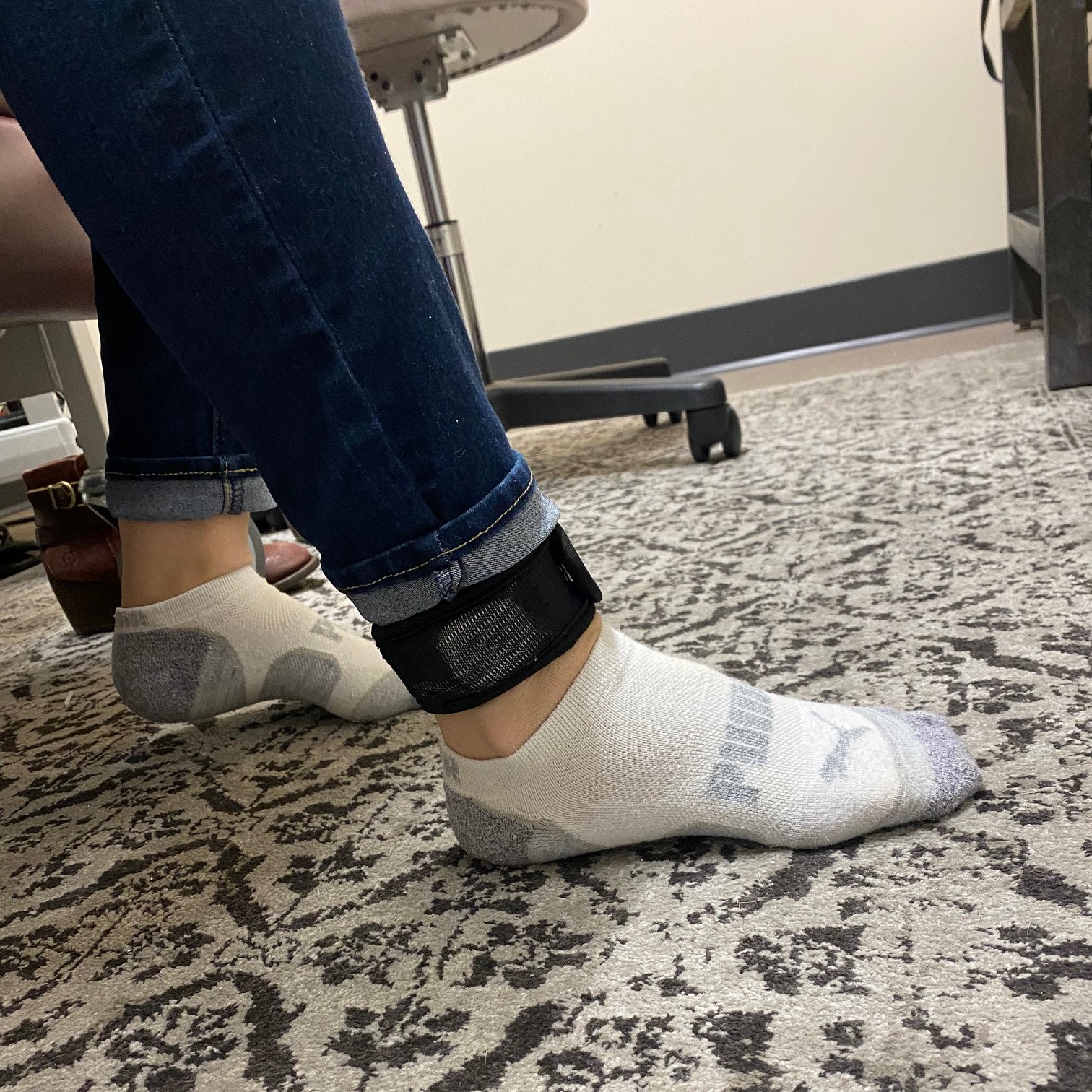
endothelial function using the Endo PAT 2000. We will outfit you with a wearable device that is worn on your ankle for seven days and provide you with a mailer to send it back to us (right image). A cognitive testing app will be set up on your smartphone so you can take the brief test in the morning and evening for seven days. There is a stipend of $50.00 for participating.

Please consider participating in this research. If you are interested, please contact us by:

Emailing: research@batemanhornecenter.org or call
(801) 532-8311
https://batemanhornecenter.org/endothelial-function-interim-results-we-still-need-you/
 
Expert Consensus Statements of the U S ME CFS Clinician Coalition - presentation by Lucinda Bateman

Webinar for the Norwegian ME-association By Lucinda Bateman of the Bateman Horne Center. She talks about the collaboration between the top clinicians on ME in the US to set a standard for ME diagnosis and care for health professionals. Resource for health care workers: https://mecfscliniciancoalition.org/c...
 
https://www.facebook.com/batemanhor...u5NDW_MNi8zBo5J6r537mTlzFgQO0leo&__tn__=<,P-R
Bateman Horne Center
·

BHC is making research participant data available to ME/CFS and long COVID researchers around the world by establishing Global Unique Identifiers (GUIDs).

"Each time you participate in research, you create a pearl of knowledge. GUIDs allow us to string pearls together, safely and securely, into one long strand that may help reveal the disease mechanisms of ME/CFS and long COVID."

Read Dr. Vernon's blog about GUIDs and how participating in research advances the science for #MECFS and #LongCOVID.
http://bit.ly/3uzJ6x4
 
Sounds like they're hashing your personal info
No need for that. GUIDs are just very large numbers or strings that can be assumed to be unique simply because they are so large that the same sequence is unlikely to come up more than once in the entire lifetime of the universe.

Very common in information sciences.
 
Can you explain what hashing means in this context?
A hash is when you take a bunch of data (could be text, numbers, a large computer file) and you run it through an algorithm that "scrambles" it to create a random number. The number you get will totally change if the data changes even slightly. Which means you can't tell what the input to the hash was by just looking at it. You can thus compare the hashes of things to see if they're the same, without knowing the data that went into them. Wikipedia has a rather technical overview.
 
Back
Top Bottom