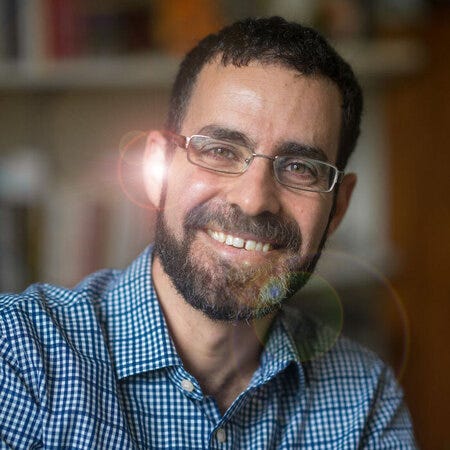
Wired Magazine: The Painful Truth About Long Covid by Alan Levinovitz, 2026

@Learningandlistening. Perhaps the reason members of this forum thought you abandoned the debate is because you stopped posting here and announced on Twitter, "I'll be stepping away from this specific topic on social media for the next few months."?

"In THIS community, on the other hand, the non-negotiable truth is that "BPS" — whatever that means — is bad and false, and it is impossible that anything involving the 'mind' is involved in sustaining the symptoms of ME/CFS.

Contrary to what seems to be a common caricature, the presence of ME/CFS symptoms do not suddenly make people inherently close-minded about the potential of mind-body approaches, this doubt develops after humiliating reality checks delivered by the nature of this illness.

The negative stance towards the biopsychosocial model applied to ME/CFS is not a "non-negotiable truth", it is a working conclusion drawn from spending many hours assessing the evidence through the lens of critical thinking and rational skepticism. This conclusion can change when convincing evidence is presented, and it is concerning that we are expected to significantly lower the standards because you think "mind-body therapies are quite difficult to trial". There is no reason why brain retraining cannot be subject to clinical trials.

As far as I can tell, this forum consists of people who largely engage in equal opportunity skepticism: low quality biological research gets grilled here like everything else.

All the CBT/GET proponents had to do to be more convincing about their approach to ME/CFS is to employ a stringent diagnostic criteria and show clinically useful improvements on objective outcome measures. Yet they failed to do so after three decades, therefore we will continue to dispute their claims.

Furthermore, the underlying rationale of brain retraining can be tested using biological measures as objective proxies for the processes that are supposedly mediating subjective symptoms.

Your WIRED article mentions discussions with mindbody proponent Vegard Bruun Wyller. Did he mention that in the early 2010s he was involved with research into the use of low dose clonidine to inhibit the sympathetic nervous system activation that was supposedly driving the sustained stress arousal feedback loop? While the drug worked to inhibit catecholamines, CFS patients became worse at the endpoint, not better, suggesting that the increased sympathetic nervous system activity (if actually present) is a compensatory mechanism.


It makes sense that an illness characterised by post-exertional malaise or exacerbation of symptoms after stressors (physical, cognitive, emotional) could benefit from managing such stressors or responses to it, but that is not the same as the illness being primarily perpetuated by internal psychological factors stuck in a feedback loop of the stress response.
 
Last edited:
Did you ever respond to David Tuller's blog post about your article?
Did you have the courage to address it on X?

I don't have X so I don't know beyond what I've seen people share elsewhere. But I saw you posted a petition to remove the WIRED article, which is not equivalent to engaging with critiques of your work.
Not the only thing I posted. So get back to me when you've actually engaged with my own posts and effort.
 
I joined this community 10 minutes ago. So I'll leave it to the established members to respond to that (the members that you are refusing to engage with in good faith, for all your big boy courage). But I'll say this, when you become disabled--as everyone does if they live long enough--I hope you don't have to know what it's like to be physically incapable of forming a connection to the outside world and rely on online communities because your mitochondria don't work.

Best of luck with your new book! Maybe Rogan will have you on again. I hope you carry the energy of "It's time for you to engage with mine, on my terms" with you to his studio this time.
I did my best to push back on everything Rogan has to offer. His nonsense. I'm not some opportunist. Go watch the interview instead of making assumptions about it. As I've said repeatedly, I have no time for people who make assumptions about my work and interactions. See you in a week or so!
 
Alan, no one is here to discuss your points about insular communities. many of us spent years or decades without any online communities, "illness narratives" (you know, because we HAD no narrative or even diagnosis) or illness identity, yet here we are, still sick.

you want engagement with your work, here's some.

Why didn't you state in the article that many ill PACE participants were reclassified as "recovered" at the start of the trial because of moving goalposts?

Why did you frame the criticism to PACE as a single person's objections--a person who you made of point of describing as patient funded? Why did you not examine the methodological failures in the study?

Why didn't you mention the myriad examples of people who got worse from brain retraining or GET?
 
Last edited:
In THIS community, on the other hand, the non-negotiable truth is that "BPS" — whatever that means — is bad and false, and it is impossible that anything involving the "mind" is involved in sustaining the symptoms of ME/CFS.

You have now made it clear, Alan, that you have not actually understood the situation in this community.

BPS is shorthand for a group of people who in the past have propounded a particular theory.
What historically is not in doubt is that these people have proved incompetent, most obviously in their dissemination of treatments that were inadequately tested. Moreover, their flagship trial, PACE, if nothing else, showed that their BPS theory was empirically wrong. The prediction was that a change in mental approach to illness would lead to an improvement in disability. There was some evidence. of a change of mental approach but there was no evidence for a corresponding improvement in disability.

And to conflate BPS with "mind" begs the question as to what "mind" is supposed to be. Just yesterday I was invited to submit an article to a special issue of a neuroscience journal on 'Rethinking the Brain, Conceptual Challenges in Neuroscience' in recognition of my previous work on mental representation. (You may not have been aware that my main academic interest is in the structure of what you call "mind".) You have suggested that somehow mind is something supernatural yet which can fit with neuroscience. It seems to me that you are a very long way away from understanding the basic metaphysical issues involved. This is no surprise to me having spent a year studying in the philosophy department at King's College London. Modern academic philosophy has failed totally to keep up with growth in human knowledge in terms of biology and physics in the twentieth century. (Remember that I am also a card-carrying philosopher. I was for ten years on the editorial team of Journal of Consciousness Studies.)

Members here object to bringing in psychological theory partly because, as has always been evident to me as a physician, it is almost entirely bullshit with no empirical foundation, and partly because most of them have tried to make use of 'mind over body' and found it to be a miserable failure.

The intellectual community here is way ahead of any academic department I have ever worked in - whether biomedical or philosophical. People here see a straw man a mile off, so there is no point in presenting us with one. You have not taken on board the basic knowledge required to address this problem usefully; people here have. I am afraid to say that my comment about humanities voyeurism seems to have been justified. And it does untold harm.
 
Now let's understand gradual exercise therapy as "any kind of activity undertaken with the end of increasing the size of that envelope." People could swap some activity in their life for that exercise, and in doing so perhaps slowly increase their envelope. We could study this, and see if it works for some people, and which kind of activities are most effective at doing so.

I've always thought this framing was baffling. Is there anyone in the world who doesn't intuitively try this when first experiencing symptoms?

Most people don’t arrive at MECFS because they avoid activity. Usually, they arrive after trying to live a normal life, pushing, crashing, seeing doctors and getting shrugs, then repeating the cycle. Over and over.

It's like asking someone with asthma if they ever tried breathing more deeply. Using the patented Levinovitz 'I randomly made up numbers' method, let's assume 30%-40% of people with asthma just never try breathing deeply?

I was never able to 'slowly increase my envelope' despite stubbornly, carefully (and idiotically) trying for years and years in many ways - all the way down to when I would try to add 10 seconds at a time on a no-resistance exercise bike.

Dismissing PEM and long-term declines because it's mostly based on patient testimony, then trumpeting Brain Retraining™ courses based on…patient testimony? When the courses themselves often hammer home that you must believe (and sometimes even that you must speak positively about it for it to work).
 
I said I'd engage in a week. But I don't have time for anyone who doesn't actually come into *my* lion's den and confront my actual points.

While I'm glad you're busy, we realize this is a game for you. Come engage with my Twitter. Come watch my podcasts. Me, me, me.

No thanks.

You didn’t come here to learn. You came as the brave self-declared heretic, and the second people laughably more knowledgeable (and respected) than you like Edwards, Tuller, or Zeynep questioned the specifics or even whether you were qualified, the mask slips - your anger, your accusations of 'ad hominem' attacks, your refusal to discuss any actual criticism without claiming it's a personal attack.

There is no way to debate someone of your fragility. Except I suppose: on a 'multi-hour' Zoom call for people who just want to 'hear where you're coming from'? That's not debate.

If I disagree carefully, I'm defensive! If I relay my own lived experience of years or decades, I'm denying your gracious help! If I question your incorrect assumptions or wild evidentiary double standards, well how dare I.

So you choose to only engage with your own strawman arguments or (imagined?) fawning Zoom calls.

You have publicly described weeks long ecstatic states where you slept about an hour a night, experiments with mushrooms and acid and MDMA, felt you could summon fire from your hand, became 'extremely charismatic', incorrectly interpreted a mildly indifferent woman as 'demonic', and later wondered whether it sounded like mania.

And after reading that, I just felt sad for you. Not angry. Sad. Because it explains the article, the forum behavior, the frantic and constant self promotion, the need to be seen as a savior, and the strange compulsion to pathologize sick people while presenting yourself as uniquely clear-eyed.

I went looking for the kind of person who could write something this harmful about vulnerable patients, and found someone who seems to be in crisis himself.

I'll leave you with a quote by your favorite author - Alan Levinovitz. :)

"look, if someone has come along and told you they have the key to fixing yourself spiritually, or even the key to healing yourself, that is a person you ought to be very, very suspicious of"

I won't be replying further, as you didn't come here for honest debate.
 
Allow me to suggest to the lions in this den that perhaps you have more in common with the hEDS "zealots" than you might think.
You're trying to turn all this into a battle of beliefs, wanting your cherished belief to have the space you feel it deserves, but it's about evidence.

hEDS is a fad diagnosis and so are mind-body and BPS approaches.

You believe that you must convince others to overcome their dubious beliefs while yourself being immersed in merely a different set of dubious beliefs.

According to Zeynep mind-body treatments for long covid have been studied without positive results. You seem to be avoiding this point because it's not compatible with your belief that mind-body approaches are promising but not being studied because of zealots.
 
Last edited:
Tern on X posted this about AL and his religious experiences: fire shooting hands, seeing cafe workers as demons and more.
Source is this interview from April 2023, note the repeating pattern of AL not being allowed to talk about something:

The quotes are from tern‘s Twitter post:

Alan Levinowitz:
"So there's some things that are very comfortable talking about because they don't touch on the things that I'm not allowed to talk about.
So, for example, I can talk about how long it lasted.
So these experiences started when I was in college.
That was the first one, and it lasted for weeks.
I slept for about an hour a night and everything looked beautiful.
The first time it happened, I remember I was in the hallway of my dorm and that was maybe a week in or something.
I looked at the palm of my hand and felt this incredible sort of tapping into this power around me.
And I was like, I could make fire come out of the palm of my hand.
I tried, and of course it didn't work because that's not how it works, and that's actually something I am comfortable saying, is that that's not how these things work.
This does not give you the power to levitate.
It does not give you the power to heal people.
It does not give you the power to make fire come out of your hand.
That's bullshit.
So this went on for many weeks and it was just incredible.
Although I'm not a religious person, I've done lots of psychedelics.
And it was a little bit like ecstasy [MDMA], it was a little bit like acid or mushrooms, but also fundamentally different.
And it went on for weeks and I felt very clear headed and I could talk with other people and live my life.
At night I would just lie in bed awake thinking of wonderful things, you know?
And when it ended, I was really distressed and I wanted it back."

Alan Levinowitz:
"This is so fascinating.
I was extremely charismatic during these experiences, I couldn't hold it in.
And I remember there was one time where I saw these people waiting for manual labor early in the morning in California.
I was wandering around at all times because I didn't sleep.
And I was like, I'm gonna go over there and help them.
I walked over, and as soon as I greeted them, it just hit me how ludicrous what I was doing was.
It was very funny and I withdrew from it.
And there was one other experience of potential narcissism, when I'd gone into this cafe, I was able to charm anyone I wanted during this experience and there was this one woman working at the café behind the counter, and I just couldn't charm her.
And she started to look like a demon, for lack of a better word.
And I got very scared.
I was like, OK, I got to get out of here.
Later, I was just like, what the hell?
She just didn't want to talk with you.
She’s not a demon, it's fine.
That's narcissism, thinking that someone who can't be charmed is a demon."
 
You take a weekend off, don't respond to any of the points made over said weekend, change the topic and refuse to discuss your article (again!) and then you complain that people don't respond immediately when you're posting in what's the middle of the night for everyone in Europe?

You wrote an article belittling a vulnerable group of people, with no expertise on the subject, while standing to gain financially from a book sharing the same view. And suddenly you need to take a week off because people choose to engage and disagree with you? Have you considered seeking professional help to work on your resilience? I think you would benefit in the long-term.
 
Last edited:
Looks like no one has any answers to my last response beyond ad hominems or snide remarks. I said I'd engage in a week. But I don't have time for anyone who doesn't actually come into *my* lion's den and confront my actual points. Zeynep didn't bring up any science. She's out of her depth, and anyone here who cares about the science knows it. I have no time for her. I have no time for kooks dredging up whatever I've written or spoken about, as if that's relevant to what I've written here.

I only have time for people with the courage to address what I actually write and argue. Frankly, I hope when I come back in a week, there's more than the juvenile garbage I've seen tonight. Because that only confirms what I already thought. This community, despite its expertise, has some things about itself it can't really confront. You can dish it out, but you can't take it. "Sea lioning." "I abandoned interminable debating by my mid-twenties." "Jonathan Edwards is an Emeritus professor." "He's just trying to create division."

Look at yourselves. So cocky in the lion's den. I'm here alone. And that's all you've got? And yet...why should I be surprised. It's the rhetorical defense mechanisms that are so typical of the kind of communities I study.

Tough love. I've taken it for over a week. I've learned a lot! Your turn.
Just to highlight/note so I can keep up that the following post on link below was made at 1.26am.

Post in thread 'Wired Magazine: The Painful Truth About Long Covid'
https://s4me.info/threads/wired-magazine-the-painful-truth-about-long-covid.50481/post-698998

and the final line(s) in it were:
As I have not oriented my existence around the interests of this particular community, I hope not to be accused of delinquency when I leave this here and don't reengage with it for a few days or a week. No doubt the lions will have torn it to shreds! I look forward to seeing how they've done so.

And this post cited above that I’m replying to was made at 3.12am, less than 2hrs later. There was at least another post made in between that was mainly about someone on X.

After several days away/not writing on here, after having highlighted on the thurs you’d be off for the weekend following the initial introduction saying something along the lines of wanting to be like the listening and learning moniker.

I’ve not been keeping track as to whether there have been other posts between mon-wed eg that were telling people to be here now at this time to see these.
 
Last edited:
Can you please explain what you mean by this term?

I am referring to academics in the humanities who treat discussion of health issues as part of their legitimate academic work, but because they do not understand the medical background misinterpret what is going on and produce documents that offer no help to ill people and often just contribute to their misery. Health problems often get dressed up as sociopolitical conflicts. Much of the commentary comes from social science and psychology departments, including endless 'doctoral theses' from psychology undergraduates and masters students. These might not strictly be 'humanities' but the cast of thinking tends to be much the same.
 
Hi everyone, popping in again after a bit of break. Happy to be in the lion's den! Thanks for your welcome, and also for your no-nonsense approach.

Since you all like tough love, I'm going to give you some. It's not going to be about the WIRED piece, or any of the arguments I've made here and elsewhere. At least not in a direct way.

Instead, I'm going to start with Mr. Magoo, who seems to be accusing me of...not welcoming debate and discussion? I think this (hilarious) accusation is quite instructive. I've spent a great deal of time here, on Twitter, and in personal correspondence and conversations with people who have reached out to me, discussing and debating my WIRED piece. Hours and hours and hours. In any normal reality, this would be an astonishing level of engagement. I have my life, my work, my friends, my wife and daughter.

But Mr. Magoo is part of this community. And in this community, if one is not endlessly on call, constantly responding to everything, tethered to their computer and spending every waking minute researching and thinking about this topic, they are blowing the topic off.

It "just keeps happening" because the level of engagement Mr. Magoo appears to demand of me is that of Ahabian monomaniacal obsession. Which brings me to something else I've seen discussed a great deal: my area of expertise, which is the formation of beliefs and belief systems, and how those are sustained.

I am a professor of religious studies, yes. As some of you have discovered, there's no clear "through line" or agenda to my work on the intersection of belief, science, and medicine. My first book was about the sociocultural forces that have led to the creation of food taboos, along with a gigantic mainstream scientific research apparatus generating enough noise that everyone could look into the Rorschach of nutrition data and see what they wanted to see. My second book was about the quasi-theological appeal of naturalness across various domains of culture: medicine, birth, economic systems, and so on. I've written about an MD/PhD who got sucked into quack autism cures, for WIRED incidentally. I've written about vaccine-hesitancy. I even wrote about long Covid for VICE in 2021, when I knew less about "the" condition (not really a "the" but let's leave that aside for now).

And here is something I can tell you with unequivocal certainty, a foundational truth in my own area of expertise. Monomaniacal obsession with a topic, in a community of people who share the same obsession, when physical health and personal identity (yes! even if you don't see it!) are on the line — it is not conducive to finding the truth. There may be excellent expert discussions — the best 9/11 conspiracists knew more about concrete and steel beams than most engineers — but when it comes to truth-seeking, it is far from ideal.

Consider a parallel community, which Jonathan Edwards is well aware of: the hEDS community. For those who are deeply, deeply committed to hEDS as a diagnosis, there is no arguing with them. They are intimately familiar with thousands of studies. There are physicians and geneticists and rheumatologists (it's true), all of whom spend their every waking minute thinking about hEDS. They do change their minds about some things, but there is one non-negotiable truth at the heart of the community: hEDS is a valid, explanatory diagnosis. It wouldn't matter if Edwards went over and laid out the very best arguments and evidence. It wouldn't matter if he pointed out that there's fundamental differences between hEDS and other established conditions, and the broader rheumatological community doesn't buy it. None of that would matter.

In THIS community, on the other hand, the non-negotiable truth is that "BPS" — whatever that means — is bad and false, and it is impossible that anything involving the "mind" is involved in sustaining the symptoms of ME/CFS. By mind rather than brain, I mean...well, I would try explain, as it's very complicated and difficult, but I won't, because this is the moment at which this particular community deploys its rhetorical defense mechanisms. "We've heard this before! It's the same BPS nonsense!" Those simpletons still puzzling over how to understand the relationship between mind, brain, body, and community, the philosophers struggling to articulate how those words themselves aren't helpful — if only they popped over here, to Science4Me, where it's all been figured out.

Allow me to suggest to the lions in this den that perhaps you have more in common with the hEDS "zealots" than you might think. (It is, of course, a feature of these communities that they are incapable of seeing their resemblance to other communities they scorn.) Perhaps you, too, have hidden some unfalsifiable truths under piles of research and discussions. Perhaps, if you stopped thinking about this in terms of the research, and started looking at yourselves from the lens of sociology, or, dare I say it, religious studies, you would see features of a community that, rather than conducing to the discovery of truth — though they may do that — are also serving another purpose.

As I have not oriented my existence around the interests of this particular community, I hope not to be accused of delinquency when I leave this here and don't reengage with it for a few days or a week. No doubt the lions will have torn it to shreds! I look forward to seeing how they've done so.
ok. Just taking a copy to read through.
 
I don't have much time for Zeynep, who began our interaction by patronizing me, and seems to think scientific studies about long Covid are "bangers" that prove things. Mercifully I don't have to argue with any of you about the relative importance of Iwasaki's latest or whatever new study Zeynep thinks is groundbreaking (le sigh) and I therefore should have mentioned — you should take it upon yourselves to explain to Zeynep and the others on Twitter that, in fact, we really are still at the stage of generating hypotheses about long Covid. Nothing more.

As for the clinical trials? There are many things I didn't include in the piece. I'm frankly not sure which trials she's talking about, as I've disengaged on Twitter. But I link to a various critiques of "mind-body" therapies. The piece just isn't about the recent science on long Covid. It's about the sociocultural context in which it takes place. If Zeynep wishes I'd written a different article, or included other things, that's fine. It's a critique writers hear all the time. I, like those writers, have little time or patience for it. Bye until a week or so from now!

Edit: I encourage everyone watching this debate to look through my Twitter. You may disagree with me, but in general I do my best to be civil, admit when I'm wrong, and share criticisms of my piece when I can.
And this.
 
Wrote these over several days so some may be redundant or outdated:

I am not going to get into defending the piece, or engaging with the many critiques brought up here, and elsewhere.
So why are you here?

If you really knew the forum as well as you claim to then you would know we are equally critical of all studies. The standard here is that a study is relevant, robustly conducted, and honestly reported, not if it is a biological or psychological study. It is more than a little disturbing how many studies across medicine fail that basic standard. It is not our fault if psychological studies are the worst offenders, that is on the authors of those studies, not us for pointing it out.

Some of us have been in this game for decades, more than forty years in my case. We have seen and heard all this stuff you are vomiting up before. Countless times in countless guises. It was unconvincing and cruel the first time, and has remained so ever since. You are bringing nothing new or useful to the debate, just further obfuscating and inflaming and entrenching the situation, and helping to excuse those responsible for it.

And what @Hoopoe said a few pages back about the placebo effect. It is not the neat answer you, and many others, think it is. Mostly it functions as a simplistic God of the gaps in medicine. The explanation that far too many reach for far too quickly and uncritically to avoid admitting ignorance and impotence. Including a lot of people who should know better. Like Associate Professors, for example.

Levinovitz: ..... "If people believe that there is a biological cause, then one important thing that happens is they no longer feel shame or guilt.
So why were they feeling shame and guilt in the first place? How did that situation come about? Are you saying that psycho-social-cultural-religious-mythological-etc explanations are based on shaming people and pinning guilt on them, and it is their fault if they don't accept this arbitrary shaming and guilt, and don a hair shirt in penance?

Why should sick people feel shame or guilt in the first place? What possible (legitimate) purpose can that serve? Do only psychologically and morally inferior people get sick?

Please, professor, think it possible you are very badly wrong and are causing harm.
And consider what would that look like, professor.

Where's the margin of error in your edicts from on high? Do you lack any concern about being wrong and the harm that might do?

If ever there was a field in medicine that needs a huge uncertainty factor in any claims, and a ship load of humility, it is this one. Yet it is the one thing we do not see from the psychosomatic cult, nor from you.

Ever consider that people with those kind of views might be the mentally and morally pathological ones? Because that has serious explanatory power.

Yet you seem to be unaware of all of the common mistakes that are also very present in BPS studies.
Indeed, that typify 'BPS' studies even. (They really are not genuine BPS studies, they are methodologically weak psychosomatic studies hiding behind a BPS marketing label.)

I may not understand this accurately, but if a responsive subgroup exists, why hasn't decades of BPS research been able to identify or reproduce it?
Exactly. Where's the predictive power?

creating false hope in the pursuit of extracting money out of people is a long-standing business model.
Even better when the 'cure' doesn't work but you can keep stringing them out by saying that they just didn't try it properly or hard enough. They need to believe more. And buy more books and attend more lucrative training courses.

You know, the age old unfalsifiable snake-oil routine.

It seems like AL believes he has secret knowledge about healing that he understands and that none of the rest of us do. If only we would all listen to HIM.
Yep. Saviour Complex.

It appears there have been two changes to the article from the archive.is snapshot to today's; the first was the change from "encephalitis" to "encephalomyelitis"; the second was a change in the description of @dave30th's position from "journalist and lecturer" to "senior fellow":
Could have been worse, at least they didn't call him [gasp!] an activist and campaigner. :devilish:


“Link here to the petition to have my piece about long Covid retracted. It includes a very strong criticism of the piece by a physician. I encourage people to read it, alongside the piece, to judge for themselves the strength of the objections.”

I do not think this is the right response. A better approach might be to demand Wired give his critics and targets a proper right of reply.

I find Levinovitz's approach quite unsavoury now.
Like all such characters, the moment he gets called out fair and square, and exposed for what he really is, he can't handle it, so throws a foot-stamping temper tantrum, and takes his precious bat and ball and runs away.
 
Last edited:


Alan Levinovitz, 10/6/2026, Twitter/X:

"I also believe that so-called "mind-body" therapies are quite difficult to trial — this is a longer discussion, but an important one — in the same way that all forms of therapy are difficult to trial, because they depend on trust and therapeutic alliance. In the real world, people want to choose the gender of their therapist, for example, but they can't in an RCT of a therapy. Pharmaceuticals aren't gendered, so that's not an issue."

Twitter Reply:
"Mindbody Trainings are Not Psychotherapy, the trainers are not qualified/licensed as psychotherapists. You misunderstand how the mindbody courses operate and how easy it is to set a program up Many are online only, use downloaded prerecorded videos + written training materials"

.

@Learningandlistening
Do you really believe that mindbody/braintraining programs/courses (and by extension, studies on them) require 'therapeutic alliance"?

Do you not realise that those courses are proliferating partly because they are so easy to design, set up and sell. With NO personal face to face dialogue, No one to one in-person or online one to one discussion with the trainers?. Many of the courses simply sell pre-recorded videos and written texts. That's it. No personal contact, no 'therapeutic alliance'.

Do you actually comprehend the content of all those courses/programs? Mind/body/braintraining courses cannot be compared with any form of psychotherapy. As with NLP trainings, many mindbody/braintraining programs/courses emphasise their course/program is 'Training' not Therapy. The trainers are not qualified/licensed psychotherapists.

One of the most advertised UK mindbody/braintraining companies (OHC) use titles for their Mindbody/braintraining/NLPTrainers which can and do mislead potential buyers that they are consulting with qualified psychologists. They claim their braintraining/NLP trainers are 'Psychology Practitioners'. When the only qualifications most of them have is in NLP/Hypnotherapy/Coaching.


The OHC company's "Founding Director of Psychology" Has Not One qualification in Psychology or psychotherapy - not even a BA/BSc.

The term 'Practitioner Psychologist' is a Protected Title in the UK. Psychologists are regulated under the Health and Care Professions Council.

The sleight of word used by the Braintraining 'ME cure' OHC company deceives so many desperate sick people into believing they are consulting with a qualified psychologist. But they are not. So often just a person who did an NLP training last year.

.
 
Last edited:
Back
Top Bottom