Brain Retraining treatment for ME/CFS and Long COVID - discussion thread

Status
Not open for further replies.
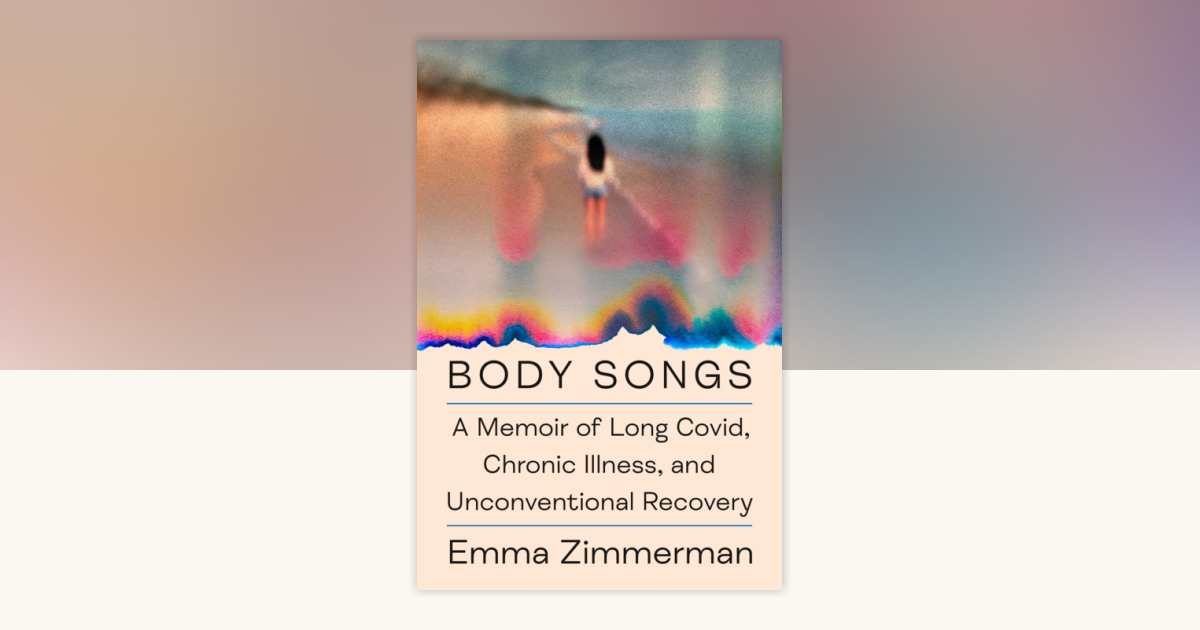
There's a other Brain retraining book about to be published next year - as part of a recovery narrative. Unfortunately it's under a big 5 publisher Penguin Random House. Emma Zimmerman Body Songs.

The inbuilt ableism of publishing and the lure of the recovery story means that brain retraining is perfect territory.

The author apparently recovered within a year of COVID.

 
As I understand it, randomised controlled trials were introduced because relying on expert clinical opinion proved to be a disaster way too many times.

And it still is.

It's brazen corruption of science.


And is it, or the pattern of it, unique to ME/CFS, et al? Or are they just arbitrarily pathologising normal physiological responses to suit their prejudices?
Also a good question.

I just think if they are moaning that science cant measure things properly in relation to brain training, well it can measure that so they should run a trial.
 
There's a other Brain retraining book about to be published next year - as part of a recovery narrative. Unfortunately it's under a big 5 publisher Penguin Random House. Emma Zimmerman Body Songs.

The inbuilt ableism of publishing and the lure of the recovery story means that brain retraining is perfect territory.

The author apparently recovered within a year of COVID.

This is exactly how The Salt Path happened. Who was the disabled writer who did a brilliant blog post about how publishing kept telling her they basically want a recovery arc?
 
I was going to post this in the Funny side of life thread because I found it hilarious. Our “favourite” brain retrainer in NZ has now added having a mortgage as a potential cause of health conditions. Maybe those childhood traumas are becoming too elusive to identify for her trainees.
 

Attachments

  • IMG_0276.webp
    IMG_0276.webp
    192.8 KB · Views: 21
I was going to post this in the Funny side of life thread because I found it hilarious. Our “favourite” brain retrainer in NZ has now added having a mortgage as a potential cause of health conditions. Maybe those childhood traumas are becoming too elusive to identify for her trainees.

I paid off my mortgage around the time that I developed ME, does this mean that not having a mortgage is a potential contributor to health conditions as well, certainly it is always best to keep all bases open and maximise your potential client pool?
 
I paid off my mortgage around the time that I developed ME, does this mean that not having a mortgage is a potential contributor to health conditions as well, certainly it is always best to keep all bases open and maximise your potential client pool?
Don’t worry – I think I’ve got you covered.

From David D. Clarke‘s They Can't Find Anything Wrong: 7 Keys to Understanding, Treating, and Healing Stress Illness
It’s free to rent/read at archive.org.

CHILDHOOD STRESS CONSEQUENCES: I DESERVE BETTER

Positive experiences in the adult world help childhood stress survivors learn they deserve better than past or present mistreatment.
Self-esteem builds steadily and eventually survivors accept that they deserve as much respect as anyone else.
Once this happens, there is no turning back.
This new attitude results in a re-evaluation of one's life and everyone in it.
This is crucial in overcoming the effects of a dysfunctional childhood.
Yet this process also can be so difficult that stress illness results.
This also plays directly into the Good Partner / Bad Illness Syndrome, mind you.
I’m positive that if paper wasn’t finite, he would have invented and written down the Mortage-paid-off / Stress Illness Syndrome right there.

In case you are not familiar with David D. Clarke, MD, he‘s the president and a co-founder, together with Howard Schubiner, MD and many others, of

- The Psychophysiologic Disorders Association (PPDA)
Oh, no, wait, I meant
- The Association for the Treatment of Neuroplastic Symptoms (ATNS)
Ahh, I‘m too slow, I was supposed to say
- https://neuroplastic.org/
Hey, no new name for the association, just a new domain name?! This revolutionary new field of medicine seems to settle down.
 
I was going to post this in the Funny side of life thread because I found it hilarious. Our “favourite” brain retrainer in NZ has now added having a mortgage as a potential cause of health conditions. Maybe those childhood traumas are becoming too elusive to identify for her trainees.
Did you know the #1 underlying cause of chronic illness is a physiological stress response?
That would be a surprise to everyone, since it's completely false to a ridiculous degree. What petulant, ignorant nonsense that makes a mockery of how harsh everyday life used to be for our ancestors, and to billions still today. What sheltered, privileged life these people enjoy. Despite everything, life has never been more easy for humans. This is partly why life expectancy has kept growing, well, that and biomedical science, which delivers 100% of medicine's achievements, until a global pandemic reversed that trend. A virus, not fear. Good grief humanity is regressing so hard, this stuff is treated as legitimate by the medical profession and is applauded at medical conferences.
 
I was going to post this in the Funny side of life thread because I found it hilarious. Our “favourite” brain retrainer in NZ has now added having a mortgage as a potential cause of health conditions. Maybe those childhood traumas are becoming too elusive to identify for her trainees.
Financial trouble is highly correlated with poorer mental health outcomes, including suicides. This includes otherwise well off people that are experiencing new financial troubles, so it’s not just due to confounding by sociodemographic factors.

But mortgages is probably the worst example I can think of as a cause for worry, unless you’re about to lose your home.
 
Last edited:
I paid off my mortgage around the time that I developed ME, does this mean that not having a mortgage is a potential contributor to health conditions as well, certainly it is always best to keep all bases open and maximise your potential client pool?

Haha, same. I got to enjoy about 3 months of complete financial security. Must have been the worry of not having any worries.
 
Despite everything, life has never been more easy for humans.
Yes, but there is a big averaging factor in that truth. The USA, for example, is a very wealthy country per capita. But when you look at the distribution of that wealth it is highly skewed to massive (and increasing) concentration of it at the top end of town, with a very few having most of it, and the very many having very little and struggling to survive from payday to payday. There is still a lot of very poor people there.
 
There was a critical article from Switzerland about mind-body and brain retraining. Good to see. I personally felt the part about pushing through lacked a bit of nuance so I wrote a response to that. But otherwise it was a much needed piece.


My response:
New article in WOZ.
Article | Google translated
They seem to have got a lot of backlash for their previous pro-biomedical stance article and are now trying to cover the biopsychosocial view, too.

Crash competence is crucial.​

Pacing or brain retraining? The current trench warfare over the “right” treatment for Long Covid does justice neither to the complex condition nor to those affected.

Machine Translation of the article’s last few paragraphs:
Medicine is an empirical rather than an exact science.
According to current understanding, ME/CFS is a neuroimmunological disorder that usually develops after an infection.
However, this does not exclude the possibility that biopsychosocial models can modulate and positively influence the course of symptoms.
A viral, biological origin and psychosocial influencing factors in the disease course are not mutually exclusive.

This is precisely where the paradox lies: “Patient organizations do describe physical, cognitive, social, emotional and sensory stimuli as triggers of PEM, yet at the same time reject the biopsychosocial model,” says Sybille Weber.
She can understand the motives, but finds it worrying that patient organizations advise against it in order to protect those affected from being psychologized.

“Unfortunately, the sometimes vehement ideological attribution of ME/CFS as a psychiatric disorder has contributed greatly to the strong defensive stance in some quarters,” says Stingl.
This misattribution has had very negative consequences for therapeutic approaches and research.

If you listen closely in all directions, everyone agrees that significantly more money must be invested in care, nursing and social protection for those affected, as well as in research into the pathological processes.
This also includes better stratification of patients by subtype and disease stage.
Only in this way can biomarkers be found and effective theories developed.
However, a better understanding of the disease always requires taking into account the lived experiences and coping strategies of those affected—regardless of the chosen therapeutic approach.

The scientific understanding of Long Covid and ME/CFS is still very provisional.
Perhaps a little more humility regarding the complexity of the human body would be appropriate—combined with the realization that polarization ultimately helps no one.
 
However, this does not exclude the possibility that biopsychosocial models can modulate and positively influence the course of symptoms.
And how is a model supposed to modulate anything? What a muddle..
This is precisely where the paradox lies: “Patient organizations do describe physical, cognitive, social, emotional and sensory stimuli as triggers of PEM, yet at the same time reject the biopsychosocial model,” says Sybille Weber.
She can understand the motives, but finds it worrying that patient organizations advise against it in order to protect those affected from being psychologized.
But that is not what the BPS model says. They have clearly not paid attention at all. And all of those things can be explained in a model based on physics and biology anyways.

And we’re not trying to protect anyone from being psychologised, we want to avoid wrongful psychologisation. You can’t just say something is psychological because it would fit a model, you have to prove the model is correct first.

And to paraphrase Kielland: if you want to follow the BPS model, you have to account for the harm that is currently being done by the systemic sadism. But they conveniently ignore those psychosocial aspects.
If you listen closely in all directions, everyone agrees that significantly more money must be invested in care, nursing and social protection for those affected, as well as in research into the pathological processes.
No, they don’t. The BPS crowd is actively fighting against biomedical research and adequate care because they believe that it’s harmful because it entrenches the belief that people are actually sick. They have outright killed people through starvation and malnutrition, and contributed to suicides and suicidal ideation, including in children. And of course ruined countless lives through worsening their health through state mandated torture (forced GET, CBT, etc.) and in general making their lives more miserable than they have to be.
 
This is precisely where the paradox lies: “Patient organizations do describe physical, cognitive, social, emotional and sensory stimuli as triggers of PEM, yet at the same time reject the biopsychosocial model,” says Sybille Weber. ​
She can understand the motives, but finds it worrying that patient organizations advise against it in order to protect those affected from being psychologized.​

The rejection is because it is not a genuine BPS model. It is a psychosomatic model barely disguised as a BPS model, that has completely failed to deliver robust evidence of benefit.

Furthermore, adopting a general BPS approach does not mean all factors are significant and relevant. It just means make sure you take them all into account, to the extent they are significant and relevant.

To the extent they are, then they also require a careful delineation of where in the causal chain they sit, whether they are primary or secondary.

None of which has happened with the current perverted version of the BPS model.
 
Last edited:
New article in WOZ.
Article | Google translated
They seem to have got a lot of backlash for their previous pro-biomedical stance article and are now trying to cover the biopsychosocial view, too.

Letter to the editor co-authored by the Austrian neurologist Stingl who was quoted out of context in the article and the president of the Swiss ME association:
Do Not Promise Recovery
“Long Covid: Crash Competence Is Crucial,” WOZ No. 27/26

The article gives the impression that there is a disagreement between the patient organizations and Dr. Michael Stingl.
We share the same position: Psychosocial support can help people with severe physical illnesses.
However, it is not a substitute for treating the underlying somatic disease and must not be associated with a promise of recovery.

For this reason, the debate on brain retraining requires precise medical differentiation.
The article conflates different disease entities, patient populations, and levels of evidence.
Findings from heterogeneous Long COVID/Post-COVID cohorts cannot be generalized to patients with ME (i.e., ME/CFS).
Nor can individual recovery stories serve as evidence of a treatment's effectiveness.

Pacing means respecting an individual's limits of exertion, as exceeding them can worsen their health.
Brain retraining programs, by contrast, are based on concepts that interpret exertion limits and illness signals as harmless or as manifestations of maladaptive neural patterns.
The D-A-CH Consensus considers activating approaches in ME to be contraindicated.
Bettina Grande, a leading expert on the role of psychotherapy in ME, further emphasizes that psychotherapeutic interventions must neither question nor reinterpret the exertion limits imposed by post-exertional malaise (PEM), nor patients' perception of those limits.

Precisely because therapeutic recommendations can have far-reaching consequences, they should be based on scientific evidence rather than on the generalization of individual cases.
Recovery stories must not lead to patients with ME being pressured into trying potentially harmful treatments.

Jonas Sagelsdorff
Executive Director, Swiss Society for ME & CFS

Dr. Michael Stingl
Neurologist, Votivpark Specialist Medical Center, Vienna

Co-authors of the D-A-CH Consensus Statement on the Diagnosis and Treatment of ME/CFS
 
In a new Substack article, internist Dr. Christoph Bammer critiques the rising trend of neuroplasticity and brain retraining programs for Long-COVID and ME/CFS. Dr. Bammer also warns against the premature psychologization of these conditions.

A core component of his critique targets commercial programs that promise to reset a conditioned limbic system by focusing heavily on the Amygdala.

Dr. Bammer explains that emotional and autonomic regulation is distributed across multiple overlapping neural circuits rather than a single structure. Consequently, trying to cure a complex, multisystemic illness like ME by for example retraining the amygdala alone is scientifically implausible, akin to trying to stop a river by turning off a single tributary.

The piece tries to contrast these localized brain retraining claims with a growing body of biomedical evidence.

Dr. Bammer concludes that because the evidence base for biopsychosocial interventions in general remains very low, medicine must embrace pacing as the non-activating standard of care rather than pathologizing a patient's rational energy management.

“What this overview must ultimately conclude is unspectacular and perhaps precisely because of this radicality: a primarily psychosocial model of illness for ME/CFS and PAIS is no longer tenable according to the current state of knowledge.

The converging biomedical evidence from vascular, muscular, and immunological research points to a primarily biologically based, multisystemic pathophysiology.

For practical purposes, this means that activating protocols and commercial brain retraining programs should not be considered standard causal therapy for confirmed PEM (progressive end-stage reactivity), that pacing should be established (and not pathologized) as a non-activating standard, and that any supportive psychotherapeutic intervention must reach its limits where it begins to replace rather than complement biomedical diagnostics.”


#pwme #myalgicE #LongCovid #PAIS #IACI #millionsmissing
 
Last edited:
“What this overview must ultimately conclude is unspectacular and perhaps precisely because of this radicality: a primarily psychosocial model of illness for ME/CFS and PAIS is no longer tenable according to the current state of knowledge.
Unfortunately, this misses the point. Psychobehavioral ideology is a strictly psychosocial model pretending to argue for a mix of various, including psychosocial, factors. The lie is baked in the ideology and is foundational to it. It is 100% psychosocial, and pretends to loosely include it, so this is already the ideological argument, has been for decades. It doesn't matter that it's a filthy lie, the fact that it's a lie is baked in the ideology and its practices, and so goes unquestioned.

The truth is that not a single so-called psychosocial factor has ever been demonstrated to be relevant other than as a consequence, and in every single case, without a single exemption, it makes 10-100x more sense the other way around: that illness causes so-called psychosocial problems, in a way such that only treating the illness matters, because the relationship is strictly directional and one-dimensional.

Treat the illness, and the psychosocial problems vanish entirely. Same goes when the illness resolves itself. Meanwhile we have decades of false assertions that biased questionnaires showing slight improvements on oddly-framed questions, which everyone interprets and answers directly, never lead to improvements in the illness and in functioning.

Every single claim, foundational or complementary, made in psychobehavioral models isn't just much more plausible backwards, it only makes sense the way we patients experience and explain them. Those models are weird, they make no intuitive or common sense, they are roughly the ethereal equivalent of homeopathy: a little bit of what harms to cure the harm, except as an idea, a concept. Which is, of course, identical in construct to expensive shaken water, but they all completely miss the point. Points that they are taught not to miss. Somehow.

There is simply no place for anything psychosocial here, simply because it will always be misused. Always, without fail. It should actually be dealt with in a similar way as with a strongly addictive substance and a group of people who are madly addicted to it. Medical professionals simply cannot be trusted with using them, having made it 100% clear that they will always misuse them, even with actual good intentions. And not only would it be a massive net positive, it wouldn't even have any gross negative, not a single one. Absolutely nothing of value would be lost if this wretched ideology were entirely erased, treated with the contempt it deserves.

All this framing does is prop up the common excuses by pretending that lies are not explicitly that: a means to an end. Our end. The end of tens of millions of lives. Not a hypothetical future, but a fact already accomplished, and going stronger than ever, an evil impossible to stop. Mostly because everyone expects there will never be consequences when they are proven wrong. Which is why the consequences will have to be extreme, to make an example that will be remembered for centuries. Any other option will be a failure.

 
How to make sense of this: if I/my ANS ’feels unsafe’, why do I only get symptoms during/after exertion?


I’ll never ever forget getting up from my bed, going down the stairs, feeling out of breath and seriously asking myself: what in the world is this ’anxiety’ about??? I simply could not figure it out!

I suffered so very much from being gaslit before diagnosis, I was taught to blame myself so badly…
I’m so sorry for all of us who’ve been harmed by this violence.
 
Status
Not open for further replies.
Back
Top Bottom