Fibromyalgia, Chronic Fatigue Syndrome, and Multiple Sclerosis are associated with lower translocator protein binding affinity genotypes
Jones, Chloe; Younger, Jarred
Introduction
Neuroinflammation is a known pathophysiologic mechanism in multiple sclerosis and a proposed mechanism in fibromyalgia and myalgic encephalomyelitis/chronic fatigue syndrome (ME/CFS).
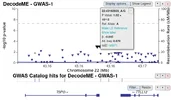
Positron Emission Tomography (PET) imaging of the translocator protein (TSPO) has been widely used to measure neuroinflammation, though second-generation ligands are highly sensitive to a single nucleotide polymorphism, rs6971, resulting in high, mixed, and low affinity binders. It is unknown whether this polymorphism is associated with neuroinflammatory disorders.
Materials and Methods
Eighty-six total participant genotypes for TSPO binding affinity were identified through Sanger sequencing (30 fibromyalgia, 21 ME/CFS, 11 multiple sclerosis, and 24 healthy controls). Associations between patient group and genotype were assessed with Fisher’s Exact test. Associations between genotype and symptom severity from self-report questionnaires were assessed with Kruskal-Wallis tests.
Results
In the present study individuals with fibromyalgia, (ME/CFS), or multiple sclerosis were more likely to have a mixed- or low-affinity genotypes compared to healthy controls. Presence of the low or mixed genotypes were also associated with greater self-reported fatigue severity and depressive symptoms.
Discussion
These findings should be confirmed in larger samples but suggest functional consequences of rs6971 polymorphism that may be related to the pathophysiology of pain and fatigue illnesses.
Web | DOI | PDF | medRxiv | Preprint