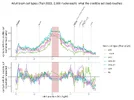
I haven't really been able to follow what exactly you're doing. Maybe you could lay out your overarching plan, and maybe describe what everything in one row of the table on this webpage means?

I haven't really been able to follow what exactly you're doing. Maybe you could lay out your overarching plan, and maybe describe what everything in one row of the table on this webpage means?

Will try to give a fuller writeup a go some other time when I’m up to it. But it’s basically just GenHancer info on promoters and enhancers (see the Genomics section on a GeneCards page) for DecodeME genes with links to view the locations on the DecodeME LocusZoom to see if they’re relevant.I haven't really been able to follow what exactly you're doing. Maybe you could lay out your overarching plan, and maybe describe what everything in one row of the table on this webpage means?
Ah, ok, so the idea is, if there are significant hits near a gene, plus significant hits near multiple enhancers or promoters which encourage expression of that gene, it might be more likely to be relevant.But it’s basically just GenHancer info on promoters and enhancers (see the Genomics section on a GeneCards page) for DecodeME genes with links to view the locations on the DecodeME LocusZoom to see if they’re relevant.
Yeah, it was meant to be a quick ‘oh this info on regulatory elements looks interesting, I wonder if I can knock something up to make it easy to link to and check if there are correlations to changes in the DecodeME data for the candidate genes, maybe it will tell us something’. And then got more complicated…Ah, ok, so the idea is, if there are significant hits near a gene, plus significant hits near multiple enhancers or promoters which encourage expression of that gene, it might be more likely to be relevant.
I just brushed up on the basics of what promoters and enhancers are with this video: Promoters and Enhancers

I think this is a really interesting connection to the PVN because the PVN apparantly mediates osmoregulation and so many pwME have issues with dehydration, excessive thirst, exessive and frequent urination (and sometimes in PEM the opposite - I need to drink loads but barely pee at all) etc. It seems like something is driving the fluid regulation of pwME haywire so this could be an important clue imo.2. NEGR1 Function: NEGR1 maintains the structural integrity and synaptic connections of neurons in the PVN.
Osmoregulation stuck out to me:
'Osmoregulation is the active regulation of the osmotic pressure of an organism's body fluids, detected by osmoreceptors, to maintain the homeostasis of the organism's water content; that is, it maintains the fluid balance and the concentration of electrolytes (salts in solution which in this case is represented by body fluid) to keep the body fluids from becoming too diluted or concentrated.'
Osmoregulation - Wikipedia
en.wikipedia.org
If it was specifically the PVN, I think it'd be more interesting. But it seems like what you quoted is an AI mentioning PVN linking to NEGR1 because it's the area of interest that was asked about, while in reality NEGR1 may be involved everywhere in the brain. And if the question was about any other brain region, it'd say NEGR1 maintains the synaptic connections there too.I think this is a really interesting connection to the PVN
Oh right, my bad!If it was specifically the PVN, I think it'd be more interesting. But it seems like what you quoted is an AI mentioning PVN linking to NEGR1 because it's the area of interest that was asked about, while in reality NEGR1 may be involved everywhere in the brain. And if the question was about any other brain region, it'd say NEGR1 maintains the synaptic connections there too.

In this large-scale genetic study of HR increase and HR recovery in 58,818 participants, we identified 25 independent genome-wide significant signals in 23 genetic loci. HR increase and HR recovery were found to be highly heritable, and the majority of the loci were independently associated with HR recovery. The polygenic score was not convincingly associated with mortality or disease.
The major finding was that a large number of candidate causal genes are involved in neuron biology, particularly at loci that are specific to HR recovery.
The most significantly associated variant, rs6488162 in SYT10, encodes a Ca2+ sensor Synaptotagmin 10 that triggers IGF-1 exocytosis, protecting neurons from degeneration. Other loci include the ACHE gene, the function of which can be strongly linked to neuronal function as it encodes the enzyme that catalyzes the breakdown of acetylcholine. Neuronal Growth Regulator 1 (NEGR1) is essential for neuronal morphology. It has been demonstrated in in vitro and in vivo experiments that NEGR1 overexpression and underexpression is closely associated with number of synapses by regulating neurite outgrowth and dendritic spine development [citation].

Distance is usually measured to the transcription start site (TSS) of a gene, the place where the reading starts. Both genes are read in the <- direction so they are read from right to left and the TSS is on the right side of the gene.On whether NEGR1 is actually the closest gene:
The end of NEGR1 closest to the best hit is roughly at base pair 72,282,000
The best hit is roughly at base pair 73,200,000
The end of LRRIQ3 (another protein coding gene) is roughy at base pair 74,030,000.
So, I think LRRIQ3 is closer. It's even more so, if you take the mid point of a gene, rather than the closest end, because NEGR1 is a big gene and LRRIQ3 isn't.

Source: Neuronal growth regulator 1 (NEGR1) promotes synaptic targeting of glutamic acid decarboxylase 65 (GAD65) | bioRxivNEGR1 targets GAD65 to synapses by promoting clustering of GAD65 at the presynaptic PM. NEGR1 deficiency causes GABAergic synapse loss indicating that clustering of GAD65 at the presynaptic PM is required for the maintenance of inhibitory synapses.
Here's what this plot looks like, it did not replicate in the Nott et al. dataset of neurons. More info about the datasets and methodology I used here.There were also no 3D-links to protein-coding genes in ENCODE. I tried to look further and found links between the credible region and NEGR1 in this dataset on pluripotent stem (iPS) cell-induced excitatory neurons.
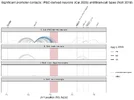
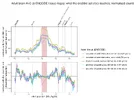
Here's what it looks like, very similar to the ENCODE data and not supportive of NEGR1Currently trying out this brain dataset but downloading it takes several hours:
Single-cell DNA methylation and 3D genome architecture in the human brain | Science