
Genetics: Chromosome 11 SOX6

Even though this region falls just below the significance threshold, the credible set lies entirely inside the SOX6 gene, making it quite likely that this is the relevant one.

1793890591426.webp

The 3D domain only includes C11orf58 as another protein coding gene. The FLAMES algorithm was also quite confident about SOX6 being the relevant gene for this signal.
1793890673121.webp

The other chromatin analyses didn't reveal much.

For the eQTL I tested more than 2000 datasets but only 2 reached PP.H4 and they were only weak signals.
1793890786219.webp

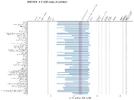
The Phewas showed a couple of genetic studies that share a signal here including overal health rating, brain-white matter MRI and miserableness.
1793890898298.webp
 
Would anyone be able to explain in simple terms what this means?
We have a lot of databases that measured DNA (the genetic code) and RNA (a measure of gene expression). So one would think that looking up the DNA variants that are associated with ME/CFS (from DecodeME) in those databases would tell us which genes it influences.

For example, it could be that people who have the ME/CFS mutations at chromosome 11, tend to have increased RNA for SOX6 compared to those without the mutations. That would give us a solid clue that SOX6 is the causal gene for the DecodeME signal.

Unfortunately, it's not always so easy. We often find nothing in these databases, not just for ME/CFS but in other diseases as well. One possible explanation is that these databases didn't measure the gene expression in the right tissue or cell type or that they need to be measured in special circumstances (for example during early development or during an infection).
Thank you. That is unfortunate. There is so much we don’t know.

I have very little grasp of genetics so I am constantly getting confused around here!
 
Even though this region falls just below the significance threshold, the credible set lies entirely inside the SOX6 gene, making it quite likely that this is the relevant one.

Outside the CNS SOX6 has a role in skeletal muscle fibre-type programmes (slow-twitch/fatigue resistant vs fast-twitch/fatiguing) and muscle satellite cells —

Concerted regulation of myofiber-specific gene expression and muscle performance by the transcriptional repressor Sox6 (2011)

In response to physiological stimuli, skeletal muscle alters its myofiber composition to significantly affect muscle performance and metabolism. This process requires concerted regulation of myofiber-specific isoforms of sarcomeric and calcium regulatory proteins that couple action potentials to the generation of contractile force.

Here, we identify Sox6 as a fast myofiber-enriched repressor of slow muscle gene expression in vivo. Mice lacking Sox6 specifically in skeletal muscle have an increased number of slow myofibers, elevated mitochondrial activity, and exhibit down-regulation of the fast myofiber gene program, resulting in enhanced muscular endurance.

In addition, microarray profiling of Sox6 knockout muscle revealed extensive muscle fiber-type remodeling, and identified numerous genes that display distinctive fiber-type enrichment. Sox6 directly represses the transcription of slow myofiber-enriched genes by binding to conserved cis-regulatory elements.

These results identify Sox6 as a robust regulator of muscle contractile phenotype and metabolism, and elucidate a mechanism by which functionally related muscle fiber-type specific gene isoforms are collectively controlled.

Web | PDF | Proceedings of the National Academy of Sciences | Open Access

Sox6 Differentially Regulates Inherited Myogenic Abilities and Muscle Fiber Types of Satellite Cells Derived from Fast- and Slow-Type Muscles (2022)

Adult skeletal muscle is primarily divided into fast and slow-type muscles, which have distinct capacities for regeneration, metabolism and contractibility. Satellite cells plays an important role in adult skeletal muscle. However, the underlying mechanisms of satellite cell myogenesis are poorly understood. We previously found that Sox6 was highly expressed in adult fast-type muscle.

Therefore, we aimed to validate the satellite cell myogenesis from different muscle fiber types and investigate the regulation of Sox6 on satellite cell myogenesis. First, we isolated satellite cells from fast- and slow-type muscles individually. We found that satellite cells derived from different muscle fiber types generated myotubes similar to their origin types. Further, we observed that cells derived from fast muscles had a higher efficiency to proliferate but lower potential to self-renew compared to the cells derived from slow muscles. Then we demonstrated that Sox6 facilitated the development of satellite cells-derived myotubes toward their inherent muscle fiber types.

We revealed that higher expression of Nfix during the differentiation of fast-type muscle-derived myogenic cells inhibited the transcription of slow-type isoforms (MyH7B, Tnnc1) by binding to Sox6. On the other hand, Sox6 activated Mef2C to promote the slow fiber formation in slow-type muscle-derived myogenic cells with Nfix low expression, showing a different effect of Sox6 on the regulation of satellite cell development.

Our findings demonstrated that satellite cells, the myogenic progenitor cells, tend to develop towards the fiber type similar to where they originated. The expression of Sox6 and Nfix partially explain the developmental differences of myogenic cells derived from fast- and slow-type muscles.

Web | PDF | International Journal of Molecular Sciences | Open Access
 
Back
Top Bottom