Genetics: Chromosome 20: ARFGEF2, CSE1L, STAU1

As in an active immune response e.g. autoantibodies or other adaptive immune responses as opposed to something gone awry with innate immune signalling?

Or a response to a pathogen?

Or just any current immune pathology as opposed to a brain only no immune involvement model?
Mostly I just mean that the monocytes would probably need to be responding to something to show a relevant difference. Otherwise they're largely just shuttling around. What specifically they might be responding to is beyond my theorizing at the moment
 
Mostly I just mean that the monocytes would probably need to be responding to something to show a relevant difference. Otherwise they're largely just shuttling around. What specifically they might be responding to is beyond my theorizing at the moment
So you're saying if monocytes are involved in the pathology, in order to 'catch them in the act', so to speak, you would still have to study them while they're actively responding to something rather than shuttling around the body?
 
So you're saying if monocytes are involved in the pathology, in order to 'catch them in the act', so to speak, you would still have to study them while they're actively responding to something rather than shuttling around the body?
Yep most likely. There could be something to observe without perturbation, and that's likely what any good researcher would check just to start. But if we're thinking that monocytes are involved somewhere in the development of the disease, it would be a matter of figuring out what these SNPs might do in this cell type at some specific triggering event for ME/CFS (using "event" broadly here to just mean a step in an unknown biological chain reaction that culminates in ME/CFS). Which is going to involve the monocytes actively doing something.
 
But if we're thinking that monocytes are involved somewhere in the development of the disease, it would be a matter of figuring out what these SNPs might do in this cell type at some specific triggering event for ME/CFS (using "event" broadly here to just mean a step in an unknown biological chain reaction that culminates in ME/CFS). Which is going to involve the monocytes actively doing something.
So are you thinking the data from locus is pointing towards monocytes being involved in the development of MECFS rather than it's perpetuating pathology? If so what makes you think that? Is it part of your hypothesis - I have read many of your posts about it but my brain is like a sieve these days and I don't retain much!
 
I can't help wondering how this fits with Andrew Grimsons work at Cornell. He's been digging deeper and deeper into more monocyte data since their initial broad sweep single cell genomic project highlighted them as being somehow different in ME.

I wonder if he has any hits for genes in this area? It could be a neat tie in of the Decode ME findings with his work.....
 
So are you thinking the data from locus is pointing towards monocytes being involved in the development of MECFS rather than it's perpetuating pathology? If so what makes you think that? Is it part of your hypothesis - I have read many of your posts about it but my brain is like a sieve these days and I don't retain much!
They could be both precipitating and perpetuating. I’m thinking precipitating here because the thing leading us to monocytes are genetic associations, which inherently make someone more like to fall into a chronic disease
 
Phewas
The last thing I wanted to check are other GWAS that have signal similar to the one as DecodeME in chromosome 20.

I used multiple data sources:

- Open Targets offers credible sets so I could check if these overlap with the credible set for DecodeME in this region. This was the case for two studies: one on loneliness using the 12-item EPQ-R neuroticism questionnaire and one on educational attainment.​
​
- The GWAS catalog lists associations with p < 10-5. So, I checked 274 snps in the region that had p < 1e-5 in DecodeME, to see if any were listed on GWAS Catalog. This returned 53 studies, most on cognitive traits.Approximately half of these had summary data available to do a coloc analysis. The Open Target studies’ data were also retrieved from here.​
​
- Then with OpenGwas I used the same approach as forestglip but not only with the lead variant (an insertion which not all studies may have tested) but with a couple of represenative SNPs from the DecodeME signal. I then checked if OpenGWAS API had other GWAS with a p < 10-4 for these SNPs. This was the case for 175 of them. I excluded molecular QTL studies (eQTL, protein, metabolite), restricted to European-only (or ancestry not given) to end up with 153.​

Next I did colocalisation analysis on them, the full results are in the attached Excel file. Because of my broad screen of thousands of studies, some accidental hits may be present so don’t think these too seriously. Some studies appear twice because they were in multiple databases. Overall, there is a clear pattern where brain traits stand out with depression, schizophrenia, cortical thickness among the top findings.
1792433148807.webp

The depression results at the top all refer to the Okbay 2016 depressive-symptoms (and bigger depression GWAS don’t replicate this finding). Loneliness (I think they all point to the same study) and biological sex could point to an participation bias effect. On the other hand, ‘frequency of tiredness / lethargy’ (PPH4 = 0.77) and ‘sleeplessness/insomnia’ (PPH4 = 0.71) also scored high. Don’t see any immune findings.

Here’s how the data looks for some of these studies, with the set of 11 core SNPs (with a probability > 85% of including the causal variant) from DecodeME coloured in red.


1792433233147.webp
 

Attachments

Last edited:
Impressive! I see that DecodeME was the most significant for this locus compared to all the other traits in the plots. And for example, the depression study has 10 times the number of cases of ME/CFS. I wonder if some of those depression cases actually have ME/CFS, giving this locus a little bit of significance due to highlighting an ME/CFS causal variant.
 
The average for central nervous system samples didn’t show peaks in our SNPs, so I had a look at a more refined dataset: the Li et al. 2023 brain atlas that used sn-ATAC-seq normalized per 107 cell types. Here I found a minor peak at 20:48917118:T:C (closer to ARFGEF2) that seems to point to GABAergic neurons from the basal ganglia. The FOXP2 finding is interesting because it might be point to eccentric medium spiny neurons found in the RNA analyses of DecodeME (but not so much in the ATAC-analysis).
ARFGEF2 could be the gene for this link because mutations have reported "preferential damage to the basal ganglia" and "hyperintensity of the putamen" which was associated with movement disorders.

Some references:
The brain MRI shows bilateral hyperintensity of the putamen, BPNH, and generalized atrophy. Loss of ARFGEF2 function affects vesicle trafficking, proliferation/apoptosis, and neurotransmitter receptor function. This can explain BPNH and microcephaly.We hypothesize that the movement disorder and the preferential damage to the basal ganglia, specifically to the putamen, may be caused by an increased sensitivity to degeneration, a dynamic dysfunction due to neurotransmitter receptor mislocalization or a combination of both.
Movement disorder and neuronal migration disorder due to ARFGEF2 mutation - PMC

A ten year-old girl with severe developmental and growth delay, feeding problems and involuntary movements is presented.Bilateral periventricular nodular heterotopia and putaminal hyperintensity were detected in cranial magnetic resonance imaging
The expanding phenotypic spectrum of ARFGEF2 gene mutation: Cardiomyopathy and movement disorder - PubMed

Furthermore, broader network dysfunction may also be suggested by the presence of movement disorders in half of affected patients, in association with radiological evidence of basal ganglia involvement (atrophy and/or signal abnormalities). This may be explained by the high expression of ARFGEF2 in the ganglionic eminences, which are critical for basal ganglia development
ARFGEF2-Related Periventricular Nodular Heterotopia: A Case Report and Literature Review - PubMed

Rather than a developmental link between ARFGEF2 and the basal ganglia as the paper above suggests, I think there are two other possibilities that have been reported in the literature.

BIG2, the protein that ARFGEF2 makes is likely involved in getting GABAa receptors to the cell surface. These are important for cells in the basal ganglia.
The brefeldin A-inhibited GDP/GTP exchange factor 2, a protein involved in vesicular trafficking, interacts with the beta subunits of the GABA receptors - PubMed

BIG2 might also act as a docking station for PKA. It binds to subunit RIIbeta, which has been linked to the striatum.
Protein kinase A-anchoring (AKAP) domains in brefeldin A-inhibited guanine nucleotide-exchange protein 2 (BIG2) - PubMed
Deficiency of the RIIβ subunit of PKA affects locomotor activity and energy homeostasis in distinct neuronal populations - PubMed
Defective Motor Behavior and Neural Gene Expression in RIIβ-Protein Kinase A Mutant Mice - PMC
 
ARFGEF2 could be the gene for this link because mutations have reported "preferential damage to the basal ganglia" and "hyperintensity of the putamen" which was associated with movement disorders.
My ability to follow the genetic investigations is extremely weak. As a newcomer to S4ME, I’m still in month 1 of trying to grapple with the real biology of ME/CFS for the first time. So my question may be very off: from what I can gather, we really can’t know at this stage which direction the genetic hits of DecodeME are pointing us (although we can explore potential), but this link you point out in ARFGEF2 could very well point to some CNS abnormality? However, the range of possibilities (and the probabilities of each) are wide open? Or are you seeing signs there could be some limit to that range of possibilities?
 
the range of possibilities (and the probabilities of each) are wide open?
Yes I think that's the case for this locus on chromosome 20. It's all still speculative. But I plan to do similar analyses on the other signals and then see if any patterns or links emerge.

If we test gene categories across all the DecodeME results then they point to the CNS and neuronal synapses and much less to the immune system or other categories. So I think that's something to keep in mind when interpreting the ambiguous signals per locus.
Cell and tissue enrichment in ME/CFS - ME/CFS Science
 
If we test gene categories across all the DecodeME results then they point to the CNS and neuronal synapses and much less to the immune system or other categories.
Thanks!

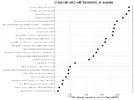
Yes, so on that same point, I take this chart (edit: as spotlighted in your article) v seriously in any attempt to think about the character of the disease. It seems for any theory to be plausible it would need to match this plot in terms of what is abnormal.
1792501546866.webp
 
Last edited:
Back
Top Bottom